

Neolithic House Project Week 4
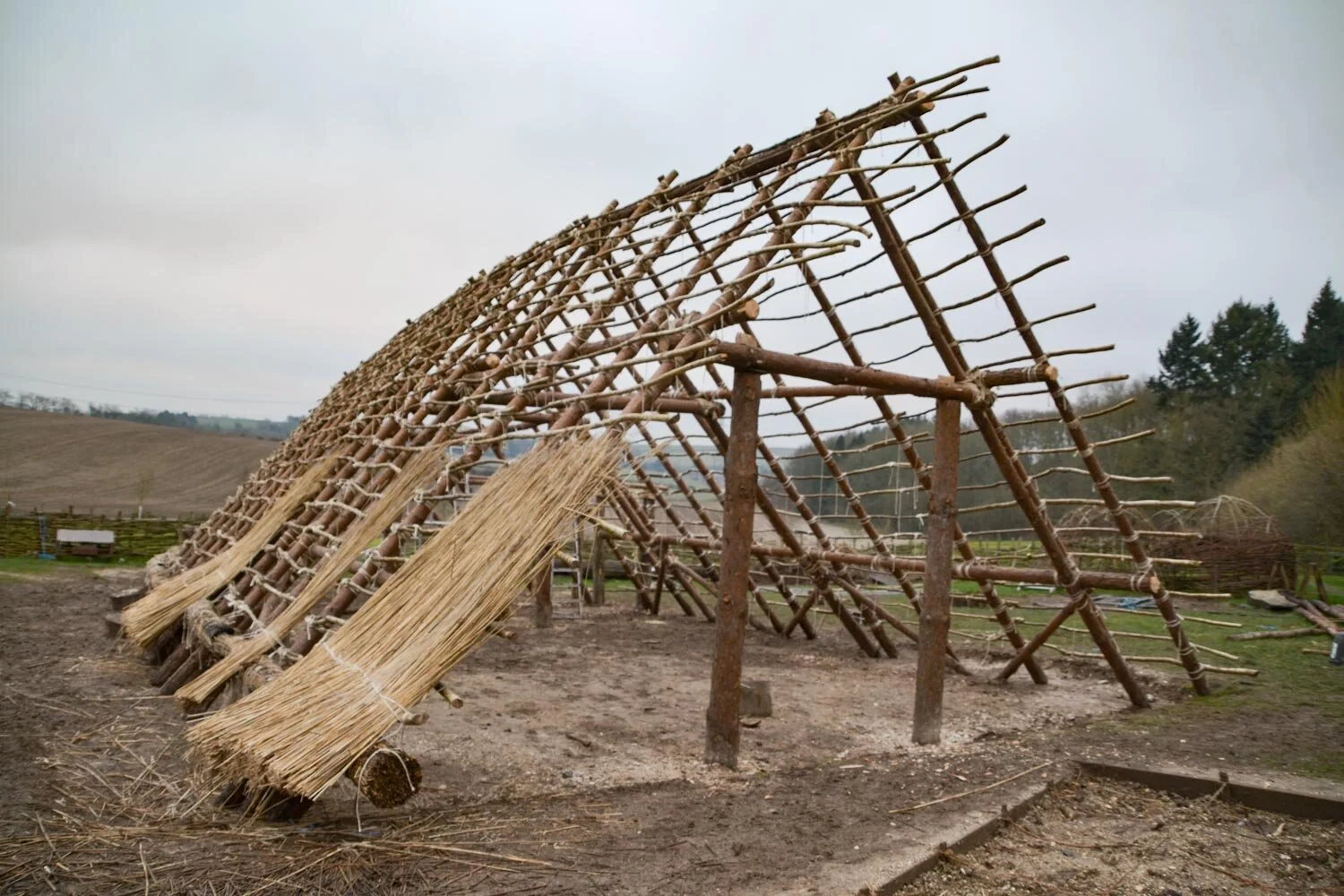
An update on week 4 of a our Neolithic House project… the thatch has arrived!
This week the thatch has arrived and we’ve wasted no time in starting this part of the building process. Our Archaeologist Claire Walton has the below update!
As I drove to a meeting on Wednesday, a lorry loaded with thatch passed me going in the opposite direction and my colleague Trevor and I both excitedly yelled “that’s our thatch!!” I knew by the time I had returned to the farm a few hours later, that there would already be thatch on the roof, and I was right. In order to work out what size each ‘bundle’ should be, we had to have a little test drive. (well, that’s what my very enthusiastic boss told me anyway)

In the absence of archaeological evidence for the roofing material, we have turned to the landscape in which the house was found, and chosen water reed. We’ve got the expertise to work with it, and it provides a reliable, warm, watertight space which is so critical to our school education and events programme. In truth, a house can be thatched with all sorts of things, from straw and reed, to the more unusual heather, sedge grass, turf and even seaweed.
Water reed can last up to 50 years, so there’s a good chance the life span of the roofing material is actually longer than the timbers of the structure itself! With the production of reed for thatch having shrunk to a very small industry in the UK, most reed is grown in Eastern Europe. We’ve chosen a batch which has been cut by hand, which will give us a much more authentic appearance and will not look too groomed or neat at the ends.
We estimate something in the region of 80-90 days of thatching ahead of us. I can see an office sweepstake coming on as to whether we get that done ahead of schedule, like the rest of the building.


Wessex Archaeology have joined us again this week, grabbing the unique opportunity to carry out a technique called photogrammetry, on what is currently still the skeleton of a building.
This involves taking a huge number of photos which are ultimately stitched together using some techy wizardry, to create an amazing image of the building which can be viewed in 3D from lots of different angles. Apologies to any techy wizards out there, because I’m sure there’s a more sophisticated explanation than that! Personally, I like that it is used not only by archaeologists for mapping of large and complex sites, but it can also apparently be used by meteorologists to measure wind speed of tornadoes in the absence of other data – wow!


Neolithic House Project Week 3
An update on week 3 of our Neolithic house project!
After a brief hiatus over the Christmas break we are cracking on with our Neolithic House build. Here’s an update from our archaeologist Claire Walton about the latest developments…
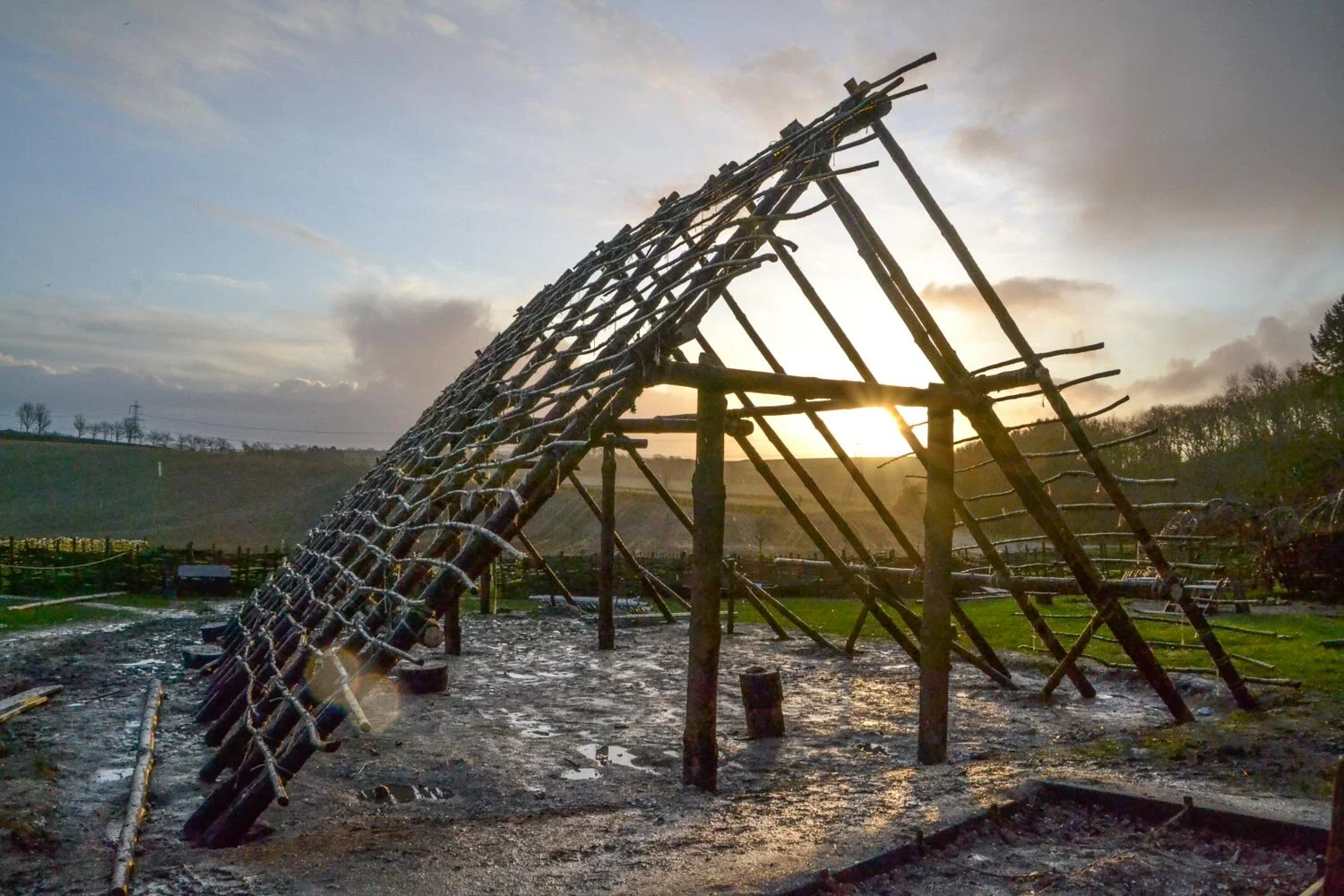
Despite Mother Nature’s best attempts to thwart us, the construction project has moved on apace, with the structure looking a lot more like a building now.
We’ve installed the main purlins and the ridge poles which has given us a real sense of the shape of the house. In line with all things Neolithic, we’ve kept it low tech. That means installing these poles without the use of mechanical crane. By jacking it up on a simple scaffold frame and lots of hauling on ropes, we levered our ridge poles into place. Everyone including our office staff were eager to lend a hand. Muscles bulged, eyeballs popped and that was just the bystanders.

With the ridge on, we can see a quite distinct curve along the roof line. In our case, this feature was the inevitable product of using an A-frame design to construct a building which narrows significantly at one end. The pitch of the roof has to remain the same throughout in order to retain the necessary 45 degrees slope for our thatch. Any shallower and the thatch’s ability to shed water is compromised. The only way to avoid this is to curve the ridge so it comes down to meet the apex of each of the principal A-frames as they gradually reduce in size towards the narrow end.
After we had finished congratulating ourselves on how brilliant it all looked, it began to dawn on us that you can see this same technique applied in Viking longhouses in particular, ostensibly for structural strengthening purposes. Perhaps our Neolithic house is evidence that this concept may have been utilised much earlier than previously thought?

Reconstructed Viking house in Ale north of Göteborg in Sweden. Photograph: Sven Rosborn (source)
With the ridge in place, we can finally begin to lay on the rafters. And with rafters come the hazel batons which are tied on horizontally, providing the bed onto which our thatch will sit.
Although we have already tackled some simple carpentry in this project, we are still very reliant on cordage to provide the lashings holding rafters, purlins and batons securely in place. In the Neolithic landscape we’d have been able to source the necessary materials to make cordage by stripping the bark of the Lime tree (Tilia cordata). Soaking or ‘retting’ these stripped fibres in water over a period of weeks, dissolves the pectin and cellular tissues that surround the bast fibre bundles, leaving you with slightly smelly (!) but very useful, flexible fibres. For a range of practical reasons, we have opted mostly for sisal. It’s still a natural, plant fibre but critically it can be obtained in the large quantities required in the middle of winter.
By next week, we should have installed the porch feature, meaning the skeleton of the building will be complete. Then the monumental task of thatching will begin in earnest. This could last 6 weeks, depending on what the weather throws at us. I wonder if we will last that long?


Neolithic House Project Week 2
An update from Butser Archaeologist Claire Walton on our Neolithic build of the Horton House
An update on the Stone Age project from our Site Archaeologist Claire Walton…
The site’s a swamp, there’s about 4 hours of working daylight and the rain just keeps on coming….. There’s nothing like tackling a building project in the middle of winter, is there?
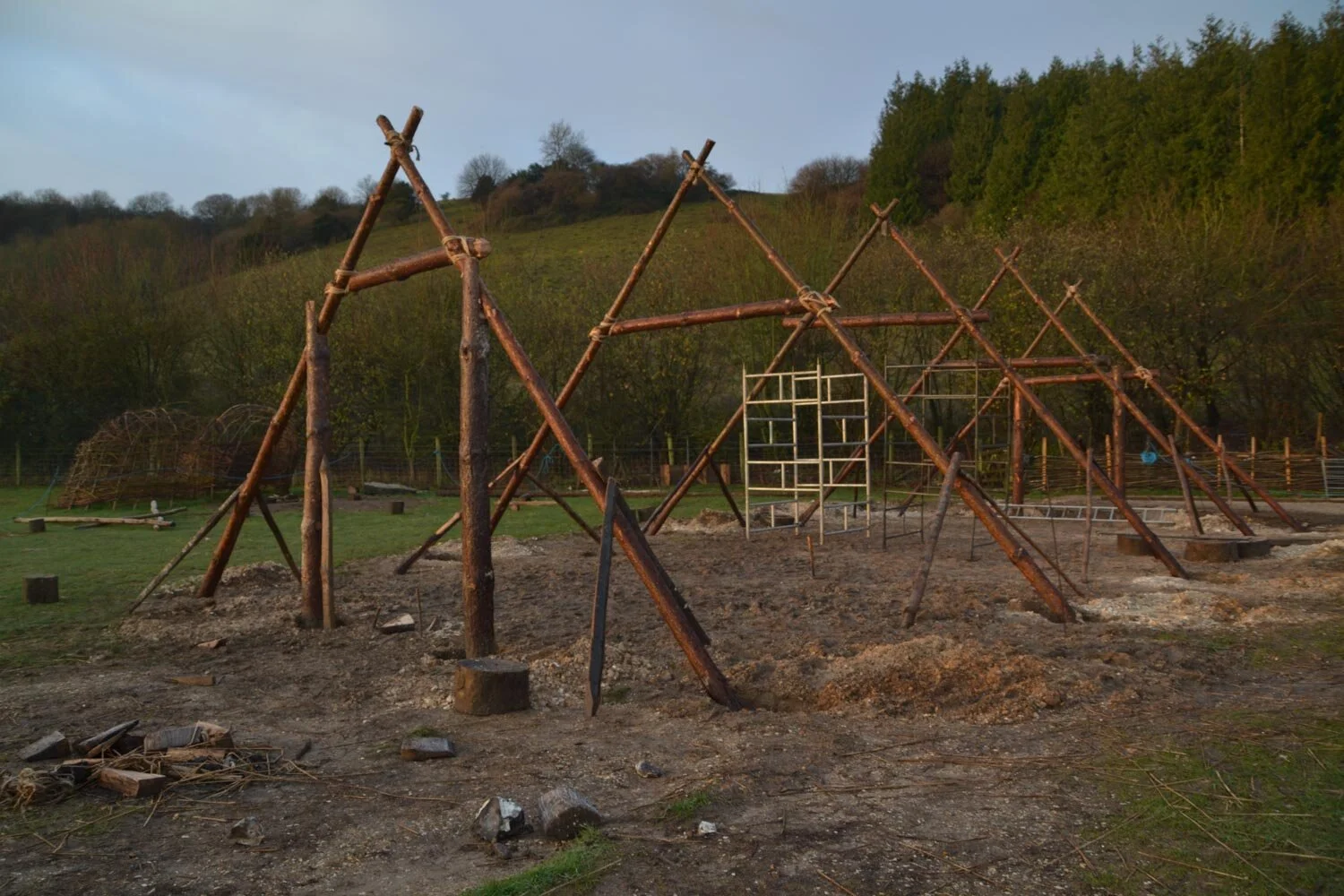
In spite of all of the above, the end of week 2 has seen us complete the main structural elements of the build, with all of the 5 A frames up and secured in the ground. Dare I say it, but we are ahead of schedule.

We have worked in close collaboration with Wessex Archaeology throughout, with the brief of fulfilling two important aims. One is that we must be faithful to the original excavated footprint of the building. The second is that we should use only the tools and knowledge available to Neolithic people!
Until recently, there was very little compelling artefactual evidence for carpentry in the Neolithic. However, thanks to the recent discovery of four waterlogged wells in Eastern Germany, we know more about what can be achieved using only stone or bone tools.
Excavations of these wells have revealed tusked mortice and tenon joints holding the oak frame of the wells together. Using dendrochronology, these timbers have been dated to between 5099 and 5206BC!
Fortunately the start of our build has not required such complex carpentry. The construction is formed from timbers in the round but we decided to use lap joints as this creates a nice flat surface where timbers meet each other, producing a more robust building (we hope!) We have conducted tests to demonstrate that all the joints and features could have been created using a Neolithic tool kit.
Using a flint axe to create these joints was relatively straightforward and surprisingly quick. We used a wide range of flints of different sizes and shapes, with the mediocre quality of some of the flint being a great opportunity for the workmen (and woman) to blame their tools! If I’m being honest, it is our skillset that is primitive, rather than the tools themselves!

For additional strengthening, we have pegged these joints and were able to demonstrate quite convincingly that drilling holes through timber can be achieved in the absence of an electric drill or augur. In fact, we used nothing more complex than a bone chisel appropriated as a sort of bradawl. It took around 1 hour of scraping, wiggling and scooping to punch right through a 4-5 inch diameter pole of green scot’s pine. Even when the bone broke, it continued to work very effectively. Knepp Castle Estate very kindly donated bones from some of their cattle and pigs so we can conduct further studies using ‘slow-grown’ organically produced bones as the bone structure is more dense and less likely to break that those of more intensively reared livestock.
An oak dowel was then wedged and bashed through the hole to peg two timbers together working very effectively, and taking far less time than we had imagined. Beautiful!
It has not only been a productive week on site, but off site too. On Tuesday, I was joined by Gareth Chaffey of Wessex Archaeology at the TAG conference in London, hosted by UCL and the Institute of Archaeology. We presented a joint workshop to talk about our collaboration with a wider audience. To keep idle hands busy, we taught all the participants how to make a piece of cordage the results of which were collected at the end of the session and will be used when we start to thatch the house.
Making cordage turns out to be quite meditative and calming. It’s also rather hard to put down – our participants were still making more whilst listening to the next speaker!
Neolithic House Project Week 1
An update on our Stone Age house project as members of Wessex Archaeology joined us to help with the construction.
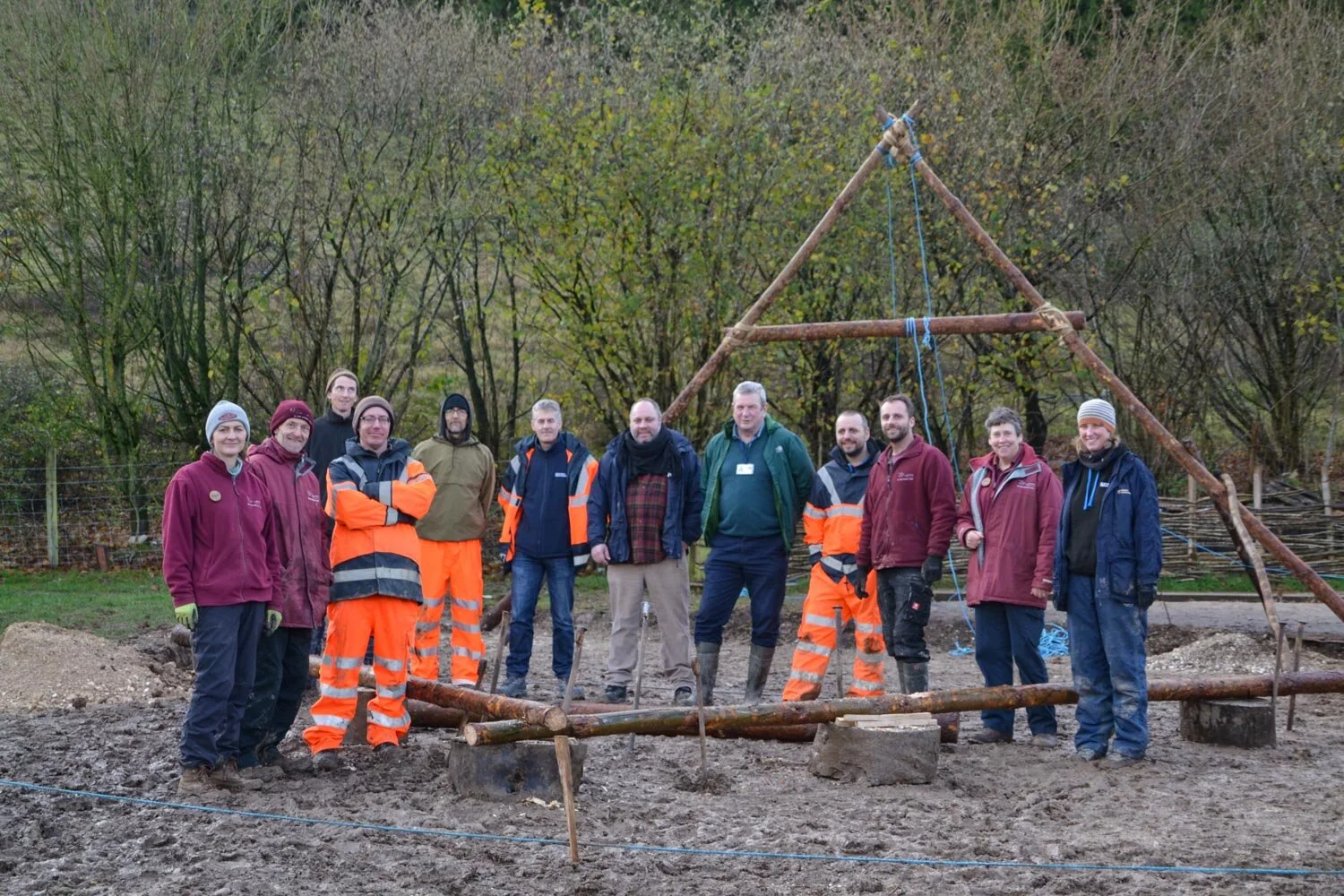
As we launch into our Stone Age project it's been a pleasure welcoming some of the team from Wessex Archaeology to join us in our Stone Age build this week.
This is a really special partnership as Wessex were the team who originally excavated the house, and know the archaeology intimately. We've been working closely together in the planning, design and, now construction, of the new house.
Our new Stone Age construction is based on an archaeological footprint from the Kingsmead Quarry at Horton, Berkshire which boasts evidence of some of the finest Early Neolithic Buildings in the country. Wessex Archaeology have been excavating at the Kingsmead site for CEMEX UK since 2003, exposing over 12,000 years of human history in the process, but it is the wealth of Neolithic archaeology that made it exceptional.
This first drew our attention when looking for evidence to base our build on. Over two dozen Early Neolithic houses c. 3800-3600BC are now known in Britain, ranging in length from a modest 6m to over 20m, but they are still rare. Usually only recognisable by post holes in the ground, they are hard to spot and it is often only at excavations where large areas are stripped, such as at Horton, that they can be found. Exceptionally at Horton at least 4 Neolithic Houses have been found!
Wessex Archaeology had not only thoroughly excavated and documented these findings but also created some brilliant computer generated reconstructions showing possible interpretations of the structures. Although our house will differ slightly in it’s interpretation and construction, having these initial designs was a great springboard to discussions and debates about form and design and how the archaeology could be interpreted.

Wessex Archaeology's interpretation of one of the Horton Houses by Karen Nichols
Our archaeologist Claire Walton will be sharing more of the technical aspects of our design and construction in our next blog, along with an update on our progress and initial observations on the process. We’ve been really pleased with the rate of construction and effectiveness of the Stone Age tools and construction techniques so far but Claire will reveal more next time!
For now we will leave you with the below photos and timelapse from our first week of construction. It was a lovely moment to have the very same team members, who have spent many a day excavating this Neolithic building, helping us to give it a new life here at Butser. For many of them, although being specialists in in analysing and understanding artefacts such as flint, this was their first time actually using a flint tool. It was a brilliant opportunity for them to gain first hand experience of using these ancient materials, plus hacking away at the timber with flint axes and bone chisels was just what some of us needed and very therapeutic on some of the darker, colder days this week!
Many thanks to the Wessex team for all their input and support so far!
For more details of the Horton House check out this Current Archaeology article and Wessex Archaeology’s discussion of the Kingsmead Quarry excavations here.


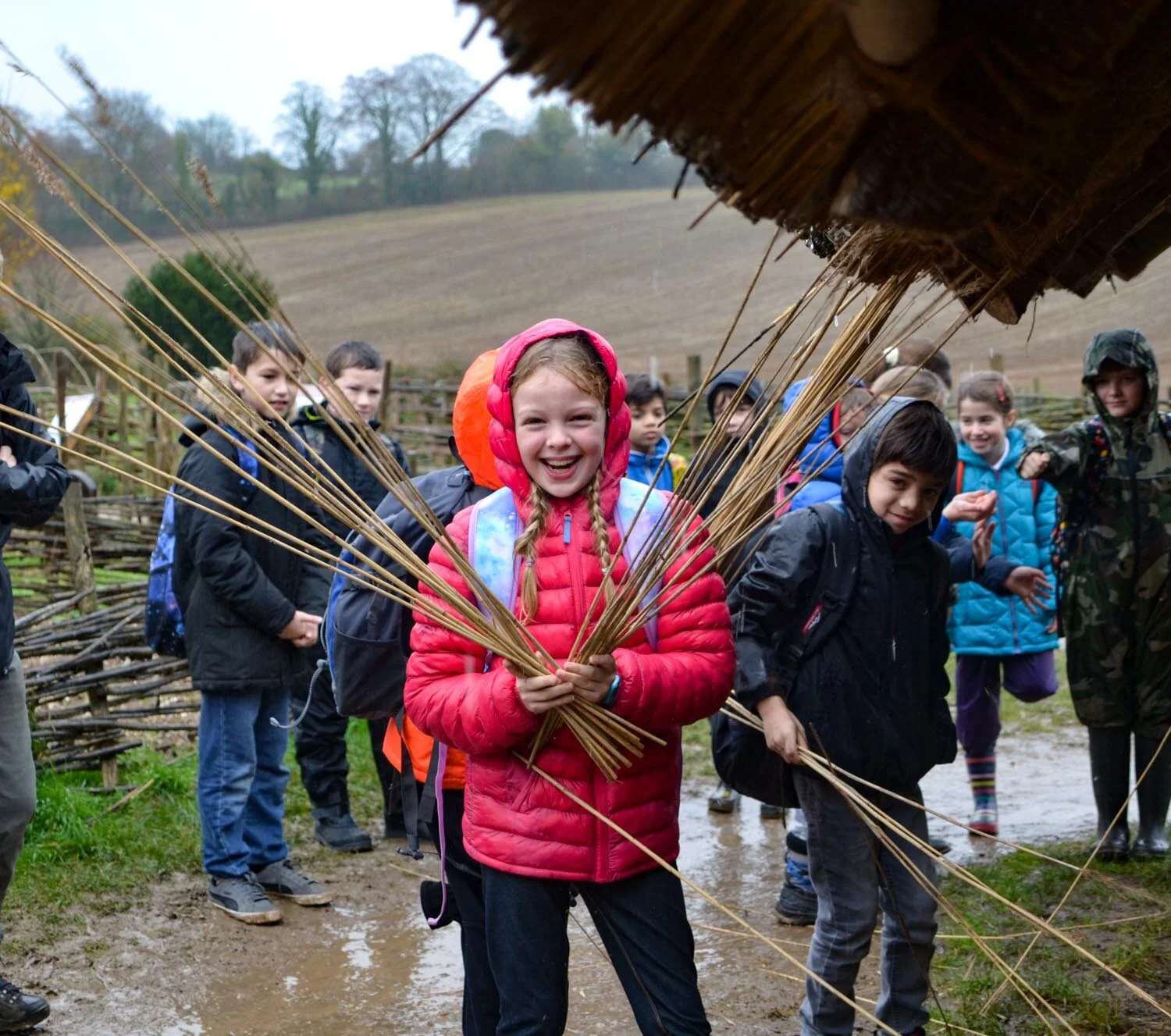
Neolithic project begins!
The redevelopment of our large Stone Age house and Neolithic area begins with a helping hand from local schools and volunteers!
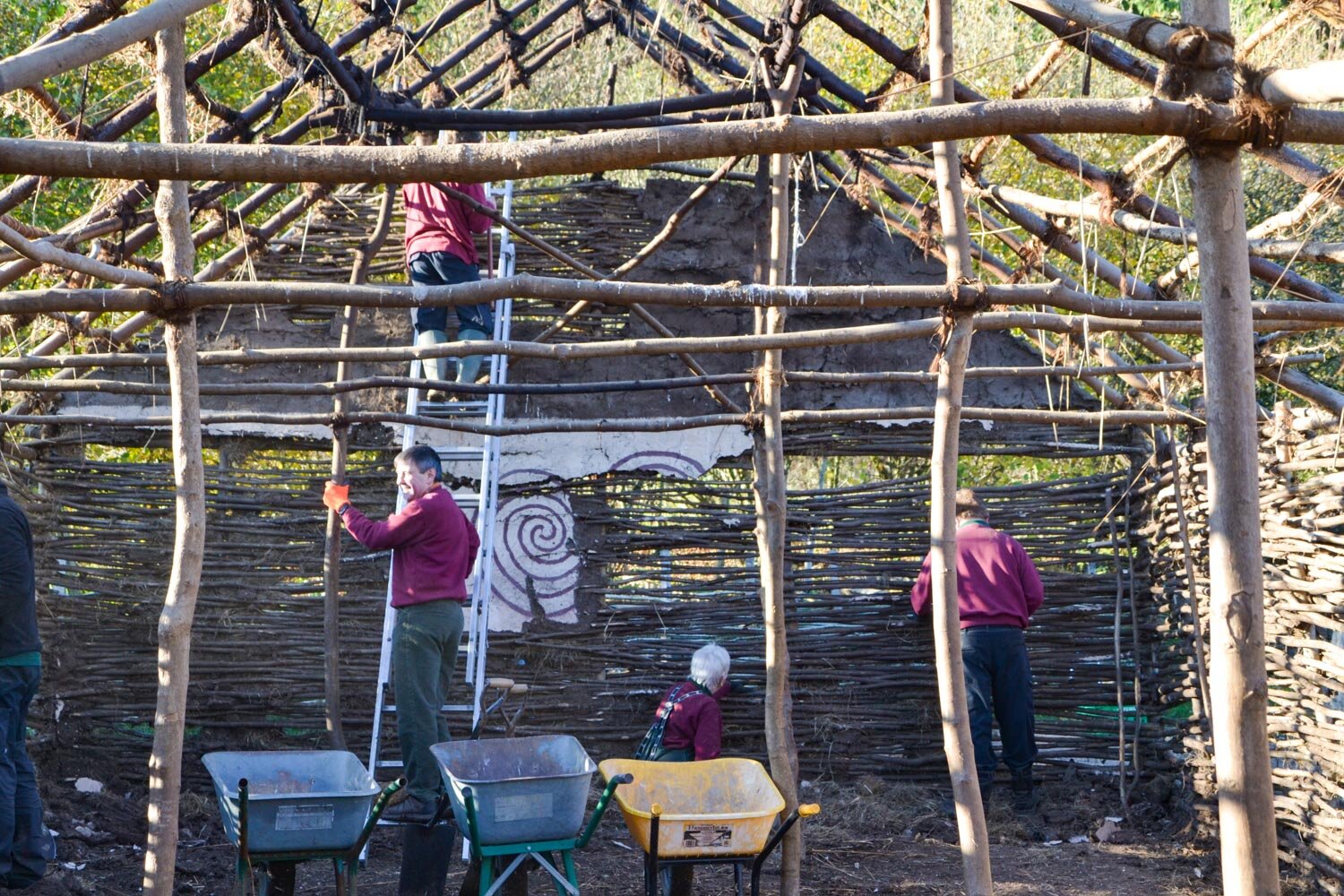
Fittingly for our first blog post on our new website it’s a time of new beginnings at the farm! We have now launched into our next big winter project... the redevelopment of our large Stone Age house and Neolithic area. So far we have welcomed some wonderful local school pupils and volunteers to help take down thatch and dismantle our old house ready for a new exciting design and rebuild commencing next week!
We are thrilled to be working closely with Wessex Archaeology on this project, using new evidence from their excavations of Neolithic houses at Kingsmead Quarry, Berkshire. We'll be testing new theories, construction techniques and design throughout 😀
We’re documenting the process throughout and will be updating our blog and social media with our progress in the coming weeks and months. Thank you to everyone who has helped make it happen so far, from stripping thatch and daub to donating to our crowdfunding campaign earlier this year! (If you’d still like to support the project you can donate here!)
Here are some pictures of local school children and volunteers from the Deadwater Valley Trust lending a hand!




Butser Autumn Update!
Autumnal updates from all the exciting things happening at the farm!
It’s been a little quiet on our blog recently but we’ve certainly been busy on the farm with lots of events, school groups, animals and exciting archaeological projects keeping us all on our toes.
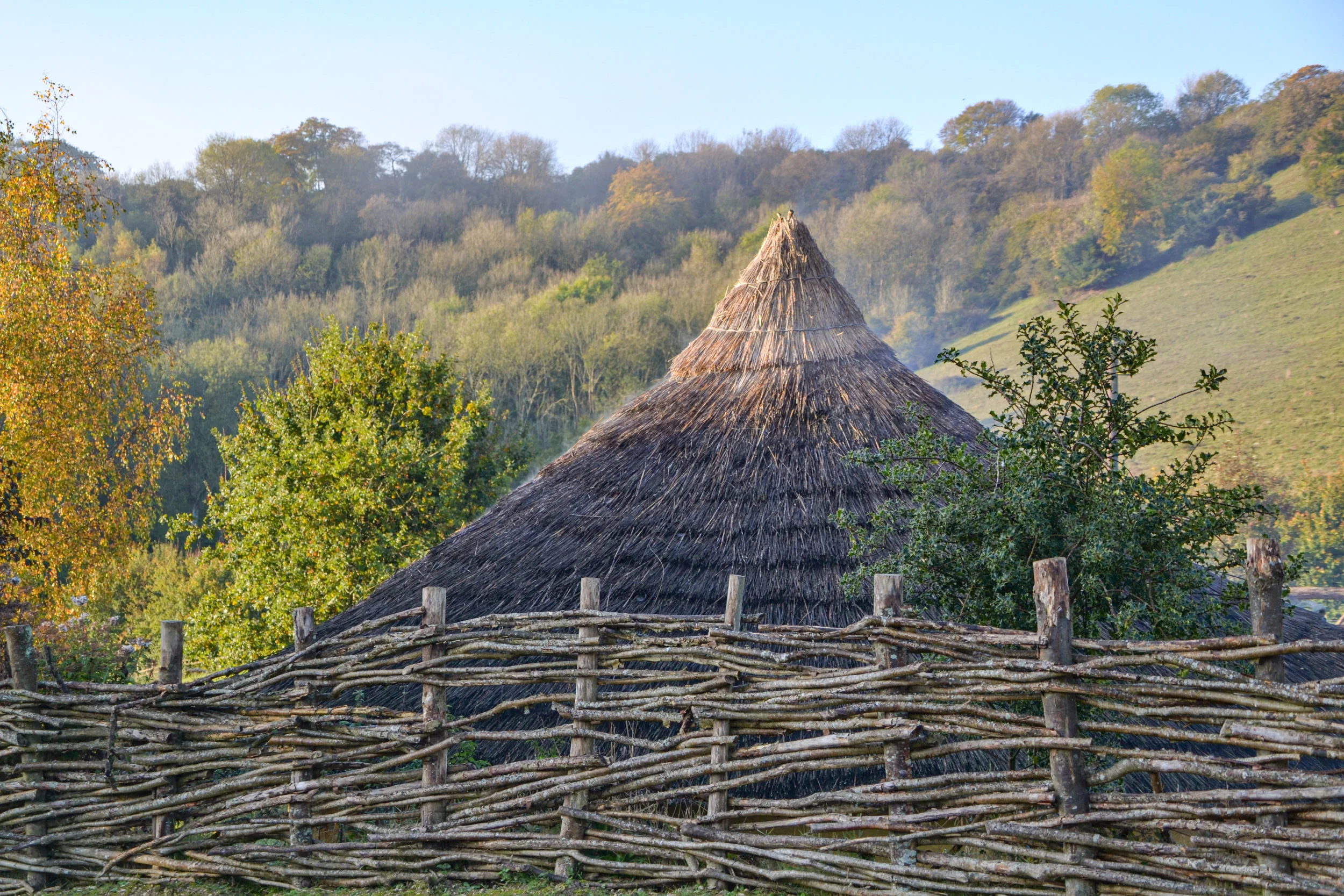
We’re now well into planning for 2020 but wanted to catch you up on some of the things that have been going on this autumn and share a few photos of the farm full of beautiful autumnal colour!
Super Schools – Autumn term is always one of our busiest periods for school visits as new teachers and pupils delve into the ancient past in their history curriculum. We love welcoming school groups to the farm to get hands on with some ancient skills and explore our reconstructed buildings. Over the winter we will be looking to expand our schools offering with possible exclusive overnight stays in a roundhouse … watch this space!
Exciting events – As the nights draw in our Great Roundhouse is the perfect venue for an evening of storytelling and entertainment gathered around the fire. At the end of October we celebrated the Celtic Festival of Samhain with music and storytelling from Jonathon Huet of Walk With Trees, earlier in the month we welcomed storyteller Jason Buck and archaeologist and broadcaster Mary Ann-Ochota for Viking Magic Hidden Gold, an evening of storytelling inspired by real archaeological artefacts and the secrets they reveal. September saw the Vikings attacking to claim our Saxon Hall for themselves, luckily the brave Saxons of Herigeas Hundas successfully defended the hall but we have a feeling they may be back for more next year!
There are only a few tickets remaining for our upcoming winter storytelling events; Tales of Winter Magic and the Holly King – visit our events page for more details.
Star turns – This year Butser has been on the big screen both in Horrible Histories the Movie: Rotten Romans and in Britannia, the Sky Series that is currently showing on TV. We have also welcomed various documentary film crews and student productions in recent months and look forward to seeing them broadcast in the future. We love seeing our buildings and animals taking on a starring role in a range of documentaries and dramas- more exciting productions are in the pipeline so stay tuned!
Building projects – All the roof trusses on our Saxon house are now complete with the last two trusses just waiting to be erected. Treewright Darren and the team are busy making oak plank boarding for the walls of the building and it is really starting to take shape. Meanwhile we have been rethatching another of our smaller Roundhouses, repainting another Roundhouse and are about to commence the renovation and redesign of our large Stone Age house. The Daub has been stripped from the Llandygai Longhouse and next week we take delivery of some beautiful Scots Pine for the renewed framework.
New collaborations – Our Stone Age House project is part of an exciting collaboration with Wessex Archaeology, the largest commercial archaeological unit in the country, they will be both a part of the planning and building process and we are thrilled to be working with such a lovely bunch! Talking of lovely people this year we have joined into an ongoing research partnership with UCL Institute of Archaeology. We will be working closely together on a range of research projects and also hosting their annual experimental archaeology course. This took place at Butser for the first time at the end of September when over 100 academics and students descended on the farm for five days of experimental archaeology. It was a real pleasure having them on site and we are very excited to see what the future of this partnership brings.
Amazing animals – This year has been a great year for wildlife on the farm. Joining our sheep, goats and pigs we’ve seen owls, bats, red kites, kestrels, foxes, deer and even seem to now have a resident hare! In recent weeks we have been hearing the stags rutting in the surrounding woodland which has been a wonderfully evocative autumnal sound.
There is lots we’ve missed but we hope that gives an overview of just some of the recent excitement at the farm! We’ll end with some beautiful pictures taken this morning of the farm in all its autumnal glory!


A fantastic first 'Primtech' at Butser Ancient Farm
We welcomed UCL’s Primary Technologies Course to Butser for the first time in our new partnership.
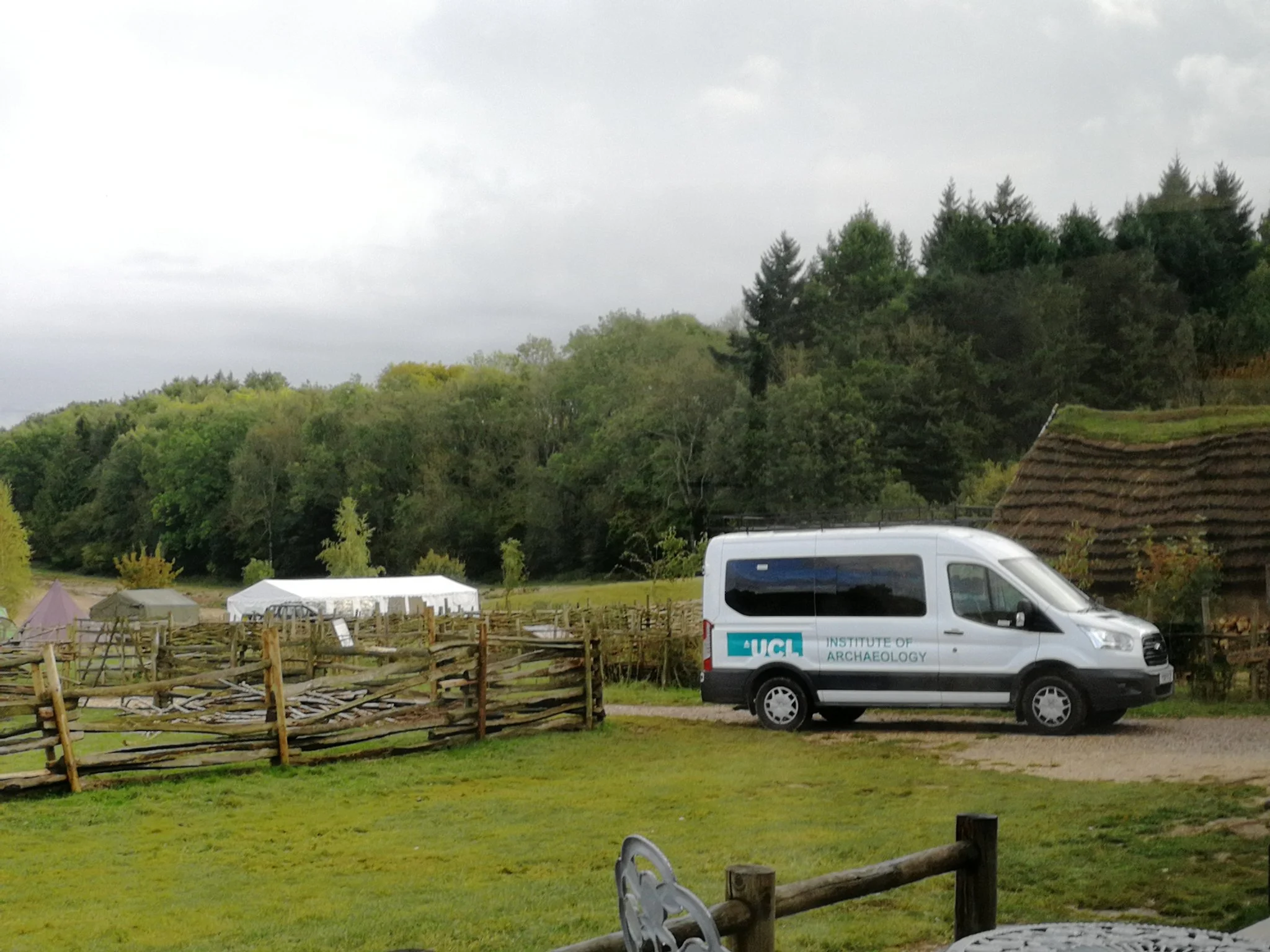
Last week we were joined by a lovely group of staff and students from University College London Institute of Archaeology for their inaugural ‘Primtech’ experimental archaeology course, now located at Butser Ancient Farm.
Months in the planning the students got the chance to experience a wonderful variety of practical workshops from metallurgy, flint-knapping, cheese making, pottery, woodwork, painting, bread making and more!
It was wonderful to have the 100 staff and students here at Butser and added a wonderful added dimension to the site. They camped in one of our paddocks and enjoyed the site after hours with stargazing and stories around our Roundhouse fires.
The ‘Primary Technologies’ course has been run every year by the UCL Institute of Archaeology since 1982. It introduces first year undergraduate students, at the very beginning of their time at University, to the basic elements of technology, essential crafts and skills. These include making stone tools, extracting copper from ore, making and firing clay pots, processing crops to make bread, and learning about constructing ancient buildings. As well as these core skills the students learn how important experiments are in understanding the past, how to build useful experimental approaches to archaeology and how to use the results to interpret data in more nuanced and sophisticated ways. We’re delighted it has now relocated to Butser and look forward to many exciting years of collaboration ahead!

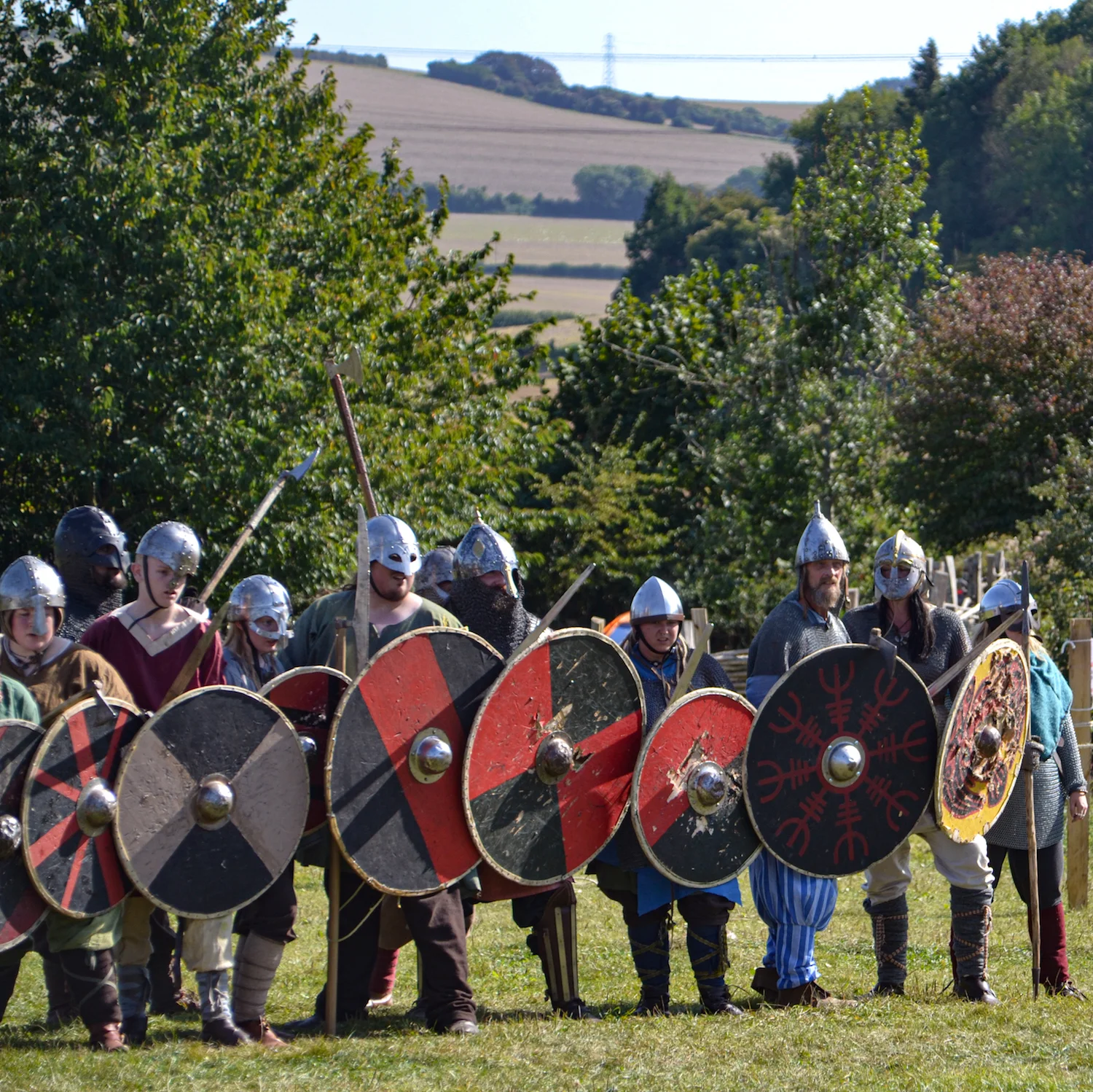
Vikings Attack Butser Ancient Farm!
Last weekend Butser was under siege from the marauding Vikings of Wuffa! Find out more…!
During the Dark Ages in Britain, a terrifying new enemy launched blood-thirsty attacks on these shores, leaving a trail of panic and fear in their wake.
The Viking raids saw invaders from the North pillaging all over the UK, including in Hampshire.
But they were not the first Pagan invaders to wreak havoc on these islands. After the Roman’s deserted Britain many decades before, war bands of Angles, Saxons, Jutes and Franks made their way to these rich lands to make their new homes, forcing back the native Britons as they went.
These invaders became the Anglo-Saxons, and the new enemy was familiar to them - they shared the same ancestors.
Last weekend Butser was under siege from the Viking horde of Wuffa from Suffolk who had heard about the prosperous Hampshire farm of Butser and its surrounding lands and planned a raid to take it for themselves, by whatever means necessary!
But Butser had a fearsome war band of Anglo-Saxons, the brutal Herigeas Hundas who call these lands their home and were prepared to fight to the death to keep what they hold sacred!
Over two days in September the Saxons and Vikings did battle in front of a wonderful audience cheering from the side lines. Alongside the fighting displays were living history demonstrations, crafts, music and storytelling and we are pleased to report that the Saxons were successful in defending their homelands!
We have a feeling, now the Vikings have had a taste for Butser, they may be back for more! watch this space!
Many thanks to the wonderful Saxon and Viking re-enactors for putting on such a wonderful show!




Blog archive
- June 2026 1
- May 2026 2
- April 2026 2
- March 2026 4
- February 2026 5
- January 2026 6
- December 2025 2
- November 2025 2
- September 2025 1
- April 2025 2
- February 2025 1
- January 2025 1
- November 2024 2
- August 2024 1
- July 2024 2
- May 2024 1
- November 2023 1
- October 2023 1
- September 2023 1
- August 2023 1
- July 2023 1
- June 2023 2
- May 2023 2
- March 2023 1
- February 2023 1
- December 2022 1
- October 2022 1
- August 2022 2
- April 2022 1
- March 2022 2
- February 2022 1
- January 2022 1
- December 2021 2
- November 2021 3
- October 2021 2
- September 2021 5
- August 2021 2
- July 2021 3
- June 2021 3
- May 2021 2
- April 2021 4
- March 2021 1
- November 2020 1
- October 2020 2
- August 2020 1
- March 2020 4
- February 2020 4
- January 2020 3
- December 2019 3
- November 2019 1
- October 2019 1
- September 2019 1
- August 2019 1
- July 2019 6
- June 2019 3
- April 2019 2
- March 2019 3
- February 2019 2
- January 2019 1
- November 2018 1
- October 2018 2
- September 2018 3
- August 2018 4
- July 2018 2
- June 2018 2
- May 2018 2
- March 2018 6
- February 2018 1
- October 2017 1
- September 2017 5
- August 2017 4
- July 2017 3
- June 2017 1
- May 2017 1
- April 2017 3
- March 2017 2
- February 2017 3
- January 2017 1
- December 2016 2
- November 2016 1
- September 2016 1
- August 2016 2
- July 2016 2
- June 2016 3
- May 2016 2
- April 2016 1
- March 2016 2
- February 2016 1
- January 2016 3
- December 2015 2
- November 2015 1
- October 2015 1
- September 2015 2
- August 2015 1
- July 2015 2
- June 2015 2
- May 2015 3