
Experimenting with Tablet Weaving
This week’s guest post is by archaeology undergraduate Lucy French, who was awarded the Friends of Butser Ancient Farm bursary in 2025.
I’ve always been interested in archaeological textiles, especially since I became a historical re-enactor and started studying archaeological science at the University of Reading. During the COVID-19 pandemic I took up an ancient textile craft called tablet weaving that was popular in early-late medieval Northern Europe. I absolutely fell in love with the craft, and it became a big hobby of mine, eventually leading to me learning how to spin my own yarn and dye it with natural materials as well.
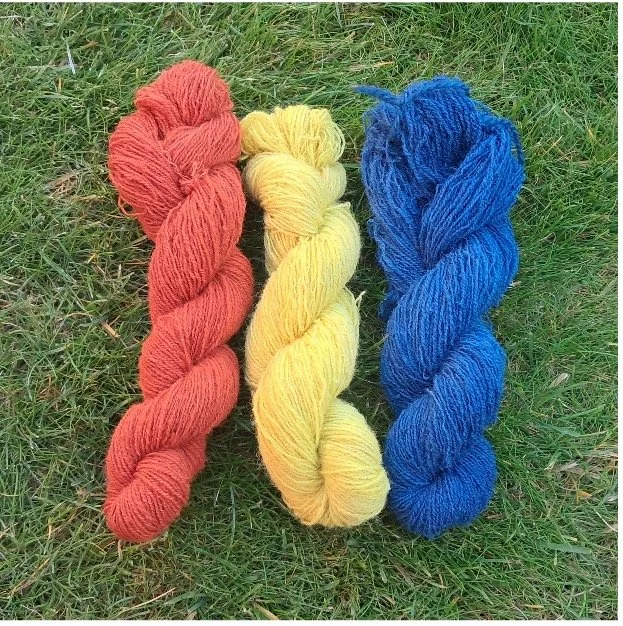
Figure 1: The yarn dyed with madder, weld and indigo.
So for my undergraduate dissertation I decided to bring my love of crafting into my degree and recreate four examples of early medieval tablet weaving. I chose two bands from Russia, one from Norway and one from Iceland with dates ranging from 500 to 1200 CE. What I really wanted to explore with this project was the time that went into producing textiles like these. They would have been used as starting borders for weaving fabric, or made by themselves to use as straps, belts or trim on clothing. My first aim for the project was to find out how long it takes to make tablet woven ribbons from start to finish – I started the experiment with a bag of raw wool that I took right from the shearer. My second aim was to compare different weaving techniques to see which elements of the patterns affected how long they took to weave. This showed me which types of tablet woven bands would have taken the most time to produce, and this gives an idea of how much they might have been worth to the people that made them. I applied for the Friends of Butser Ancient Farm bursary in order to be able to buy the materials I needed to reproduce the textiles accurately.
I spent the summer turning my bag of raw wool into four metres of finished tablet weaving, a process that took 38 active hours - not including the time spent waiting for my woad vat to ferment! My first task was to clean the wool and remove all of the dirt and grease that had built up in it. Then I used wool combs to prepare the fibre for spinning, removing any short fibres and getting out the last of the dirt. For the spinning I used a modern spindle, and I ended up making 150g of yarn, which was much more than I ended up using in the experiment. This part was the most time-consuming step of the project, as it took over two-thirds of the total time. I made six small skeins of yarn and dyed two yellow, two red and two blue. For the yellow yarn I decided to use weld (Reseda luteola) and for the red I used madder (Rubia tinctoria). For the blue yarn I originally intended to use woad (Isatis tinctoria), however it’s a notoriously finicky dye to work with and I wasn’t able to get a blue colour out of my dye vat at all even after leaving it to ferment for a week! So instead I decided to use pre-processed indigo powder instead, which gave me the same rich blue but only required an hour and some chemicals to work. Dyeing with indigo is a fascinating process as when you first take the yarn out of the dye bath it looks green but as the dye particles hit the air they oxidise and it turns blue in front of your eyes!
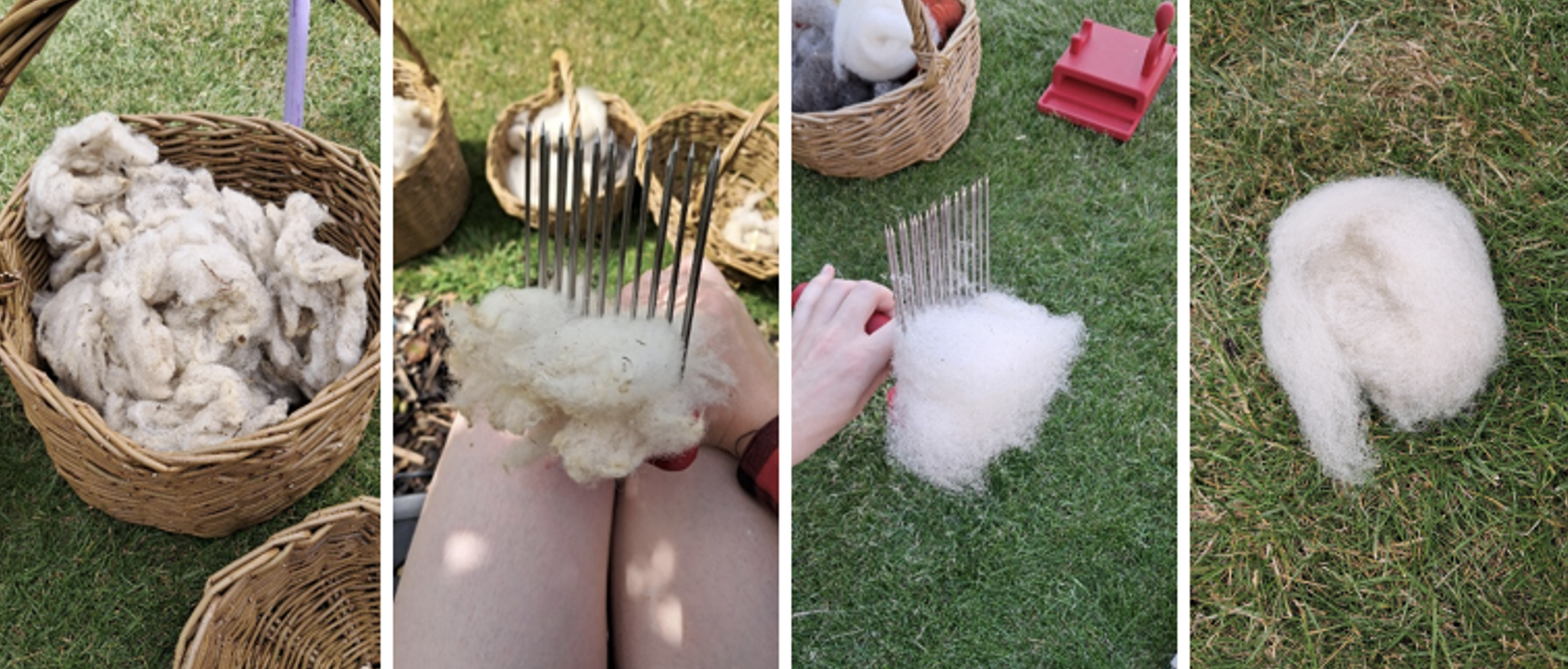
Figure 2: The process of combing the wool to prepare it for spinning.
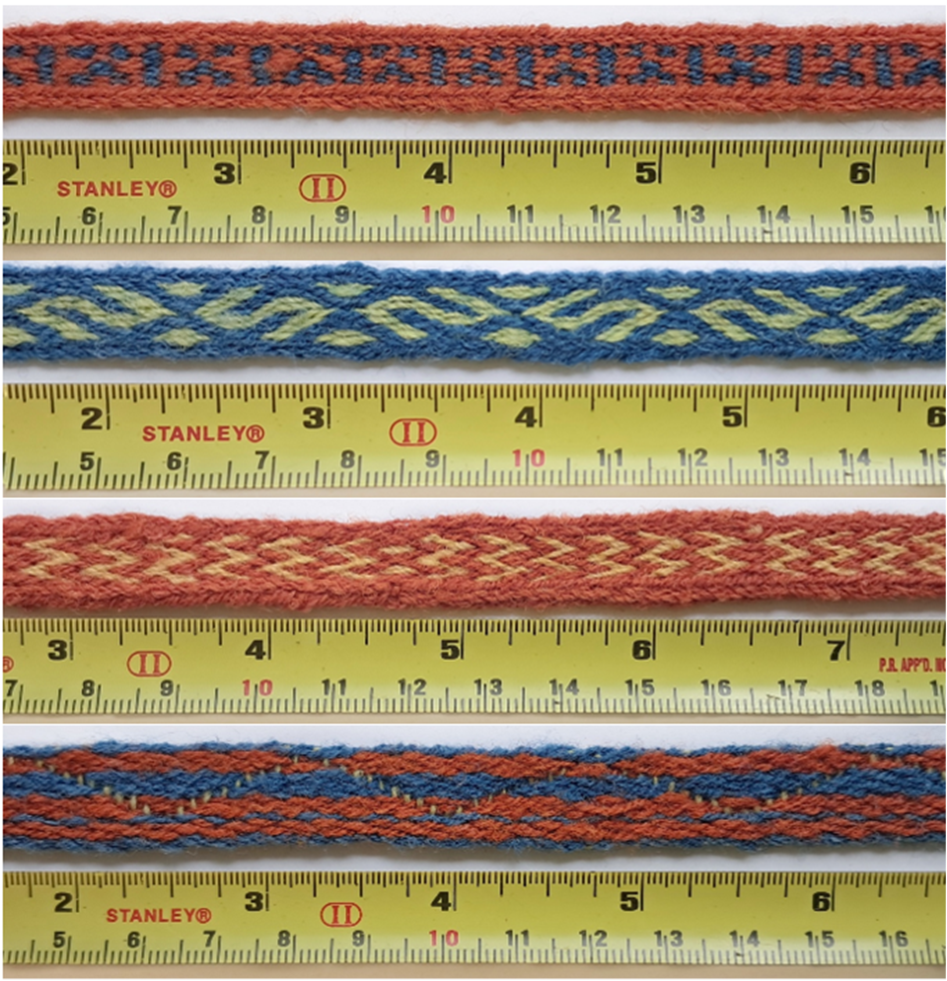
Figure 3: The reproduced bands.
Once the yarn was made I could get to weaving, and I made one metre of each of the bands I’d chosen to reproduce. This was actually the fastest part of the process, as now the yarn was made it only took eight and a half hours to weave all four of the bands. I found quite a big difference between the weaving times, the fastest took just an hour and a half to weave in total whereas the slowest took four and a half hours. I was able to compare the four different techniques and determine which of the factors, such as width and number of threads required, increase the time taken to make the band.
This experiment gives a really interesting insight into how much time went into making textiles like these in the past, and demonstrates how skilled early medieval weavers were. The results have shown that both the dyes used and the techniques used to weave a textile significantly impacts the time it takes to make, and this may have affected how much the cloth was worth to the people that made and used it. I enjoyed every minute of this project and I would love to do this again with some other tablet woven bands from other places and periods!
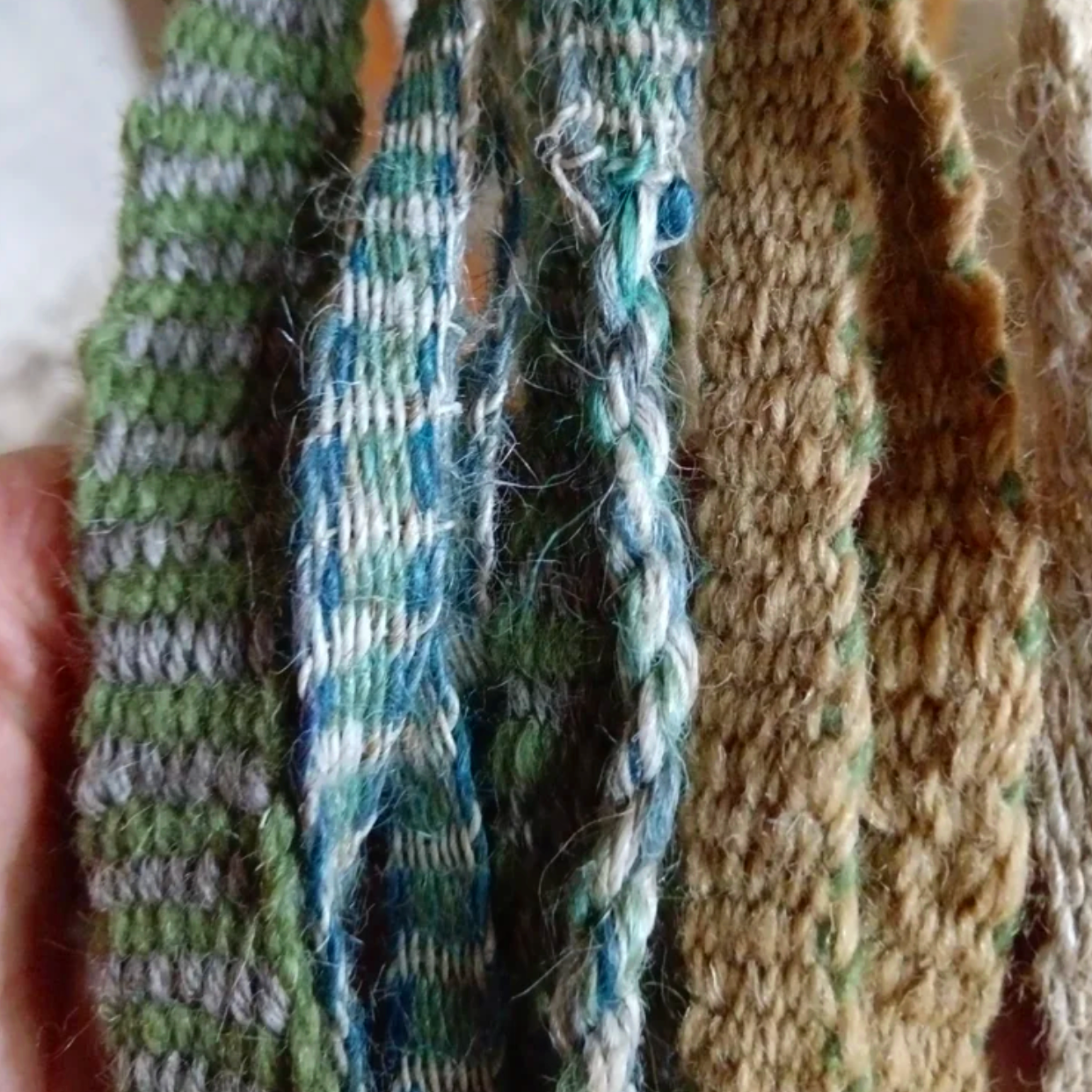
Interested in ancient weaving techniques? Come and weave in an Iron Age roundhouse, using techniques that stretch back thousands of years.
Belt Weaving - Backstrap Loom Workshop
Saturday 1 August 2026
10am - 2pm | £40 per person
Join heritage educator Kat Wootton to learn about setting up a simple backstrap loom using a rigid heddle.
Learn about warp threads and weft threads, what the shuttle does, and a little textiles history, while making a beautiful belt from natural fibres.
Suitable for beginners! Age 16+ (or 14+ if accompanied by an adult).
Ticket includes full entry to Butser Ancient Farm on the day.