Reynard Meets the Roost
The Experimentalists are an exciting volunteer team here at Butser, working on experimental projects to bring our ancient houses to life. They’re currently working on several projects across the farm. In this update, Margaret Taylor (Experimentalist and volunteer librarian) shares an update from their newest experiment - an Iron Age chicken coop! You can read more about this project in The Chicken House Eggsperiment.
Fox alert!
It is a fine, calm spring morning in the Iron Age enclosure at Butser Ancient Farm. Several chickens are happily pecking amongst the grass, when without warning a fox quietly enters the chicken pen… One sharp eyed cockerel, however, has spotted the fox and is determined to save the flock.
The Experimentalists have recently created our own chicken house and inhabitants. Real chickens would of course be ideal - but not practical! The answer? Willow chickens! Now 13 chickens and two chicks have moved in.
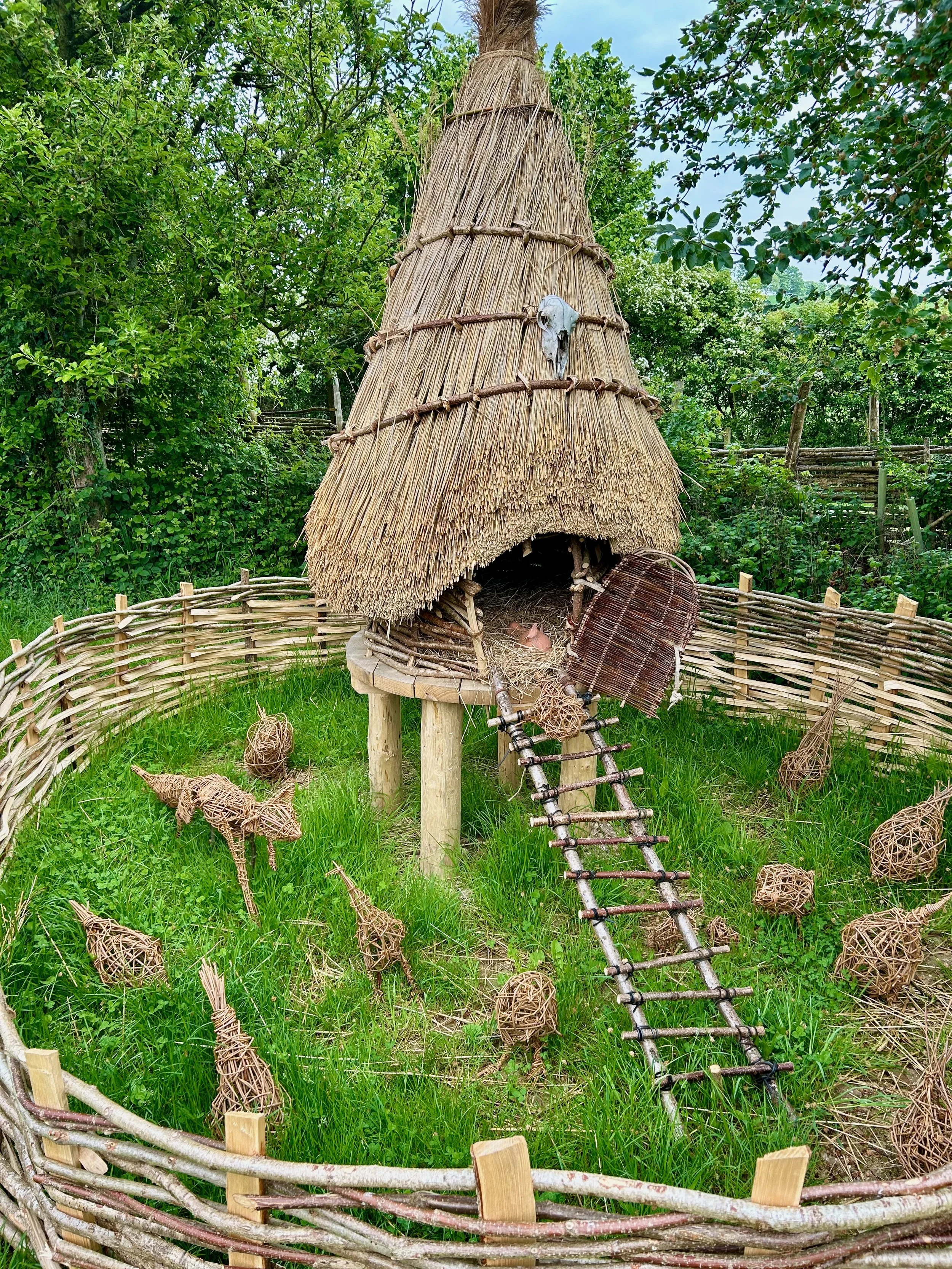
The fox and chickens in together!
This drew my attention towards natural construction materials: hazel, which we used for the lower part of the chicken house and the enclosure fence, and willow, which was used for the upper portion of the chicken house.
Willow is a versatile material that has been used for millenia, all the way from the Neolithic, Bronze Age and into ‘our’ era, the Iron Age. Willow will have been used for a multitude of items, including baskets and fish traps. However, the evidence is often lost as items created from willow rarely survive, except in areas like peat bogs and rivers where plant material does not fully decompose.
Fences have been a necessity for millennia, too. This led me to wonder about our early ancestors and their use of fences. Francis Pryor’s fascinating book Britain BC discusses how in the Mesolithic, hunter gatherers would have followed the herds in order to trap/kill deer and other animals. Then 5,000 years ago, there was a gradual shift from ‘loose herding’ towards ‘close herding’. Close herding can be dated to the later Neolithic and Early Bronze Age. Both would have been much easier with the use of herding dogs. The native cattle were aurochs, and too fierce to be domesticated. Pryor considers that the ancestors of our modern cattle must have been imported and came from a different bloodline. The final move to close herding would have been hastened by the introduction of new species, such as sheep and goats.
Pryor describes how: ‘Unlike modern animals, which have to be shorn, primitive sheep don’t retain their fleeces, but naturally shed them in the early summer. This means that in June they have to be caught up in order to ‘roo’ or pluck the old fleece; alternatively, they can be penned in a small paddock and the wool collected from bushes, hurdles and fences which the sheep rub against.’
Pryor then adds that as sheep can be milked and their milk makes excellent yoghurt and cheese, this provides an additional incentive towards closer herding.
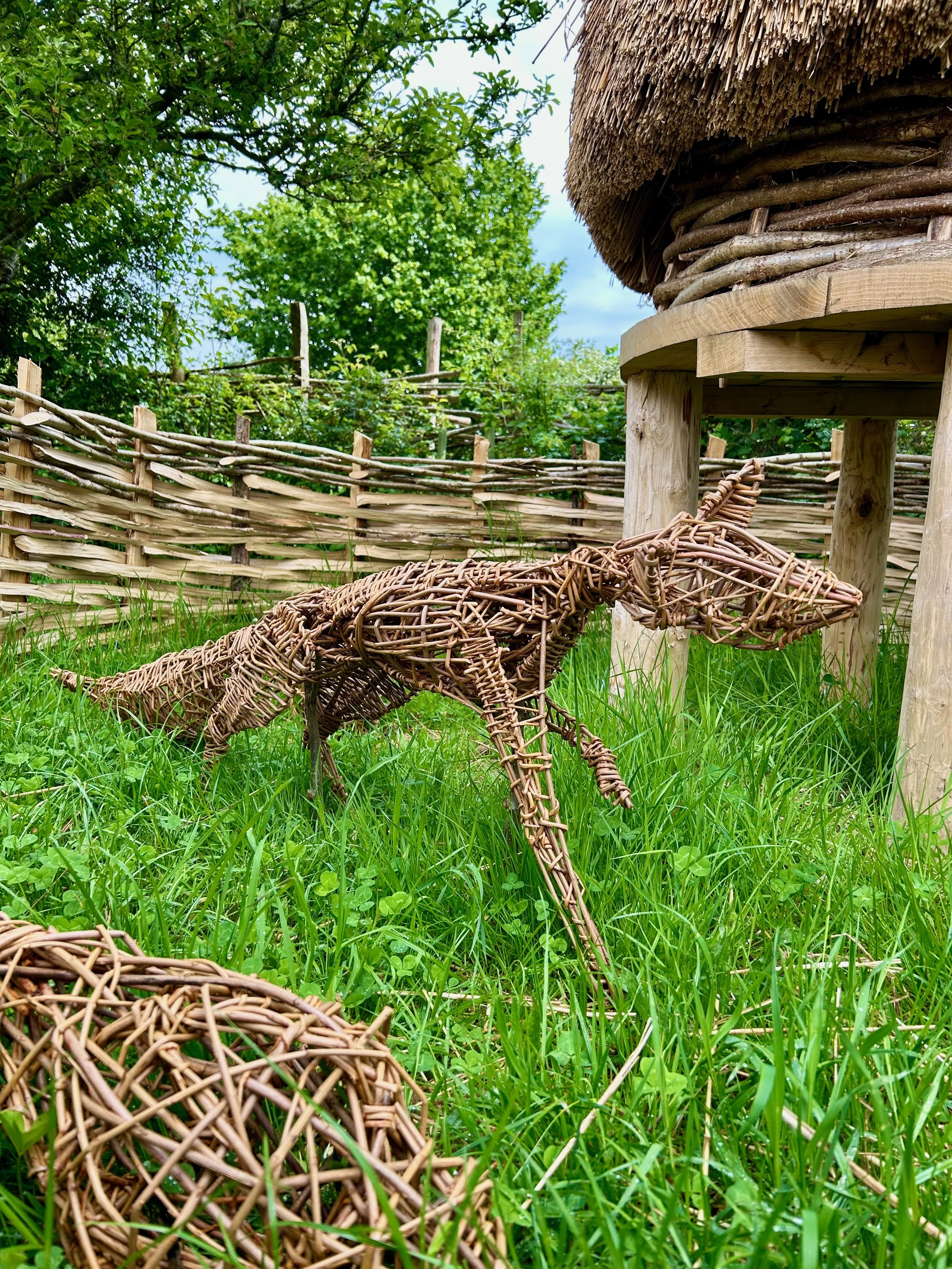
The fox sculpture up close
Now to return our attention to those chickens. Our ancestors, sitting around a fire - or more preferably out in the sunshine with a pile of withies - would have enjoyed discussing what they could create. They didn’t need fake chickens, but just maybe, alongside making life’s necessities, they enjoyed being creative making animals, figures and even toys for the children with their willow!
But there were also, of course, predators - one being the fox, with archaeological evidence for the red fox (Vulpes vulpes) in Britain from Wolstonian Glacial sediments in Warwickshire (wildlifeoneline.me.uk).
Constructing our Chickens
It was challenging - and definitely so for me, as I am not good at picking up new skills quickly. There were 15 of us in our group, under the expert tuition of Maddy. It was reassuring that there were no definite rules and we could make our chickens totally unique. Most members of the group made wonderful chickens, although they have variously described them as a duck/robin/kiwi etc! But they are all looking great, as can be seen in the photographs.
We used willow which had been pre-soaked for several days and then drained. The first task was to create 3 rings, which were then joined together to make a ball. This was the body and then we were invited to choose a spot for the beak and then the tail. The next task was making the legs and feet, and working out how to attach them to the body. This was an interesting exercise…
I felt I was lagging behind, although of course I was re-assured that there was plenty of time, and Maddy is a great teacher. Consequently, around lunchtime, I was definitely relieved when my willow withies began to resemble a possible chicken. I think it is fair to say that I was not the only one who found it a challenge, but we all got there in the end.
The talented Riley made a great chicken, and then took some willow home, and during the next week fashioned a fantastic fox. Others tweaked their chickens later, and now 13 chickens are living happily in their enclosure - pegged down to avoid them ‘flying off’.
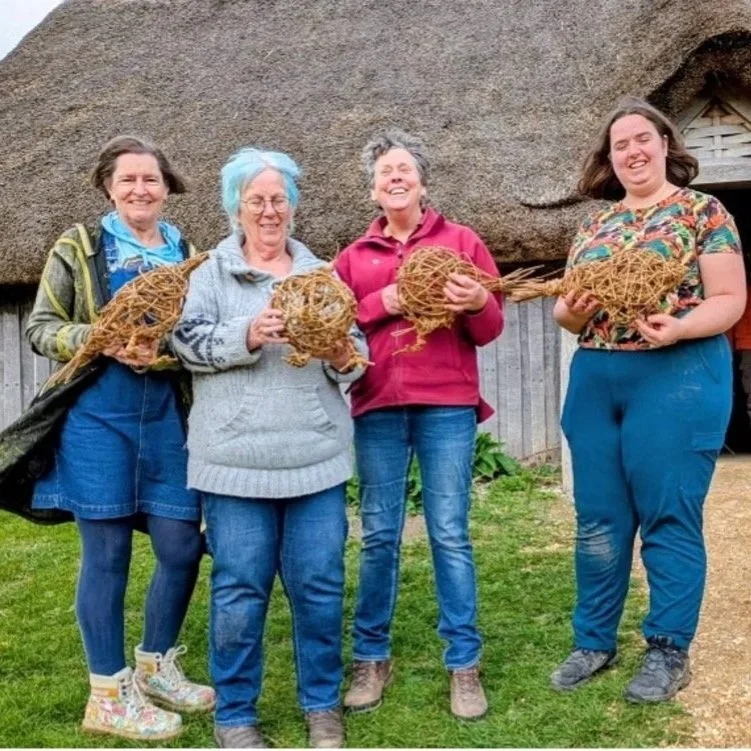
Some members of the original group with their chickens
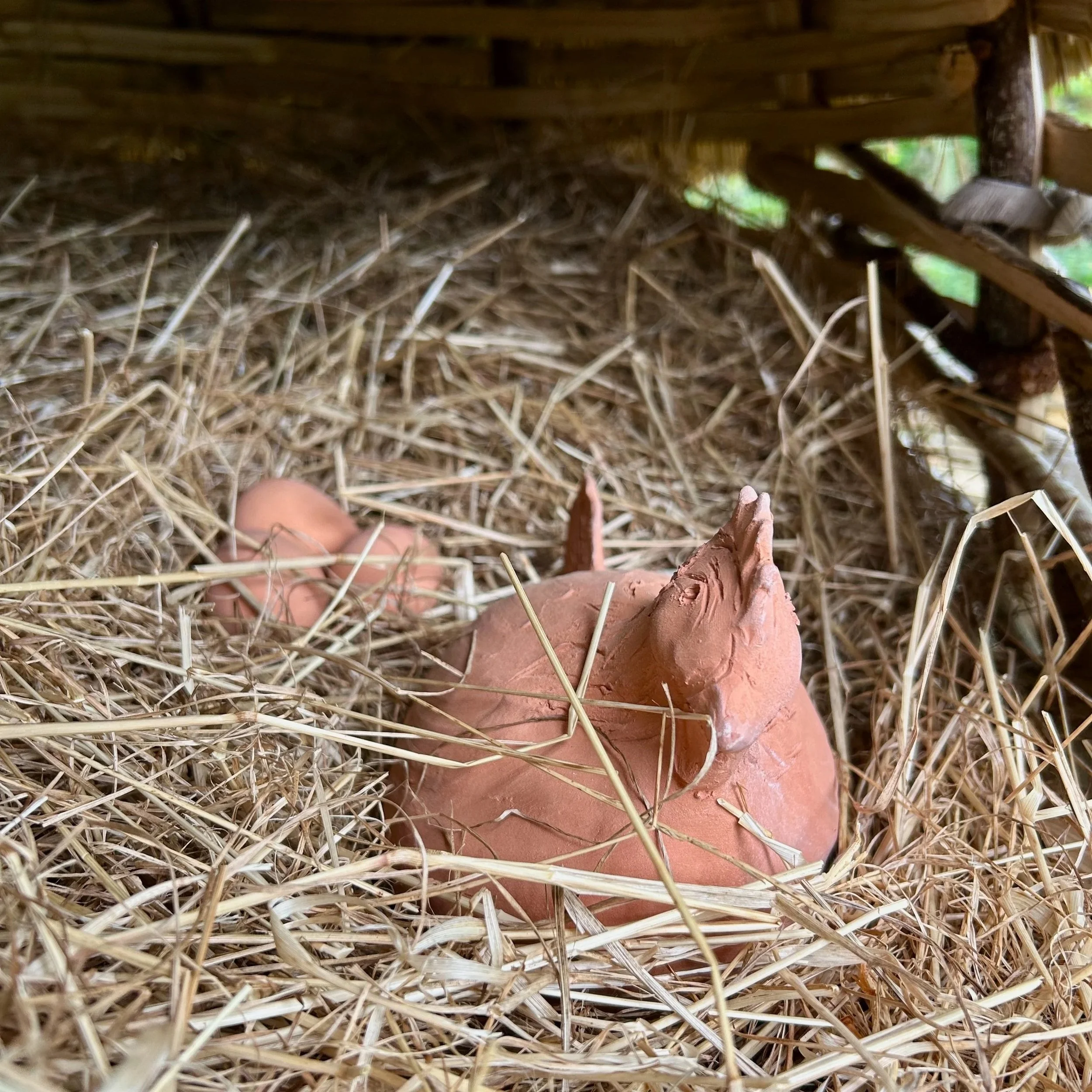
The first terracotta chicken to inhabit the coop