

A new shrine for the Roman Villa!
This month at Butser we’ve been delighted to receive a new addition to our Roman Villa - a beautiful Lararium, or Roman household shrine, made specifically for the Villa by artist Isabel Young from the Royal College of Art. Find out more about the new addition in our latest blog post.
This month at Butser we’ve been delighted to receive a new addition to our Roman Villa - a beautiful Lararium, or Roman household shrine, made specifically for the Villa and donated by artist Isabel Young from the Royal College of Art.
In the 20th anniversary year of our Villa it’s wonderful to see the Villa continue to grow and enable us to be able to expand the stories we can tell about Roman life in this unique space.
Find out more about the new addition below.
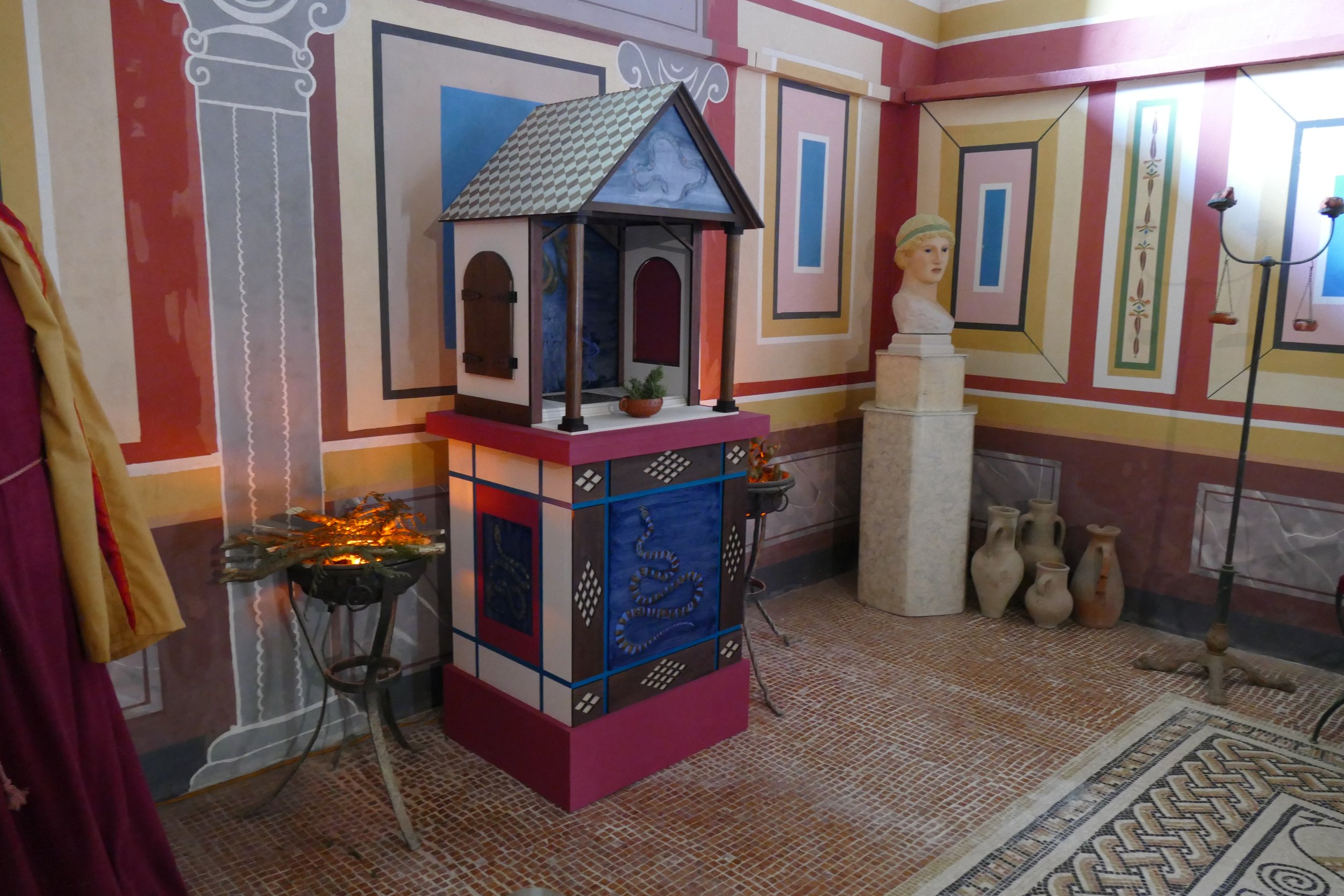
The new Lararium in place in the villa atrium
In ancient Roman dwellings a Lararium (a shrine to the household gods) would have been an important feature in every home and used in the practice of everyday private worship. Such artefacts found in the excavations of Pompeii have been a source of inspiration for Isabel Young, artist and Senior Tutor (Research) at the Royal College of Art, who has built a brand new Lararium for our beautiful Roman Villa. A free-standing aedicula now inhabits the mosaic room awaiting re-enactments and offerings in the interpretation of religious beliefs and ritual practices.
The Lararium has been designed with reference to the architecture of Butser’s Roman Villa and mirrors the wooden shutters, trusses, roof tiles and colour scheme of the villa building itself. While the theme is ancient, a combination of traditional and modern techniques has been used by Isabel to create the new shrine, including high tech laser cutting technology.
Paintings are an important part of Roman Lararium design, and a total of 8 paintings of snakes, as protective spirits of the house, decorate the surfaces of the shrine. The central figure of Ceres, goddess of harvest, and to whom the shrine is dedicated, presides over the altar as an important divinity for the farming community of Butser Ancient Farm.

A detail of one of the 8 snakes that adorn the Lararium
The Lararium has evolved from Isabel Young’s long-term exploration of the cultural dynamics of the house, vernacular architecture, ancient buildings, and the people who lived in them. We hope that this new addition to Butser can be used to expand on knowledge and understanding of relationships between the house, site, landscape, family, religion, ritual practices, and the pantheon of Roman deities.

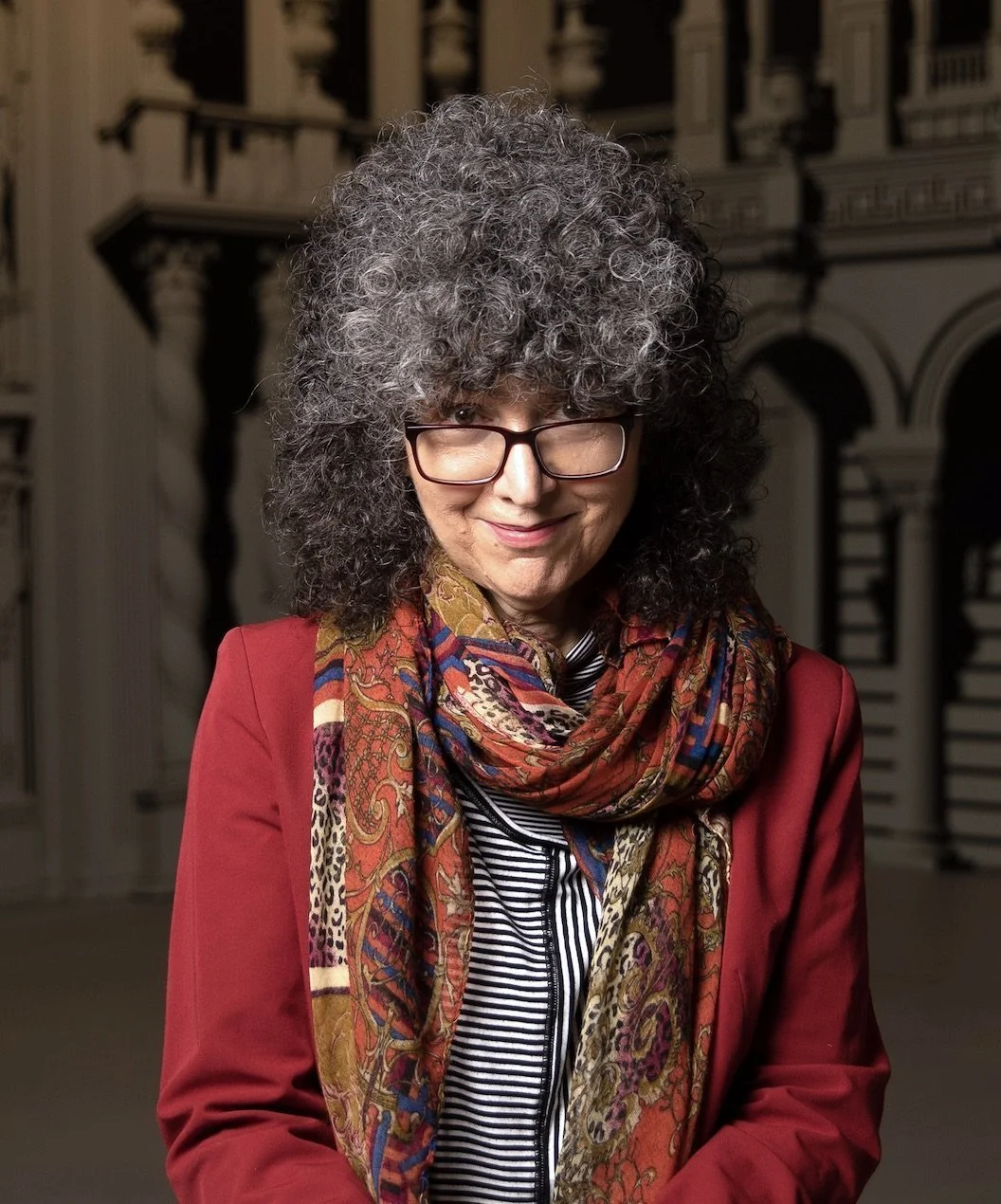
Artist Isabel Young next to the new Lararium
A huge thank you to Isabel for creating this wonderful shrine for the villa!
Come and visit us from the 1st to the 4th June 2023 to meet Isabel and make a clay figurine to the roman household gods on a special drop-in workshop (included in your admission price) inspired by the Lararium.
Beltain Celtic Fire Festival 2023: Welcoming in the summer!
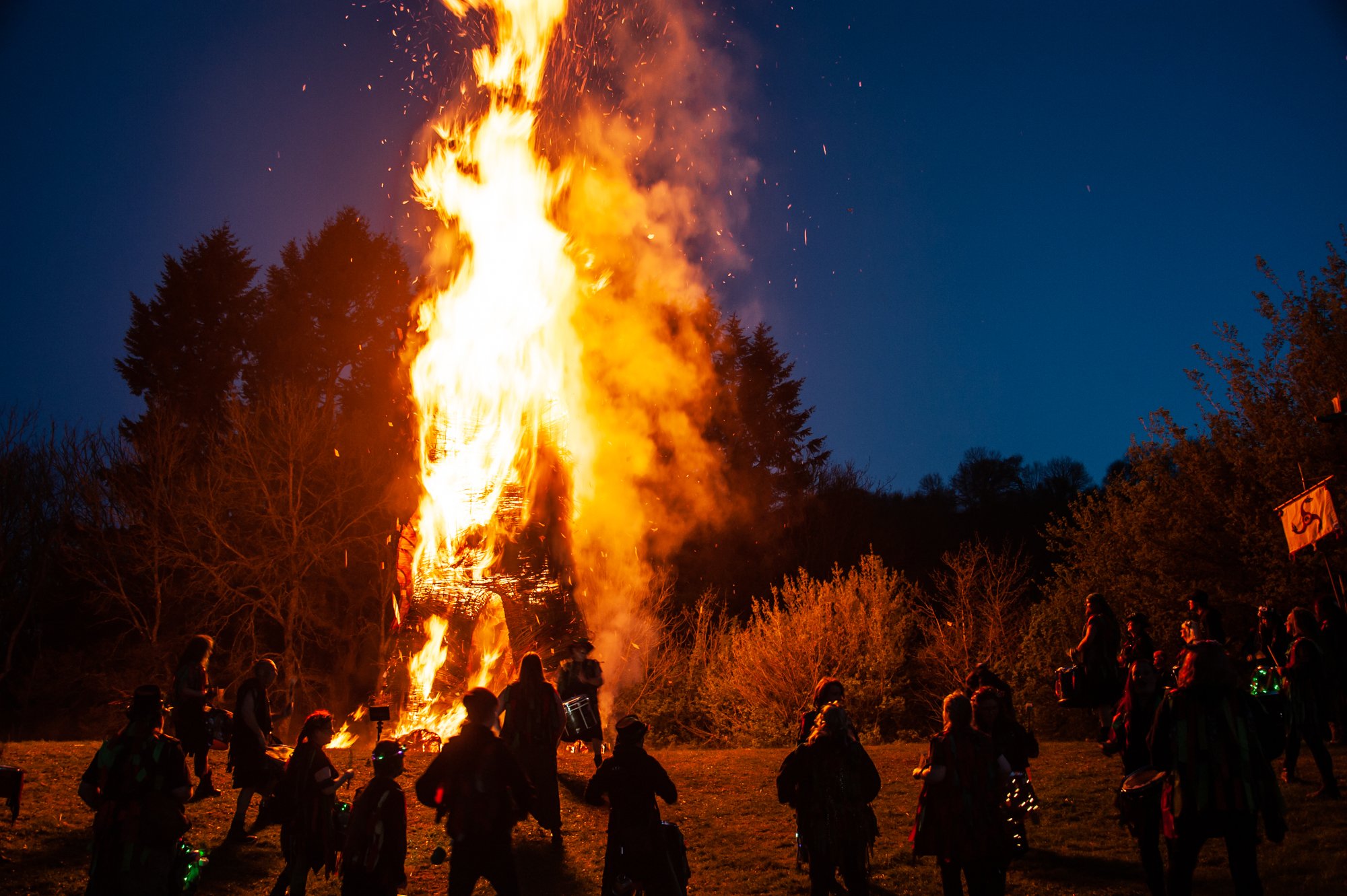
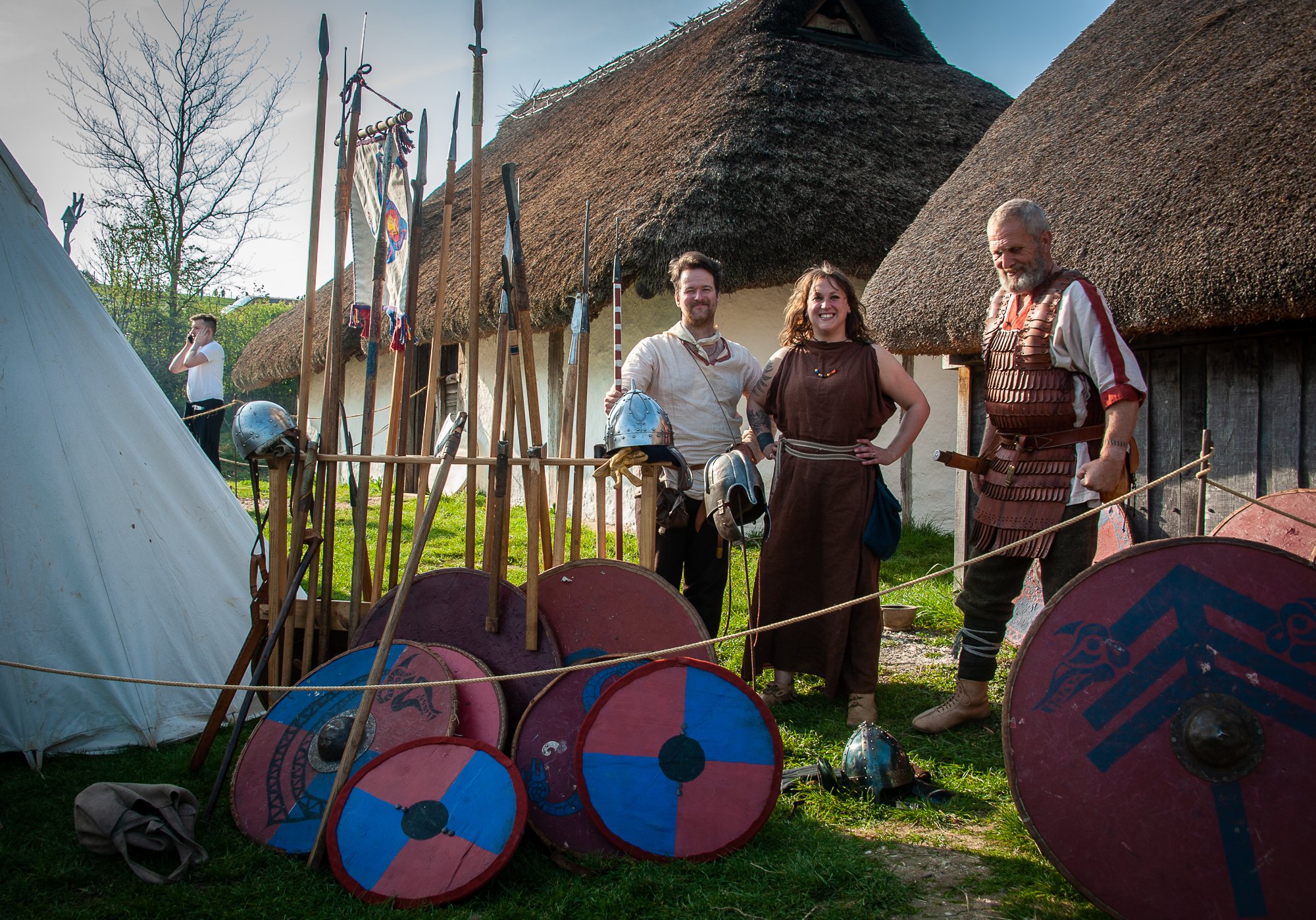
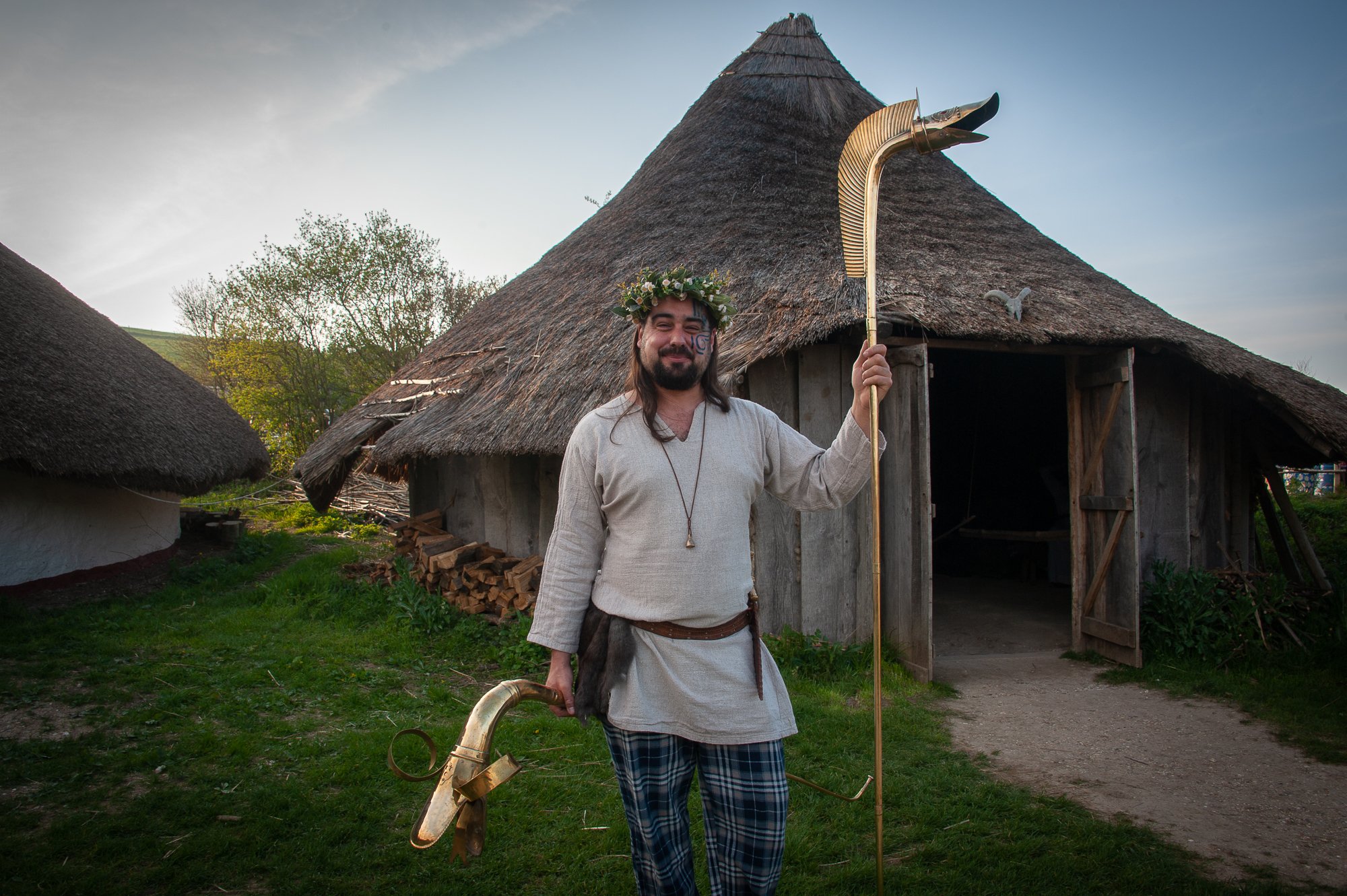
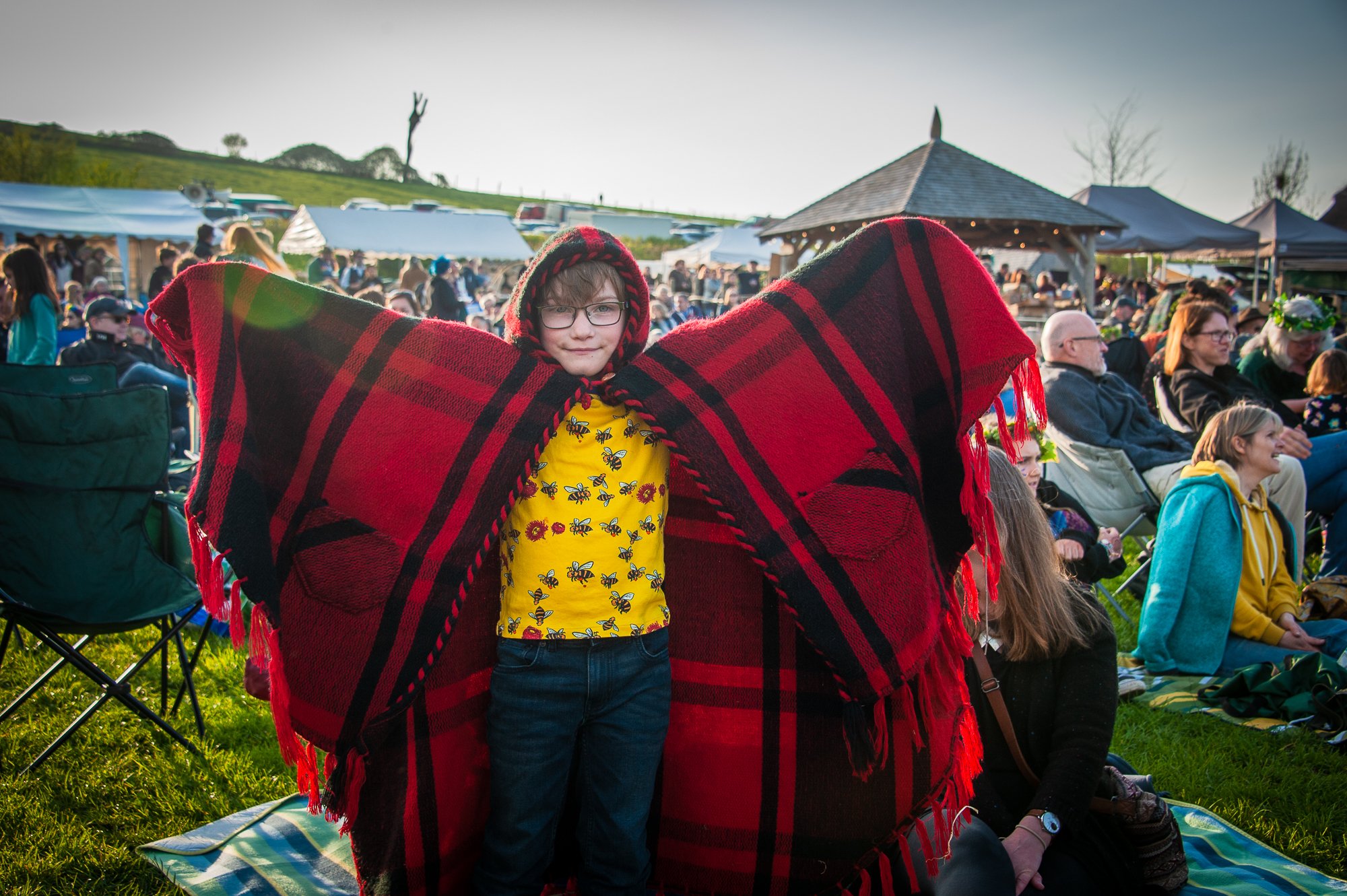
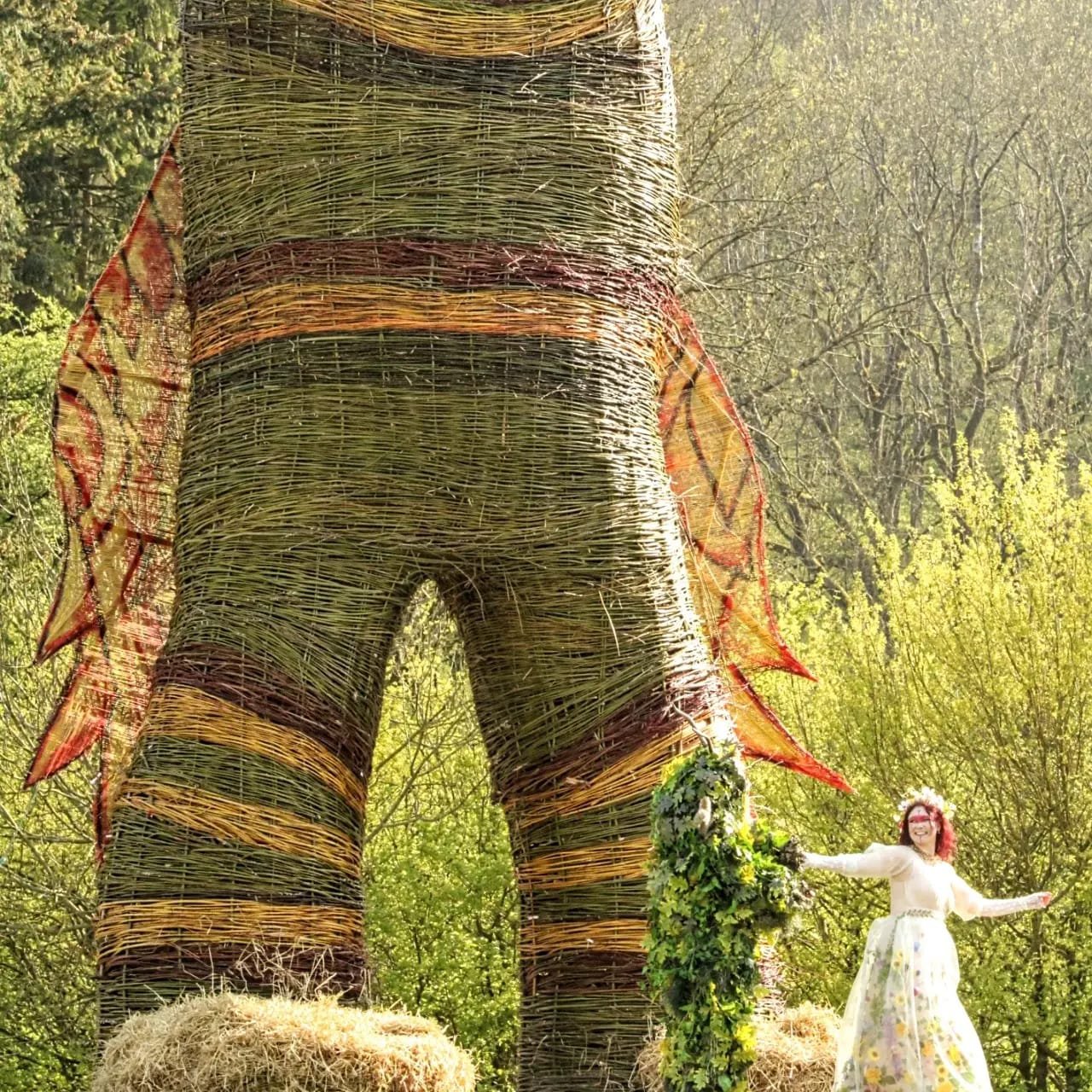
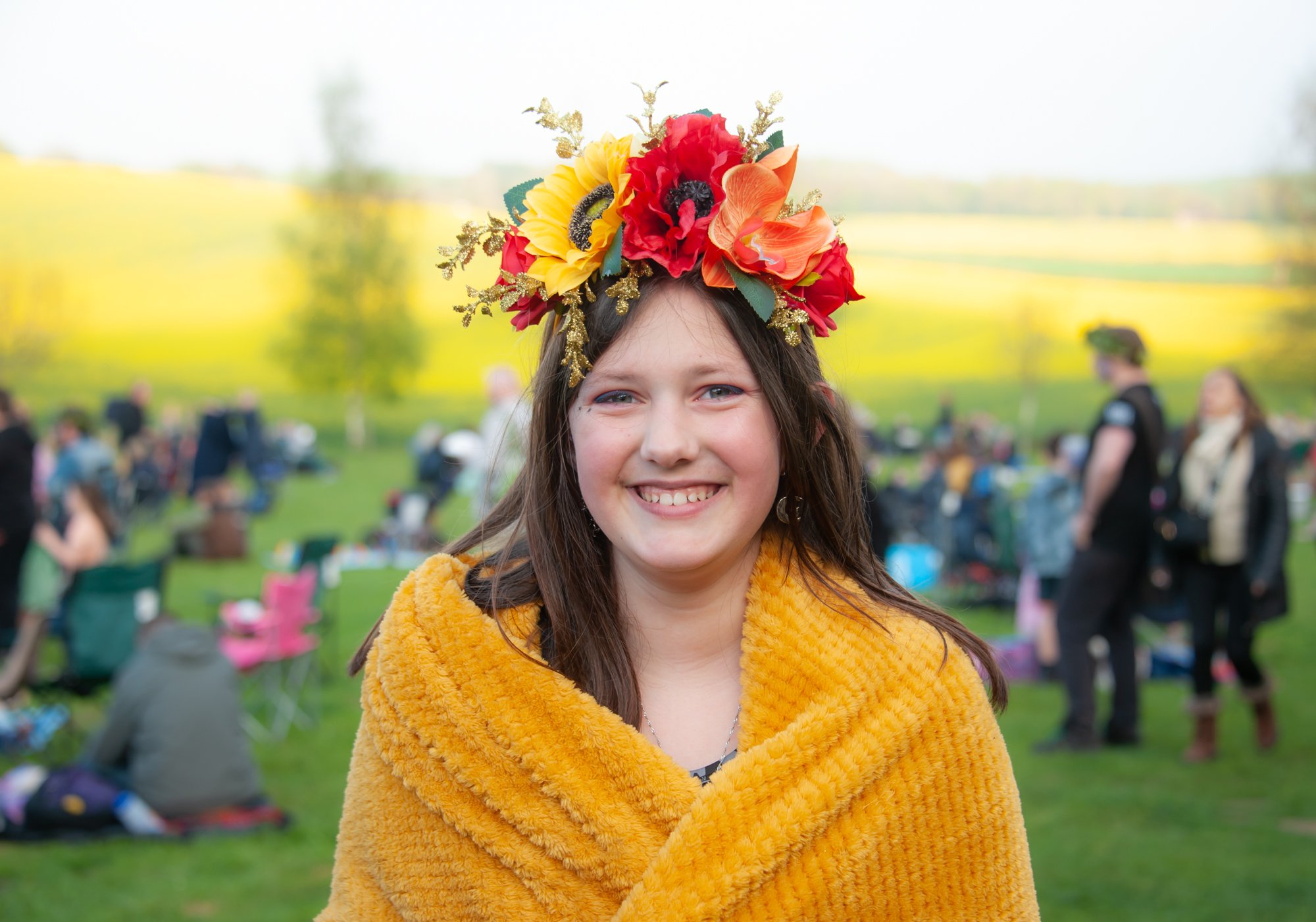
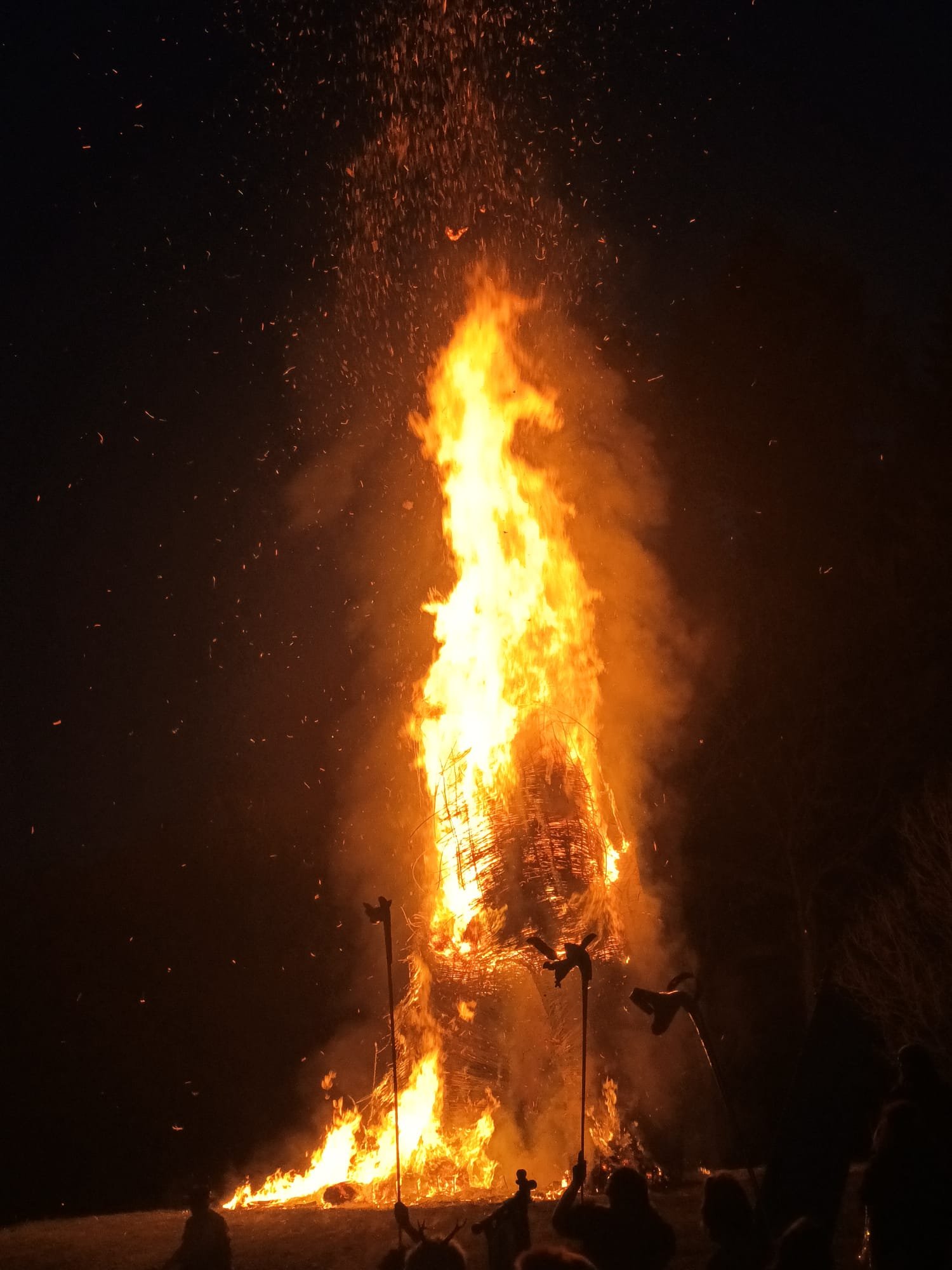
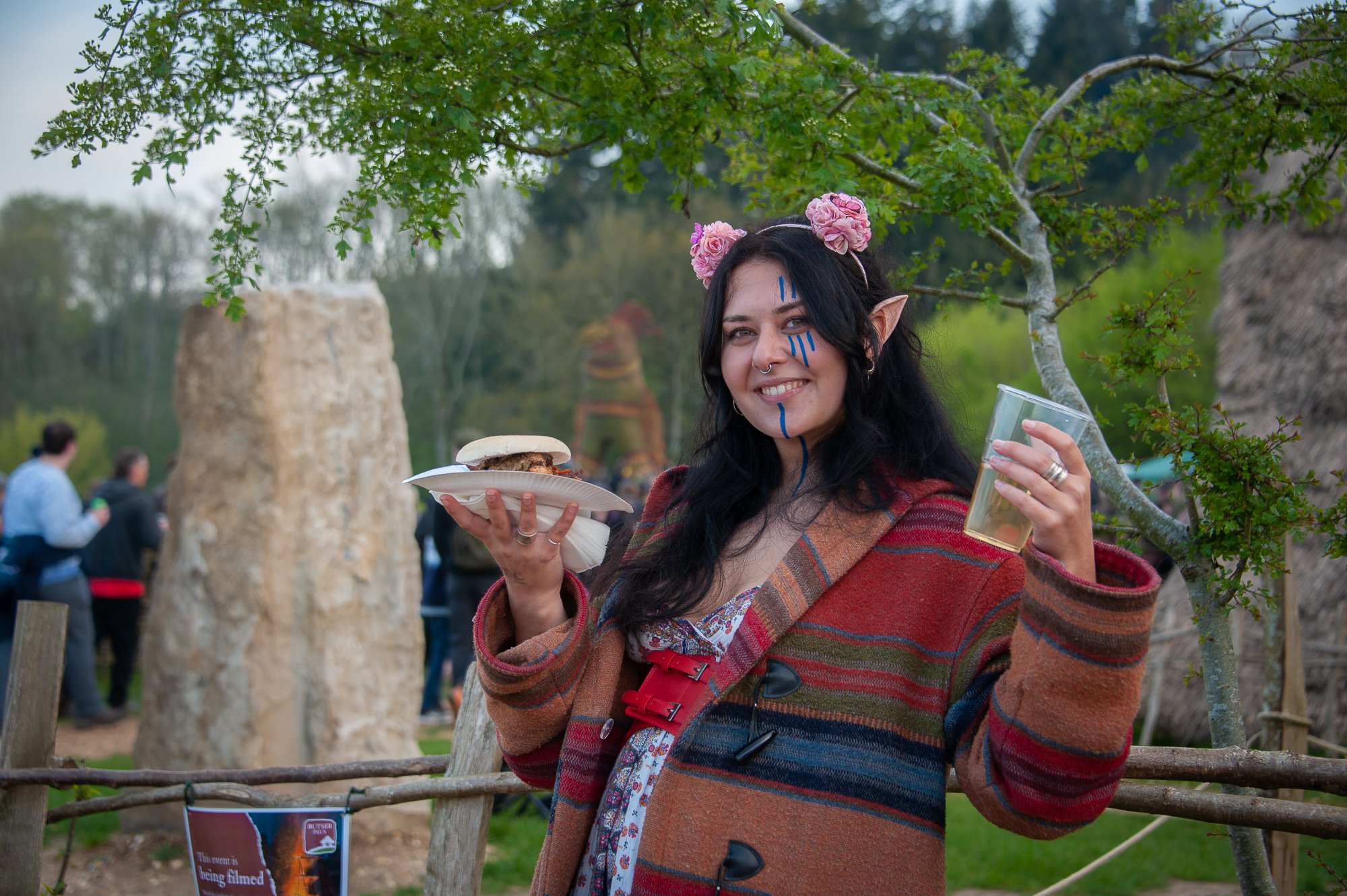
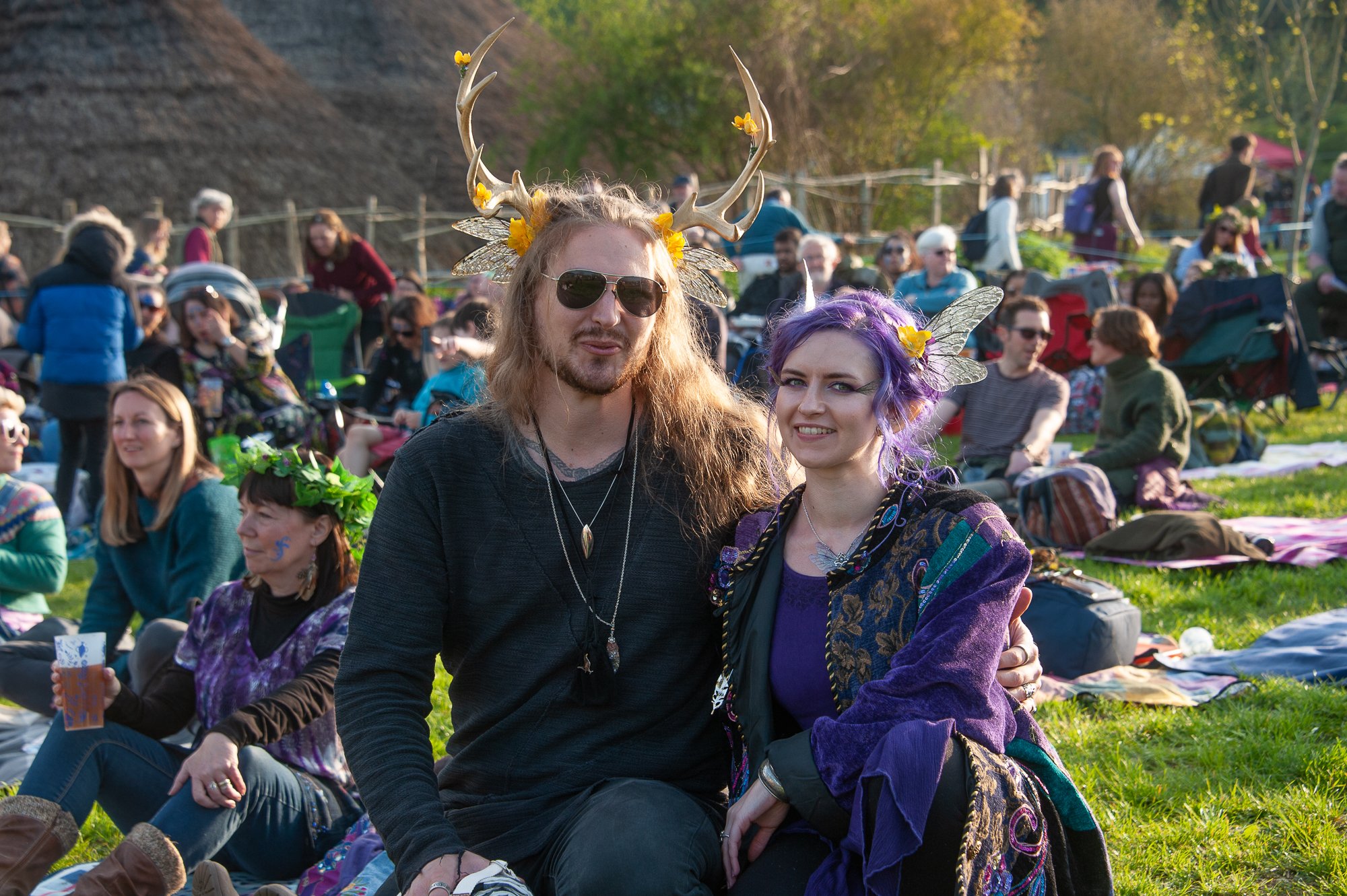
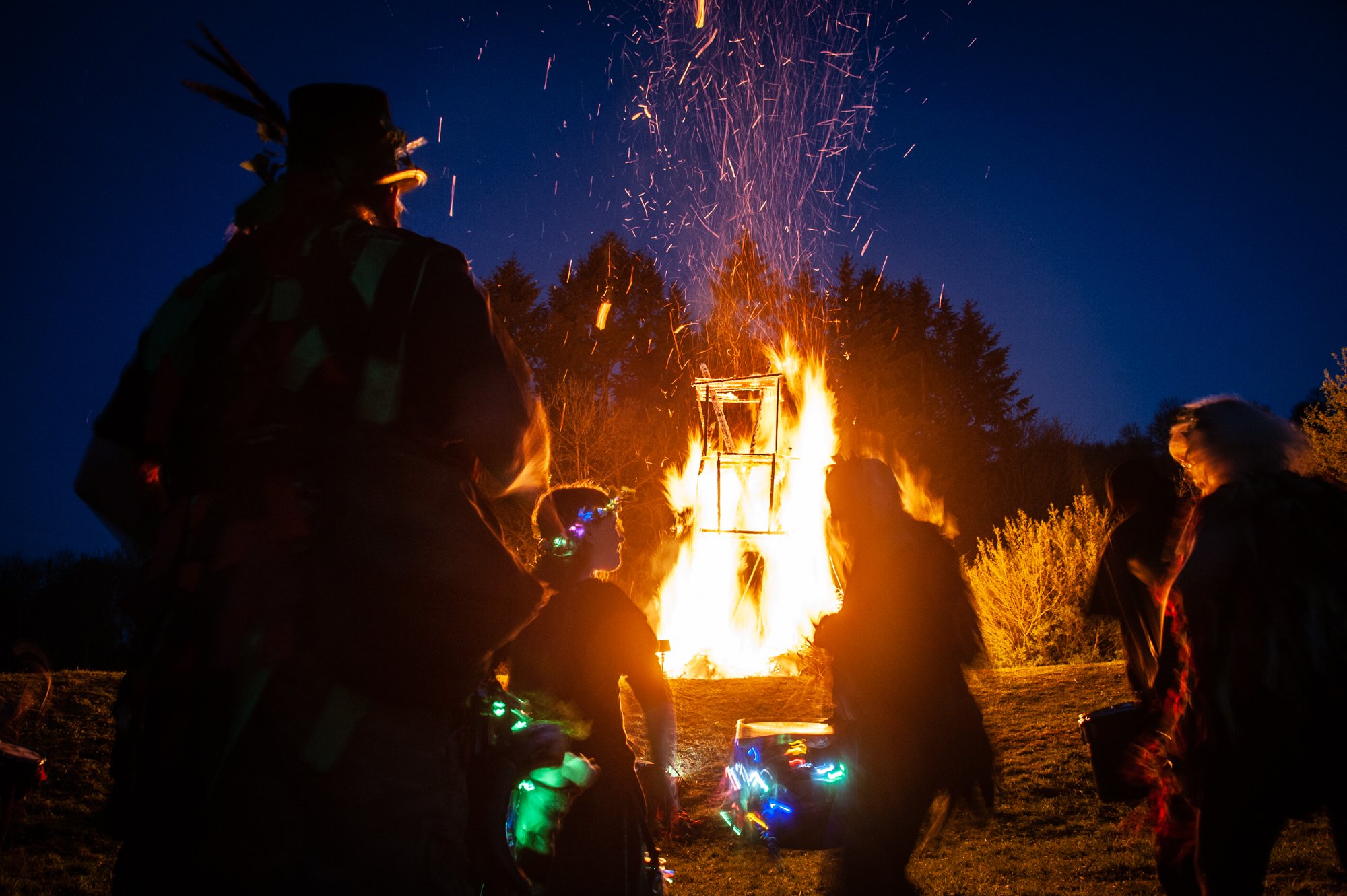
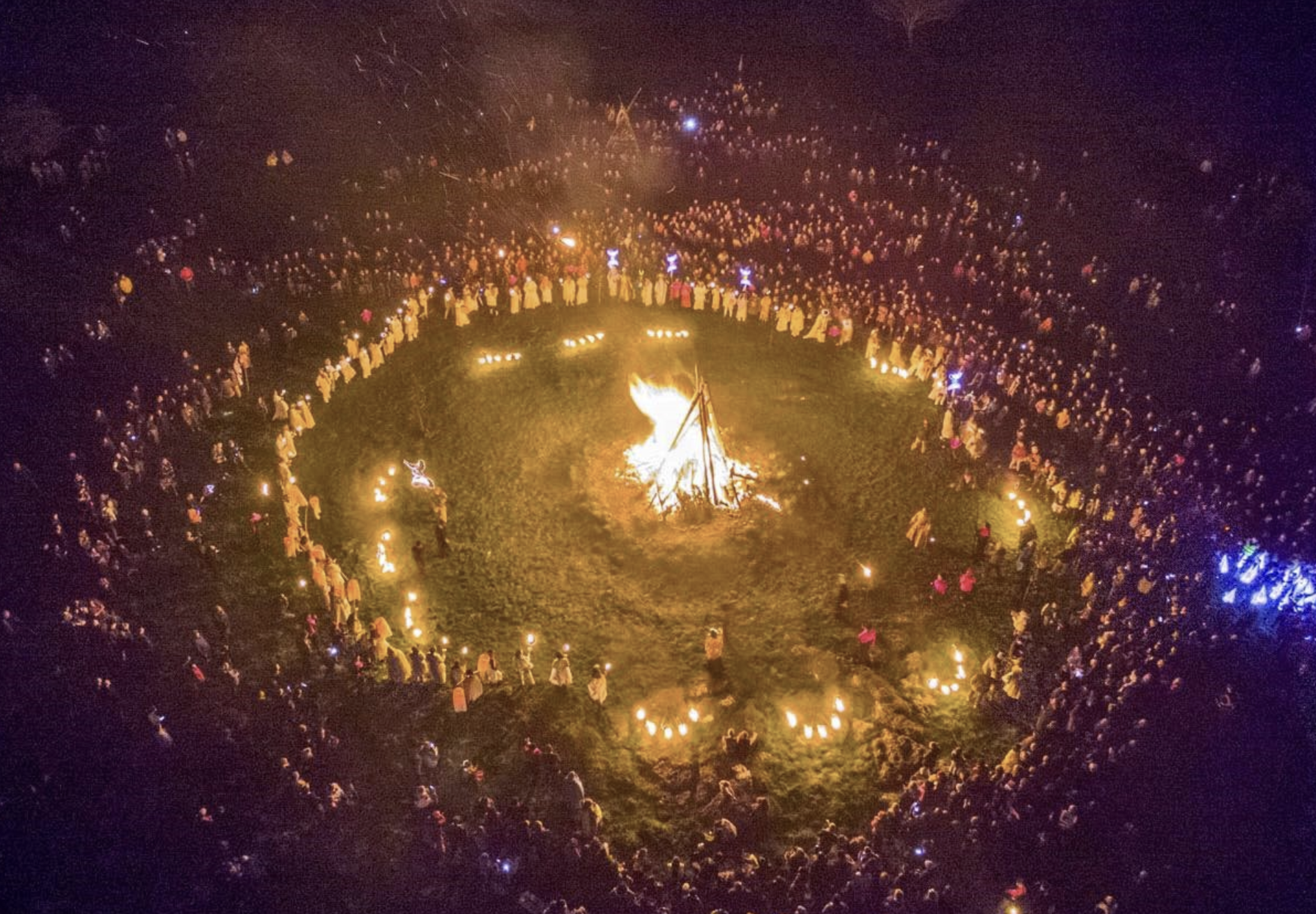
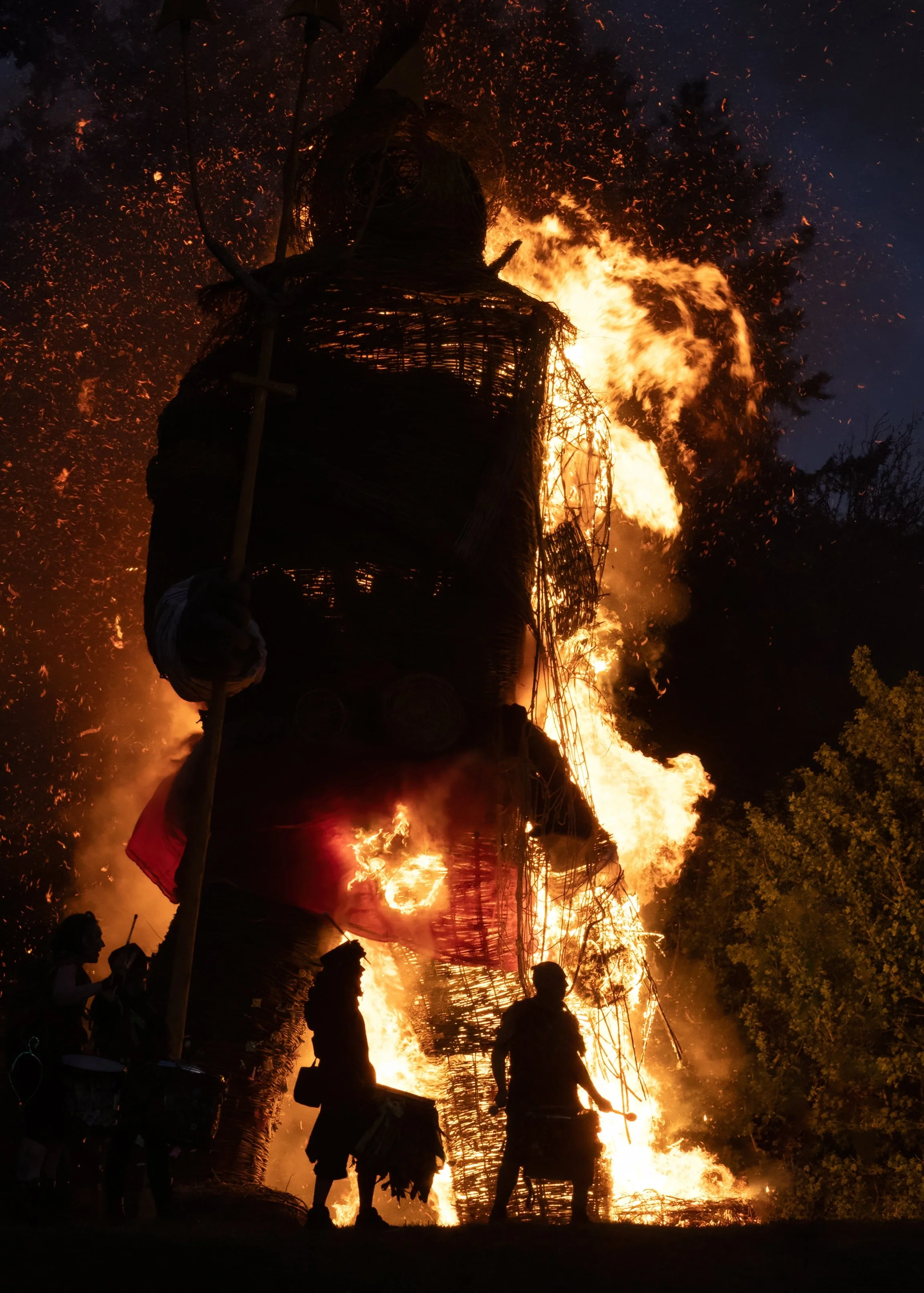
We celebrated Beltain Celtic Fire Festival with an afternoon and evening of music, mead, merriment, and of course, the burning of our 30ft wickerman. Here’s to good company and sunny days!
It’s Beltain! The ancient Celtic festival celebrated at the beginning of summer, and possibly even the origins of May Day. We celebrated this wonderful festival with an afternoon and evening of music, mead, merriment, and of course, the burning of our 30ft wickerman. Here’s to good company and sunny days!
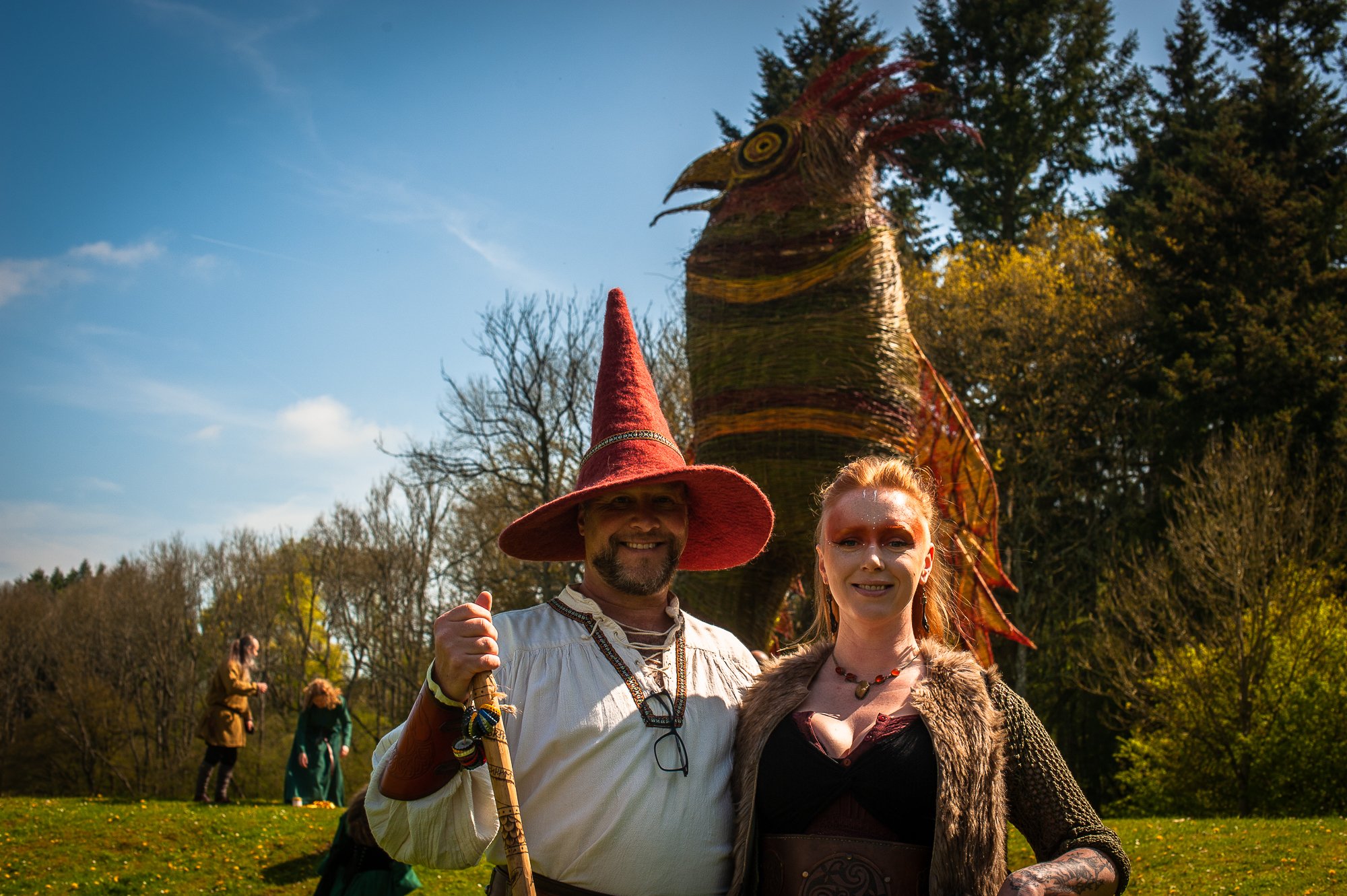
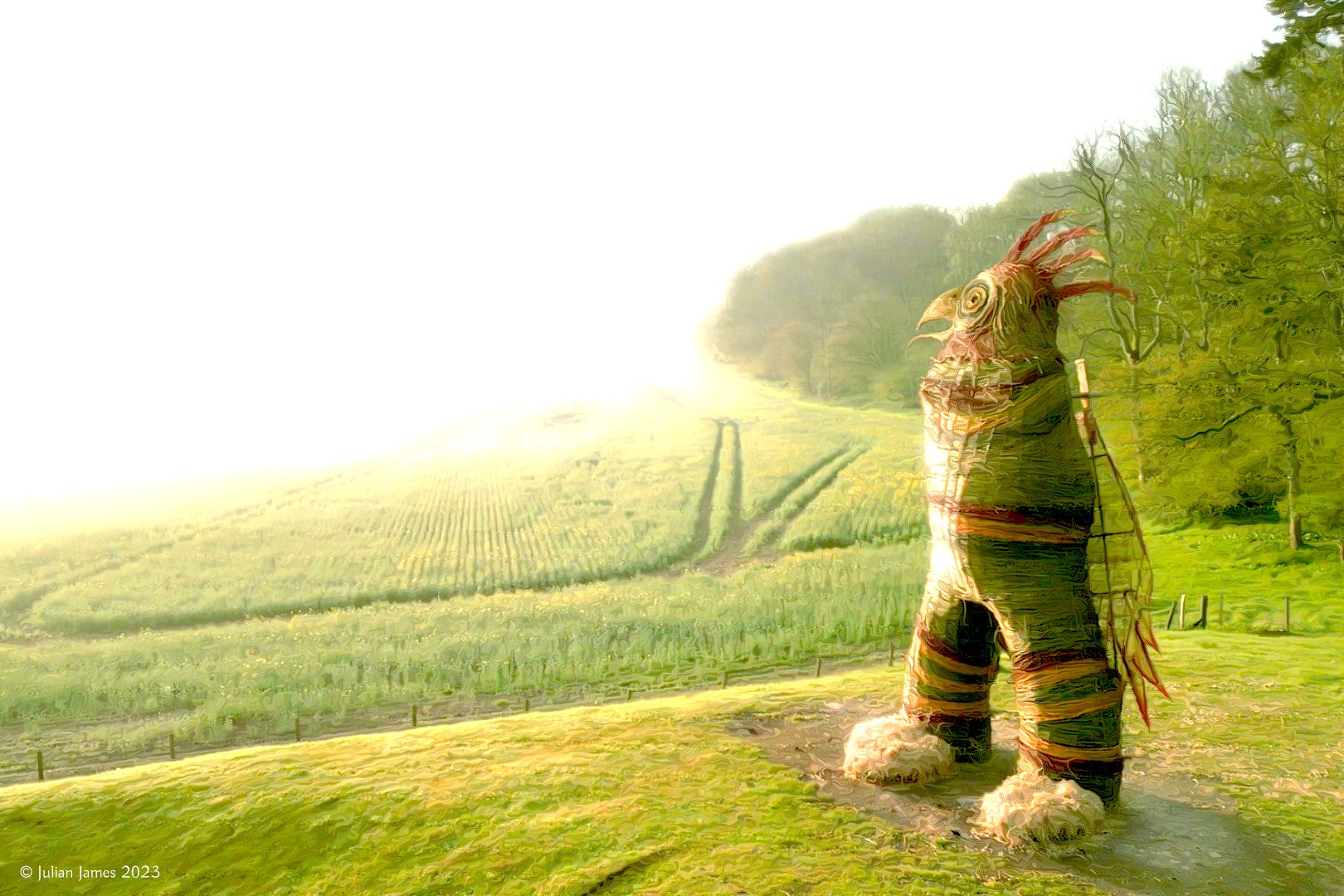
This year’s wickerman was actually a wickerbeast, following the design of a phoenix to symbolise rebirth through fire — the same way our wickermen themselves live, die, and are reborn again each Beltain.
Thank you to everyone who joined us for this wonderful event! To everyone who made it out, to all our visitors and volunteers and supporters here, thank you for making things like this possible.
Stay tuned here for some of our favourite pictures from the event!
Relive the magic!
Watch the full commemorative video on Butser Plus for as little as £2.99!
Photos from Beltain Celtic Fire Festival 2023
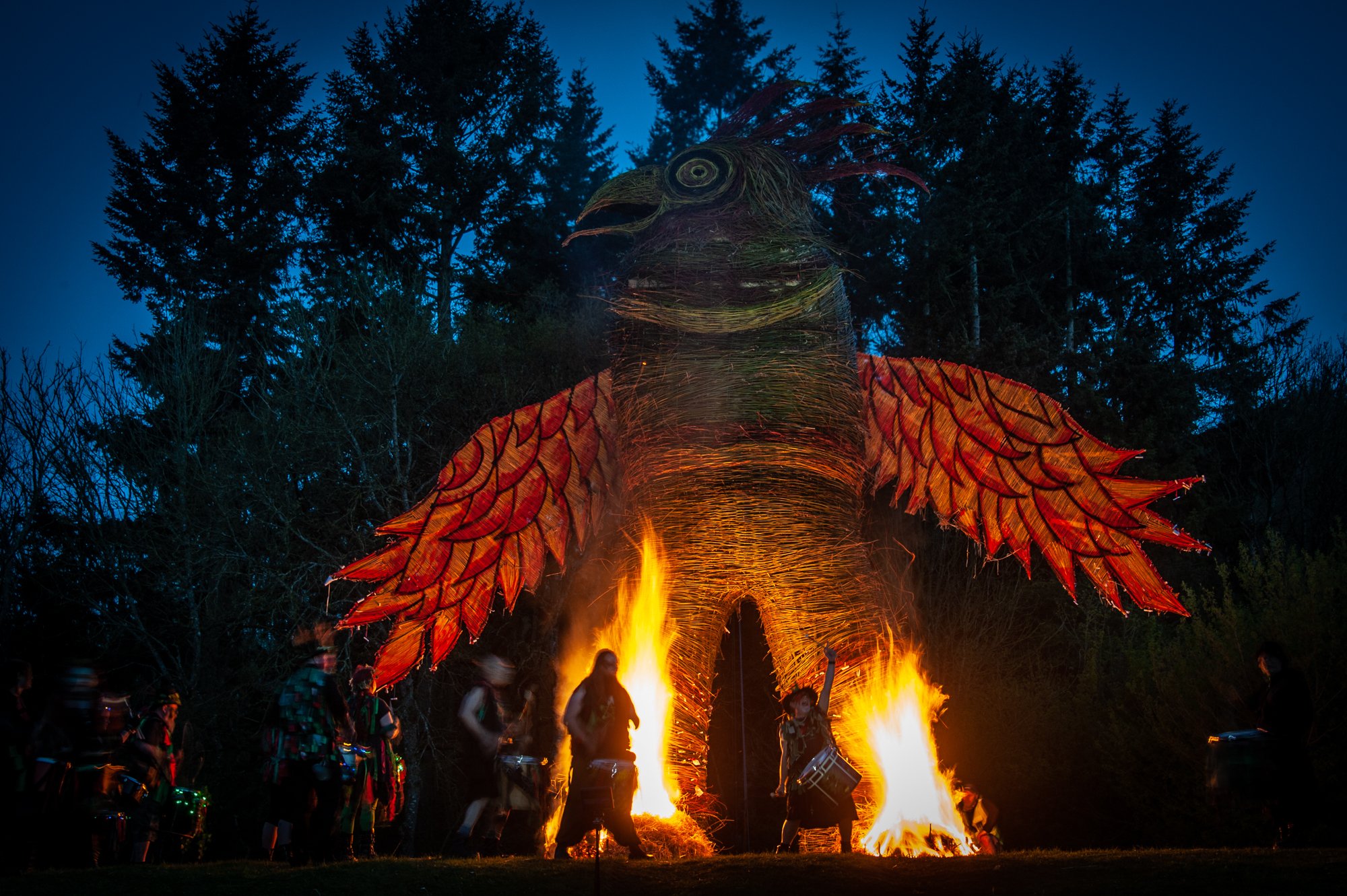
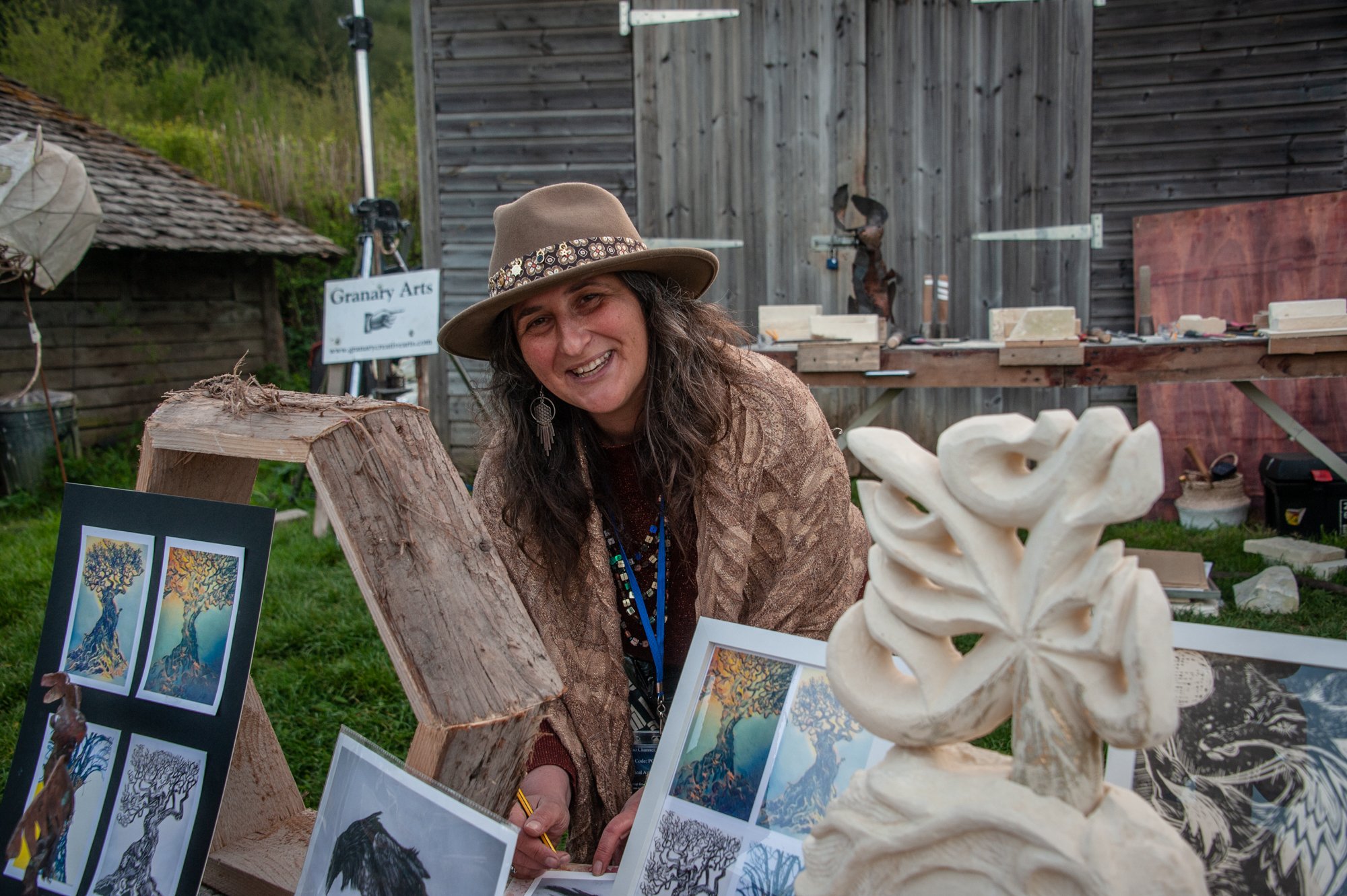
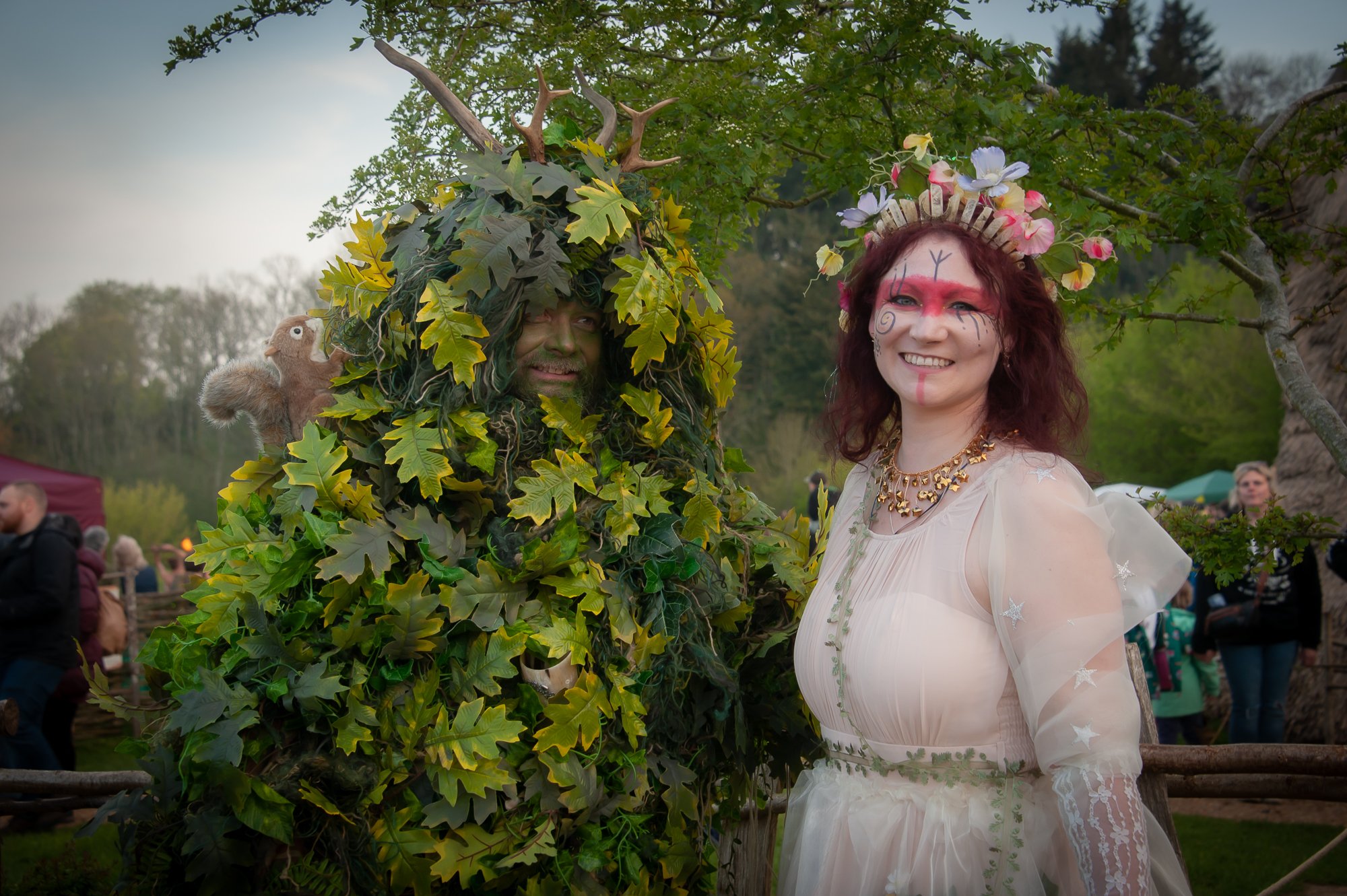
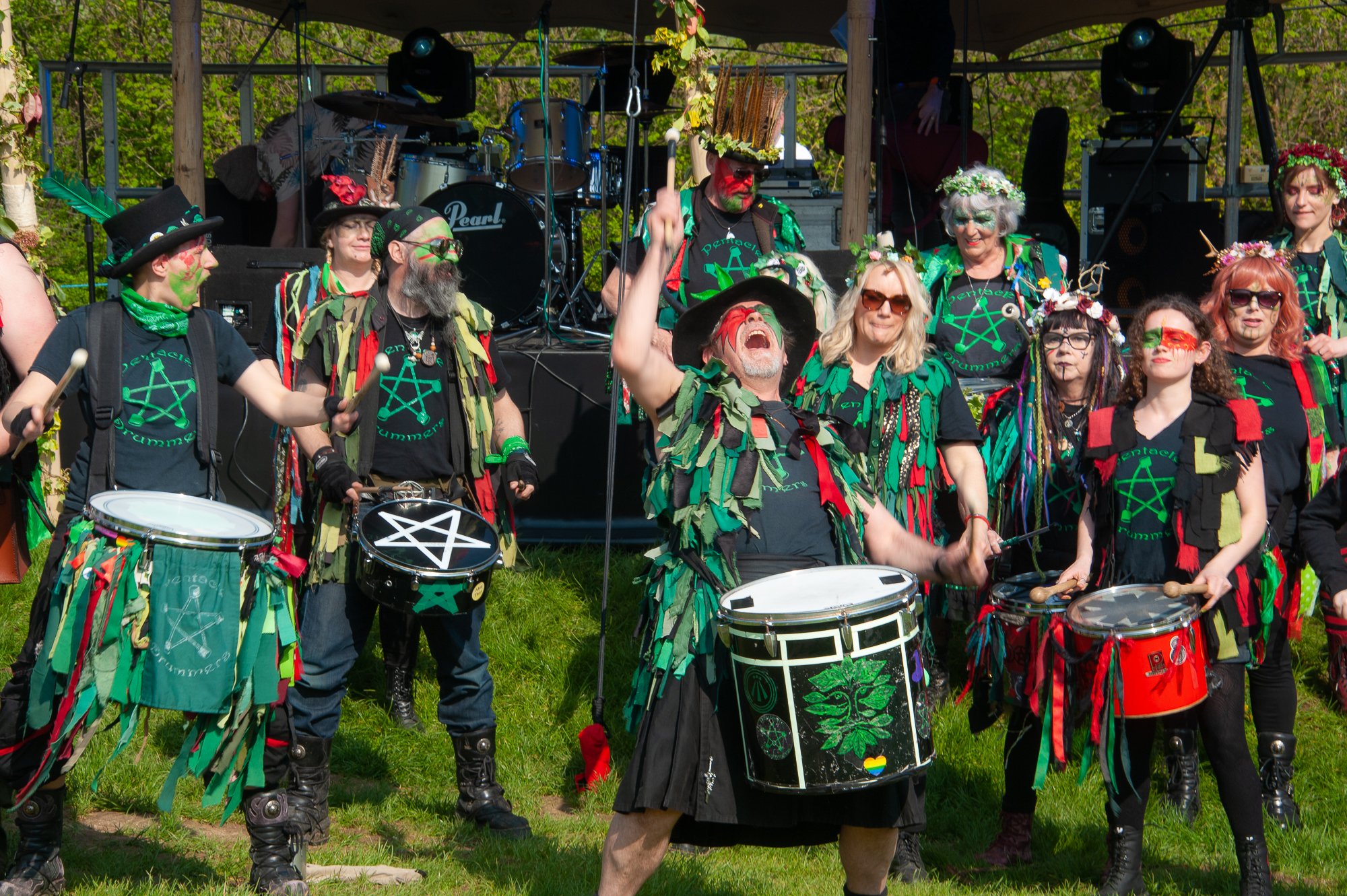
With all our thanks
We are a small team from a small museum, and Beltain is an incredibly ambitious event for us to hold each year — one only made possible by an incredible number of wonderful people working very hard.
To all our staff and volunteers, thank you for your tireless work in preparing for and running this event! To the Friends of Butser Ancient Farm for your wonderful support, thank you.
To the Saxons of Herigeas Hundas, the Romans of Butser IX Legion, the ancient musicians of Here Be Flagons, to all the other reenactors and living history practitioners who helped bring our ancient farm to life, and to everyone who turned up in costume — thank you.
To the brilliant musical trio Polly Gone Wrong and the lovely band Tiger Moth, to the iconic Feckless who always gets us up and dancing, to the endlessly energetic Pentacle Drummers, and to the classic Ukes of Hazard, thank you for your wonderful performances.
To Jen Atkinson, Jo Dunbar, and Adrian Rooke, thank you for your wonderful talks on herbs, healing, elves, and the origins of Beltain. To Flying Iron, Steamship Circus, Ostara the Bubble Fairy, Mary Rose Royal George, Jez Smith, the Shanti Sisters, and Eva Greenslade, thank you for your work offering unique and incredible performances and experiences, from handfasting to axe throwing to archaeoacoustics.
To Neil Burridge, Joe the Smithy, Craig the Saxon Forager, Caroline and Tom of Pario Gallico, Fergus Milton, Jim Clift, and everyone from the Ancient Wessex Network, thank you for your wonderful demonstrations of ancient crafts and metalworking.
To Andrew Shorter, Jonathon Huet, Dawn Nelson, and Jason Buck, thank you for bringing such magic with your wonderful stories.
To Artscape, Granary Creative Arts Centre and HantsAstro for your interesting and interactive stalls, thank you. To Chalice Mead, Three Copse, the Whitelands Project, Langham Brewery, Bowman Ales, Mr Whiteheads, and Blackmoor Estate, thank you for supplying us — whether that’s with mead, local greenery, or our very own unique Beltain Cider!
To craftsfolk and traders the Wood Beyond the World, Pixie Made, Old Ways Candles, the Special Branch, Kevan Dyne, Minerva Crafts, Wesnet Services, Pipers Honey, Hare and Tabor, Finn’s Fire and Woodcarving, Woody Wonders Twig Pencils, Gina McAdam, Amongst the Gorse, Fantastical Kingdoms, Woolleymamma Leather, Willow and Crafts, and Gwen’s Garden — thank you!
To Crepe Britain, Matt with the hog roast, the Mobile Coffee Box, Earth’s Kitchen, and Sharon and Wendy of the Butser Bakes stand, thank you for all your work to feed everyone!
To Eleanor Sopwith, Alan Ridgley, Andrew Hayward, and Stanners Stanton, thank you for allowing us to use your stunning photos.
To friends unnamed but not forgotten, thank you.
And finally, to our supporters on Butser Plus, to our visitors, and to you 💚
Four of the Most Incredible Ancient Female Burials in Archaeology
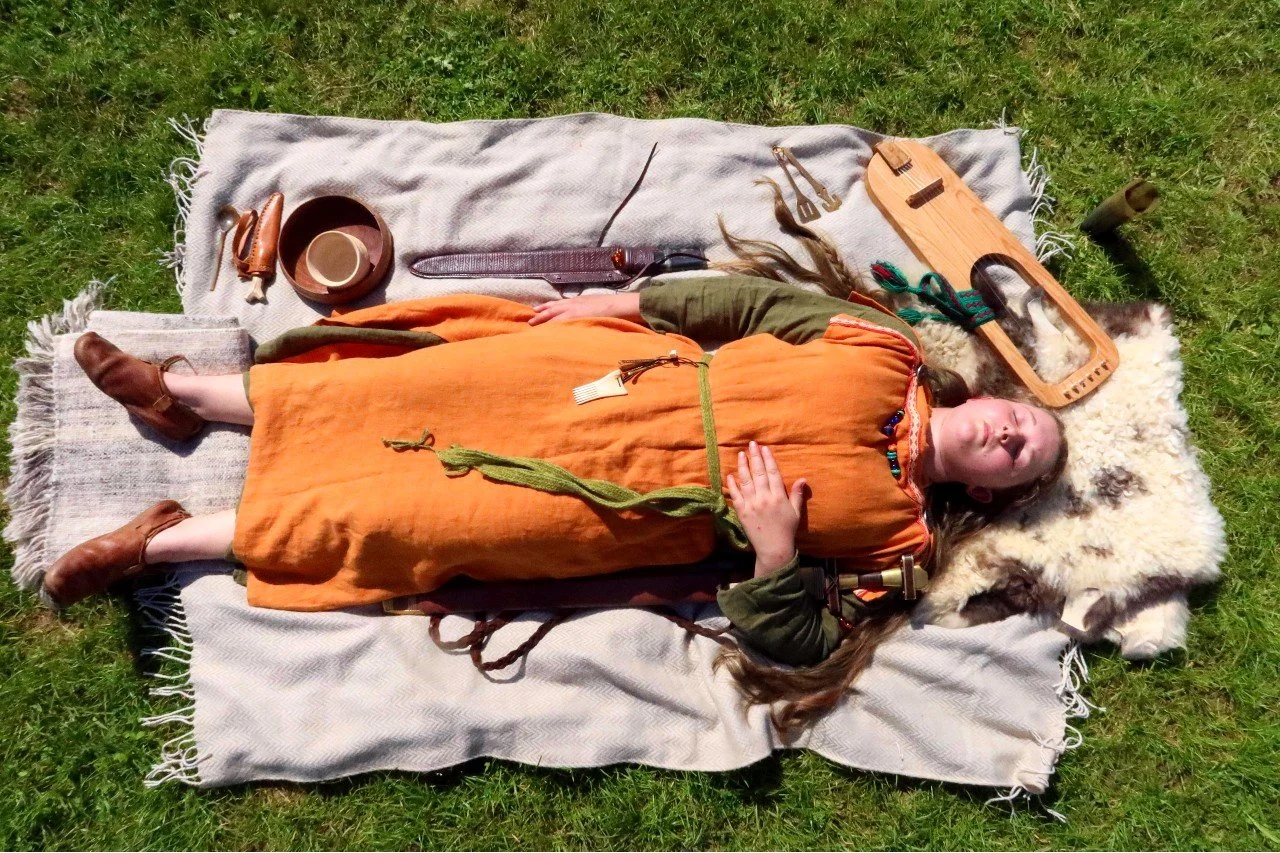
We’re celebrating International Women’s Day! Let’s explore four of the most incredible ancient female burials in archaeology: from a tattooed princess to a Viking shieldmaiden, these women lived outstanding lives, and their graves can help us understand the world they came from.
Whenever we talk about ancient people and burials, it's really important that we remember there's much more to a person than the shape of their bones or a DNA readout — how they fit into society, what name they used, or how they thought of themselves are all still mysteries to us. We can’t even know for sure if the things they’re buried with belonged to or were important to them: that’s often how they make most sense to us, but the dead don’t bury themselves after all. And, as we'll see with some of these burials, mapping modern ideas about gender and society onto people from the ancient past is never a good idea.
This is a bit of a morbid topic, but this article contains no pictures of human remains, so you’re safe while you’re here.
With all that said, let's get right into exploring these four exceptional graves, and the lives of the people in them!

Selection of flint tools on display at Beltain 2022 // Image: William Mulryne
4. The Huntress of Wilamaya Patjxa
In 2018, archaeological excavations high in the Peruvian mountains uncovered a 9,000-year-old grave filled with so many hunting tools that archaeologists assumed they’d found a revered chieftain and master hunter. But as DNA testing soon showed, the grave belonged to a teenage girl.
In the end, there were six burials found at Wilamaya Patjxa, but this girl was the only one buried with hunting tools. And more than that — she was buried with so many tools, a whole Stone Age inventory of everything she would have needed to bring down big game and prepare its various parts. She had flint projectile points for arrows or a spear, knives and axes for butchery, scrapers and ocher for processing hide, and more. All in all, over 24 tools were found in her grave, grouped in such a way to suggest she might have had them in some kind of bag or container — a literal toolkit she could carry around with her.
This incredible find prompted researcher Randall Haas and his team to go back and look at other hunter graves in North and South America from this period. Women had been found with hunting tools before, which had often been explained in other ways — a flint projectile point can be useful for other things than just hunting. And it’s not unreasonable for researchers to assume that, in ancient hunter-gather societies, the division of labour would have been down gender lines: man the hunter, woman the gatherer. That’s how many modern hunter-gatherer societies work, after all.
But this find throws a wrench in that idea, and so do Haas’ findings: his team identified 27 graves from this period that include hunting tools for big game like ancient alpacas and deer. 11 of those belonged to women. Far from hunting being exclusively for men, Haas now believes as many as 30-50% of big game hunters could have been women, meaning the division of labour for hunter-gatherers may have been much more gender neutral than people assumed.

Recreation of the Bad Dürrenberg Shaman headdress at Beltain 2022 // Image: Harvey Mills
3. the shaman of Bad Dürrenberg
Discovered by archaeologists in Germany in 1934, this grave was immediately clear to be something really special. The 8,500-year-old body was surrounded by more than 150 bones and artefacts, and the Nazis, in power by that time, fell about themselves trying to claim the grave belonged to an ancient Aryan man. They couldn’t have been more wrong.
The body belonged to the woman we now call the Shaman of Bad Dürrenberg, and she wasn’t alone — she was also buried with a baby boy, assumed to be her own child, although recent research throws that into doubt. The two people were buried in a red clay reserved for important and respected individuals, and the woman was quickly identified as a likely spiritual leader. It seemed she had some kind of headdress made of deer antlers and pierced boar teeth pendants, and the items around her were made from many other bones, even from cranes and tortoises.
Study into the Shaman’s own bones has revealed she had scoliosis, and may have suffered from various neurological conditions as a result of her bone structure — involuntary eye or limb movement, head and neck pain, sensations of crawling skin, and even hallucinations. In a culture that may have practiced shamanism, these could have been interpreted by her or her people as spiritual trances or visions. It’s even possible she may have learnt to control some of her symptoms and induce an altered state at will.
In their 2022 book, archaeologists Harald Meller and Kai Michel revealed that the Nazis were even more wrong in their assumptions. Not only was the Shaman a woman, and a woman whose experiences with disability may have elevated her as a spiritual leader, but like many early humans the Shaman of Bad Dürrenberg was also dark-skinned.

Butser roundhouses enveloped in winter fog // Image: Butser Ancient Farm
2. The Siberian Ice Maiden
In 1993, a team of archaeologists under Natalia Polosmak made an incredible discovery in the Eurasian Steppes of Siberia. Deep in a burial mound, suspended by thousands of years of ice and permafrost, was a 2,500-year-old mummy.
The Siberian Ice Maiden, as she’s come to be known, was given a lavish burial. She was dressed in brightly-coloured silks and an incredible 3-foot tall headdress, with a polished mirror and makeup supplies near to hand. Leather deer were appliquéd onto her casket, and her headdress was decorated with golden cats. Around her was placed a feast — and, thanks to the ice, parts of the food were preserved even thousands of years later: deer meat, a drink for the afterlife, and something that might have been yoghurt.
The most incredible part of this archaeological discovery, though, is the woman herself. The ice kept her in such a good state that you can still see the tattoo on her shoulder — a leaping deer. The incredible state of her preservation also meant that, in 2014, researchers Andrey Letyagin and Andrey Savelov could conduct an MRI scan on the mummy. And their findings are really significant: she had chronic pain.
The woman was dying of breast cancer, and had suffered a recent fall (from her horse, perhaps) that fractured her skull. Together, this knowledge sheds new light on another item she was buried with: a little container of cannabis, possibly taken for pain relief.
Thanks to the way she was preserved, we know so much about the Siberian Ice Maiden. It’s not hard to imagine this young woman, in her 20s when she died. She wore eyeliner, rode horses, got tattoos, fought cancer, took painkillers, and commanded intense respect from her people.

Saxon reenactor with Herigeas Hundas at the Equinox Viking Boat Burn 2022 // Image: Alan Ridgley
1. the birka viking warrior
In 1878, archaeologist Hjalmar Stolpe uncovered in Sweden one of the most remarkable graves of a Viking warrior ever found. It was a 10th Century grave of the ultimate Viking warrior, and, as was proved in 2017, it was the grave of a woman.
The Birka Viking Warrior was a trained fighter. Rather than the two or three weapons most warriors were buried with, she had a full set of battle equipment covering a variety of fighting styles — sword and shield, bow and armour-piercing arrows, horses for mounted combat, axes for hand-to-hand fighting, a spear for range… More than that, her weapons were battle-scarred. These weren’t ceremonial or symbolic, they were real equipment for a professional fighter.
She wasn’t just buried with weapons, either — her clothing and other grave goods, including a tactical board game hnefltafl, suggest she was affluent and respected, and may even have been a commander with her own warband. Textiles experts analysing her clothing have argued that she was of such a high status that she may have answered directly to a royal military leader.
In the 10th Century, Birka was a major Viking trading post and the first real city in Sweden, and it had a hillfort with a military garrison for defense. When she died, the Viking warrior was buried outside the gate of the hillfort, beside two other graves containing a lot of weaponry, so it seems likely she was a professional warrior tasked with the defense of one of the Viking world’s greatest trade centres. If she could do it, how many more Viking women warriors could we be missing?
Archaeology is always an exercise in interpretation — we don’t know for sure how these people lived, or if our understanding of their graves is right. But burials give us some of the best snapshots into the past, and help us understand what was important to a people and their culture.
These four burials give us a glimpse into ancient worlds where women were hunters, fighters, and spiritual leaders, and remind us that you can’t make assumptions when you look at the ancient past!

First Time Thatching
Sam Hall, a member of our education and public engagement team, reflects on his experiences learning to thatch on our new Danebury CS20 Iron Age Roundhouse.
Sam Hall is a dedicated member of our education and public engagement team here at the farm, but as with all jobs at Butser there is always the opportunity to learn a new skill and get stuck in to one of the many projects taking place at the farm.
Here Sam reflects on his experience learning to thatch and helping out on the construction of our latest Iron Age Roundhouse- Danebury CS20.
Thanks Sam!
Butser Ancient Farm resonates with a long-lost past and all its traditions in many ways. From its own history of extensive archaeological research to the experimental structures which exist on site, the commitment of the Farm to expanding our own understanding of British prehistory (including, of course, Roman and beyond!) is clear for all to see.
Something else at the Farm which resonates with a deep-rooted practice of human society is the idea of skill-sharing. In many ways this is of course practiced today, although for entirely different reasons: usually it is in working multiple apps, devices, and machines. But what about when the machines disappear? The skill-sharing at the Farm instead focuses on traditional hand-crafts that are both physically and mentally demanding, in which you, and the small team with whom you work, become the determining agents as to whether it goes particularly well or not so much (no pressure!).
Luckily, in my first week thatching, the pressure was almost nonexistent, as I was working under the supervision of Paul Corrie. This meant that not only could I take the time to focus on all the aspects of thatching itself, but also that I could have that time to assimilate and learn the skills I would need to pick up. All of this is necessary to ensure that the reed roof of the new Iron Age roundhouse actually stays on - wouldn’t that be a good start?

Sam’s thatching work on Danebury CS20 Roundhouse

Here you can clearly see the older darker reused thatch and newer thatch on top.
Mistakes being a key part of any human labour, the idea of having sufficient time to actually learn multiple aspects of any one craft is what makes skill-sharing such a success. There is, unlike many parts of life today, no time to rush; doing so is likely to lead to more costly, time-consuming, and labour-intensive problems to fix.
Learning in this way makes historical sense too. It is one thing to live as part of a society, like we do today, which has a hyper-abundance of products. What of those prehistoric peoples who, to get anything at all, had to work hard at each step? The hazel rods, for example, making up multiple purlin rings around the heavy timber roof, would not have come to those people pre-cut and shaped already. Instead, they would have their starting point at the tree itself, to which they would have to take their axe (again, the result of a long process of iron ore extraction, smelting, forging, and so on) before carrying the timber back to wherever the new house was being built. Each step of the way was a learning curve for those people, with the time and energy invested being more precious than money; no machines could step in to replace their effort and dramatically reduce the time involved; it was vital, therefore, not to waste resources.
So, although my very first week learning to thatch a roundhouse roof covered a small portion of the third lift (or “level” of thatch), it provided plenty of opportunity to resonate a fraction more with how those before us had to go about things. Down to the seemingly minute details - for example, are the reeds spread thin enough? - and the unforgiving nature of thatch when tied on properly - there is little movement to push through, although that is needed to get the next bundle tied securely to the beam behind - the feeling of scratched, cold hands makes prehistory and its people feel incredibly close.
On top of that, the opportunity to begin this learning journey adds an enormous amount of value to the educational side of work at the Farm. Enabling the skills experienced and learned first-hand to be communicated with eager students puts a priceless value on the past and encapsulates what it means to bring to life practices and skills which are slowly being lost.

Danbury CS20 Roundhouse being thatched, February 2023
Firing a Roman Kiln
Previously in our blog we heard from Professor Bill Sillar - Professor of Archaeology and Technology in Society at UCL Institute of Archaeology about the Roman Kiln UCL built at the farm. Below Bill describes the process of firing the Kiln for the first time during UCL’s ‘Archaeotech’ experimental archaeology course.
Previously in our blog we heard from Professor Bill Sillar - Professor of Archaeology and Technology in Society at UCL Institute of Archaeology, about the Roman Kiln UCL built at the farm. Below Bill describes the process of firing the Kiln for the first time during UCL’s ‘Archaeotech’ experimental archaeology course.
In September 2022 the UCL team returned to fire up the replica Roman Kiln they built in April.
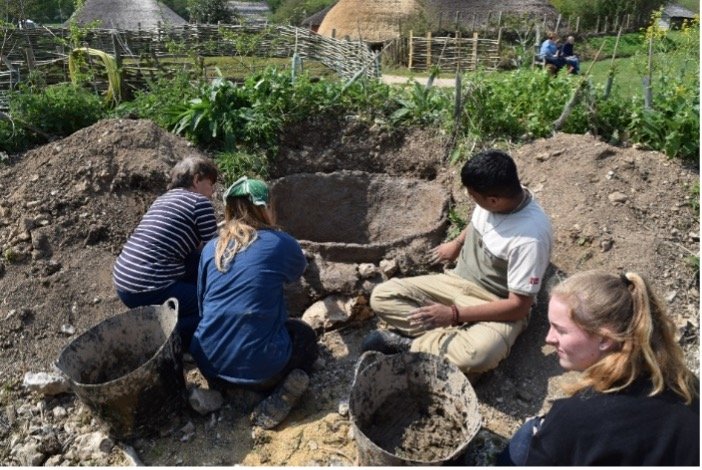
Constructing the Roman kiln in April 2022
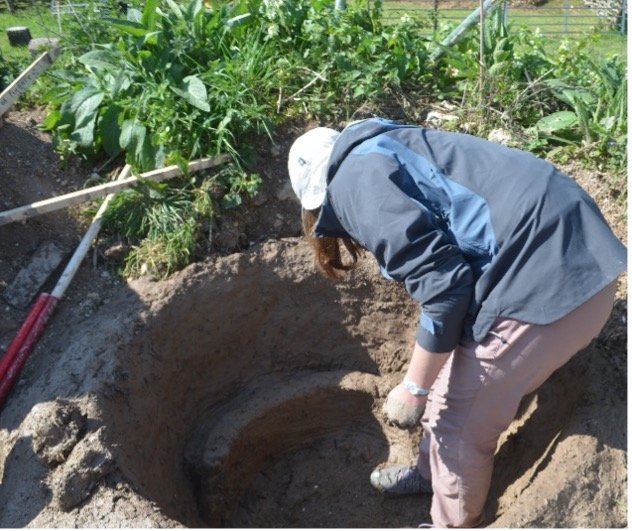
The kiln, based on an early second-century Roman kiln on the banks of the River Medway, originally excavated in 1975 by the Upchurch Archaeology Research Group (UARG). By September our replica kiln was dry to the touch, but still had a lot of moisture in the clay, so we started with a small fire at the base of the chamber to dry out and warm the kiln structure. We then placed our pre-prepared pedestals and kiln bars and continued to heat the structure.
A couple of the kiln bars broke, probably as we heated them up too quickly to release the moisture in the clay. We had made a few pots on the kick wheel we brought from Fishbourne Roman Palace, but, as with the original kiln assemblage, we made the majority of our pottery using hand building techniques, including a range of jars of similar sizes to those found in the excavated kiln.
The first firing of the kiln

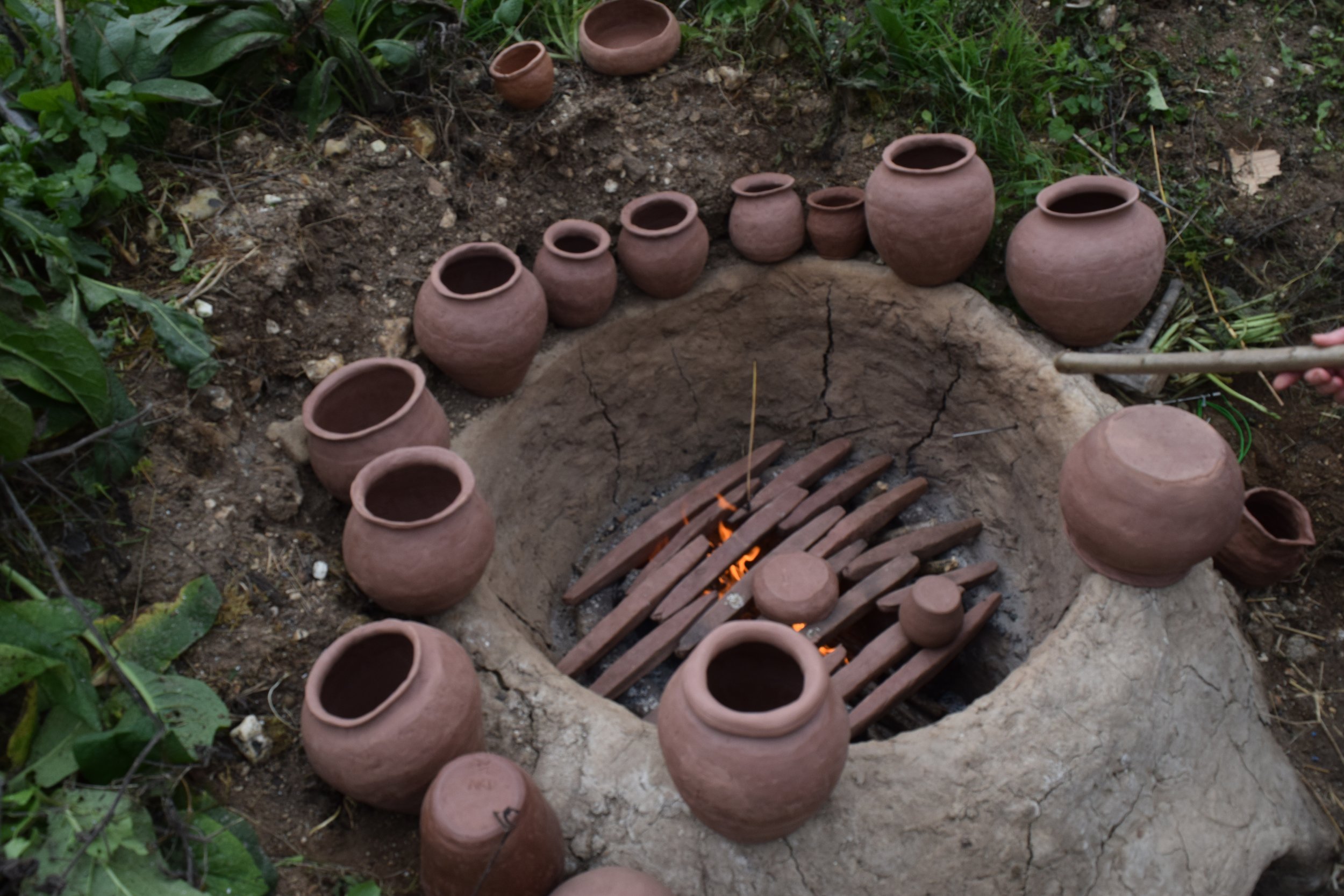
So, we loaded the kiln placing the jars and other pots mouth downwards, we put two layers of pottery with a mixture of vessels. We continued to slowly heat the kiln. For fuel we were using coppiced wood from fences and structures that had been dismantled at Butser, this was predominately hazel that was aged and fairly dry, so a very suitable fuel to use in the restricted opening of the kiln flue. As the pottery began to heat up we placed a covering of pottery sherds (including some fragments of original Roman tiles) over the kiln load. (An interesting question is whether some of the pottery excavated at the original Medway kiln was being used as a sherd covering for the firing.)

The firing continues into the night

The results of the first firing
We kept the firing going into the night reaching a temperature of around 860 centigrade, and then left it to cool before unloading the following morning. This first firing was fairly successful with only 3 vessels completely shattered, but the pottery was slightly underfired and some large vessels had small cracks or chips, which were probably a result of production and handling faults. About 20% of vessels were partially reduced/carbonised as a result of poor circulation of air/oxygen during the firing.


The second firing of the kiln

Results of the second firing
A second firing was more successful reaching a temperature of 960 degrees, but again with about 20% of the pottery partially reduced/carbonised. We now intend to undertake further analysis of the original assemblage from the Medway kiln to consider how our improved understanding of the kiln might help our interpretation and we hope to undertake further firings to assess how different fuels and methods of covering influence the firing conditions.
Thank you very much to Bill and all the staff and students from UCL and Archaeology South East for building and firing this fantastic kiln here at Butser . We are looking forward to the next experiments!
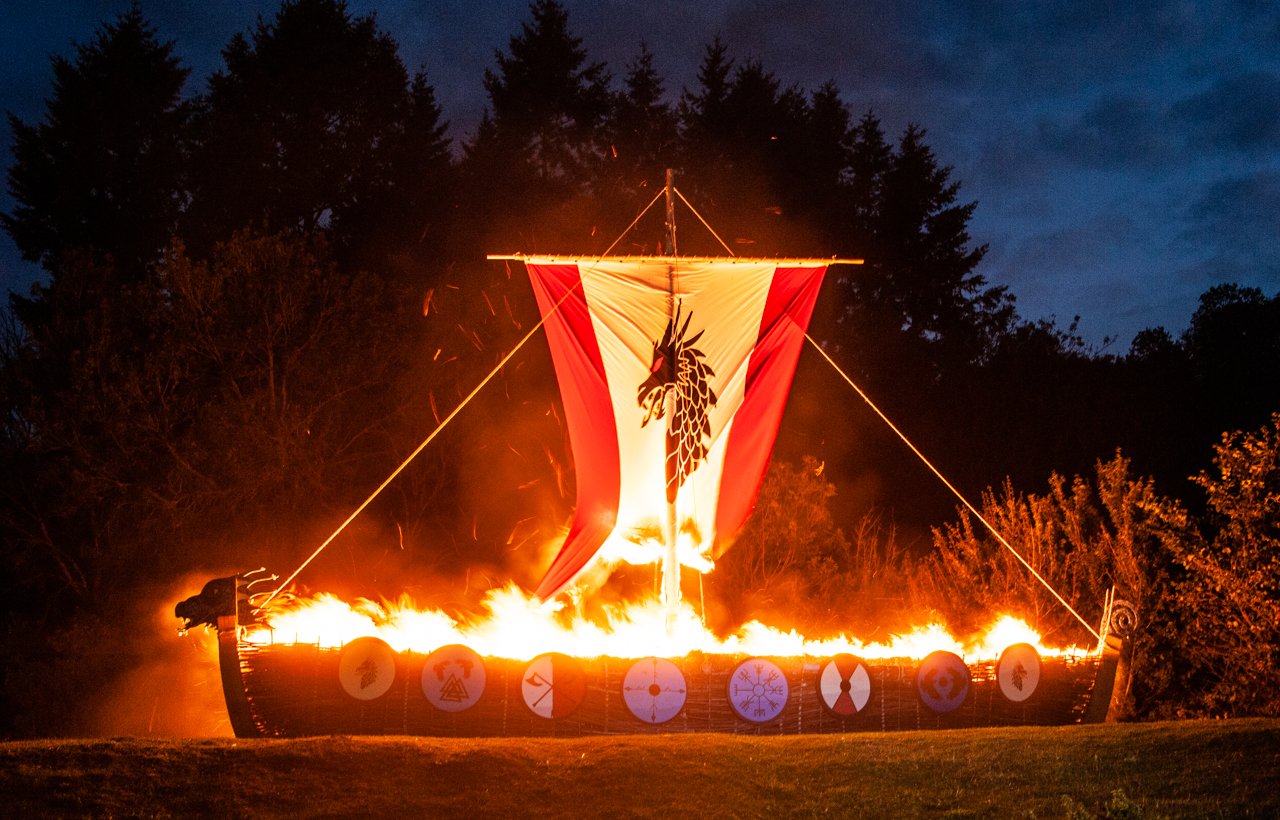
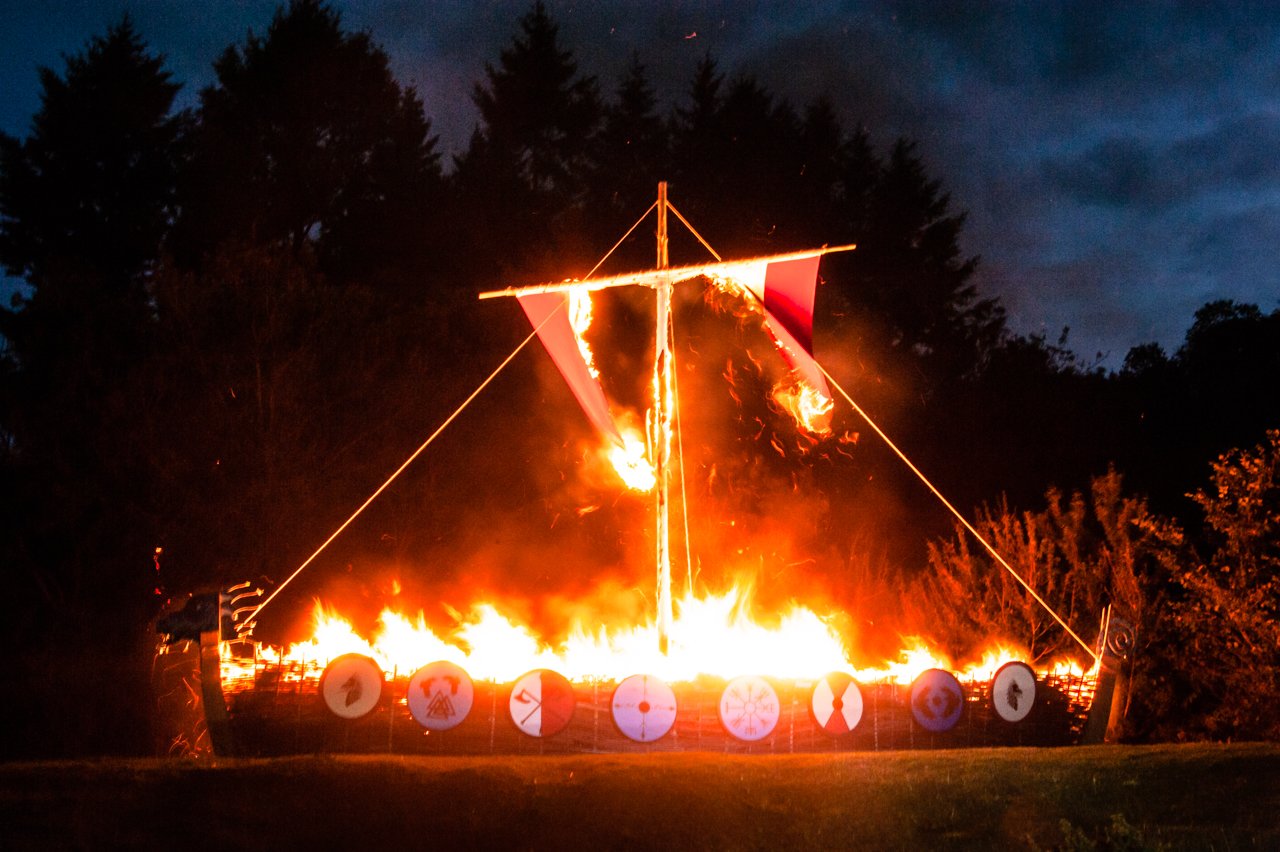
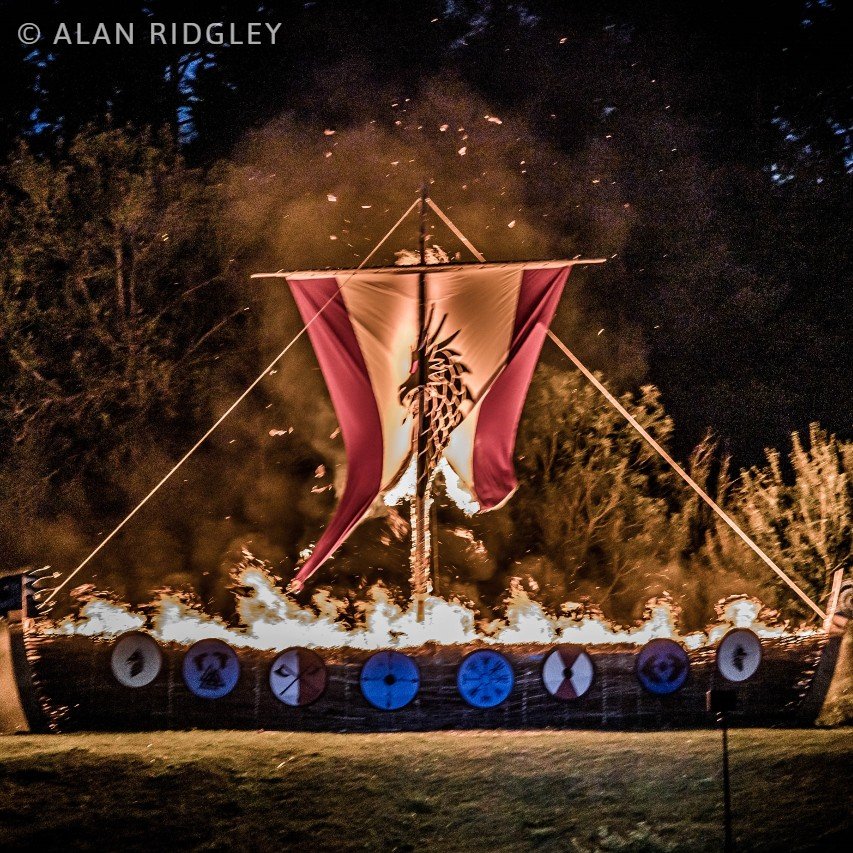
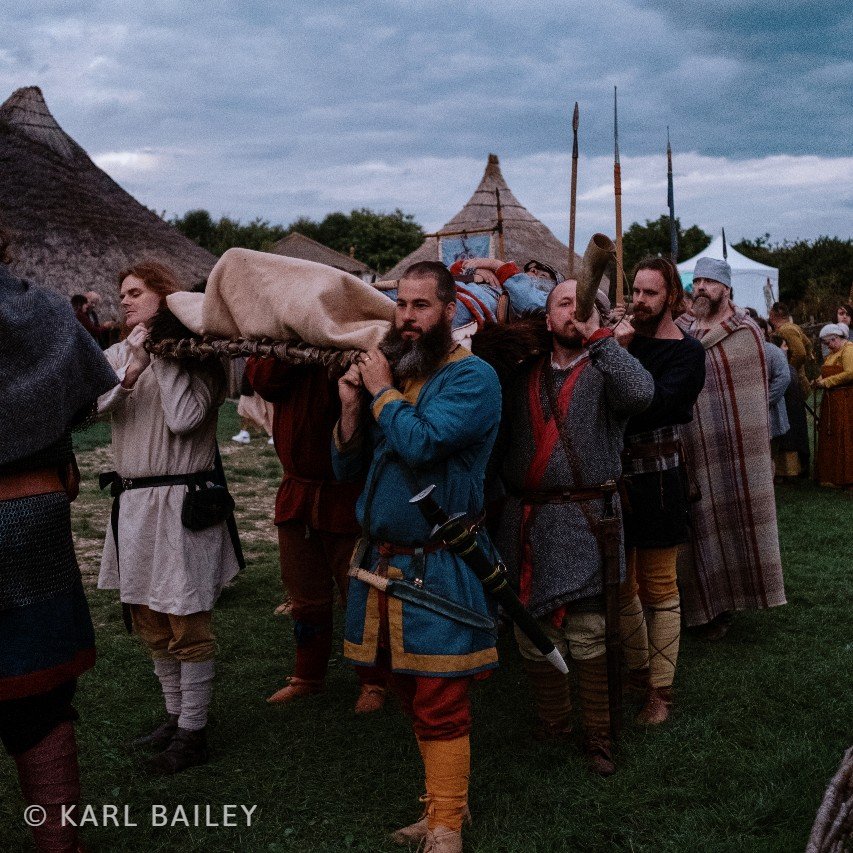
Viking Boat Burn for the Autumn Equinox 2022
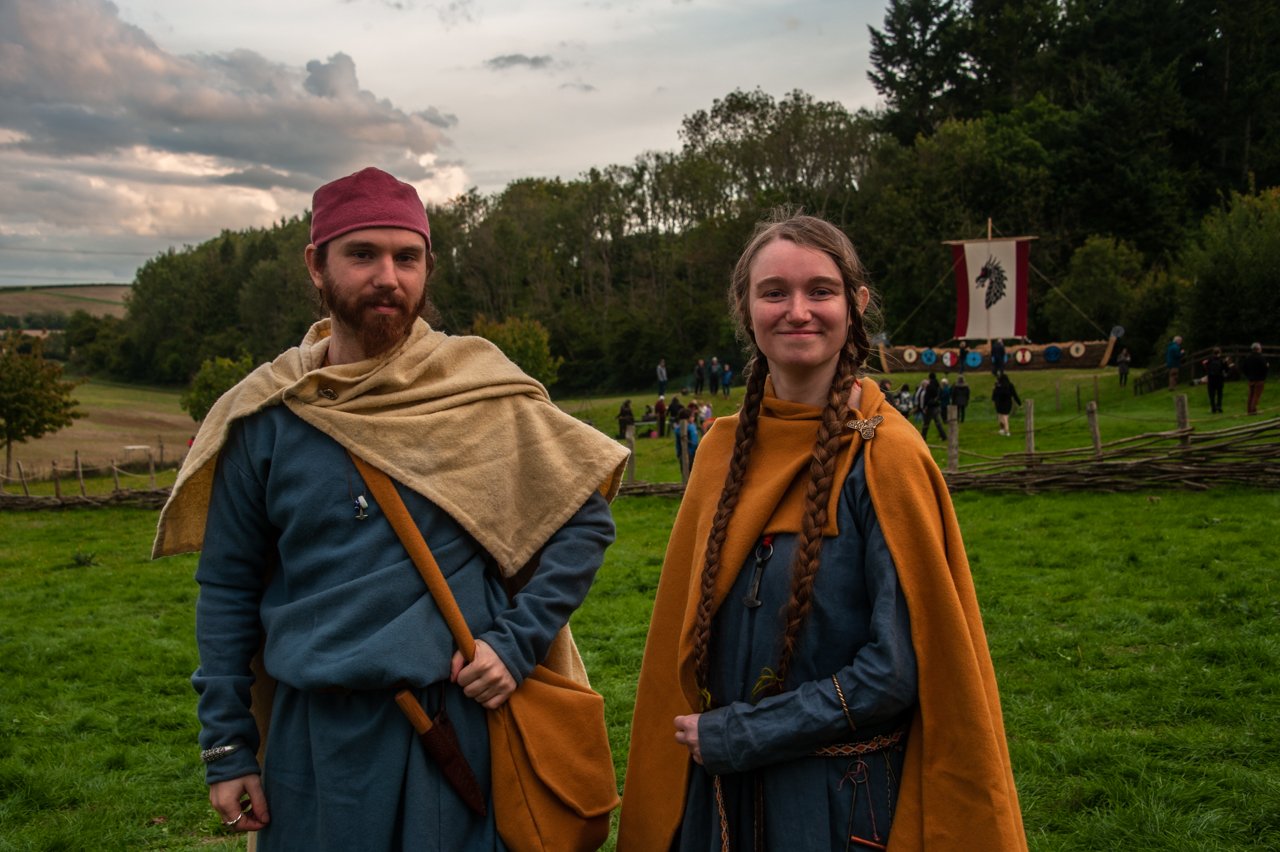
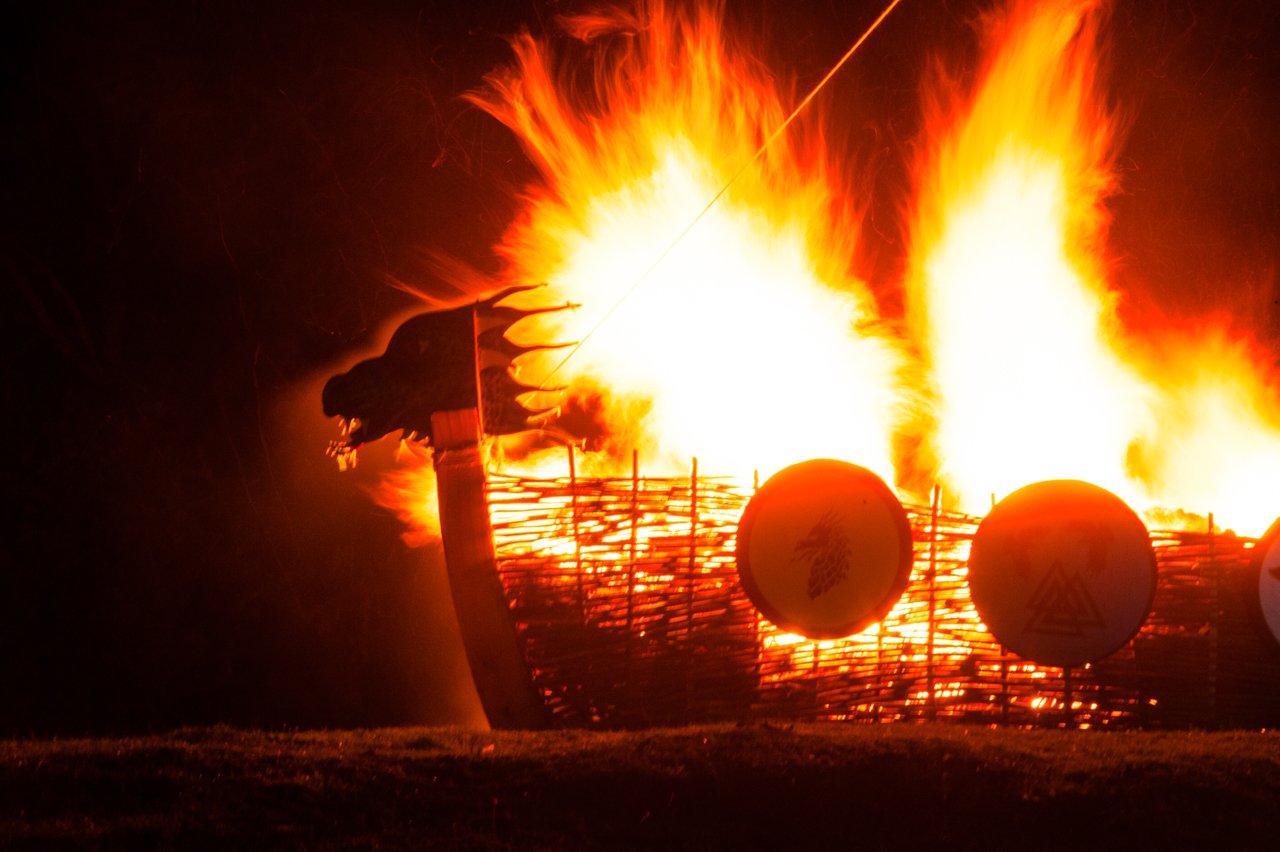
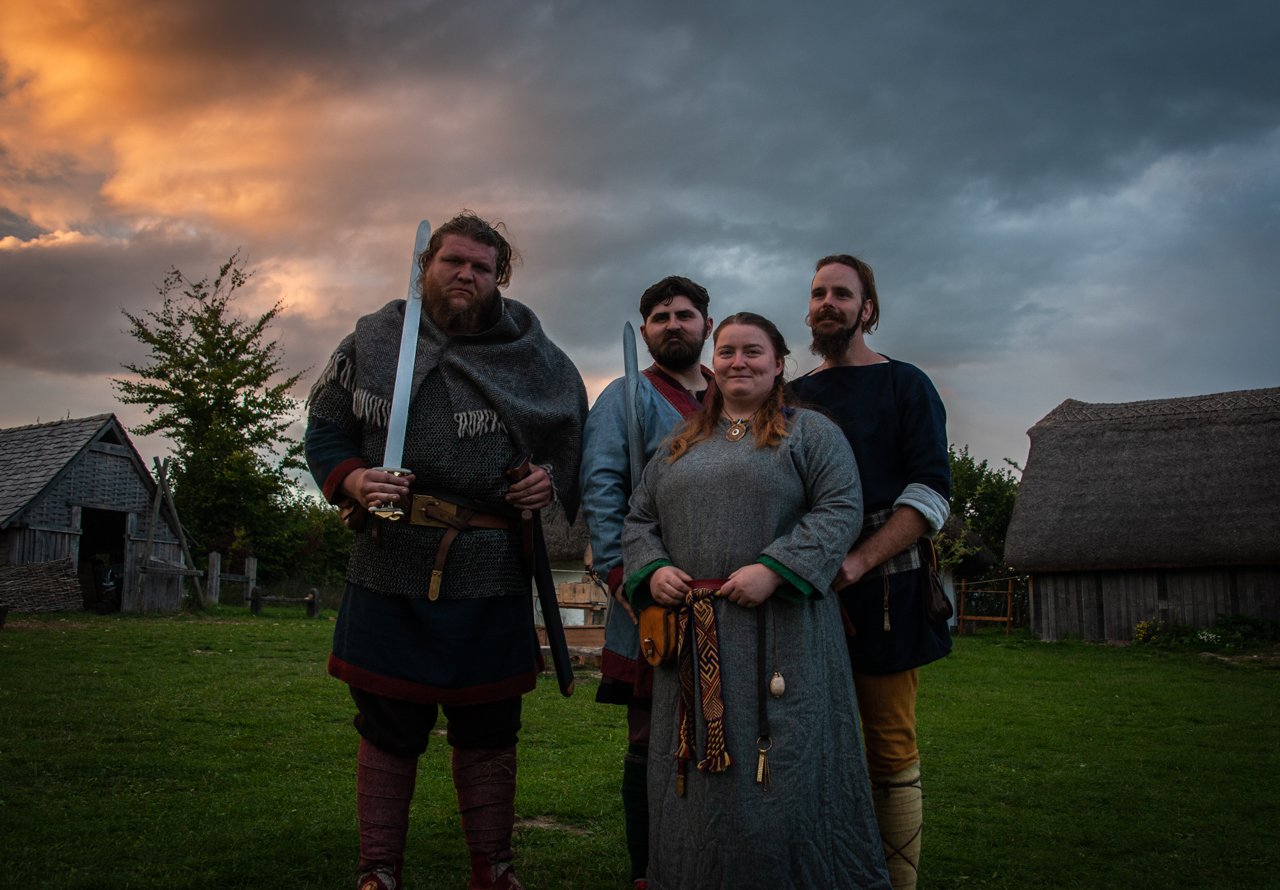
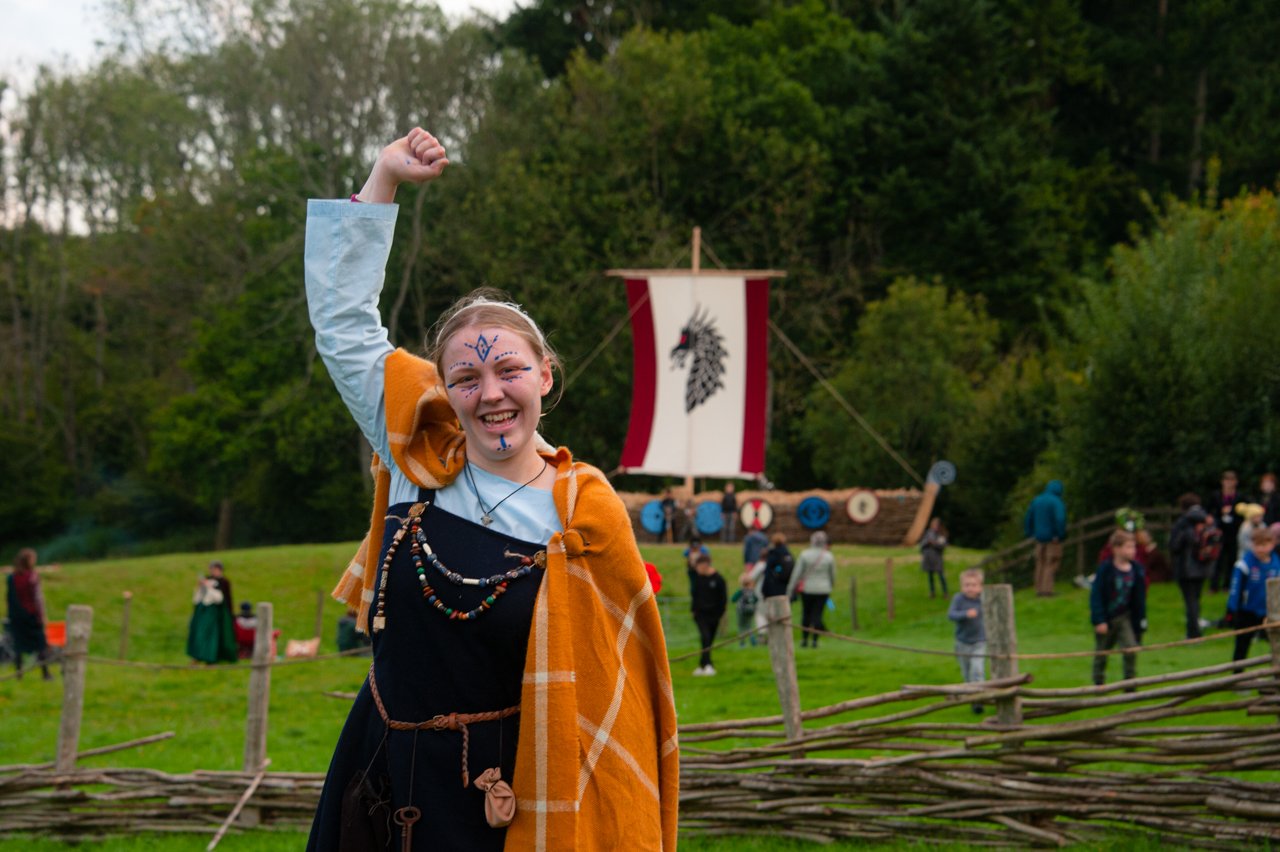
We celebrated the Autumn Equinox in style with a spectacular Viking boat burning! See some of our favourite pictures from this incredible event.
We celebrated the Autumn Equinox in style with a spectacular Viking boat burning!
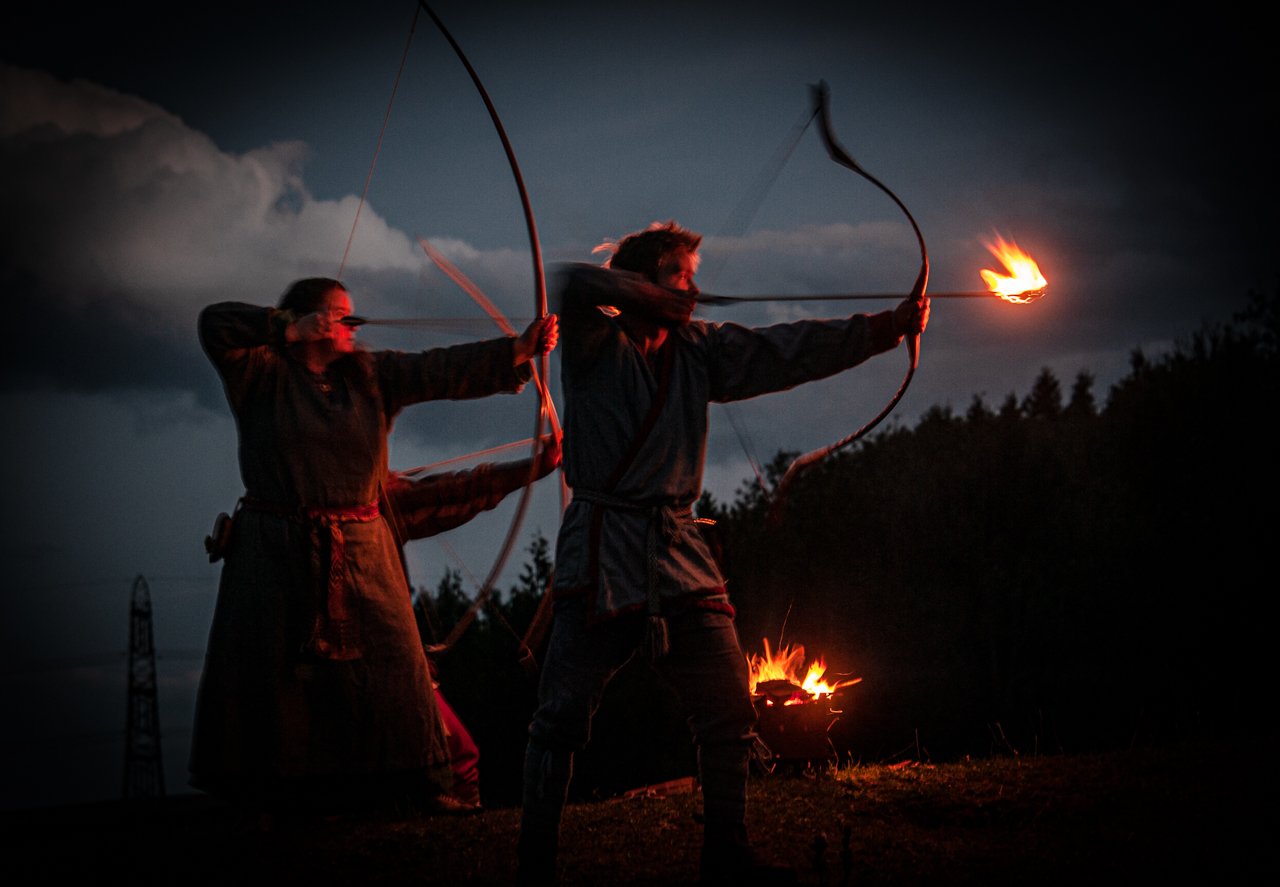
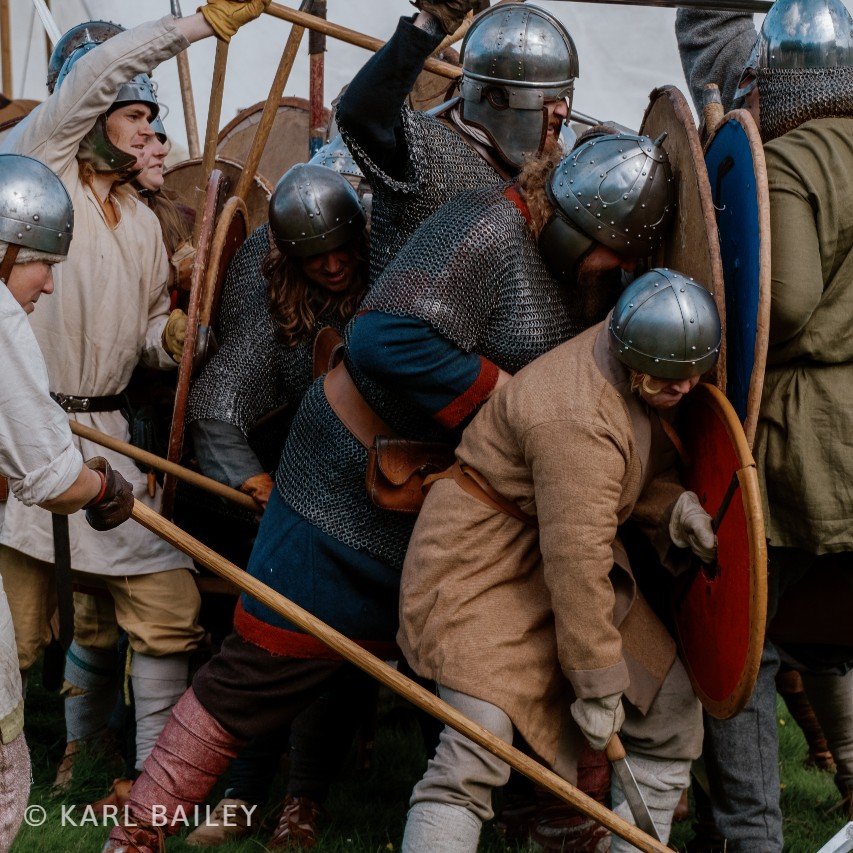
As the sun set on the last summer's day and the year turned to autumn, Vikings marched on our Saxon homeland, and a fierce warrior was lost... Stunning Viking music, an incredible reenactor battle, Saxon and Viking encampments, and of course, fire.
Thank you to everyone who joined us for this wonderful event! To everyone who made it out, to all our visitors and volunteers and supporters here, thank you for making things like this possible.
Stay tuned here for some of our favourite pictures from the event!
Relive the magic with our commemorative video!
Watch our short video from the event and relive the magic of the boat burn! See this and 40+ other videos on Butser Plus for just £2.99.
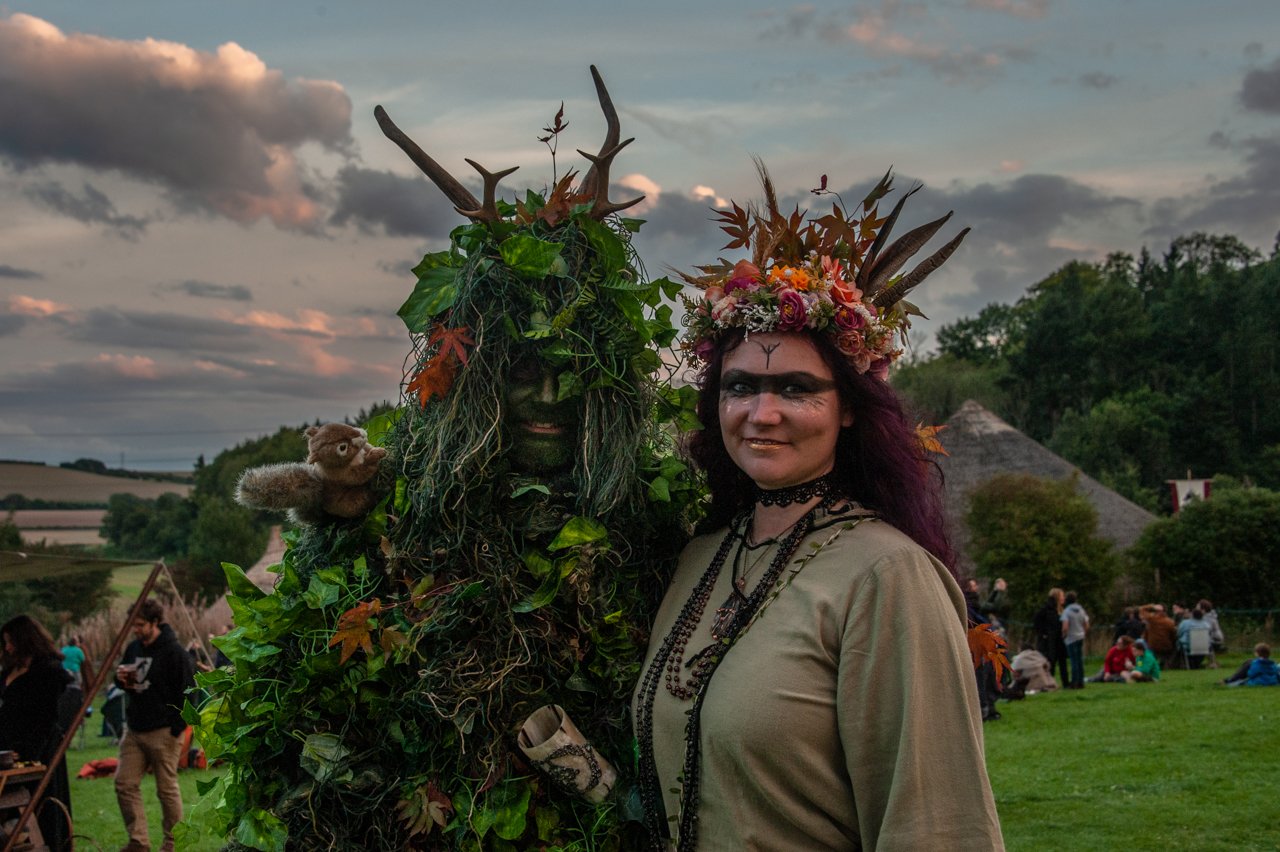
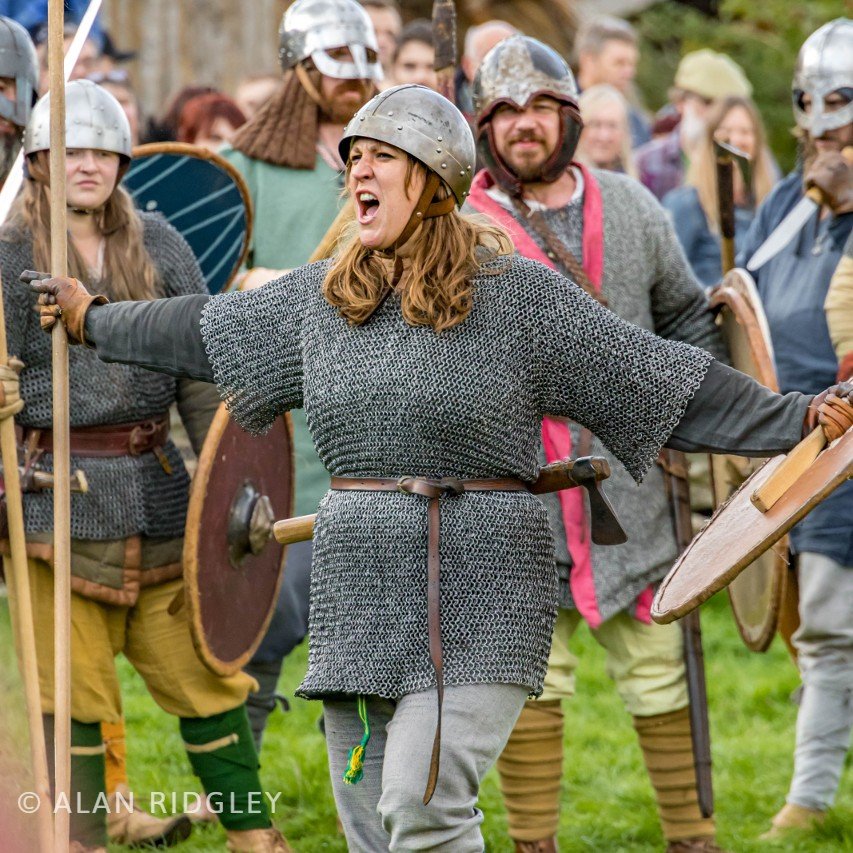
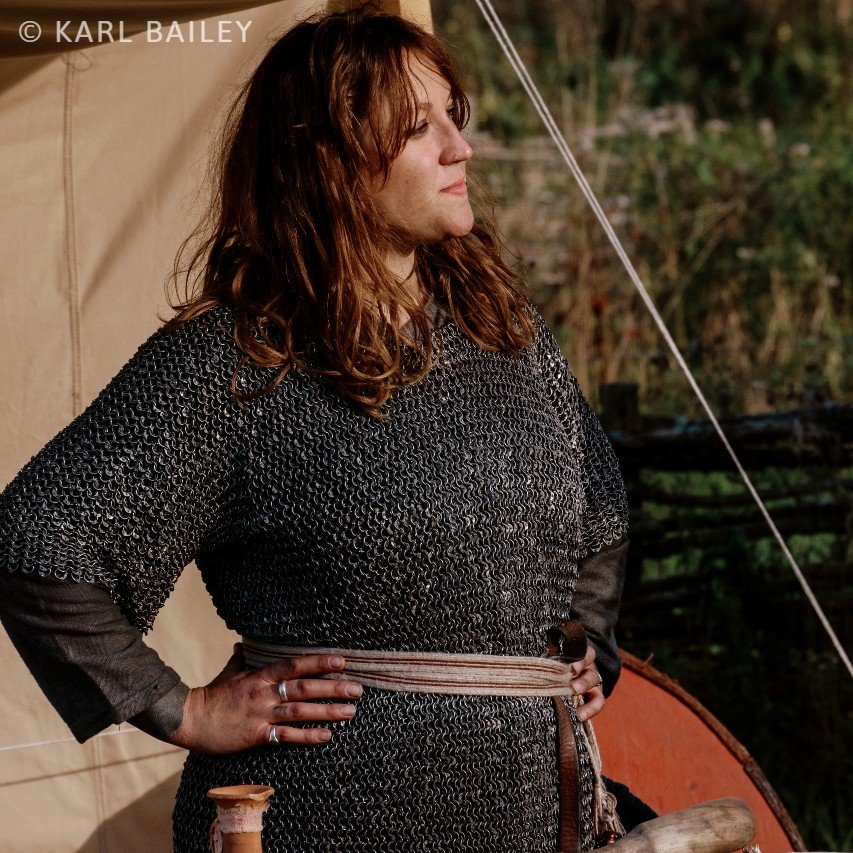
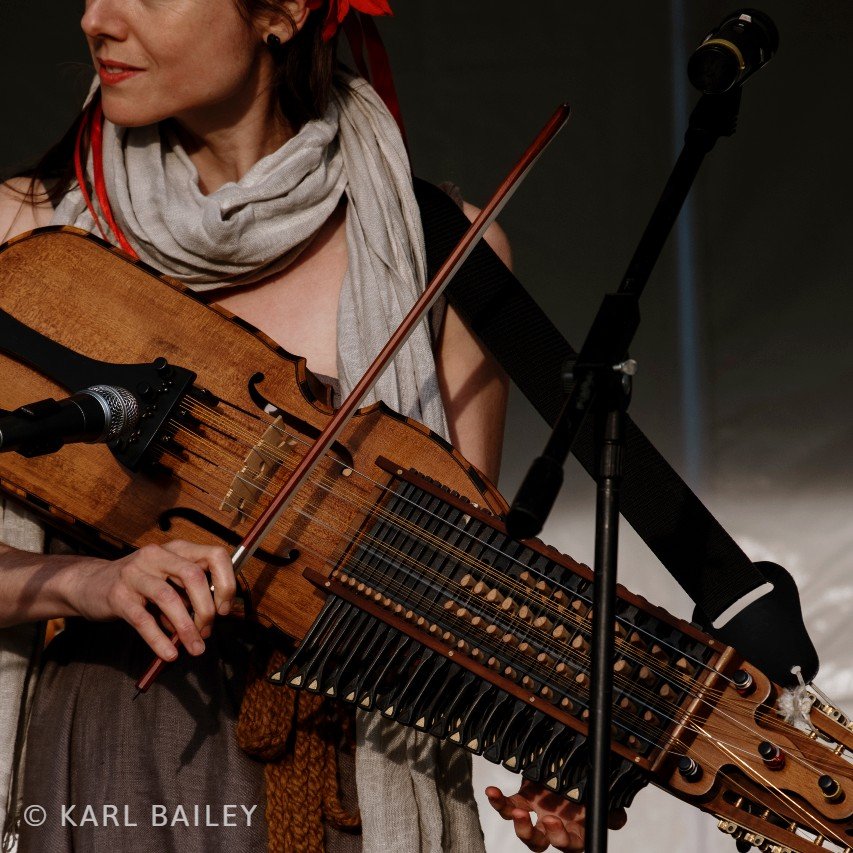
Photos from the Viking Boat Burn
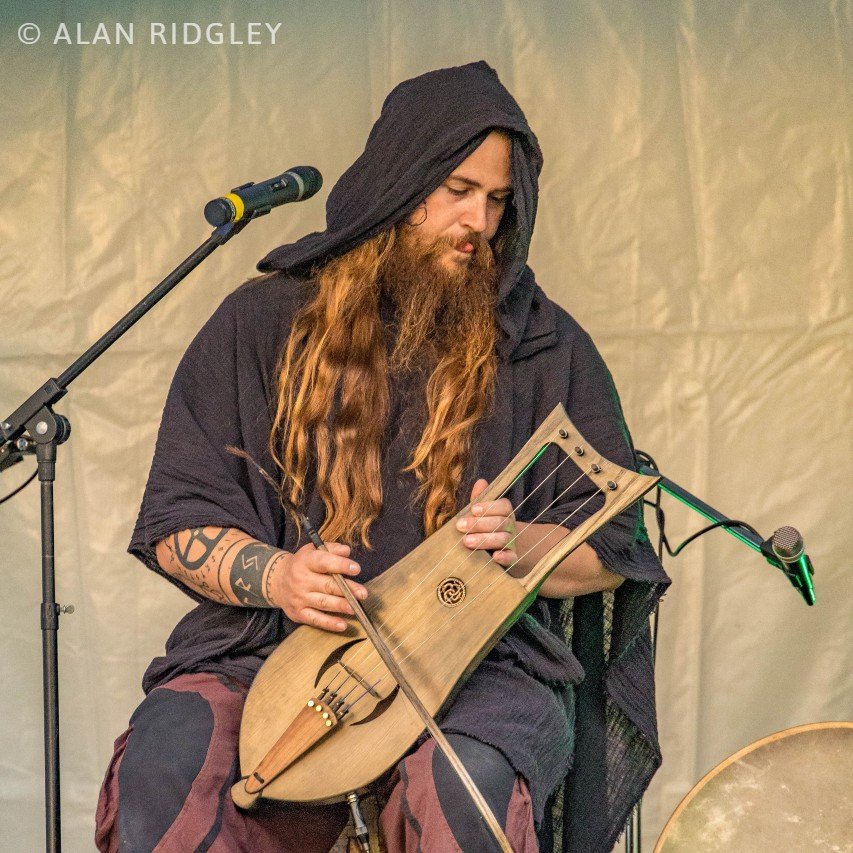
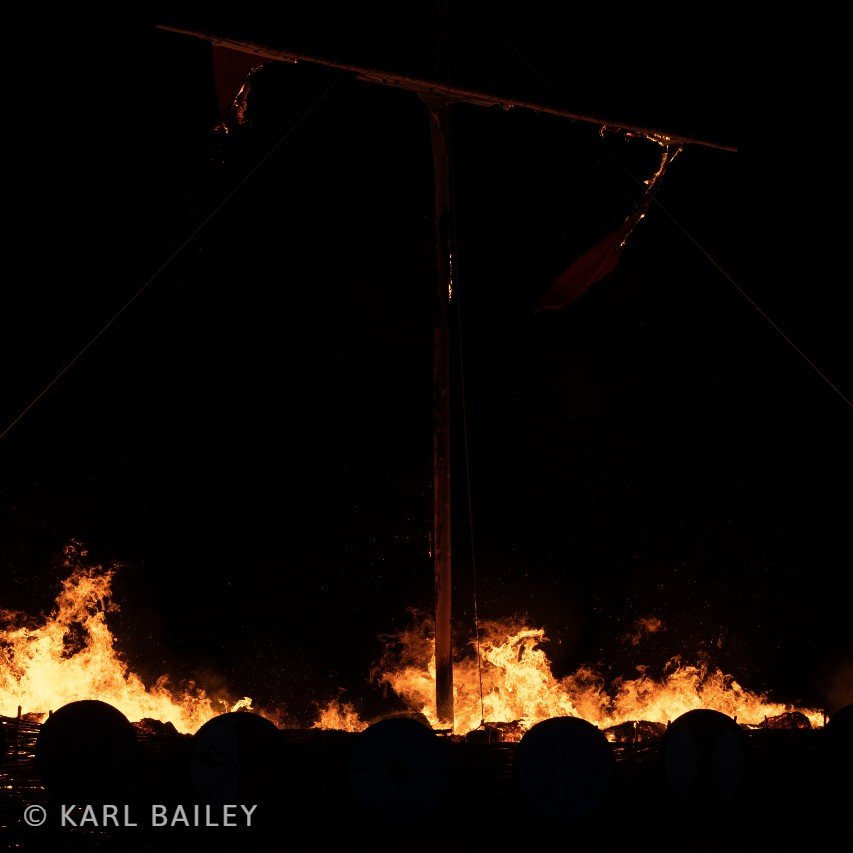
With all our thanks
To all our staff and volunteers, for your hard work on this event! To Herigeas Hundas the Saxon band and Wuffa the Vikings, for the wonderful atmosphere of your encampments and of course the big battle. To the musicians Anna Tam, Seidrblot, and Pentacle Drummers for your incredible performances. To Joe the Smithy, the Saxon Forager, and Jez Smith for your demonstrations. To Westcott woodworkers, Hare and Haber, and the Friends of Butser for your stalls, and Crepe Britain, Matt the hog roast, and the Mobile Coffee Box for your delicious food and drink! To Karl Bailey and Alan Ridgley for allowing us to use your stunning photos. And finally, to our supporters on Butser Plus, to our visitors, and to you 💚

An Experimental Charcoal Burn
During the Festival of Archaeology, we were joined by woodsman Mark Allery to demonstrate the process of charcoal making. He was helped by Katie, a student from Bournemouth University on a work placement here at Butser. Here she is reflecting on the experience — just one of many things she’s been helping us with on site!
During the Festival of Archaeology, I spent a day working with Mark Allery learning the process of making charcoal. It was fascinating to learn, as we did two different methods: using an oil drum and a traditional earth burn. The oil drum was used to produce a larger amount of charcoal to be used for other experiments, such as metalworking, whereas the earth burn was more of an experiment.
Typically, an earth burn would use 4-foot logs, arranged upright in a circular pattern around a central pole, which is then covered in bracken and then an earth clamp. However, the earth burn that we did was on a much smaller scale, almost 1/8th the size of a traditional earth burn. Burns of this size aren’t typically done, but we wanted to see if there would still be a good yield of charcoal when using smaller logs.

Arrangement of logs before the earth clamp was constructed.
Thin sticks and offcuts were stacked around a central pole in a triangle shape, to create a base structure and provide fuel for the burn. The logs we were burning were around 8-9 inches and had been cut in half vertically. This allowed us to lay them upright around the ‘pyre,’ alternating the direction they were facing. The first layers edge was flat against the side of the structure, then the next layer faced outwards, which was repeated until it created a circular shape around the central log and pyre. Lastly, more logs were laid on top of the pile, creating a layer to help stop dirt from falling through the wood. Fresh bracken was placed on the top and around the sides to give another protective layer before dirt was packed around the entire structure.
The central pole was then removed, and the hole was filled with wood shavings, chips and a cloth wick soaked in oil. The wick was lit, and the hole was sealed using a flat piece of wood, bracken, and more dirt, completing the earth clamp.
Oxygen and temperature play a significant role in the process of making charcoal. We found that, due to the size, it was difficult to control these factors in the miniature earth burn. With the oil drum, it was easier as there were holes that could be covered and uncovered, depending on how fast or slow the burning needed to happen. On the miniature burn, the smoke was still only coming out of the top, which meant that the wood that was lower down wasn’t being cooked and wouldn’t end up as charcoal. We decided to poke holes along the bottom of the clamp, to try and ‘throttle’ the burn by bringing more oxygen into it. We hoped this would increase the temperature and help to speed up the process.

The earth burn.
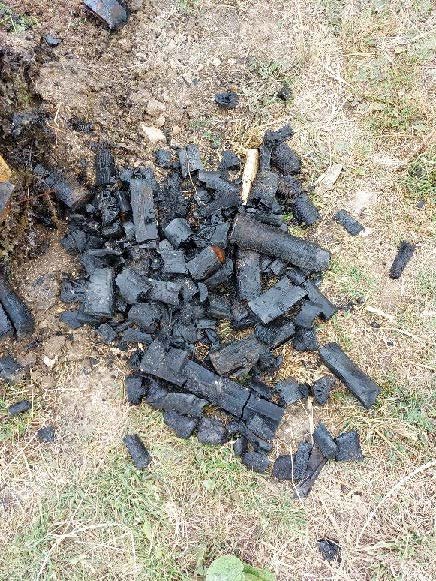
Charcoal produced by the earth burn.
In total, we left it to burn for around 4.5 hours before we stopped the process by pouring water on it and starting to remove the earth and bracken. The results of the experiment showed that only the top 2 inches of the logs had been turned into charcoal, and that the outermost logs hadn’t been burned at all.
We decided that when building up the wood, we should have sloped the sides, rather than leave them straight, to allow for better airflow. We also should have left it to burn for longer, but we were working under the time constraints of the day. The earth burns done on a larger scale can burn for several days, so our mini experiment might have yielded more charcoal, had we left it longer.

The oil drum.

Charcoal produced by the oil drum burn.
Even though the mini earth burn didn’t yield much charcoal, the oil drum did, with most of the wood becoming charcoal. This burn process was fully completed, allowing the wood to have a good chance to fully cook. We knew this because the smoke from the drum turned blue and then almost stopped. At this point, we placed the lid on, sealed the edges with sand and the holes at the bottom with earth. This stops any airflow into the drum, and stops the cooking process, allowing the charcoal to cool down so it can be used. When we lifted the drum, we found a pile of charcoal was then taken to other areas of the farm for use.
Even though the experiment didn’t go entirely to plan, it was still exciting to find out what would happen. Using the results, and corrections, we could re-do the experiment to see if an earth burn of this size could produce a good amount of charcoal in relation to how much wood you choose to burn. Learning this process was incredible, and I’m thankful that I got to experience it, alongside all the other skills I’ve learnt on my placement!

Theory Vs Practice – experimental brass production
Our Experimental Archaeologist Therese Kearns explains a recent experiment conducted as part of the Accidental and Experimental Archaeometallurgy conference at the Ancient Technology Centre in Dorset.
Our Experimental Archaeologist Therese Kearns explains a recent experiment conducted as part of the Accidental and Experimental Archaeometallurgy conference at the Ancient Technology Centre in Dorset.
Butser colleague Fergus Milton and I recently attended the Accidental and Experimental Archaeometallurgy conference organised by the Historical Metallurgy Society in the Ancient Technology Centre in Cranbourne, Dorset.
The conference programme was divided into oral presentations and practical experiments covering ferrous and non-ferrous metallurgy. This meant that there were furnaces of all shapes and sizes dotted around the site and a buzz of enthusiasm for high-temperature technologies, which makes these gatherings so wonderful.
Figure 1 Therese and Fergus experimenting with a variety of crucibles in the furnace.
The last time I attended this conference was in 2010 when I was involved with iron smelting experiments, but this time we decided to take a leap into the unknown and experiment with the production of brass.
While we were familiar with the theory of brass production by the cementation process, we had never tried it practically, so we were excited by the steep learning curve that awaited us!
Brass is an alloy of copper and zinc and has a yellow colour much like gold. It was prized in antiquity not just for its colour, but also because it was harder, stronger and more malleable and ductile than bronze (an alloy of copper and tin).
The Romans were producing brass using the cementation process by at least the 1st century BC. Initially, it was used for coinage, but it soon largely replaced bronze for the manufacture of decorative metalwork. Traditionally, the introduction of brass to Britain was associated with the arrival of the Romans, though there is some evidence of brass metal from late Iron Age contexts.
The metallurgy of brass is fascinating and more complex than other alloys such as bronze where the alloy constituents (copper and tin) are mixed together in their molten state. Zinc melts at 419°C and vaporises when heated above 907°C which is below the melting point of copper (1083°C). This means that zinc and copper cannot be in a molten state at the same time so they can’t be melted together. In antiquity, the brass manufacturing process involved first producing zinc oxide by crushing zinc carbonate ore (such as calamine) and layering it with powdered charcoal (which acts as the reducing agent) then roasting it at around 700°C. The carbon combines with oxygen which is released as carbon dioxide gas (CO2), leaving behind zinc oxide (ZnO).
The zinc oxide was then placed in a crucible with charcoal and granulated or finely divided copper. The zinc oxide reacted with the carbon inside the crucible to produce zinc vapour which diffused through the copper while in its solid state. It was crucial that the crucible was sealed, otherwise, the zinc vapour would be lost to the atmosphere. It was also important to control the temperature so that it remained below the melting point of copper to ensure the copper remained solid until the maximum diffusion of the zinc vapour had occurred. If the copper melted, it would sink to the bottom of the crucible and reduce the surface area available to absorb enough vapour to form brass.
Our experiments were inspired by metalworking debris excavated at the Westward House area of Fishbourne Palace in the 1990s. Among the excavated finds were fragments of crucibles and moulds which were used for making and casting brass.
The fragments were from two distinct crucible forms – handmade triangular shallow bowls – a type well known from late Iron Age contexts, and small wheel-thrown jars with an extra outer layer of ceramic material, examples of which were also found in Roman contexts in Cirencester, York and Silchester.
As these experiments were our first venture into practical brass production our main aim was to get a feel of how the process might have worked, explore different crucible types and understand the working temperatures required for the process.
We had hoped to use a thermocouple to take regular temperature readings, but unfortunately, the thermocouple malfunctioned, so we had to do without apart from one run when we were able to borrow from a colleague.
All the experiments were conducted in a shallow bowl furnace with air input via a tuyere extending to the centre of the furnace pumped through a small set of goat-skin bellows.
We had prepared a range of crucibles of different shapes and sizes, all hand-built, and some similar to the triangular forms seen in the archaeological assemblage from Westward House. The crucibles had to be strong enough to hold the metal and resist the heat but also needed to be sealed to avoid the loss of zinc vapour. We were unable to procure any zinc ore but were happy that zinc metal would suffice for these initial experiments and would not detract from our broad understanding of the process.
The learning curve was every bit as steep as we had expected and although we were experienced in smelting copper and casting bronze in a similar furnace where temperatures above 1000°C are required, the requirements for this process were very different. Here, the challenge was to achieve temperatures above 907°C but under 1083°C and maintain it for as long as the process required. How long was that? We had no idea!
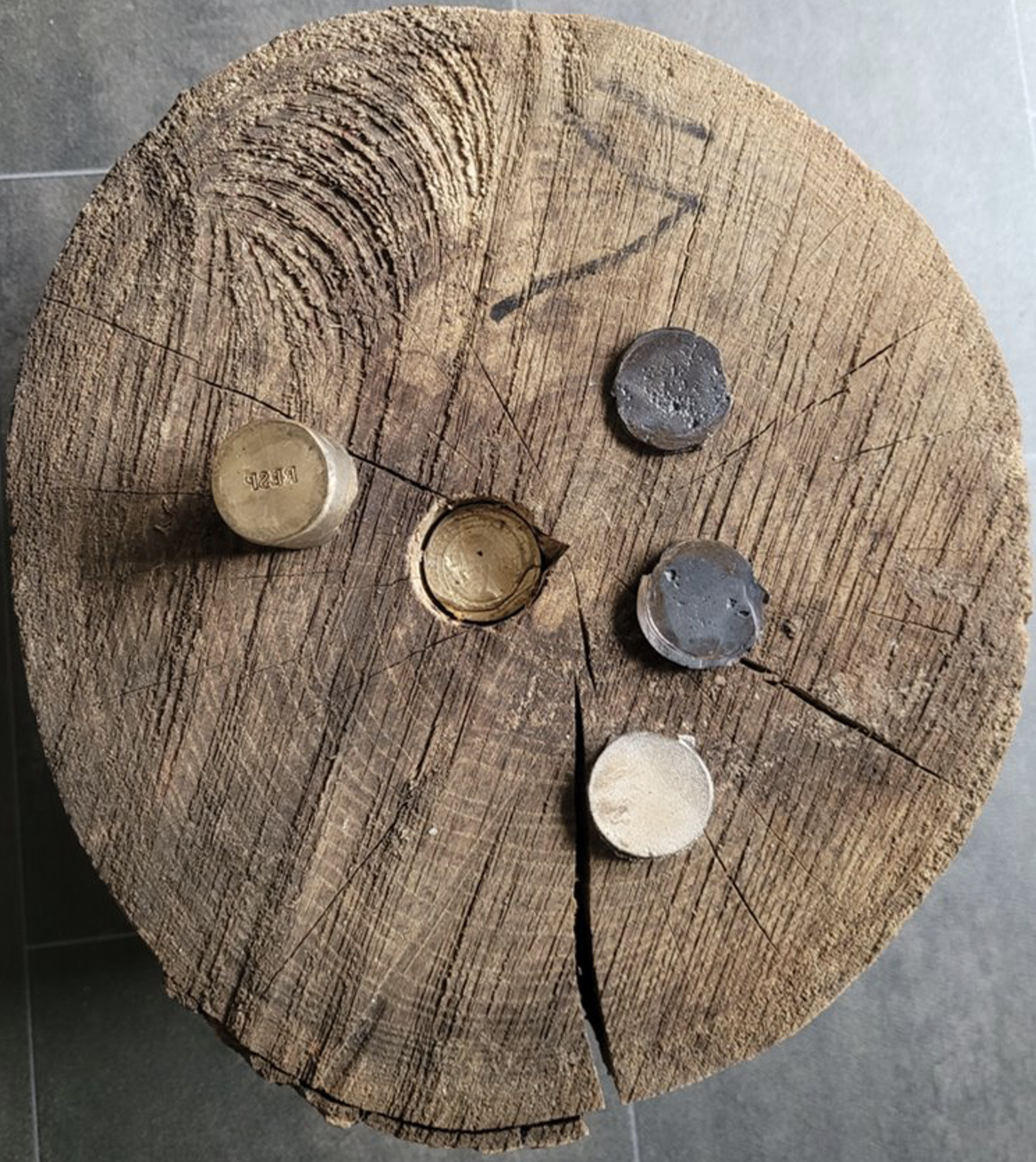
For our first attempt, we used a crucible with an indented lid (figure 2) which we hoped would be self-sealing. The crucible was charged with 50g of copper prills and 15g of granulated zinc. When we thought we had reached around 1000°degrees (which we gauged by the colour in the furnace) we continued to bellow for 12 minutes at which point we stopped and opened the crucible to have a look inside. The zinc was still solid suggesting that we had not reached a high enough temperature and certainly not high enough to penetrate through the crucible fabric. We continued to bellow trying to ensure that the heat was being distributed right across the furnace and into the crucible wall. After a further 25 minutes, when we opened the crucible, it was clear from the colour of the metal that some brass has been produced, however, we had also melted the contents of the crucible and a solid ingot weighting 63g lay at the bottom. The exciting thing was that the ingot was clearly brass on both sides, though we have yet to determine how deep that penetration goes.
In total, we ran four experiments using crucibles of different forms and fabrics and different methods of sealing lids, using clay, dung, leather and sheep's wool. We had varying success on each attempt and in hindsight, I believe that we were being too cautious about the temperature control after we melted the entire contents of the crucible on our first attempt. In subsequent attempts, it was clear that we had created some brass, but we opened the crucible too soon, just as the vapour was just starting to diffuse into the copper but before the process was complete.
On the one occasion when we did have access to a thermocouple it showed that we reached 1160° C in the furnace after bellowing for six minutes at a rapid rate, when bellowing stopped the temperature decreased by consistent jumps of 100°C, which showed us that to maintain a temperature just over 900°C we needed to slow down the bellows dramatically.
We learned lots of lessons from these experiments and will be much more informed for our next attempt – so watch this space!

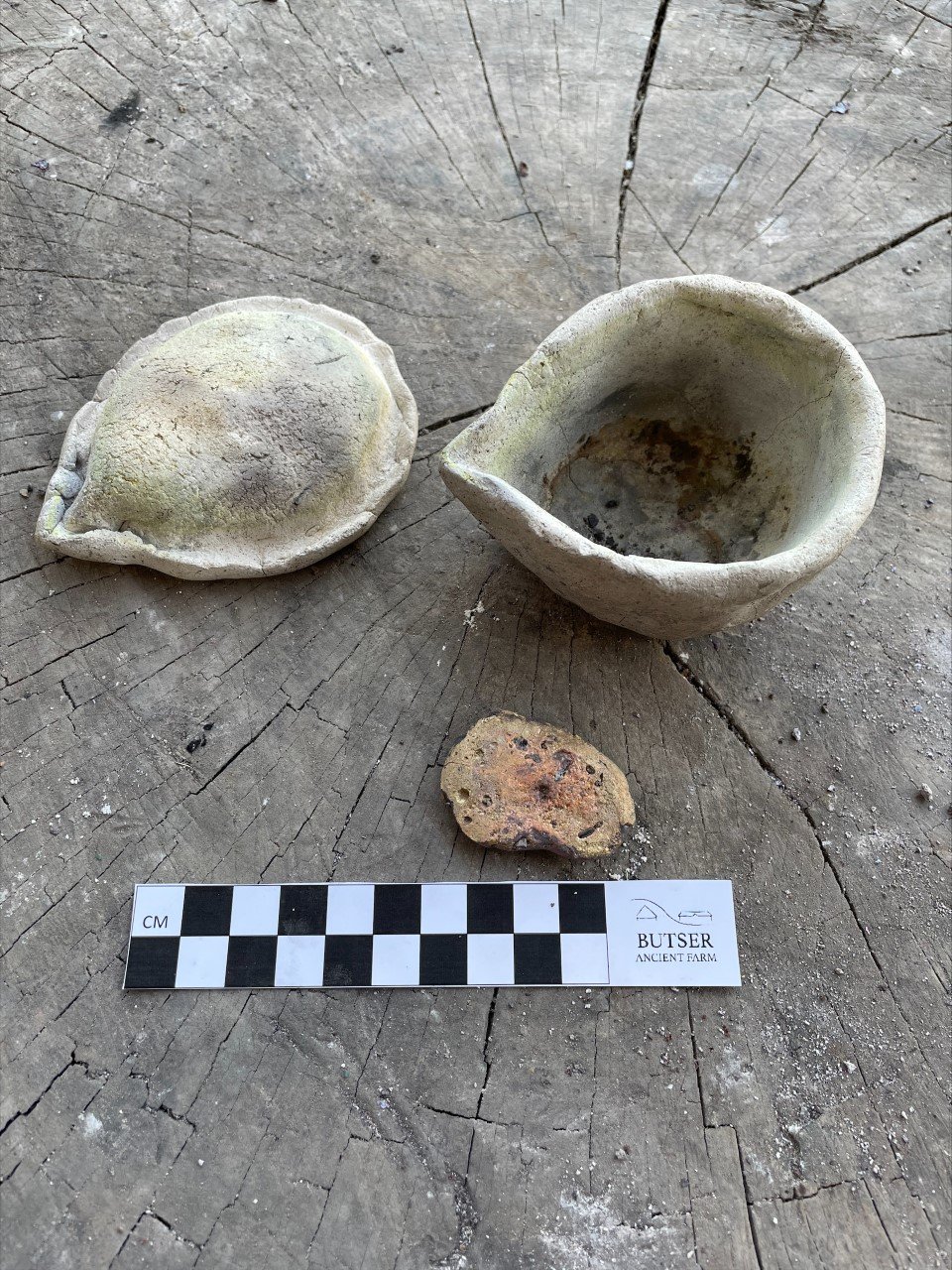
Figure 2 A lidded crucible ready to go into the furnace, and the resultant ingot with the distinctive brassy colour visible on the underside.

Triangular crucible sealed with clay, straw and dung mix.

Blog archive
- April 2026 1
- March 2026 2
- February 2026 4
- January 2026 5
- December 2025 6
- November 2025 2
- October 2025 2
- August 2025 1
- March 2025 2
- January 2025 1
- December 2024 1
- October 2024 2
- July 2024 1
- June 2024 2
- April 2024 1
- October 2023 1
- September 2023 1
- August 2023 1
- July 2023 1
- June 2023 1
- May 2023 2
- April 2023 2
- February 2023 1
- January 2023 1
- November 2022 1
- September 2022 1
- July 2022 2
- March 2022 1
- February 2022 2
- January 2022 1
- December 2021 1
- November 2021 2
- October 2021 3
- September 2021 2
- August 2021 5
- July 2021 2
- June 2021 3
- May 2021 3
- April 2021 2
- March 2021 4
- February 2021 1
- October 2020 1
- September 2020 2
- July 2020 1
- February 2020 4
- January 2020 4
- December 2019 3
- November 2019 3
- October 2019 1
- September 2019 1
- August 2019 1
- July 2019 1
- June 2019 6
- May 2019 3
- March 2019 2
- February 2019 3
- January 2019 2
- December 2018 1
- October 2018 1
- September 2018 2
- August 2018 3
- July 2018 4
- June 2018 2
- May 2018 2
- April 2018 2
- February 2018 6
- January 2018 1
- September 2017 1
- August 2017 5
- July 2017 4
- June 2017 3
- May 2017 1
- April 2017 1
- March 2017 3
- February 2017 2
- January 2017 3
- December 2016 1
- November 2016 2
- October 2016 1
- August 2016 1
- July 2016 2
- June 2016 2
- May 2016 3
- April 2016 2
- March 2016 1
- February 2016 2
- January 2016 1
- December 2015 3
- November 2015 2
- October 2015 1
- September 2015 1
- August 2015 2
- July 2015 1
- June 2015 2
- May 2015 2
- April 2015 3