
UCL’s ‘Prim Tech’ Course is coming to Butser Ancient Farm!
See below for an exciting update about a new partnership between the farm and the UCL Institute of Archaeology.
See below for an exciting update about a new partnership between the farm and the UCL Institute of Archaeology.

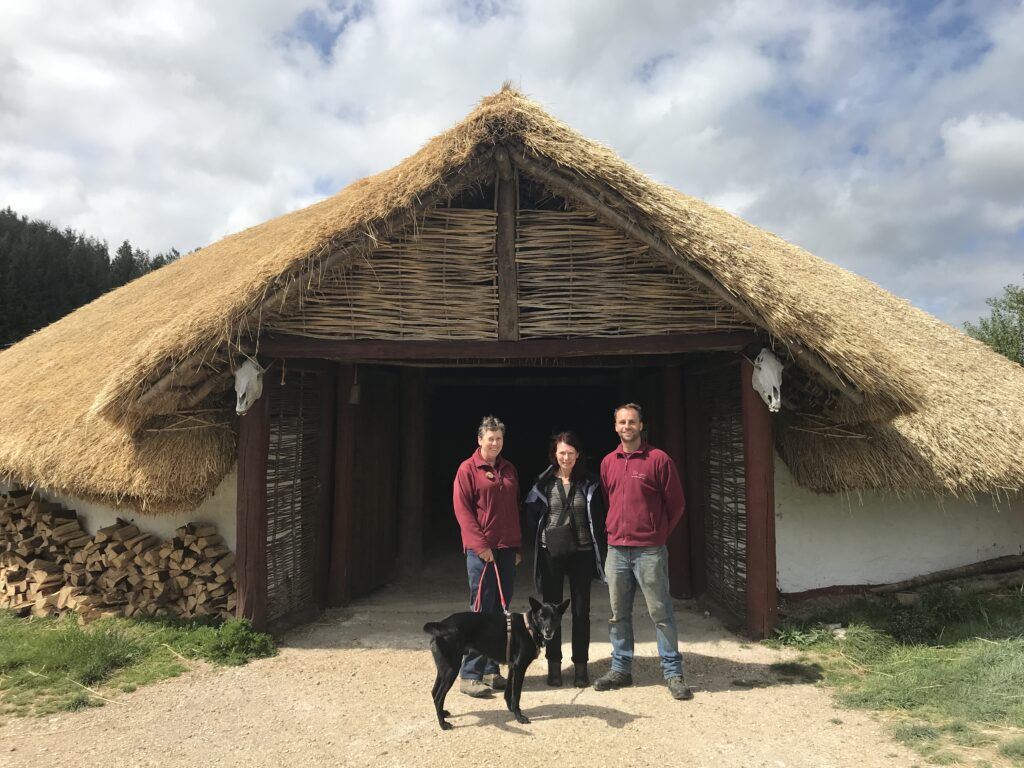
Left to right Maureen Page (Butser Ancient Farm Director), Fagan the dog, Sue Hamilton (UCL-IoA Director), Simon Jay (Butser Ancient Farm Director) outside the farm’s Iron Age round house.
‘We are delighted to announce that, from September 2019, Butser Ancient Farm will be hosting the UCL Institute of Archaeology’s annual ‘Prim Tech’ course marking the start of what both institutions intend to be a period of partnership in teaching, research, and public engagement in the technologies of the past and their contributions to present-day issues of sustainability.
The ‘Primary Technologies’ course has been run every year by the UCL Institute of Archaeology since 1982. It introduces their first year students, in the very first week of their time at University, to the basic elements of technology, essential crafts and skills. These include making stone tools, extracting copper from ore, making and firing clay pots, processing crops to make bread, and learning about constructing ancient buildings. As well as these core skills the students learn how important experiments are in understanding the past, how to build useful experimental approaches to archaeology and how to use the results to interpret data in more nuanced and sophisticated ways,
In considering where to relocate this course, after more than a decade based in West Sussex, Butser Ancient Farm was an obvious choice. Founded in 1972 by the celebrated experimental archaeologist Peter Reynolds, Butser has been a pioneering force in understanding ancient farming and prehistoric technologies and is internationally recognised for its contribution to the field. Run today as a community interest company, Butser Ancient farm is a powerful force in school and adult education in exploring the human past and in providing opportunities for unique experiences and experiments in the technologies encompassed by past societies and still used by many traditional societies.
Butser Ancient Farm Director, Maureen Page said
“I am excited to welcome UCL Institute of Archaeology to Butser Ancient Farm. For us this signals a new chapter in the farm’s development. We value this collaboration as it will enhance our ability to promote current research and encourage the enthusiasm of new archaeologists, enabling us to bring this knowledge and understanding to a wide and varied audience. Experience, experiment and education were the founding principles of Butser Ancient Farm for Peter Reynolds and this opportunity will help us to reinforce these principles.”
UCL Institute of Archaeology Director, Sue Hamilton said
“I’m thrilled by this collaboration and it could not be at a better place. The common ethos and interests of the UCL Institute of Archaeology and Butser Ancient Farm makes this a compelling partnership centre around investigating ‘primary technologies’ to better elucidate the past and provide more alternatives for sustaining present-day environments and resources.”
Both teams are now working to prepare for this September’s Prim Tech and welcoming the 2019 cohort of Institute of Archaeology first years. For the future, we hope to work together to deliver new research and exciting projects for the wider public.’
For further information, please contact:
Jo Dullaghan, UCL-Institute of Archaeology Research (Pre-Award) Administrator & Communications Manager, j.dullaghan@ucl.ac.uk
Maureen Page, Director Butser Ancient Farm, 023 9259 8838 (UK) or +44 23 9259 8838 (International)
Butser Wildlife Watch - June 2019
An update on our recent wildlife sightings including a surprise new lamb, striped lychnis moths, and Darnel.
We’ve been keeping track of the wonderful wildlife we see here at Butser as the seasons change. Here is our June update written by team member Victoria Melluish on what we’ve witnessed this month!
The humidity, rain and sunshine seem to have truly given the flora what it needs, the farm is looking remarkably vibrant and full of life! A magnificent ambiance for the summer solstice this year.

This month has been rather surprising in many ways, with the most surprising one of all being a new born lamb found cuddled up next to her mother in one of our sheep fields. A late edition to the farm but a welcomed one for sure, it’s impossible to be out on the farm without hearing the cooing and aww’ s of the public and staff when passing the little woolly late comer. We decided to name her Solstice, she will be going to her new home in August to be a part of a new flock of Manx Loughton.
For the insect enthusiasts out there this is the perfect time to visit the farm, our Mullein caterpillars have emerged and they are looking rather striking, enjoying themselves it seems whilst they munch through the Mullein plants, they are very easy to spot! This of course beckons the rare Striped Lychnis caterpillar whose species looks incredibly similar to the Mullein caterpillar the difference is in the stripes and type of mullein plant they prefer. Striped Lychnis only eat dark mullein plants, so it is crucial to preserve them. By working with the Butterfly conservation charity we have been able to gradually increase the numbers each year. We should be expecting them in early July, however I am already searching every dark mullein plant on site just to make sure!

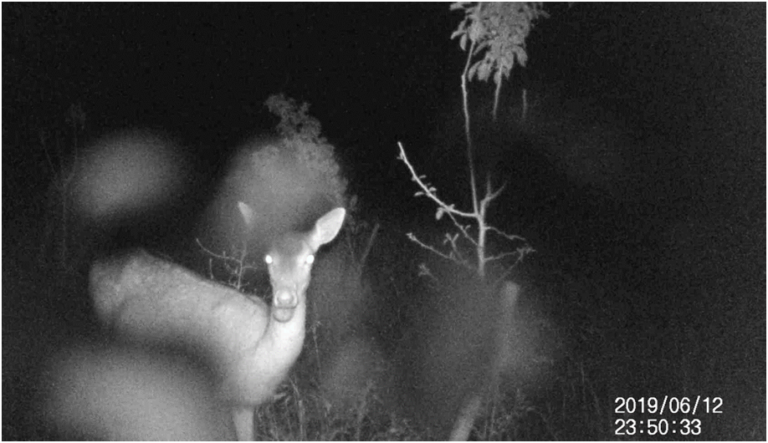
Our beautiful Roman garden has had some newly planted trees by archaeologist Claire, which have been mysteriously nibbled. We put out our trail camera to see what naughty creature has been using the new trees as their own personal buffet and it turns out that the culprit is a fallow doe. It is likely that she has a fawn with her somewhere, so the leaves must be providing her with much needed nutrients! Luckily she doesn’t seem to be interested in them now that she’s nibbled her favourite bits.

In our Stone Age crop field we have been astounded by the healthy growth of our darnel seeds, they have flourished and are doing very well to the surprise of Dominic Price from The Species Recovery Trust, who has said that his plugs have not survived on any other plot of land accept ours, very curious!


Roman Villa renovations complete!
Renovations of the Butser Roman Villa have been completed!
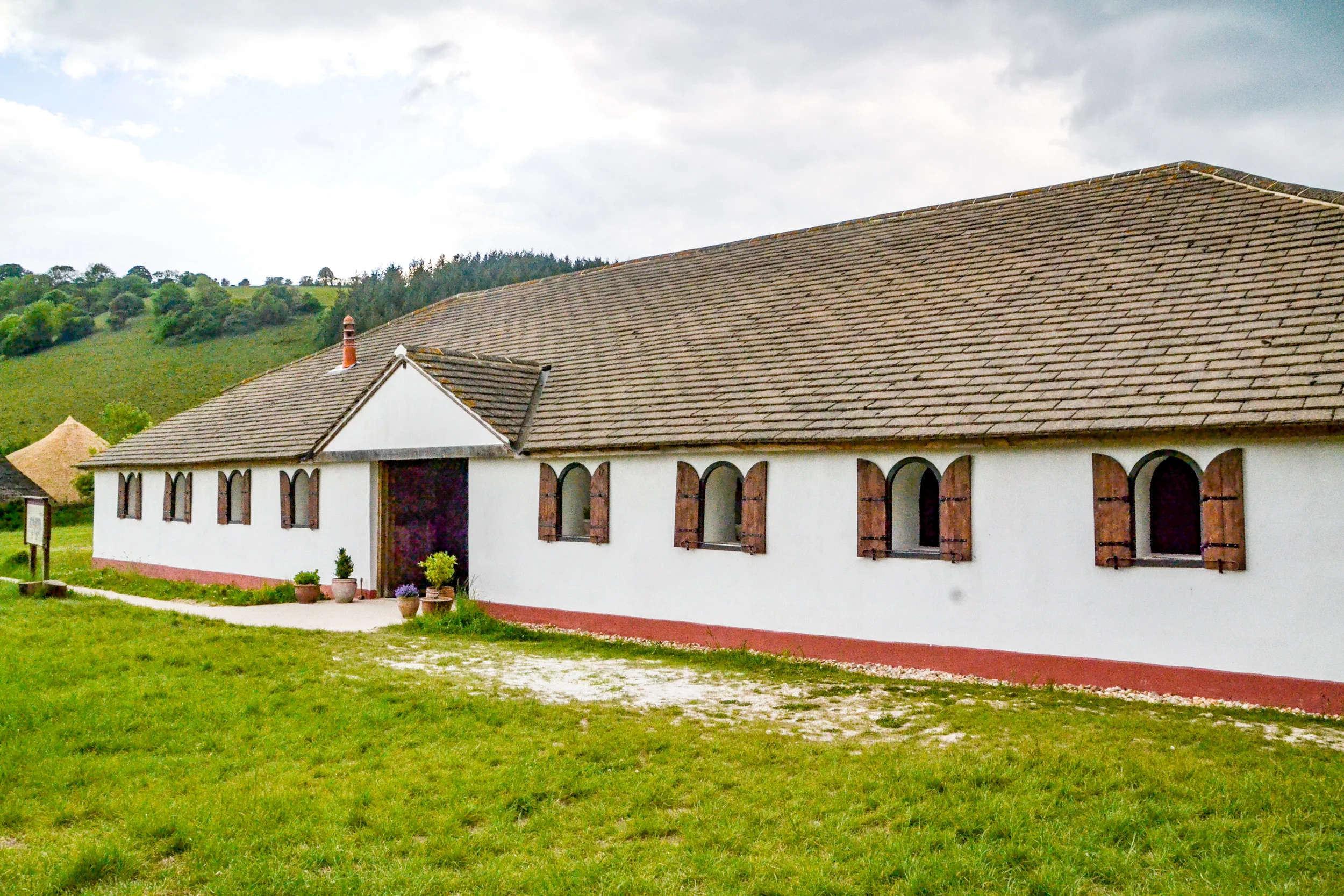
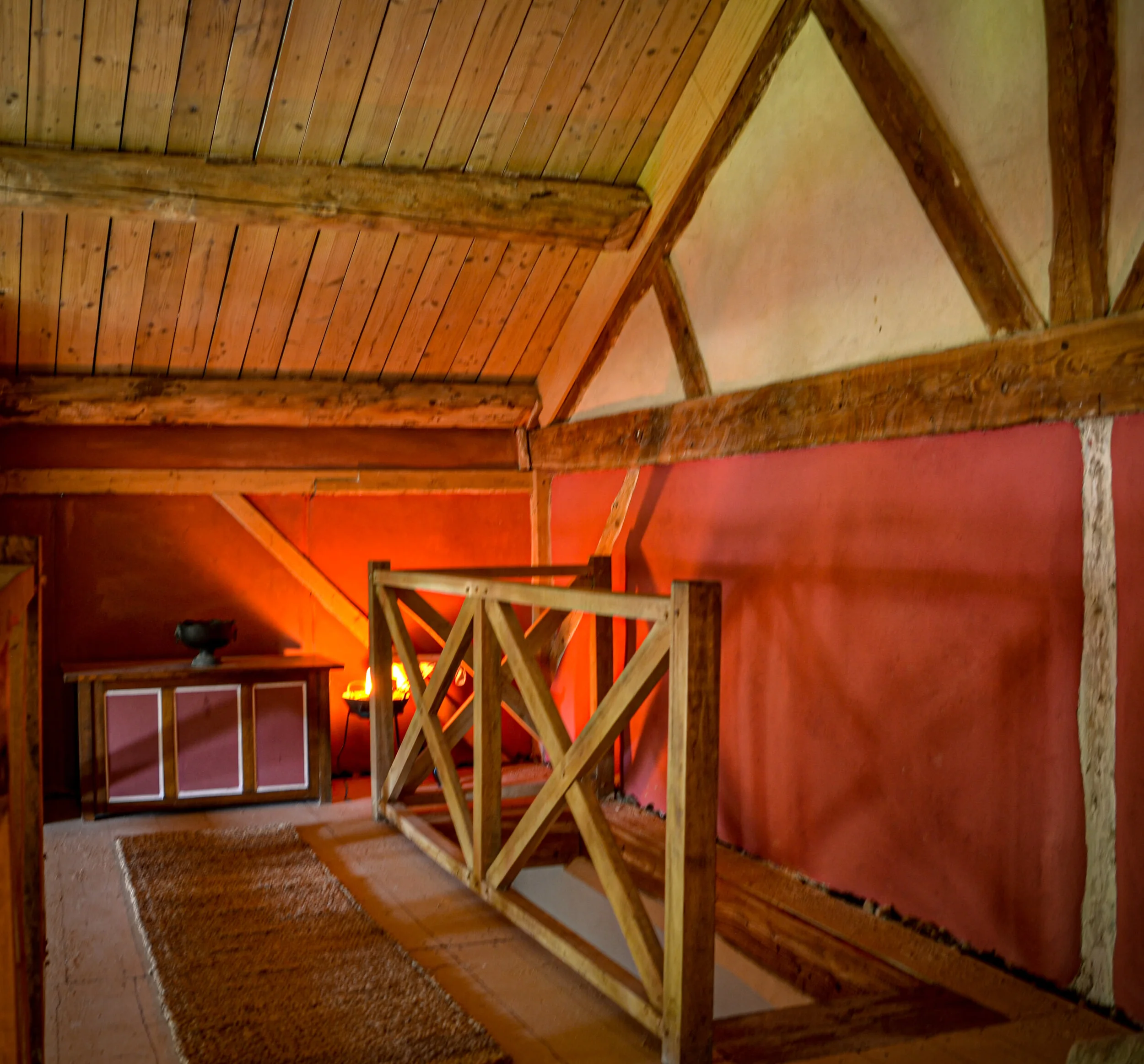
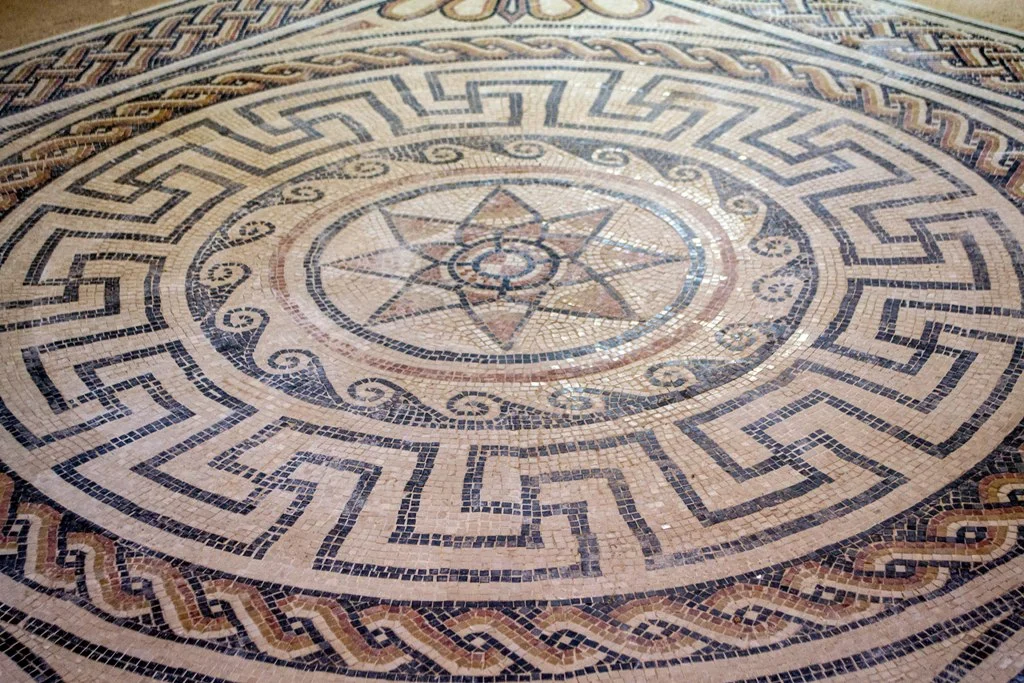
During May half term we celebrated the completion of our Roman Villa renovations as the final tesserae of our mosaic was laid, the final lick of paint applied to the walls, and furniture and flowers made the building into a home.The villa, based on excavations from Sparsholt near Winchester, is now displayed in a way we feel represents how those who lived here almost 2000 years ago may have experienced the villa. The mosaic is a copy of the design originally in the villa, the walls have been painted based on evidence from the plaster found during excavations and we have furnished the space according to current research and experiments about use of domestic space. Of course, despite our renovations being finished for now, this is just the beginning of a new phase of life for the villa and there is still more we would like to do! We are now able to test out, adapt and reflect changing theories about life in a Roman villa... things never stand still for very long at Butser!Here are some photos of the villa taken last week and of our opening celebrations to mark the occasion. Many thanks to everyone who has worked so hard to make the villa renovations a success!




Butser Wildlife Watch May 2019
Recent wildlife sightings from Butser Ancient Farm, featuring petrified frogs, white deer and pigs!
Butser Wildlife Watch May 2019
We've been keeping track of the wonderful wildlife we see here at Butser as the seasons change. Here is our May update written by team member Victoria Melluish on what we've witnessed this month!
What a curious month it has been for wildlife on the farm! If you follow our Facebook page and blog you will see that we have been renovating our Roman Villa, whilst we have been painting, sweeping and clearing we come across quite a few unusual things. The occasional spider or other interesting bugs and sometimes even mice, however this curious little thing was found in a large roman like pot that we have had in the villa for a number of years. A petrified frog!
“In geology, petrifaction or petrification is the process by which organic material becomes a fossil through the replacement of the original material and the filling of the original pore spaces with minerals.”
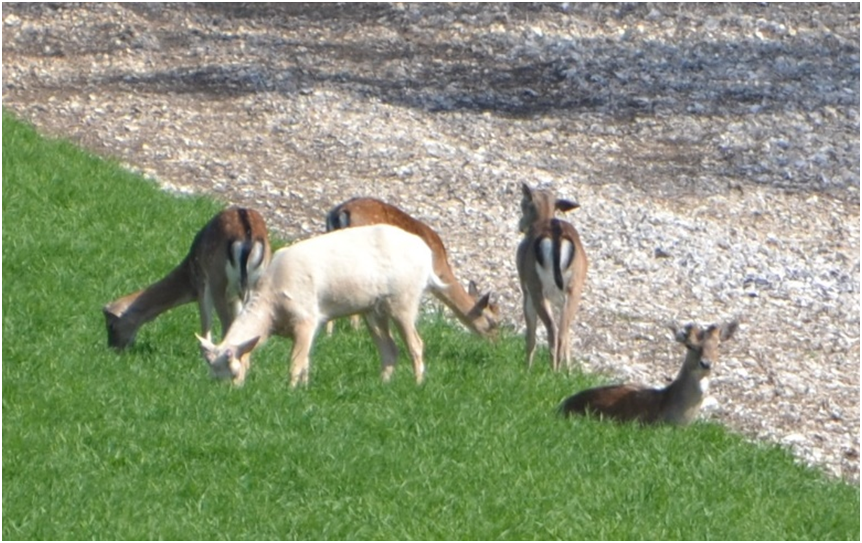
On a rather sunny and peaceful afternoon we also spotted a white shape moving in the field opposite our site, could it be the white hart? We took out our camera and decided to get as close as we could to get a good shot, a few minutes passed and the deer had slipped away back into the forest. Upon looking at the photographs we saw that the white stag had lost his antlers ,we then realised that fallow deer shed their antlers around April/May time, so be sure to have a wonder through your local forest to find them!
We have also been joined by four rather cute pink and black spotted piglets! Known as Gloucestershire old spotted pigs, a rare breed and one of the oldest too. Their other name is the orchard pig, people would say that their black spots were actually bruises from apples that had fallen from the trees! Make sure you come down to the farm and say hello, they are very friendly and will most certainly make you smile with their curious oinks and squeaks.


Butser Wildlife Watch April 2019
Recent wildlife sighting on the farm including foxes, ducks on our roundhouse roofs and lizards!
We've been keeping track of the wonderful wildlife we see here at Butser as the seasons change. Here is our April update written by team member Victoria Melluish on what we've witnessed this month!


With the deer tracks, fox prints and owl pellets being little hints and clues to the kind of wildlife that visit the farm when we aren’t there, we decided that it was time to take a look into the secret nightlife of Butser Ancient Farm. We made the decision to purchase a trail camera, a device that photographs and videos during the night and day whenever it senses movement. One of the best decisions we have made as it turns out!
We set the camera up for the first time and captured deer in the distance, something we are accustomed to seeing on an almost daily basis, yet always a delight to see. The second night we fixed the camera to a wooden post in the ground in a different location and decided to up the ante a little so we put down peanut butter to lure over any fluffy guests. The peanut butter worked a treat as in the first night we were visited by badgers, foxes, deer, Heron, ducks and pheasants. Seeing animals behave in the wild is truly a magnificent thing to have the pleasure of watching. Let’s hope we will capture some rabbits, hare and hedgehogs next!
Did you know? The earliest recorded use of the word “badger” was in 1523. Before that, it was called a “brock” or “bauson”. According to many researchers, the ancient Celts would call them “Broc”. The Irish Gaelic for fox is Sionnach and it was believed that foxes were the dogs of the Norsemen who were supposed to have brought them to Ireland.
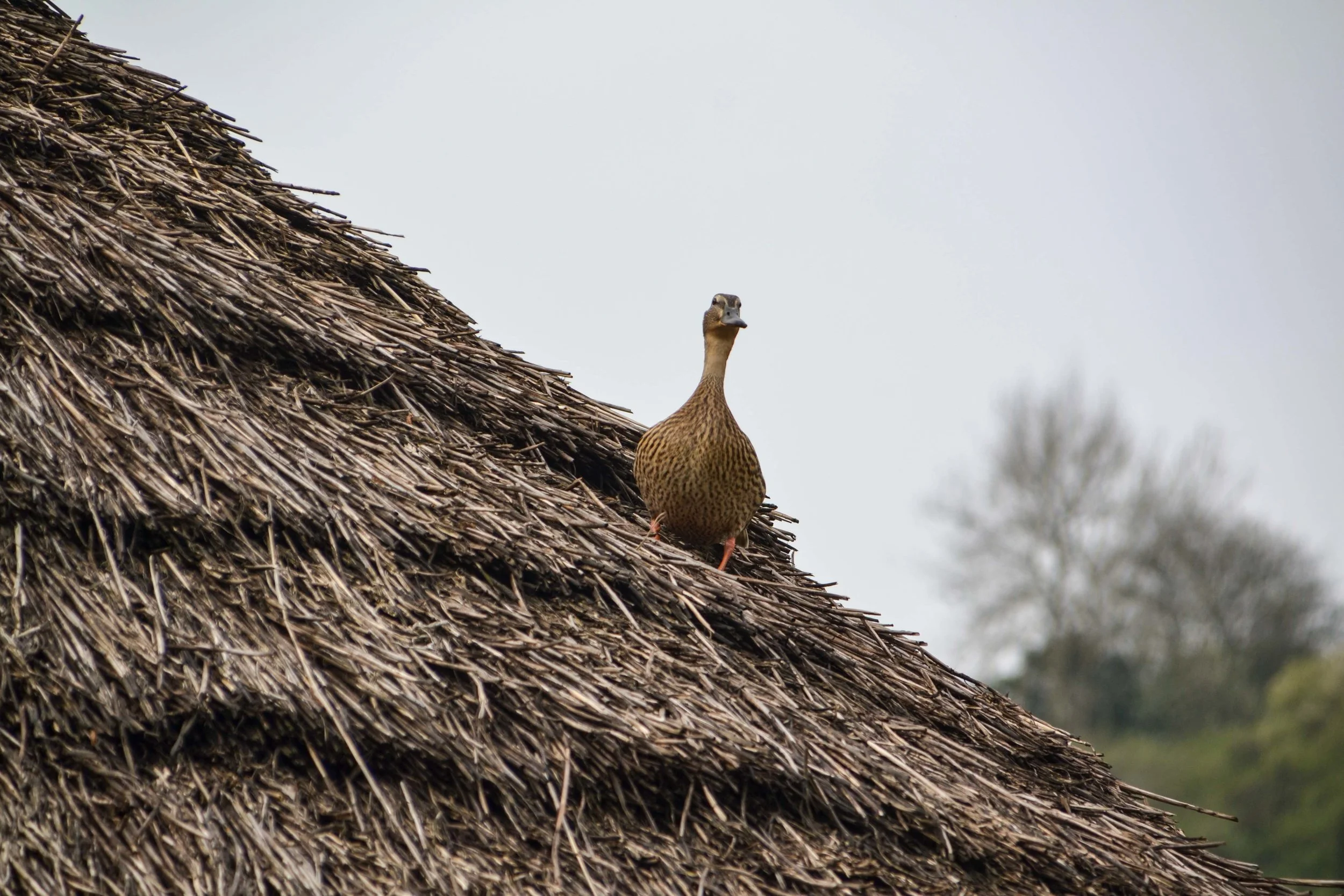
We were also visited by some curious ducks that decided to take a rest on the thatch of the Little Woodbury, they seemed to be enjoying the view of the farm!
Our Archaeologist Claire has also been busy in the Roman crop field planting flax which has already started to germinate and has also been planting in the Stone Age area Einkorn and Darnell. Einkorn is the earliest type of farmed wheat and is said to have been developed by farmers in the Middle East around 10,000 years ago! Plans for Celtic beans and barley to be planted near the Saxon part of the farm are also underway, watch this space! Claire also discovered a common green lizard amidst the foliage whilst planting, quite an irregular site to see on the farm!
Butser mosaic update - Easter 2019
An update on our mosaic project progress
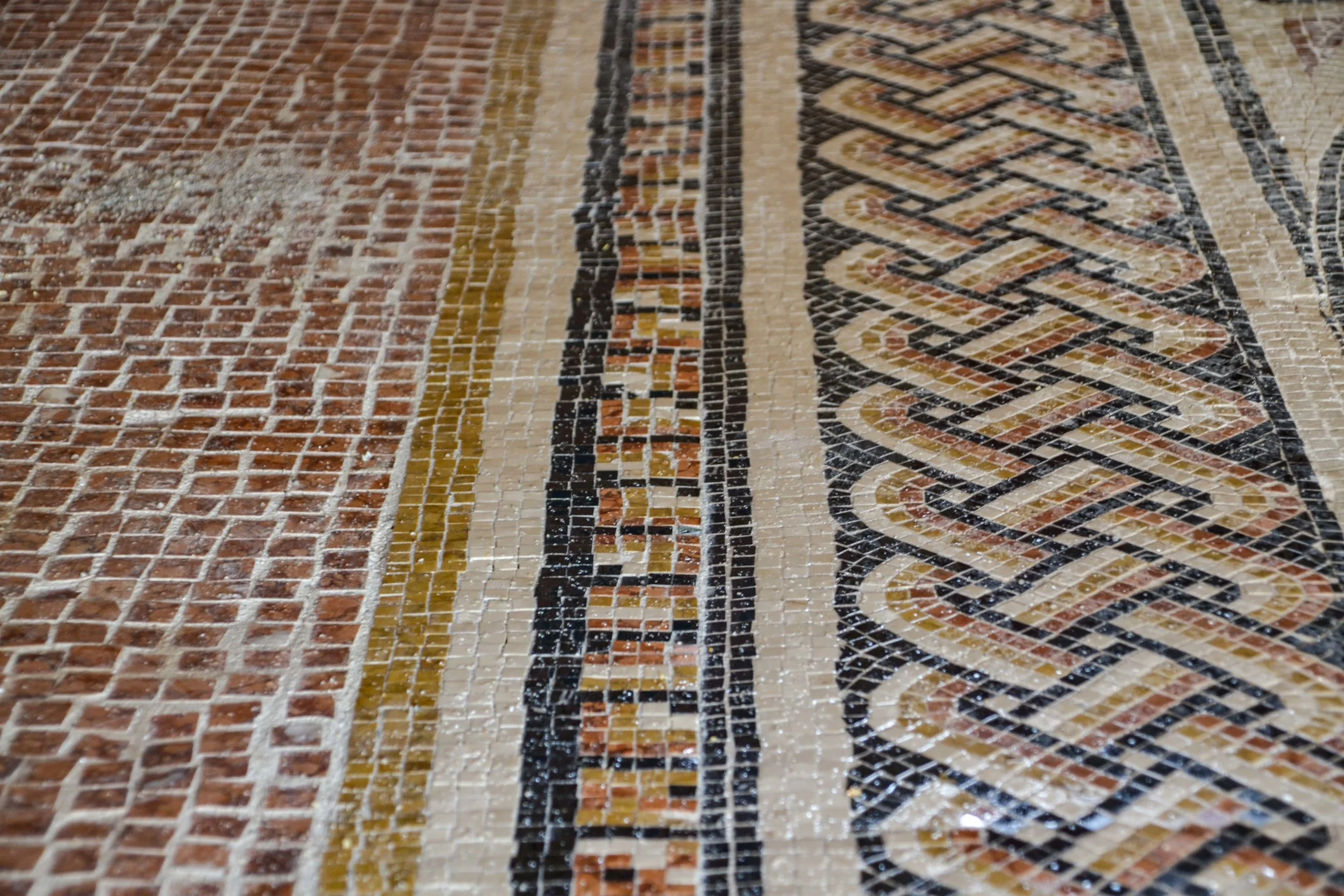
The Butser Ancient Farm Roman Villa mosaic project has reached a significant milestone – the final tessera of the geometric border has been laid!


Since we resumed work this month the team has made enormous progress, laying almost as much of the floor area in two weeks as we did in two months last year. In part that’s because our mosaicists are now experts in their professions, and partly because a lot of our work over the past week or two has been in the border – with much larger tesserae (tiles) and no tricky pattern to lay.
But the other reason things have speeded up is that we had extra help from many, many of our visitors over the Easter break. People of all ages were down on their hands and knees helping us get the floor finished. The help was much appreciated and it seems like everyone had an absolute ball doing it – a real win-win!
As well as being a really nice, authentic floor covering for our villa, the mosaic was a piece of experimental archaeology. It has provided us with some interesting insights into the process of mosaic making, using quite authentic techniques. In keeping with that authentic experimental approach, we have also included the initials of each one of our mosaicists in the border of the design. Now, we can’t say for certain that any Roman-British mosaicist did this, but there are lots of ‘mistakes’ in mosaics around the country, which look rather obvious, even deliberate. Some people think that these are sort of ‘coded’ messages by the makers to say ‘I did this’. In keeping with this secretive approach, we have hidden the initials in plain sight – with subtle shifts of pattern which are not easy to spot.
Once we have opened the mosaic fully for public view you might enjoy a game of spot the mosaicist!We still have a little more to finish off but it is all very simple to lay from here forward, so we’re hoping to have it all done by the end of May. That means we will have a fully redecorated triclinium, ready to welcome the Emperor, and all of our visitors!
Butser Wildlife Watch March 2019
Recent wildlife sightings at the farm, including deer, toads and of course the arrival of our beautiful Manx Loaghtan lambs.
We've been keeping track of the wonderful wildlife we see here at Butser as the seasons change. Here is the first of our updates written by team member Victoria Melluish on what we've witnessed this spring!
This month we have discovered many wonderful and curious things at Butser Ancient Farm, as spring awakens from her wintery slumber and stretches her branches, the flora and fauna are reborn right before our eyes.


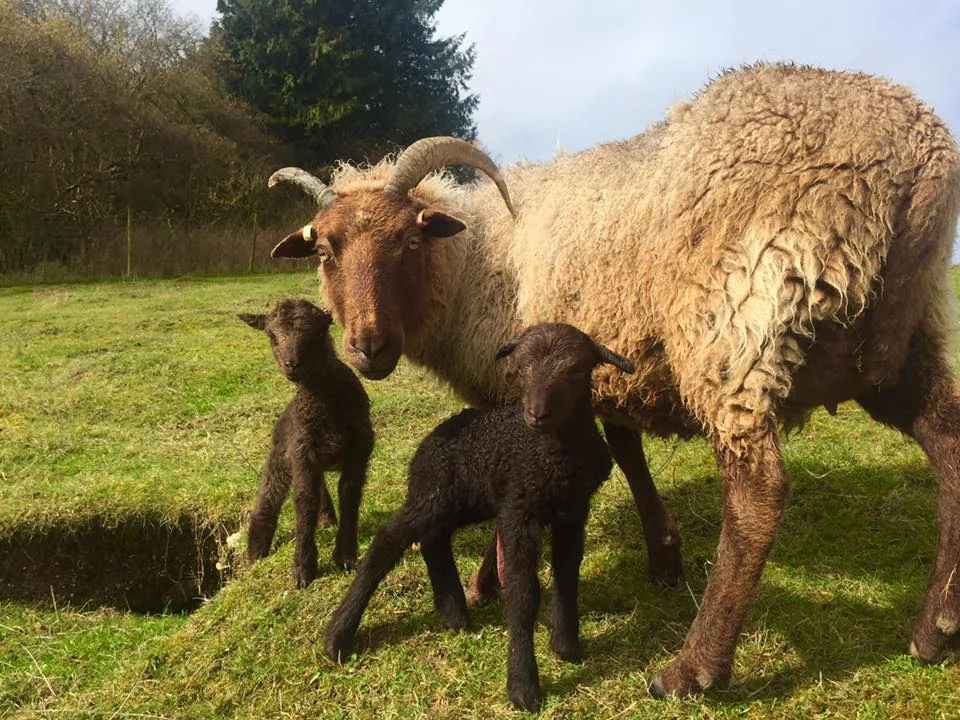
March has been particularly special due to the little patter of hoofs, our Manx Loaghtan lambs are being born one after the other and seem to pop up all over our fields like little puffs of black smoke. Their unique genes means that they are born as dark as coal which gradually transforms as they grow into a coffee brown, then into a cream and white adult with tussled wispy looking wool, chocolate caramel toned head and legs, and of course their magnificent fairy tale horns. Manx Loaghtan are usually born with either two or four little bumps on their heads where their horns will eventually grow, sometimes they can grow up to six!
We have also stumbled across a common toad nestled amongst the logs and bramble next to the Llandygai just a few feet away from a discarded pheasant egg, which are usually a pale khaki green colour. Pheasants wonder the farm in plenty, usually appearing in larger numbers once the site is quieter to peck at the goat food, so it is no surprise that they may misplace an egg or two.
Barn owl and kestrel pellets have been discovered also, the kestrel is a regular visitor of the farm and always seems to sit behind the roman villa on the window ledge where she leaves her pellets and droppings each evening, whereas the barn owl favours the Little Woodbury roundhouse where field mice, field voles and shrew are abundant. Dissecting the barn owl pellets we found that the barn owl has a particular taste for field voles, as 98% of the bones found in her pellets identically matched the anatomy. The kestrel seems to prey on much smaller mammals and insects, like small mice and beetles, which tells us a lot about the biodiversity of the farm.
Spotting the lambs in our fields and kestrels drifting past our peripherals is delightful and usually predictable around March time, however something that caught our eye last week was entirely unexpected and unpredictable. Whilst walking through the Iron Age Village I glanced over at a Buzzard swooping and darting at the disgruntled crows, when my eye fixated just beyond the farms fencing towards the forest. A white glimmer of movement in the distance, I knew immediately what it was, a rare site that we see maybe three times a year. The elusive and legendary White Hart of Butser.
We quietly scrambled over to the wicker man hill to get closer being sure to move slowly as we approached and fumbled around to get the camera ready for a shot of this beautiful abnormality. We crawled to the top of the hill and peeked over, he was grazing on the edge of the forest with five other fallow deer, four doe and another stag, all fawn and bark coloured tones. The white hart had grown his antlers far more since last year and was looking evermore graceful. As we shifted and snapped pictures, his head quickly turned to us and he stared whilst we held our breath. Then almost like he didn’t see us at all he continued grazing, seemingly not concerned that there were two very giddy grinning humans staring at him. Moments passed and then he and his herd galloped through the wheat field and over the hill, a truly magical moment!
The White Hart throughout history has always been given the title of mystical and legendary, whether it be an omen or a sign of good fortune, the White Hart stuns and excites almost everyone who sees it. In Celtic mythology, the White Stag symbolises the presence and existence of the otherworld, and means that forces from the otherworld are in action. The Celtic god Cernunnos has always been seen in drawings, paintings and in writing as a man with horns growing from his head, many believe the two are connected or the same being. In earlier times the Celts believed that the White Stag was a bringer of great changes to those it encountered, sometimes it was known that the white stag would also appear when something sacred or a law or code was being broken.There is plenty of evidence that prove that the white stag is not just a supernatural beast but a natural phenomenon. White stags and deer are often wrongly thought of as being albino. In fact they inherited a rare genetic condition called leucism. So there we experienced the highlight of the month and are constantly gazing out over to the forest edge to see if we can catch another small glimpse of the White Hart, we hope our visitors will one day be able to spot this beauty.
Butser Roman mosaic website launch!
We’ve developed an educational resource all about the Roman art of mosaic making!
To celebrate the installation of our unique, replica mosaic in the recently renovated Roman villa, we are excited to announce that we've developed a free, online education resource aimed at years 3 and 4 explaining all about the art of mosaic making!


This resource is designed to help teachers and students to better understand the process of making mosaics, and their importance as a means of display. The website is designed to guide teachers and their pupils through the mosaic making process with step-by-step guides, teacher resources, and suggested class activities.
The mosaic floor in the Butser Roman villa is a volunteer project, kindly part-funded by a grant from South Downs National Park Sustainable Communities Fund, that started last year to install a hand-laid, close reproduction of the 4th century AD mosaic floor that graced the original Sparsholt villa, that the Butser Ancient Farm villa is based on.
The project is part of a larger initiative to refurbish the villa and enhance it as a living representation of 4th century Roman Britain. The Butser mosaic will be completed during this coming Easter period and visitors to the site will be invited to come and help install some of the final tesserae tiles! (weekdays from Tuesday 9th April to Thursday 18th April, sessions between 11am -12pm and 1pm till 2pm)
While aimed principally at years 3 – 4, the fun, visual resource is available as a free resource for anyone to enjoy. You can find the website here; www.butserromanmosaic.wordpress.com




Blog archive
- December 2025 1
- November 2025 2
- September 2025 1
- April 2025 2
- February 2025 1
- January 2025 1
- November 2024 2
- August 2024 1
- July 2024 2
- May 2024 1
- November 2023 1
- October 2023 1
- September 2023 1
- August 2023 1
- July 2023 1
- June 2023 2
- May 2023 2
- March 2023 1
- February 2023 1
- December 2022 1
- October 2022 1
- August 2022 2
- April 2022 1
- March 2022 2
- February 2022 1
- January 2022 1
- December 2021 2
- November 2021 3
- October 2021 2
- September 2021 5
- August 2021 2
- July 2021 3
- June 2021 3
- May 2021 2
- April 2021 4
- March 2021 1
- November 2020 1
- October 2020 2
- August 2020 1
- March 2020 4
- February 2020 4
- January 2020 3
- December 2019 3
- November 2019 1
- October 2019 1
- September 2019 1
- August 2019 1
- July 2019 6
- June 2019 3
- April 2019 2
- March 2019 3
- February 2019 2
- January 2019 1
- November 2018 1
- October 2018 2
- September 2018 3
- August 2018 4
- July 2018 2
- June 2018 2
- May 2018 2
- March 2018 6
- February 2018 1
- October 2017 1
- September 2017 5
- August 2017 4
- July 2017 3
- June 2017 1
- May 2017 1
- April 2017 3
- March 2017 2
- February 2017 3
- January 2017 1
- December 2016 2
- November 2016 1
- September 2016 1
- August 2016 2
- July 2016 2
- June 2016 3
- May 2016 2
- April 2016 1
- March 2016 2
- February 2016 1
- January 2016 3
- December 2015 2
- November 2015 1
- October 2015 1
- September 2015 2
- August 2015 1
- July 2015 2
- June 2015 2
- May 2015 3