
How to Make a Saxon Figgy Pudding

Illustration by Tiffany Francis-Baker
Hang on.. Is that a pudding or a punch?
The figgy pudding of Christmas carol fame has long been part of the festive lexicon, but the dish to which it refers can be harder to pin down.
The term ‘figgy pudding’ is usually associated with the iconic steamed pudding we see on Christmas cards - a mound of mincemeat topped with a sprig of holly.
In a world before electric fridges, these mincemeat-based recipes were designed to preserve meat by mixing it with high levels of sugar, fat, spices and alcohol (that’s our kind of Christmas Day).
But the original figgy pudding, dating back to the Middle Ages, is almost unrecognisable from its modern descendant.
The pudding we know today actually began life as a pottage - a form of savoury broth made of dried fruits (including ‘figgy’ figs and plums), spices, wine, breadcrumbs, ground almonds and meat stock.
It was not until the end of the 17th century that ‘figgy pudding’ became more solid, sliced and cooked beneath a roasting joint, before later becoming a dessert.
Like many ancient customs, there are few written examples of recipes from the early Medieval period, when Saxons would have celebrated Yule with heaving tables of food and drink, similar to those in our Saxon longhalls.
The recipe below is a best guess at what a Saxon may have interpreted as a figgy pudding - not a steamed dessert, but a savoury starter at the beginning of the meal. If you’re looking to impress your relatives this Yule, why not complete the menu with a few other Saxon delicacies like stuffed boar testicles and rotting medlars? Waes hael!
For expert guidance, we also have a range of cookery-themed workshops taking place in 2026 - the perfect last minute Christmas gift for friends and family.
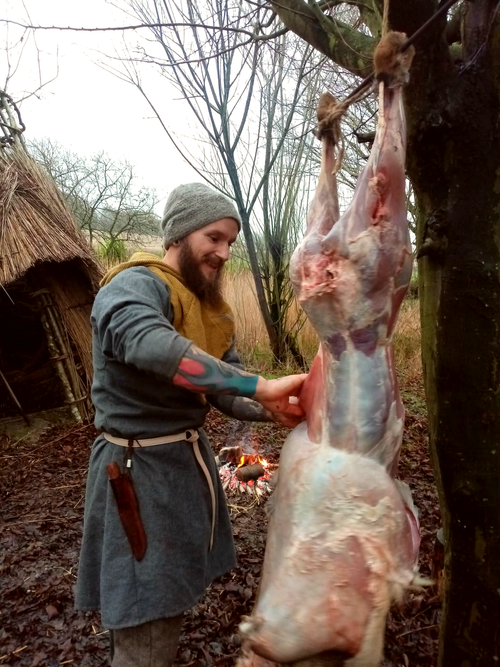
Deer Butchery & Saxon Cookery
Saturday 16 May / Saturday 12 December
Learn the most ancient skill there is: how to prepare an animal for the table. Skin, butcher and cook a deer using traditional tools, techniques and recipes.
Saxon Cookery
Sunday 17 May / Sunday 13 December
Learn to cook some of England’s oldest recipes like sweet Saxon bread, nettle and wild garlic soup, and meadowsweet mead, and feast in an authentic Saxon hall! Veggie and vegan-friendly options included.
Using the Whole Animal
Friday 21 - Sunday 23 August
This course will introduce you to which parts of an animal are useful for different products, and how to preserve those parts until they can be used. We will cover all basic butchery for both food and utilitarian items, as well as those parts not often seen as useful.
How to Make Saxon ‘Figgy’ Pottage
INGREDIENTS
500g beef or mutton, diced
900ml water
1 tsp salt
1 tsp ground nutmeg
1 tsp ground cinnamon
1/2 tsp ground cloves
200g prunes
2 handfuls fresh breadcrumbs
1 handful ground almonds
200g raisins
2 medium-sized cooking apples, peeled and diced
300ml red wine
300ml ale
100ml verjuice*
* Verjuice (from the French vert jus or ‘green juice’) is a sour liquid made from pressing unripe, unfermented grapes, crab apples or other sour fruits. Due to its mild acidity, it was historically used in medieval cooking to cut the richness of savoury dishes. If you don’t have access to verjuice, you can use diluted lemon juice or cider vinegar.
METHOD
1. Add the meat and water to a large pot and bring to the boil, then reduce to a simmer. Add the salt, nutmeg, cinnamon, cloves and prunes, and allow to simmer for half an hour.
2. Stir in the breadcrumbs and ground almonds and leave for another half hour to simmer.
3. Add the raisins, cooking apples, red wine and ale, then simmer for a further 15-20 minutes until the fruit is plump and apples are tender.
4. Finish by adding the verjuice, then stir well and ladle into bowls with a crust of warm bread on the side.