
Ancient crops, strange fungus and witchcraft.
We work closely with the Species Recovery Trust, find out more about our crop growing experiments.
A guest post by Dom Price, Species Recovery Trust, on the experiments at Butser Ancient Farm.
Ancient crops, strange fungus and witchcraft.
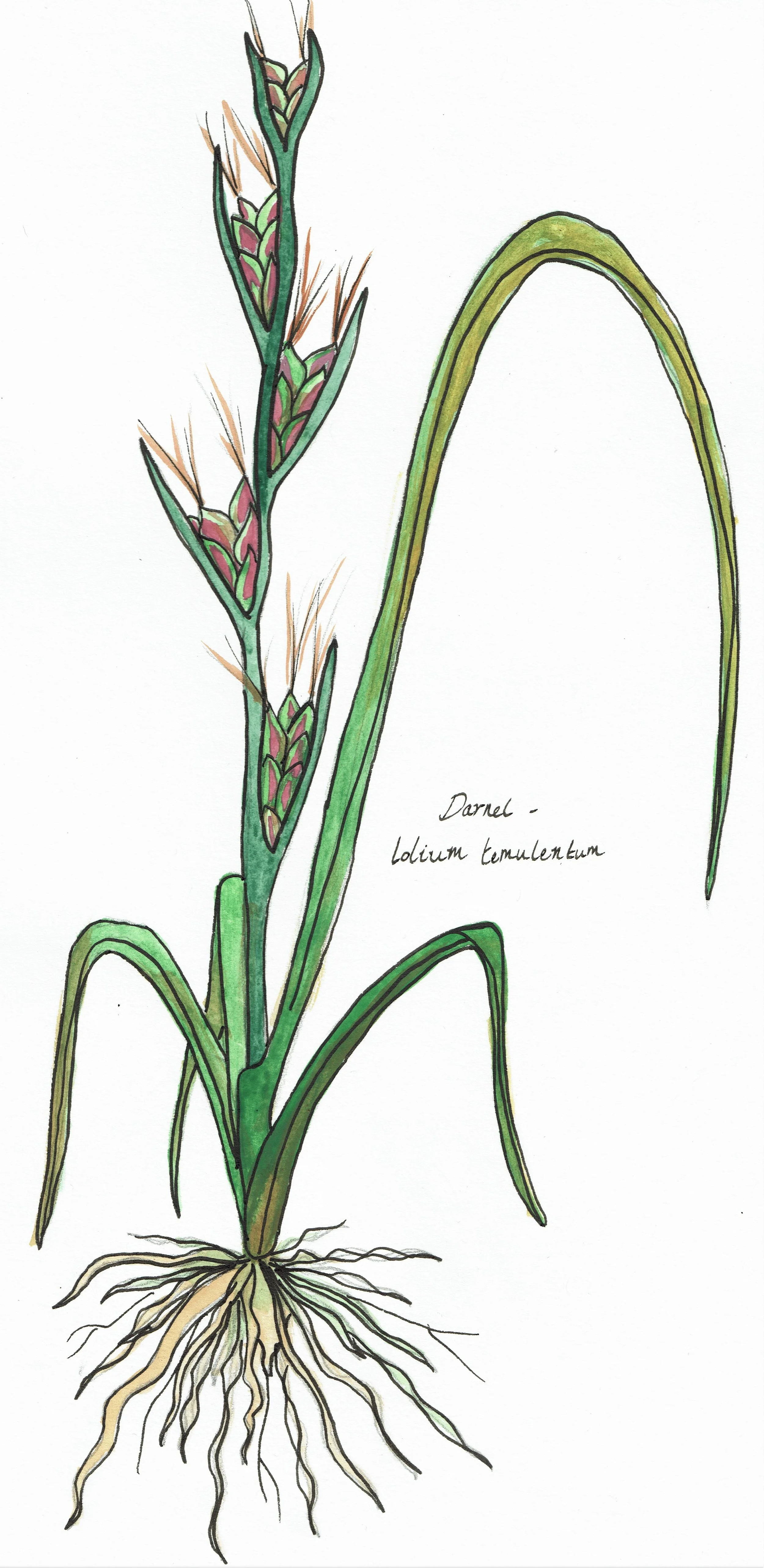
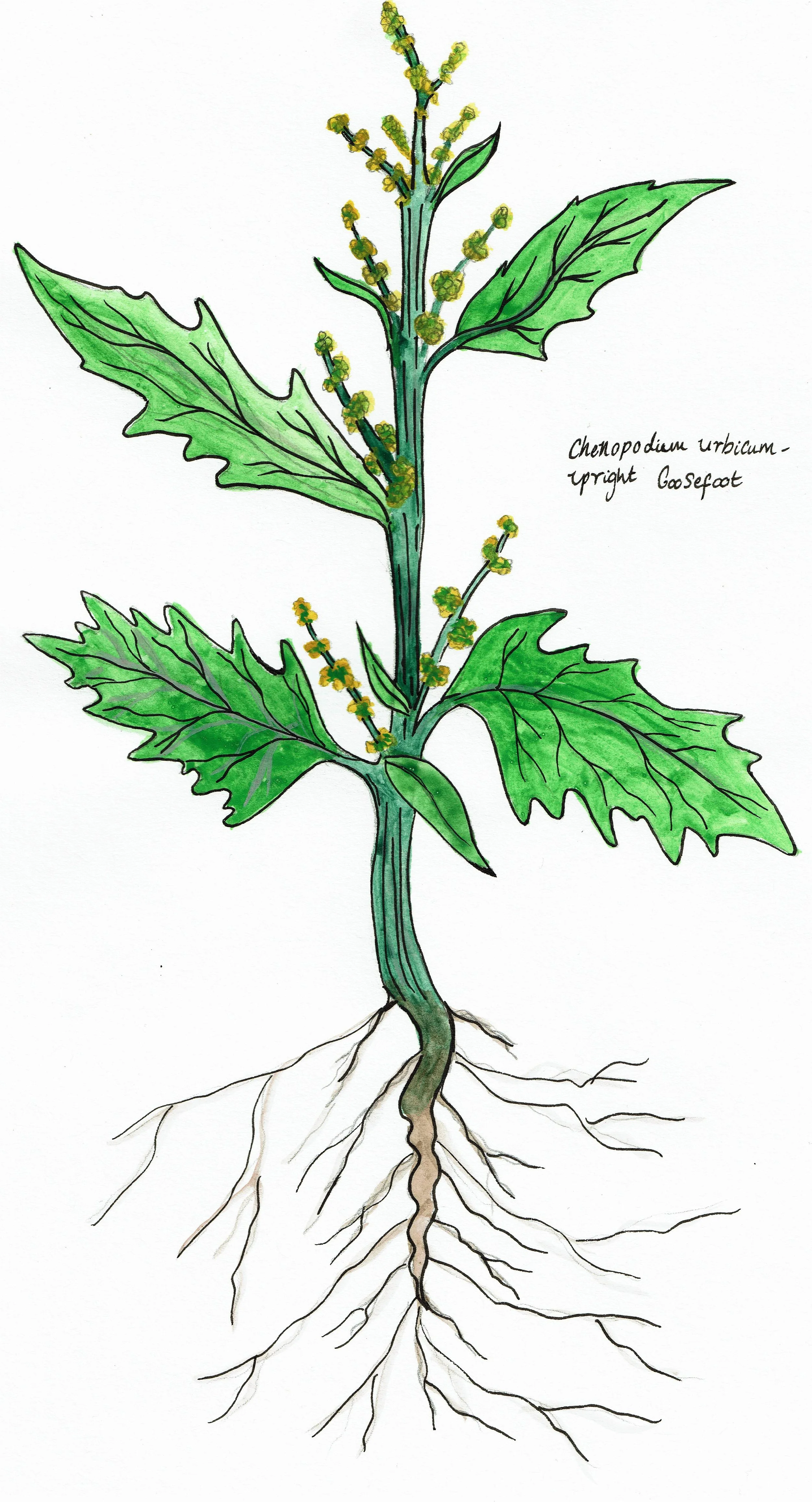
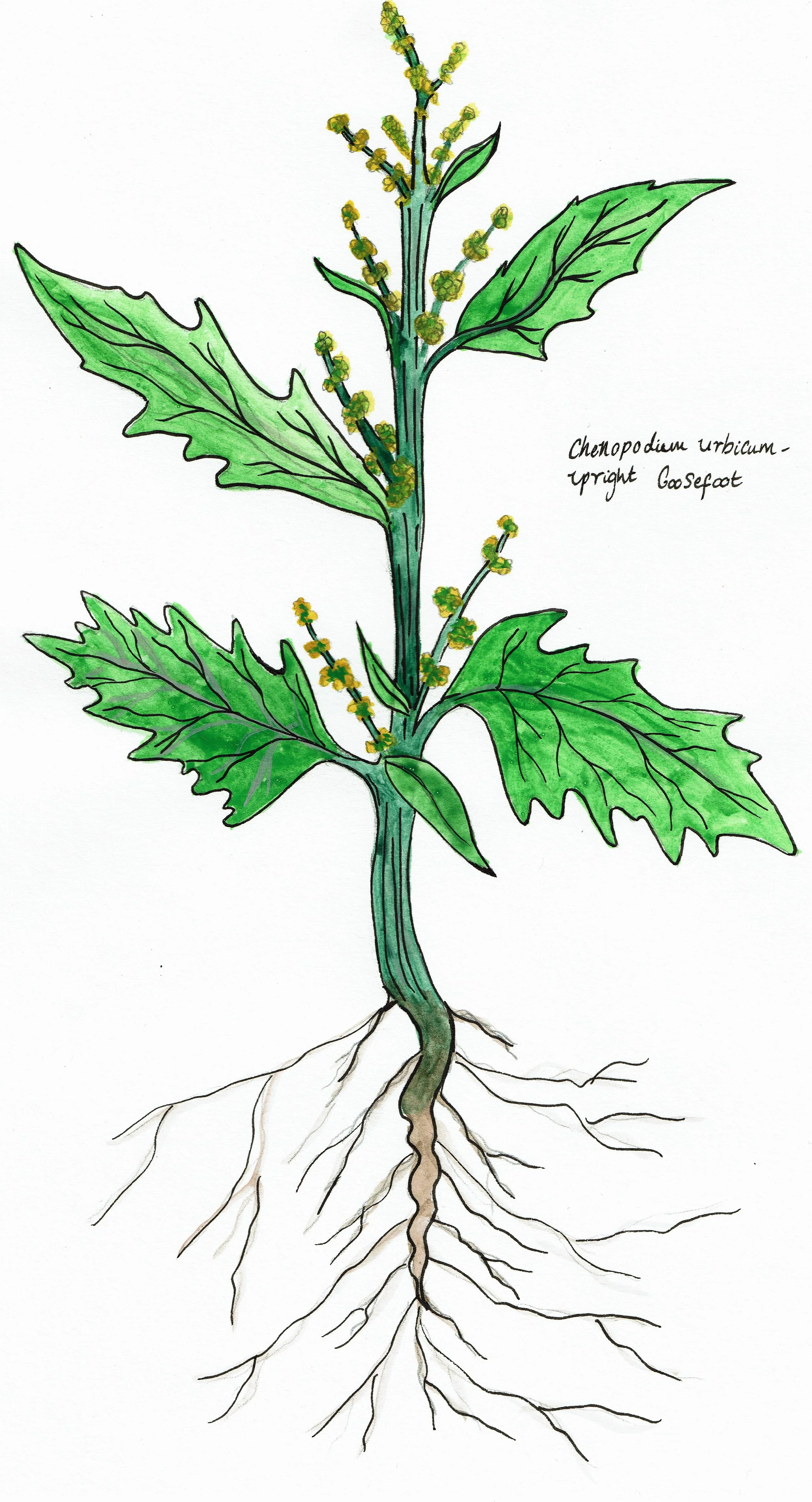
Butser ancient farm is a key site forming part of a project to re-introduce two species of now extinct plants. Darnel and upright goosefoot were both a relatively common site in ancient farming systems before the introduction of modern agriculture, including the widespread use of herbicide and improvements in seed cleaning technology which allowed all ‘weed’ species to be removed before seeds were re-sown.
Both of these plants vanished from mainland Britain over two decades ago, and Darnel is now hanging on a knife edge on the Arran Isles off the west coast of Ireland. Having managed to obtain seeds for both the species, we first started growth trials at Butser in 2015. During this time we’ve learnt a lot more about the ecology and life-cycle of both plants, but also had a chance to observe them within a low-level arable system.
Both species have proven extremely challenging to grow; we lost nearly all the plants in the heat wave of 2018, and goosefoot in particular, while good at germinating, seems reluctant to form any decent quantity of mature plants.
In 2019 we will be growing Darnel in amongst a nurse crop, to replicate the way it used to occur in mediaeval Europe. This will allow us to study in more detail the way it interacts with the crop also give us a glimpse of the habitat type which our ancient ancestors would have been much more familiar with.
In its peak Darnel was a serious contaminant of crops in medieval times, and it is believed that many phrases, such as ’taking the bad with the good’ originate from this mix of crop plants. Darnel was a particularly problematic plant as its presence often led to infestation with the Ergot fungus. When the infected grain entered the food chain this led to outbreaks of ergotism. The early phases of this illness were characterized by wild hallucinations and seeing of visions, which led to an entire folklore around the disease with rumours of witchcraft and demonic possession.
On an agricultural level, the growing conditions were right for ergot to flourish — a wet season in 1691 would have been perfect for ergot to spread on the rye. In addition, Salemites were unlikely to have known what ergot was, and Caporael found later letters that showed ergot was a significant problem in the area. Recent research looking at weather patterns in Massachusetts have led scientists to believe an outbreak of ergotism may have been behind the Salem witch trials.
The Ergot fungus is still very common in the wild, and very rarely enters the food system these days.
Dom Price , Species Recovery Trust
Useful links - https://www.vox.com/2015/10/29/9620542/salem-witch-trials-ergotism- http://speciesrecoverytrust.org.uk/
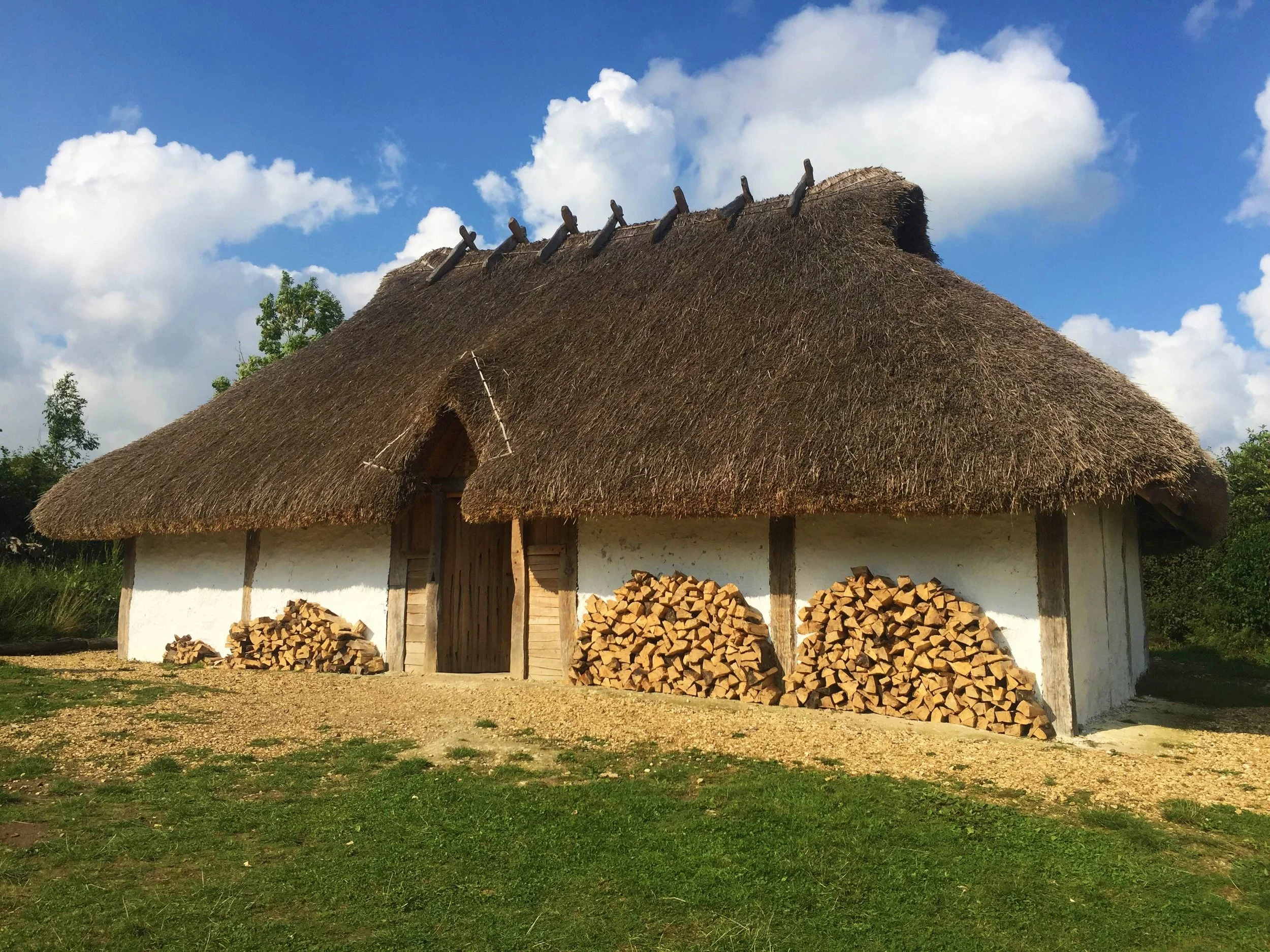
Grand Saxon Designs
We’re running Treewrighting workshops this summer - discover how we built our Saxon House
Grand Saxon Designs
We already have one Saxon house at Butser Ancient Farm based on local archaeological evidence. It was built by treewright Darren Hammerton in 2016. Now he’s working on a second house from the same site, built with different techniques.

Treewrighting is the ancient process of taking timber from source through to manufactured wooden item. It pre-dates modern power tools by thousands of years, and treewrighting involves the use of familiar tools, such as chisels and axes, as well as less familiar wood-working equipment like adzes and specialist axes.
This summer Darren is running a series of workshops to teach aspiring treewrights some of the ancient techniques and crafts needed to build Saxon houses. These workshops will run at the same time as the second Saxon hall house reconstruction, so participants can get close to and, in some cases, involved in an exciting archaeological reconstruction programme.

We’ll start with making Saxon bulwark walls, which are horizonal timber slats set into recessed grooves in timber uprights. Darren will also teach the treewrighting techniques to build a Saxon roof truss and a Saxon har-hung door, a door hinged without metalwork. There will also be a wattle hurdle workshop which are used for a bed for the roof thatch.
If you want to prepare for your own Saxon grand design, this summer is your chance to learn the treewrighting techniques you’ll need.

Staff trip to Grimes Graves and West Stow
Staff visited West Stowe and Grimes Graves in Suffolk - find out about our experience
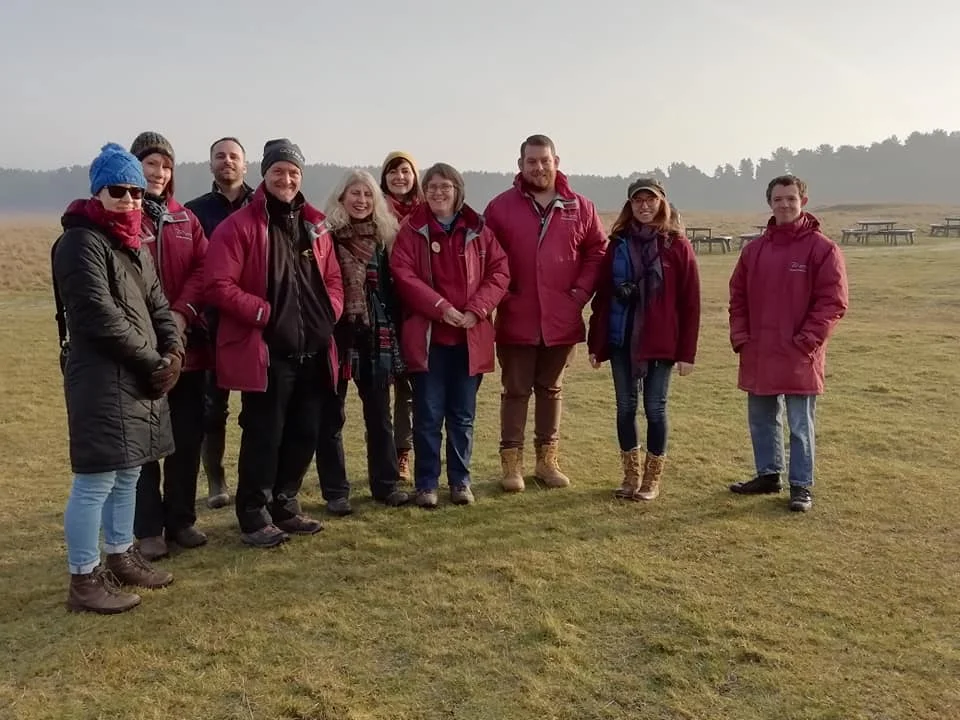
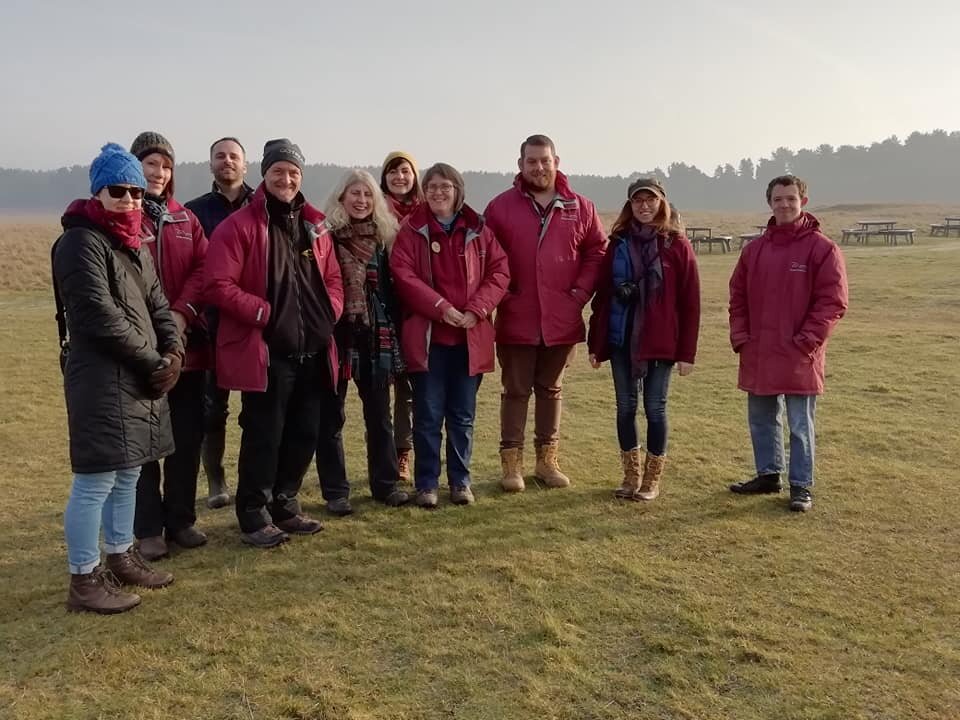
A happy group of Butser staff travelled to Suffolk last week to visit two great archaeological sites – West Stow and the iconic Neolithic flint mines of Grimes Graves.


West Stow Anglo-Saxon village is a site built around a number of experimental reconstructions of houses from the early phase of Anglo-Saxon Britain, from the 5th – 7th Centuries. The houses are built on the site of the original settlement. As so little is known of housing and culture of the period it was very interesting to see their reconstructions. The site and period are different from our Butser Saxon buildings, which date from around the 7th – 8th Centuries, and have markedly different archaeology, so it was great to see the experimental interpretation of these buildings and enjoy the excellent small museums on site.
Without doubt, the highlight of our trip was the visit to Grimes Graves. Site manager Rob, along with other terrific members of staff, opened the site specially for us on a rather wintry but really lovely sunny Suffolk morning. The site, with its distinctive potholed landscape, features over 400 former flint mining pits. The mines were in operation around 4500 years ago. The miners extracted flint from a below-ground seam by excavating more or less funnel-shaped pits, 20 or more metres deep. There are quite a lot of flint lumps (nodules) above this level, but they were after the finest, black Suffolk flint, which occurs, fairly unusually, in a continuous bed well below ground level. How they knew it was there is just one of the fascinating archaeological questions arising from our visit!
After kitting up with hard hats, we descended into one of the few original pits to have been archaeologically excavated, which has been cleared of the infill that has closed over the vast majority of the others. Inside we experienced what is as close as it is perhaps possible to get to a Neolithic landscape, albeit a subterranean one! The really unexpected, and very cool, part of the Grimes Graves experience was being given access to the normally closed-off excavation tunnels, where miners used their antler picks and hands to form chambers off to the sides of the main pit, following the flint seam. Sitting in a Neolithic flint mine, talking about the archaeology... does it get any better?
We can highly recommend a visit to both sites if you find yourself in Suffolk. Grimes Graves and West Stow are only around 15 miles apart, with the interesting Anglo Saxon town of Thetford more or less in between.
What work-experience at Butser is all about!
Read about the experience of a work placement at Butser Ancient Farm from the lovely student Angels!

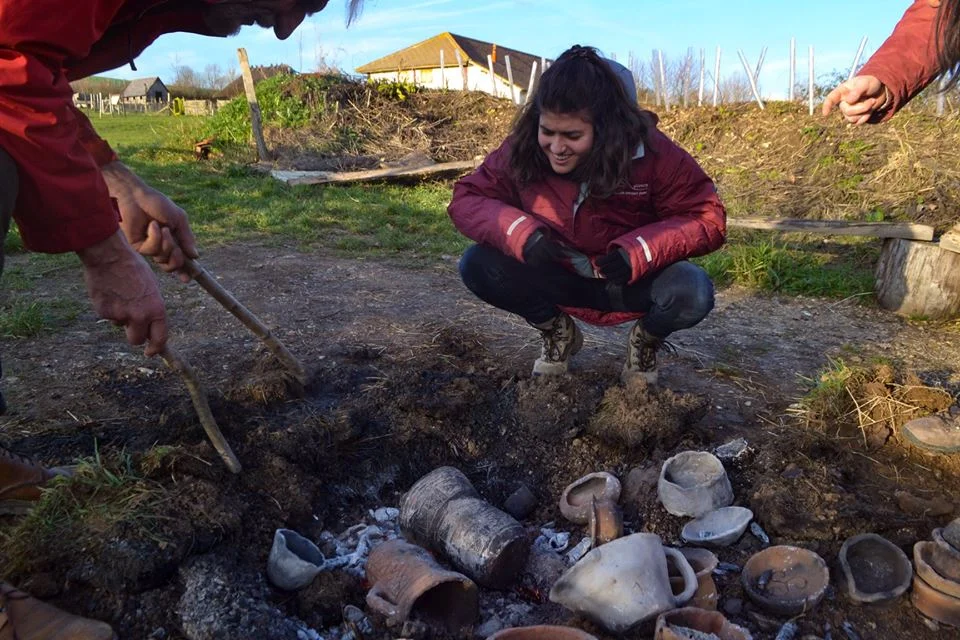
Each year we have several wonderful students join us from across Europe for a work-experience placement, whether they are studying archaeology, cultural heritage, museum studies or a range of other relevant subjects, they get the chance to see how somewhere like Butser operates on a day to day basis, conduct their own experiments and research projects, and generally get stuck in to life on the farm.
At the end of last year, Àngels joined us for a 3 month period from Catalonia. She brought brilliant new ideas to the farm and worked with us on a huge range of projects from painting the Roman Villa to making pottery, designing signs, evaluating and collecting feedback and more.
Àngels has written a great blog piece for the Exarc website about all the things she experienced and learned during her placement. Take a look here.
We want to say a big thank you to Àngels for all her help and hope to see her back on the farm again before too long!

Butser Volunteer success!
We are delighted to have received a local award in recognition of our wonderful volunteer team!
A couple of weeks ago we were excited to be invited to the East Hants Volunteer Awards 2019 following the nomination of our regular Wednesday volunteer team for the award of small team of the year!
Members of the team donned their finery for the awards presentation, joining a hall full of inspiring volunteers and nominees. After hearing about some of the wonderful volunteer projects going on locally it was time for the small team award....After a drumroll, the winner was announced...The Butser team had won!!
We're delighted and very proud of the team and all they do here at Butser. See below for a video of Jorge talking about why he volunteers.
Many thanks to East Hants District Council and Community First for organising the awards ceremony and to Strong Island Media for the brilliant video.
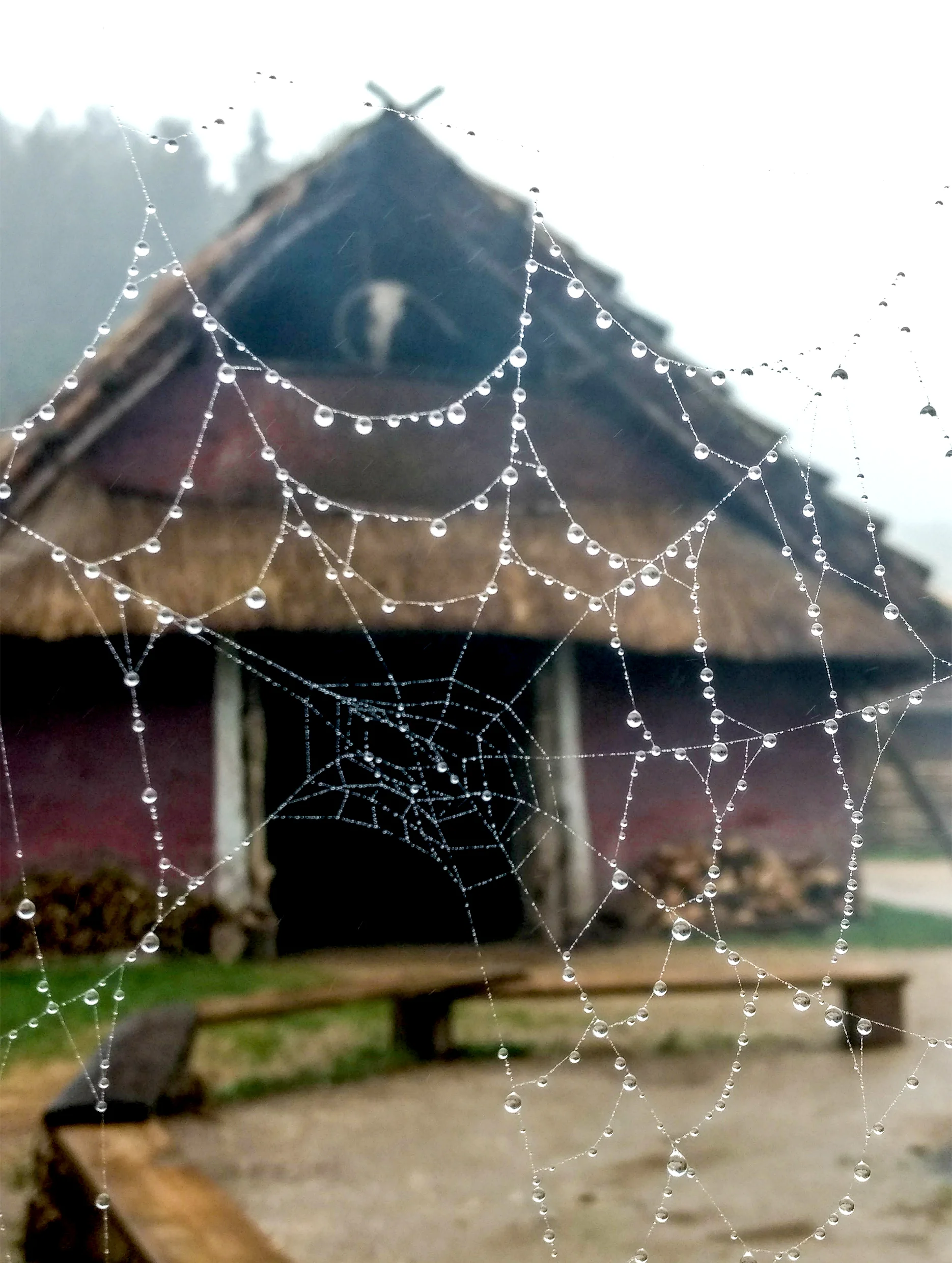
Samhain adventures this half term
Find out about the spooky goings on this October half term as we celebrate Samhain.
At Samhain it's believed the veil between the worlds is very thin, it was a time for communication with the ancestors and the spirits of the dead. Spare places were laid at the table during the Samhain feast so that the ancestors could once again join with family and friends. Others could also slip through this gap in space-time - the faerie, hobgoblins, elves and other mischief makers - this is the root of Halloweens mischief night and our trick or treat tradition.
Bonfires known as 'Samhnagan' were lit on hilltops, often the burial grounds of a communities past, with all other fires in the community put out and rekindled from the Samhnagan fire. Although our Samhain festival may now be sold out there is lot's more to do at Butser to connect with this special time of year. This half term we are open from Monday to Friday (22-26th October). Each day we'll have storytelling, a Batty trail following Pippi the Bat around the farm as she learns about ancient beliefs, hands on talks. demonstrations and more. Please see below for a breakdown of what's happening each day;
Monday 22nd October -
Batty trail - follow the adventures of Pippi the Bat
Handling session - Samhain, skeletons and all that spooky stuff! 11am
Ancient storytelling at 11.30am and 2pm
Tuesday 23rd October
Batty trail - follow the adventures of Pippi the Bat
Ancient Storytelling at 11.30am
Make your own pinecone bat to take home at 1pm - 3pm
Flintknapping demonstrations
Wednesday 24th October
Batty trail - follow the adventures of Pippi the Bat
Handling session - Samhain, skeletons and all that spooky stuff! 11am
Spooky storytelling with Fayes Fables - an interactive performance in our roundhouse following the next adventures of Fairy Bigtoe from local theatre company Fayes Fables.
Flintknapping demonstrations
Thursday 25th October
Batty trail - follow the adventures of Pippi the Bat
Handling session - Samhain, skeletons and all that spooky stuff! 11am
Ancient Storytelling at 11.30am and 2pm
Friday 26th October
Batty trail - follow the adventures of Pippi the Bat
Handling session - Samhain, skeletons and all that spooky stuff! 11am
Ancient Storytelling at 11.30am and 2pm
Chalk carving - carve a spooky ghost to take home from 1pm - 3pm
**Evening event** Museums at Night - After-dark Tour 7pm - 9pm (must be prebooked)

There'll also be much more going on each day on the farm, from the build of our new Saxon hall, flintknapping, milking the goats and more! We hope to see you there!
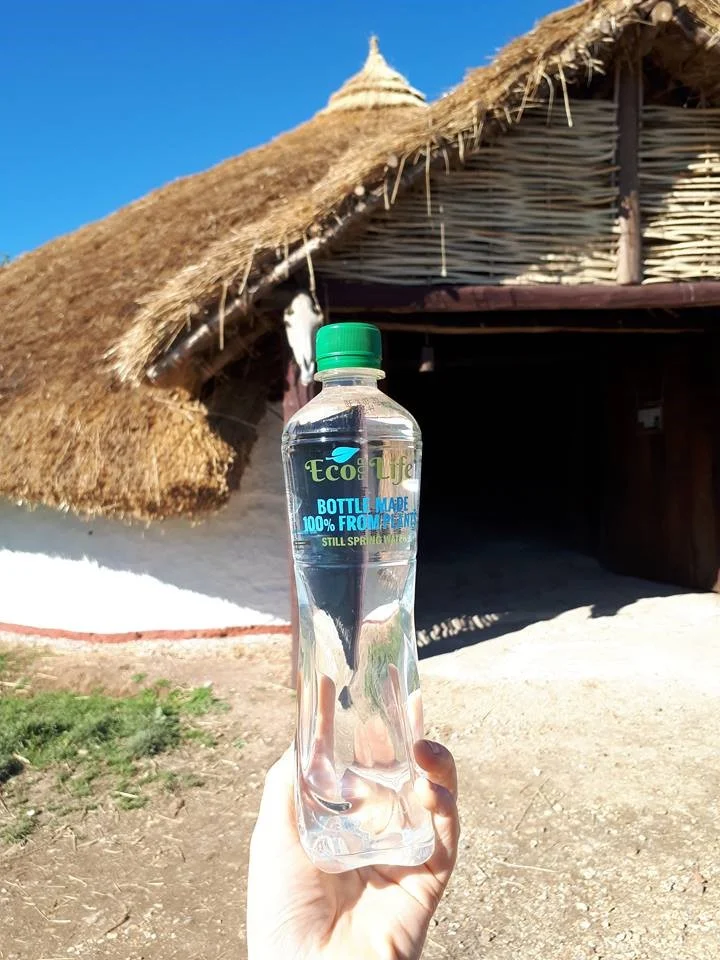
Eco for life at Butser
Doing our part to cut our plastic waste here at Butser.
Looking out for the archaeology of the future....Plastic waste is one of the biggest environmental challenges that we face today, when we think about what the archaeology of the future will look like, plastic waste will be one of the main things left behind by us for future generations.
A plastic bottle will take over 450 years to decompose and some scientists think that some plastic will never fully decompose. This is particularly worrying as it is estimated globally an astonishing one million bottles are bought every minute. The UK alone purchase 38.5m plastic bottles each day, accounting for around 40% of litter by volume found in our environment.
Here at Butser we are making a conscious effort towards becoming more eco-friendly. With the planet accumulating more and more plastic and other non-biodegradable items it is more urgent than ever to make a change now. We decided to get in touch with Eco for Life, a fantastic local company from Chichester who sell 100% Plant-based bottles. Not only are they completely biodegradable and can be used as a valuable soil supplement, but they are also reusable for up to 12-18 months, simply wash out and reuse! Even the information on the bottle is lasered on with high grade ink made from plants!
As always we are over the moon to be supporting a local business and even more so for what they are promoting and the difference they are already making.
Here's a video of the process behind the bottles;
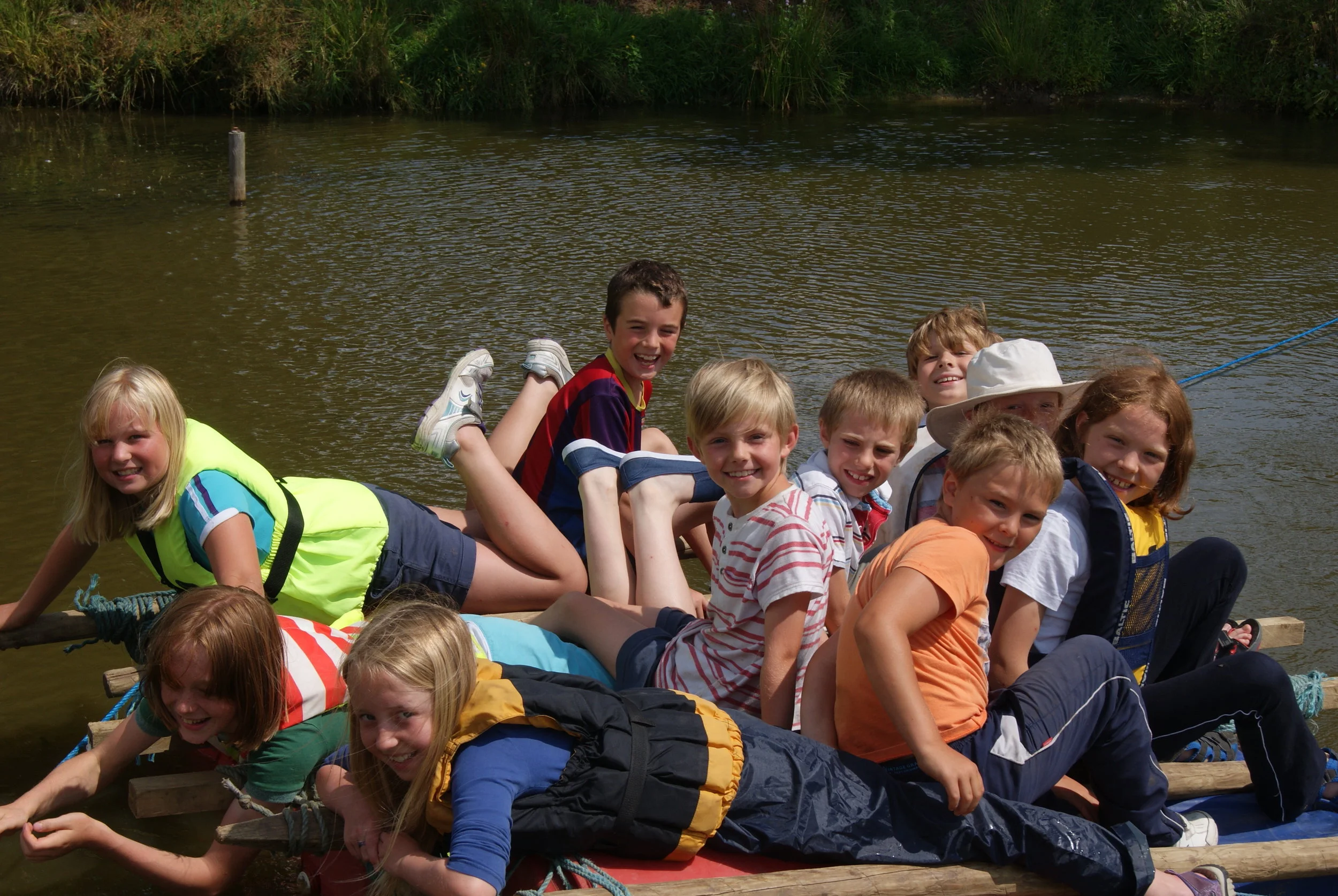
Warrior Camps
Our 2018 Warrior Camp recruits passed with flying colours!
Over the summer we, once again, ran a series of Warrior Camps at the farm and are pleased to announce that the new recruits passed their warrior training with flying colours!!
Each day involved a series of outdoor adventures at the farm, inspired by the old; making and cooking over a fire, building a raft, hunting for clues, constructing a shelter and much more!
Our Warrior Camp 1 was aimed at children aged 8-14 and our more advanced Warrior Camp 2, for those aged 10 - 14, involved a chance to stay overnight at the farm! All under the expert tutorage of Keith Page MBE and David Norris.
We’ll be running more warrior camps next year so keep an eye on our website for the date and ticket release!




Blog archive
- December 2025 1
- November 2025 2
- September 2025 1
- April 2025 2
- February 2025 1
- January 2025 1
- November 2024 2
- August 2024 1
- July 2024 2
- May 2024 1
- November 2023 1
- October 2023 1
- September 2023 1
- August 2023 1
- July 2023 1
- June 2023 2
- May 2023 2
- March 2023 1
- February 2023 1
- December 2022 1
- October 2022 1
- August 2022 2
- April 2022 1
- March 2022 2
- February 2022 1
- January 2022 1
- December 2021 2
- November 2021 3
- October 2021 2
- September 2021 5
- August 2021 2
- July 2021 3
- June 2021 3
- May 2021 2
- April 2021 4
- March 2021 1
- November 2020 1
- October 2020 2
- August 2020 1
- March 2020 4
- February 2020 4
- January 2020 3
- December 2019 3
- November 2019 1
- October 2019 1
- September 2019 1
- August 2019 1
- July 2019 6
- June 2019 3
- April 2019 2
- March 2019 3
- February 2019 2
- January 2019 1
- November 2018 1
- October 2018 2
- September 2018 3
- August 2018 4
- July 2018 2
- June 2018 2
- May 2018 2
- March 2018 6
- February 2018 1
- October 2017 1
- September 2017 5
- August 2017 4
- July 2017 3
- June 2017 1
- May 2017 1
- April 2017 3
- March 2017 2
- February 2017 3
- January 2017 1
- December 2016 2
- November 2016 1
- September 2016 1
- August 2016 2
- July 2016 2
- June 2016 3
- May 2016 2
- April 2016 1
- March 2016 2
- February 2016 1
- January 2016 3
- December 2015 2
- November 2015 1
- October 2015 1
- September 2015 2
- August 2015 1
- July 2015 2
- June 2015 2
- May 2015 3