
Colouring the Iron Age - Part 1
The Experimentalists are an exciting volunteer team here at Butser, working on experimental projects to bring our ancient houses to life. In part 1 of this update, Margaret Taylor (Experimentalist and volunteer librarian) explores their ongoing experiments with natural dyes, looking at the plants, pigments and mordants that could have been used to create colour in the Iron Age.
What are we doing and how did it start?
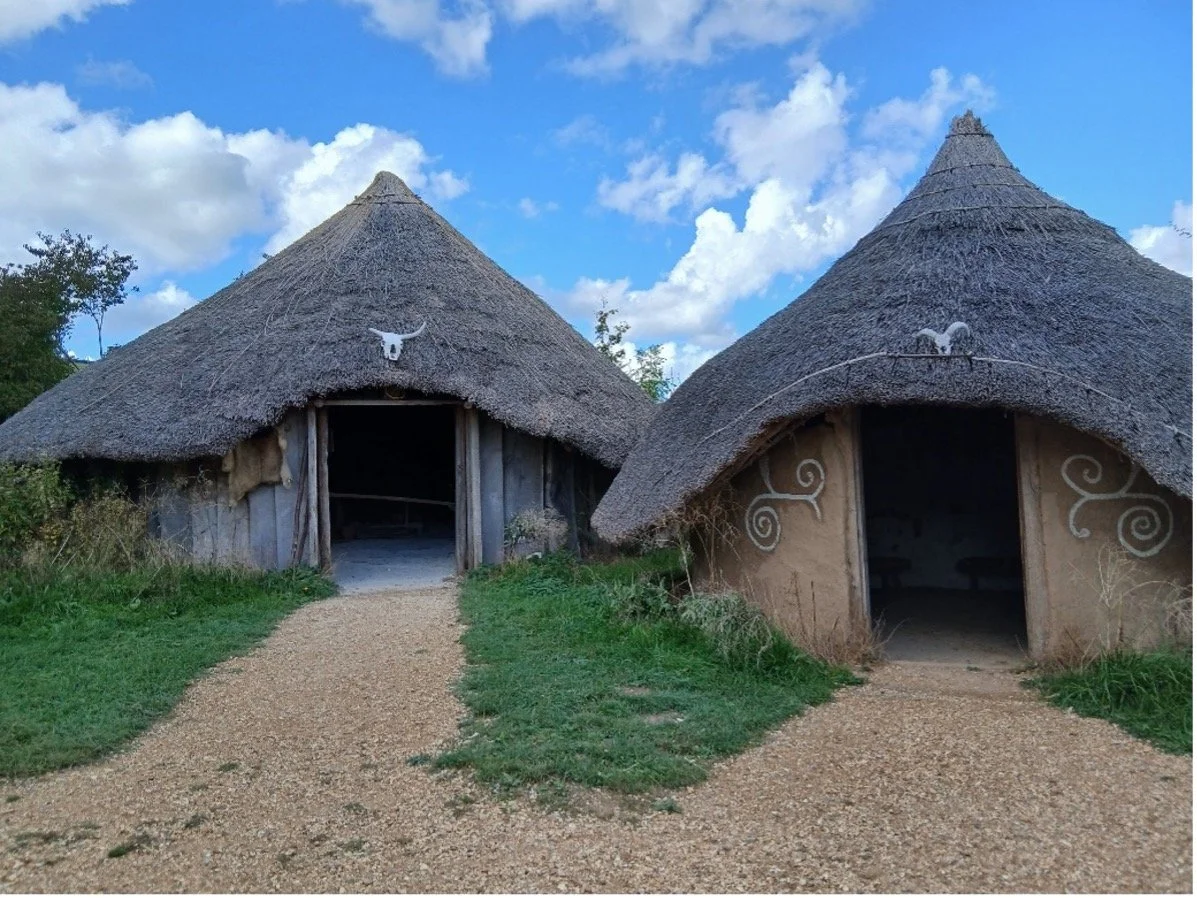
As Experimentalists at Butser Ancient Farm, our aim is to bring the past to life, and we spend a lot of time in CS1, the Danebury roundhouse. Our goal is to make visitors to feel that the owners have just stepped out of their home for a few minutes!
Our ancestors would have lived in a colourful world, but it is difficult to recreate colour, as textiles do not survive, but when they do, they may have come out of a bog – and are inevitably brown! It takes a remarkably short amount of time for textiles to go brown when they have been buried in the ground.
In the spring I reported on our project to create an Iron Age tapestry. Now we have extended our project to dress some characters in the CS1 Danebury roundhouse. But how can we create colourful garments? Naturally, we have ‘cheated a bit’ and have furnished it with modern plaid fabrics. But we want to do more!
Maureen Page began our quest with creating an orange tunic, which is worn by the manikin in CS1, and was dyed with onion skins. We know that this was not appropriate to the period, as onions were introduced by the Romans. However, we used it as we really wanted to introduce some colour into the house. This has led Maureen and I to pursue our dyeing adventure to discover what might have been more realistic. My own experiment began a few years ago, with using onion skins and soya (which acts as a fixer), but then I discovered like-minded souls at Butser and I was hooked on this new hobby!
We used the onion skins because we knew that our ancestors would have achieved similar yellow, brown and green colours with the plants available to them. The nearest alternative that we have found so far is tansy. This grows naturally in Petersfield, but I must admit that mine comes in a packet from the helpful supplier, George Weil in Guildford. Both Maureen and I have had good results with it and mordanting it with alum.
What did our ancestors do?
So, what plants did they use as dyes, and what mordants (colour fixers) might they have used?
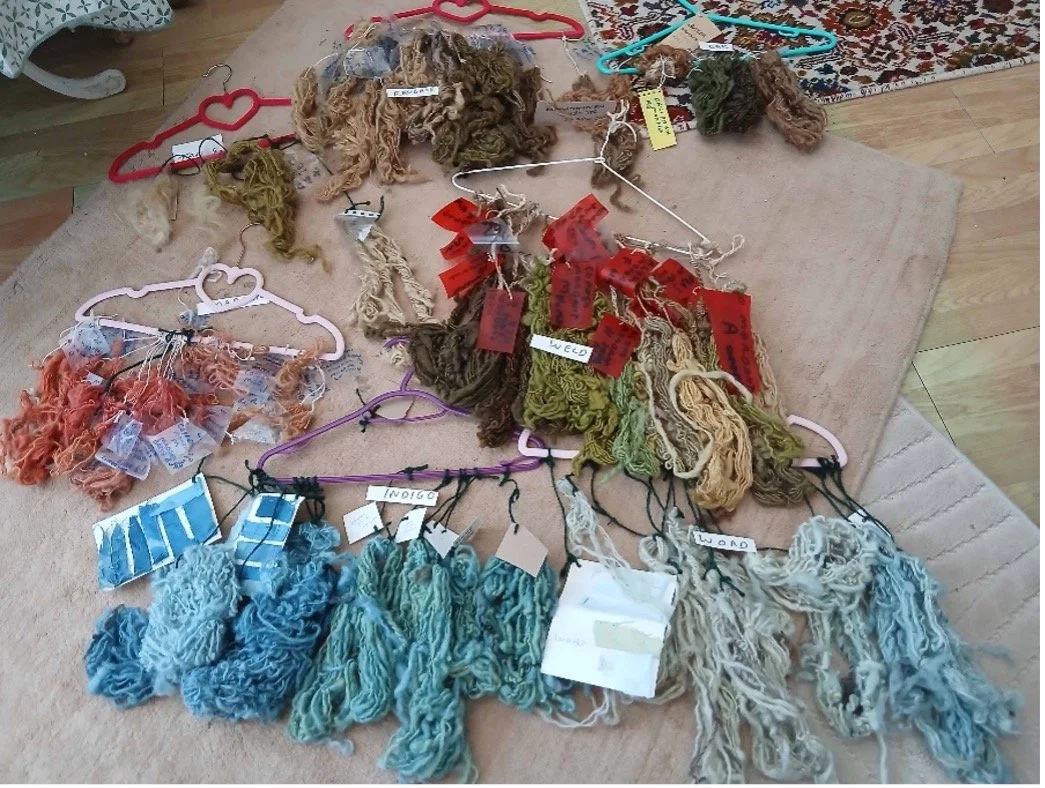
A selection of my home dyed samples.
Last year we dyed with weld, and applied a selection of mordants and modifiers to obtain a range of colours. I have since dyed with red and white onion skins, carrot, rhubarb, madder, tansy, oak leaves, bark, woad, and marigold. Maureen has been concentrating on plants growing in her garden, and her list is impressive: ash leaves, birch bark, blackberries, cranberries, comfrey, ivy leaves, nettle, tansy, sloe berries, yew and oak bark. Her most recent experiments are with bay and sage leaves. She uses alum and copper sulphate as mordants. Of course, not all these plants were available in the Iron Age.
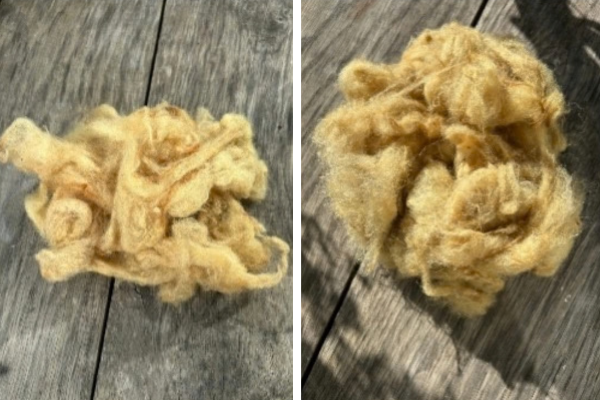
Sage and bay both arrived in the United Kingdom with the Romans. Wool dyed with bay on the left, and sage on the right and mordanted with alum.
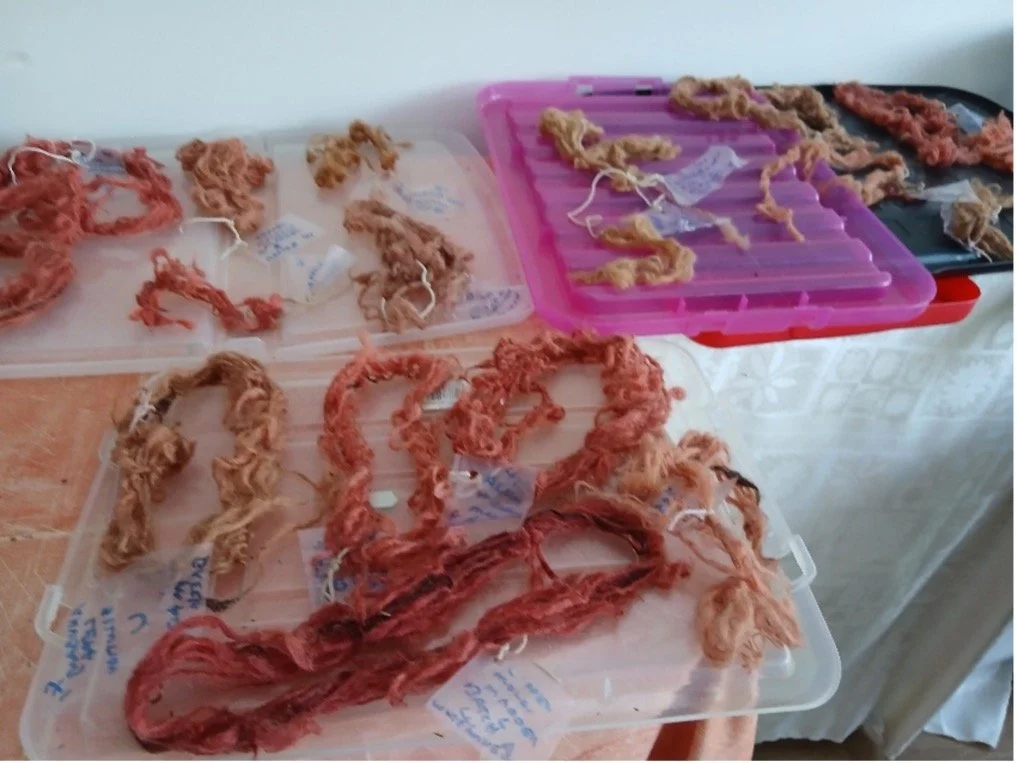
Madder skeins drying.
The Bronze Age
Our first visit is to the Bronze Age. This period has been extensively researched by Nicole DeRushie, with her excellent book: Bog Fashion. It appears that dyeing wool was generally unnecessary. The sheep were mainly grey and brown, and their fleeces provided a variety of shades. White sheep were introduced later as their fleeces are most suitable for dyeing. She also mentioned a 2017 Danish study which did not find evidence of dye on western Bronze Age textiles.
And on the Iron Age, Nicole De Rushie comments that:
‘The vast majority of Scandinavian textiles recovered from Iron Age graves and bog finds reveal the presence of organic dye, though the ones which don’t may simply have been dyed using substances that aren’t currently detectable, perhaps leaving traces so faint or so altered over time as to be unidentifiable. Researchers have determined that most textiles would have been given a dye bath after the weaving was done, with some being subjected to multi-stage dying to produce more colours, including greens and purples.’
By this stage our ancestors had encouraged the breeding of white sheep, thus providing great scope for dyeing wool. This leads us on to the question of mordants. (These are the fixers that ensure colour fastness). Many plants do provide colour, but then disappointment follows when the wool or fabric is washed, and all the colour disappears.
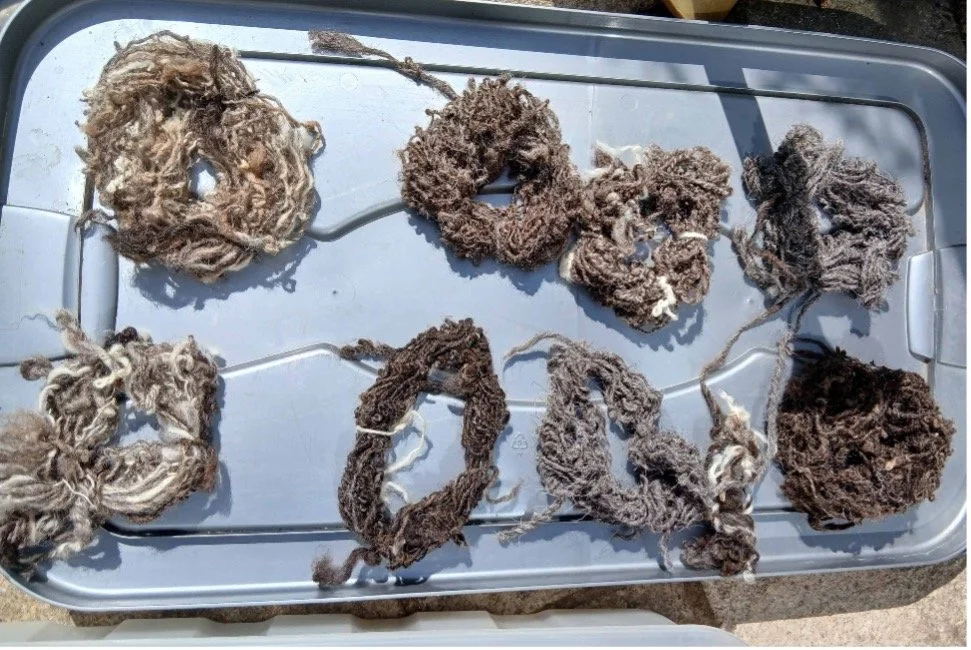
This is natural sheep’s wool – not Butser’s Manx Loaghtan, but fleece from modern sheep breeds. It shows the range of colours naturally available without using dye.
Woad
One of the most famous dyes available to our Iron Age ancestors is woad. It now grows naturally in this country, and particularly at Butser. Although it came from south east Europe and was not originally native to the United Kingdom, at some point, perhaps during the Iron Age, it was introduced to this country.
The Romans called the Celts, Picti, which comes from the Latin verb, pingere. This means “to paint” or pictus “painted”. Julius Caesar: The Gallic Wars (Book 5) stated that:
‘Al the Britons does dye themselves with woade, which setteth a blewish color vppon them: and it maketh the more terryble to beholde in battell.’ (From the English translation by Arthur Golding G. 1565).
We have evidence for woad seeds from a dig at Dragonby, near Scunthorpe. The following information is abridged and the full article can be read here.
‘A large part of the Iron Age and Romao British nucleated settlement at Dragonby, near Scunthorpe, South Humberside (SK 905 138) was excavated by one of us (JM) in advance of threatened ironstone quarrying between 1964 and 1973. The settlement lies in the territory of the Iron Age tribe of the Corieltauvi. It was undefended and about 10ha in area. The main features comprised rectilinear enclosures, trackways and roundhouses.
The remains of woad we report here were found in the lower levels of a waterlogged pit. Layder D contained a large amount of waterlogged plant remains, together with a few sherds of Dragonby’s late Iron Age E and G wares. It was likely that the lower levels of the pit were deposited during the late Iron Age before the advent of the Roman Army.
Amongst the water-logged seed assemblage from pit F 589d eighteen fragments of woad (Isatis tinctoria L.) were found (identified by ARH). The fragments consist of a rather spongy tissue with some strands running across it. They look like boat-shaped hollows and represent the central part of the fruit which contains the seed. In one fragment parts of the wing of the fruit are still preserved.
The presents of the seed ad pod fragments, does, of course, only provide circumstantial evidence for the use of the plant, as the parts of the plant used in the manufacture of the blue dye are the leaves, usually when young (Hurry 1930), i.e before the seeds had been set. The seeds of fruits would not normally be expected in a deposit of dye-bath waste.’
This fascinating article describes the use of woad as a body paint and as a dye. Read the full article here.
It explains how “an infusion of the plant in hot water with the addition of an alkaline substance, such as ammonia or urine, produces a woad vat. The aim of a woad vat is to produce a reduction reaction, which would reduce the insoluble blue woad into a soluble white form, which would turn blue on exposure to air.”
Dr Carr then “referred to some of the scenes on the famous Gundestrop cauldron as evidence for this; perhaps even the cauldron itself was a woad vat?”
Dr Gilly Carr of the University of Kent discussed how 1st century BC to 5th century AD canoe-shaped ‘cosmetic grinders’ with bovine, duck and phallic-shaped terminal designs, such as those found at Colchester were not for Roman use but were instead used for the preparation of woad for body painting by native Britons. “The terminal designs perhaps relate to the binding agents used to apply woad: for example, the duck terminal indicating egg white or yolk, and the bovine terminal indicating a binding agent of beef dripping or milk.”
We experimented with woad, and indigo – which is a pigment that is extracted from woad, and for us, inexperienced dyers, the indigo provided better results. John Edmonds’ book, The History of Woad and the Medieval Woad Vat, describes how indigo appears to have been prevalent throughout the Celtic regions from Britain to southern Siberia, as well as in the eastern Mediterranean and Egypt.
Of course, as Edmonds notes, “what is serious lacking in the archaeological record is any evidence of a Celtic dyehouse. This would perhaps be a simple rectangular construction leaving evidence of at least four post holes and the remains of a hearth over which an iron vat could be heated. There could be evidence of the woad dumped nearby or at least the outer winged casing of the woad seed which seems the part most likely to survive.”
For more information on woad, visit this website here.
In part 2, we’ll share our own experiments with woad and indigo, along with further research into mordants, natural colour fixers and the plants that may have been used to dye textiles in the Iron Age.
How did Hunter-Gatherers Repair their Shelters?
The Experimentalists are an exciting volunteer team here at Butser, working on experimental projects to bring our ancient houses to life. They’re currently working on several projects across the farm. In this update, Margaret Taylor (Experimentalist and volunteer librarian) shares an update from their newest experiment on repairing our Mesolithic shelter!
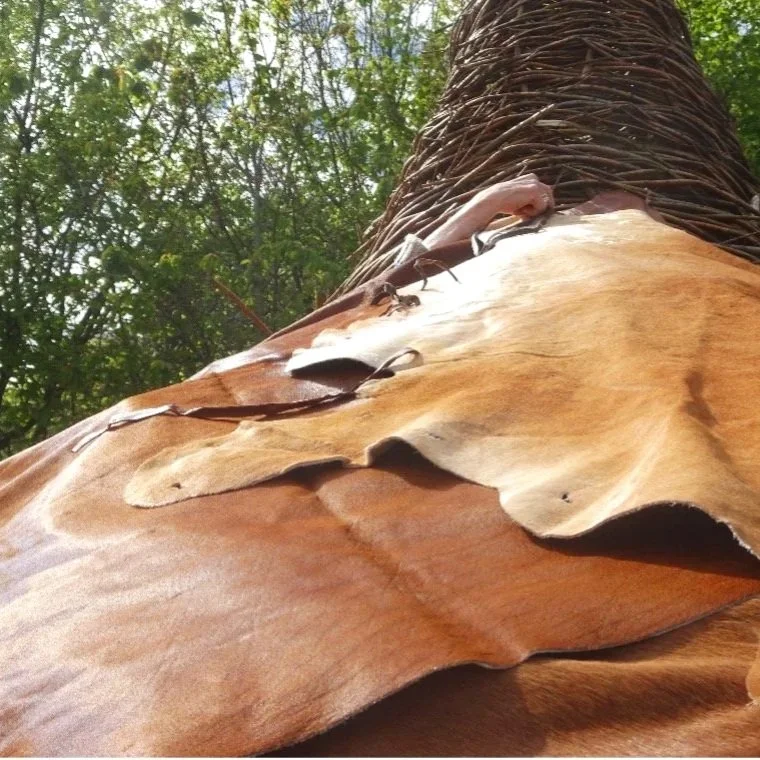
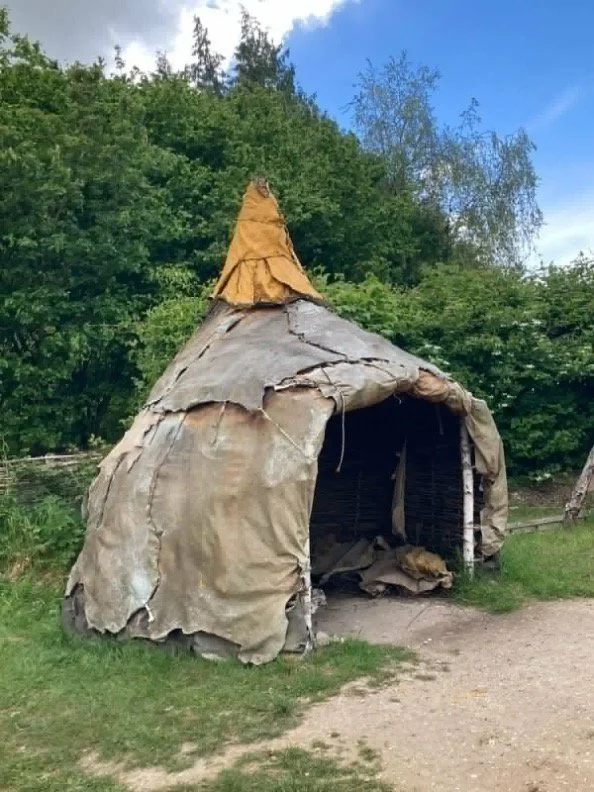
The Experimentalists recently revisited the Mesolithic shelter in the Stone Age enclosure to make repairs and ‘re-paint’ the top section. It was built several years ago, and two years ago the team provided it with a hide cover.
Archaeological Evidence
At this point it is useful to turn the clock back and consider the context of hunter-gatherers and their homes - and for this, Butser team member Trevor Creighton is our best guide.
Trevor explains how the Stone age period is loosely defined as pre-2000BC, and is broken into three phases: the Palaeolithic, Mesolithic and Neolithic - or ‘Old’, ‘Middle’ and ‘New’ Stone Ages. Our story begins around 12,500 years ago when, following the final Ice Age, our ancestors returned to Britain as Homo sapiens ‘hunter-gatherers’. He writes that:
‘By this time the Americas have been permanently settled for at least 10,000 years, Australia for a minimum of 50,000 and mother Africa has had a continuous presence of Homo sapiens for 300,000 years and human habitation for 2.5 million! In human terms, Britain is a very young land indeed.
‘We think of Mesolithic peoples - past and present - as mobile. They were hunter-gatherers. Such a lifestyle is called nomadic. Recent British finds highlight the oversimplifications of popular ideas of the hunter-gatherer. Sites such as Staff Carr in Yorkshire and Howick in Northumberland exhibit evidence of sophisticated structures, including houses, and long- term occupation. Perhaps the occupation was seasonal but the association with the site was of the order of centuries and the evidence implies that the occupants may never have moved far from the general area, even during their seasonal ‘wandering’. The movement of people would, almost certainly, have been within a well-defined territory and with a clear set of objectives. Archaeologists find deposits of charcoal distributed through Mesolithic soil layers, which leads to a theory that fire was being used as a means of driving animals and encouraging new grass growth. In short, Mesolithic Britons appear to have been managing their environment in sophisticated ways.’
Two known sites in the United Kingdom are Mount Sandel in Northern Ireland and Howick in Northumberland:
‘At Mount Sandel a low scoop was the focus for a circular building some 6m in diameter, constructed out of small stakes and posts. The excavator, Peter Woodman, noted the possibility that turn was banked up to provide one side of the building. The building had been constructed on the same spot at least four times. Occupation at Mount Sandel could have lasted for much of the year.’ (Mesolithic Lives in Scotland by Graeme Warren.)
We do not know what the shelters would have actually looked like, and the Butser shelter is an artistic impression of what they perhaps might have built. We decided that animal hides like deer and aurochs (the wild ancestor of modern cattle) would have worked well, and that they would have been quite valuable; it would have been very time consuming to prepare and tan the hides and they may have wished them to be portable - a bit like the portability of Yurts in central Asia today (although theirs are created with modern materials!). The Experimentalists were also given a short talk and a chance to begin preparing a hide - and it was not easy! One of the first questions visitors ask is why it has a chimney-type piece. This is purely artistic licence, constructed specifically for Butser. Of course, we do not have evidence - and do not know what our ancestors would have done.
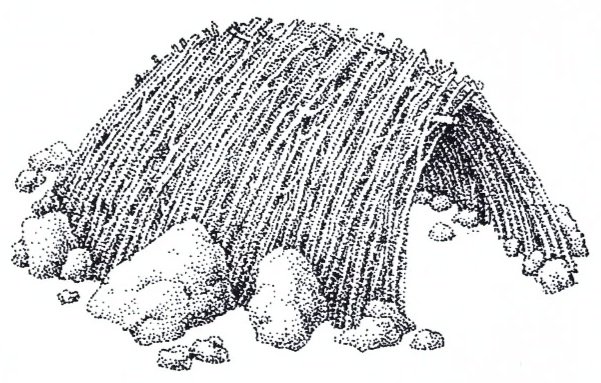
This example is taken from a much earlier period, and based on an excavation at Terra Amata, a hillside site at Nice in Southern France described in Origins by Richard E Leakey and Roger Lewin.
See the illustration (right) for an example from an excavation on a hillside in Nice. A team of volunteers attached to the University of Nice (date unknown) cleared a site and eventually uncovered the remains of what they considered to be substantial living quarters:
‘By digging down through the living floor they found evidence that the site had been occupied over and over, probably at yearly intervals, and possibly by the same people. The occupants of the camp had built their shelters by driving wooden posts into the ground, using rocks to give them stability, and then covering the whole, possibly with animal skins, branches, or a combination of the two.’
The team concluded that these were hunter-gatherers, and guessed they were an early type of Homo sapiens.
The Butser Mesolithic Shelter
We covered the shelter in 2024, and it has survived very well, but it does require regular maintenance and this begs the question - what would our ancestors would have done?
Our shelter is permanent and the animal hides on it require regular attention. The hides are working very well, but attention was needed to the top section and we decided that another application of colour would work well.
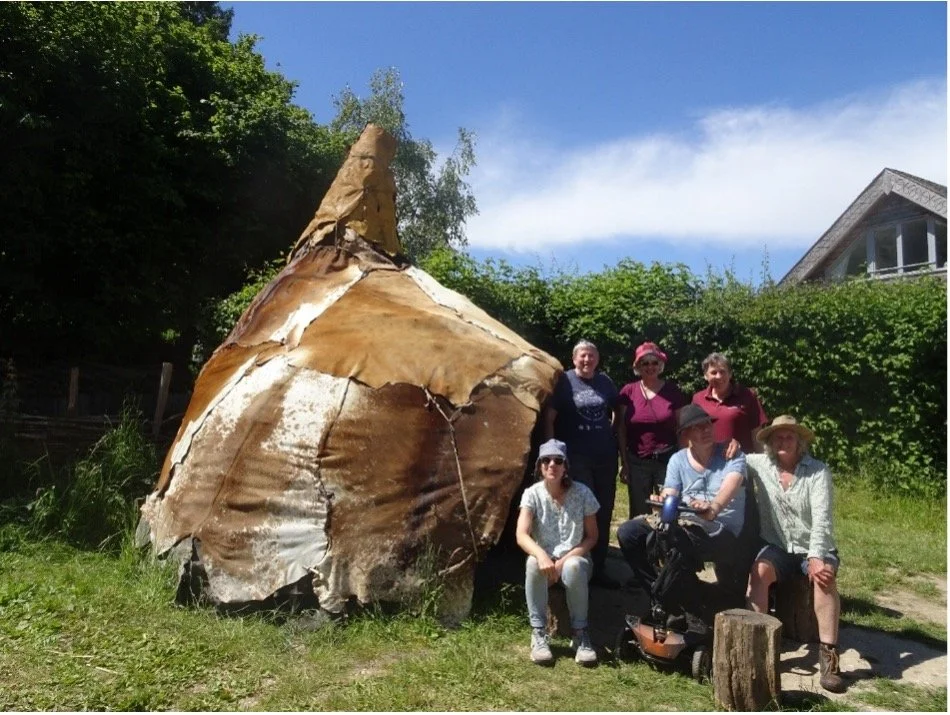
In 2024, the Experimentalists completed the shelter covering.
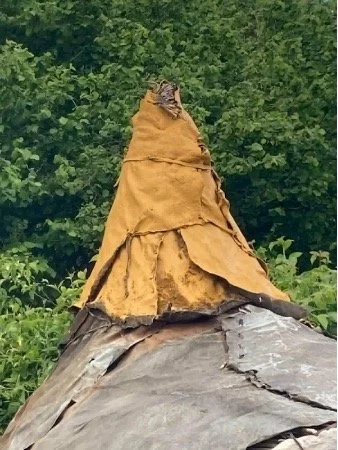
The shelter in 2026 following repair works.
Two years ago, our shelter did not have a covering; there was a shelter nearby which had old and very tatty deer skins covering it. Our mission as Experimentalists was to tidy up the present shelter. Of course, we did not want to waste the hides, and so we set about rejuvenating them. Needless to say, this was a very messy job. It involved scrubbing the hides and then basting them with fish oil and lard.
We also tackled this task in all weathers - including in one of the Saxon houses, with very poor lighting, sheltering from Butser’s very own torrential rain!
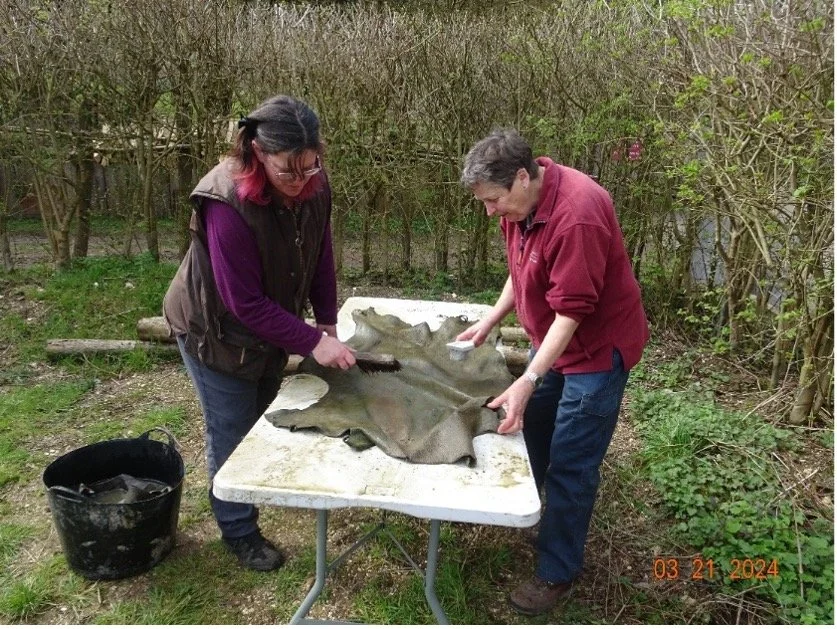
Scrubbing the skins, which we then put on the fence to dry.
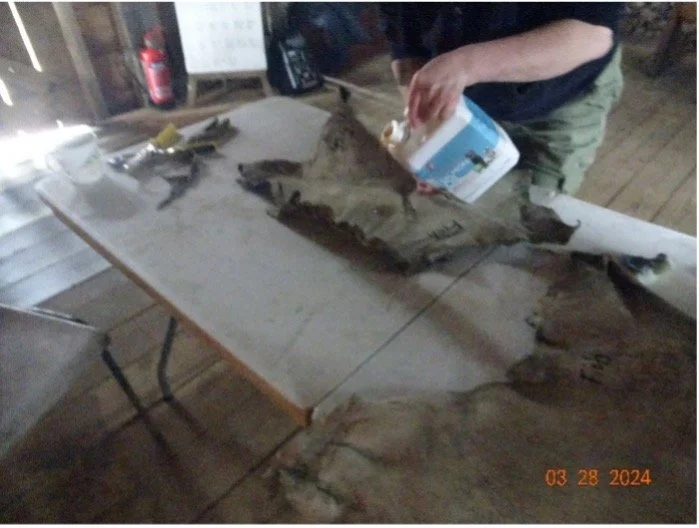
Inside the Saxon House, with the photograph taken with the aid of flash - using modern fish oil!
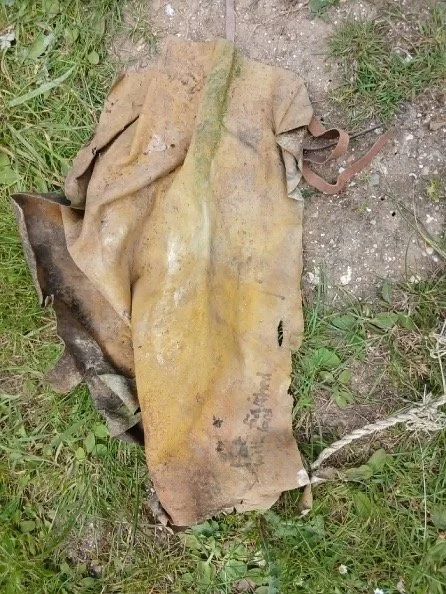
And in true Experimentalist style, we labelled each hide with marker pen - and were pleased to see that in our 2026 renovations, our labelling had survived!
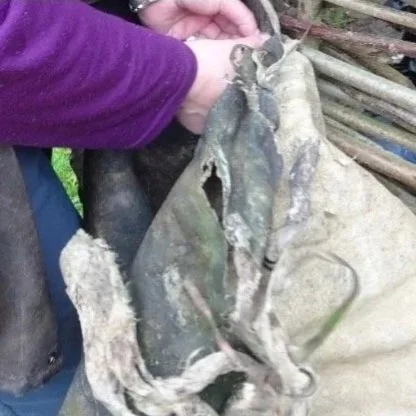
The next task was to attach the hides to the lower section of the shelter.
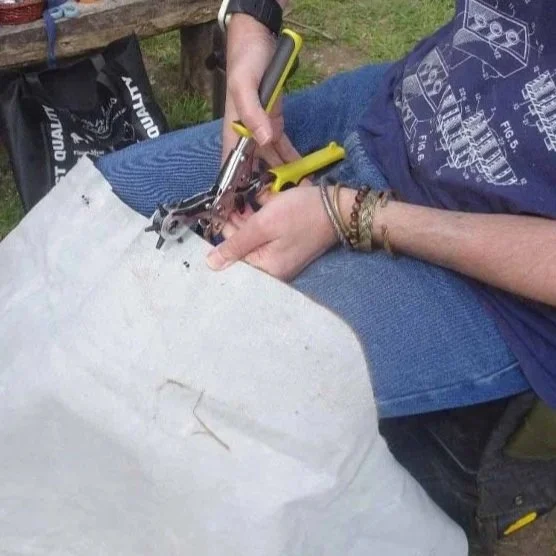
Now, we needed to attach the cow hides. These were either purchased by Butser, as seconds or donated. It made us smile because these are designed as floor mats in a modern house, and came with instructions. It is recommended that they are kept dry inside, and not exposed to excessive sunlight or the elements! Therefore, we were very interested to see how they would cope with the extremes of a Butser winter!
Finally, a word on the colour: Ochre.
Ochre is a natural clay pigment, ranging in colours from yellow to deep orange. It would have been found in Britain and our ancestors would have crushed it and mixed the ochre with water or binders, such as fat. This inevitably led us to consider how they might have applied colour - hands, of course, but horse/animal hair would, as now, have also made good brushes.
Two years ago, on a hot summer’s day, hiding under the shade of the hedge, we applied ochre to the upper skins with our hands - and it went everywhere, staining our skin yellow. We sent Will up to the roof, wearing a plastic cape to protect his clothes. This time we mixed the ochre with fat, as before, but it was applied with a brush - much more effective and practical. Ray volunteered to go up the ladder - with a couple of us taking it in turns to secure the ladder and this method was much more efficient.
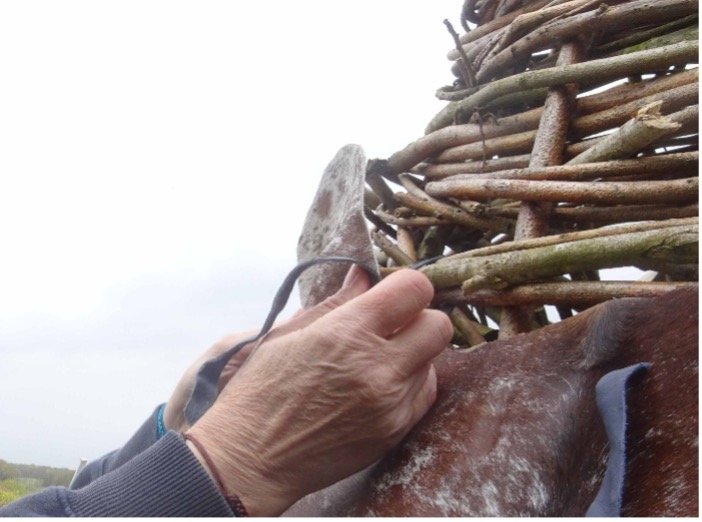
Experimentalist Clare, in action!
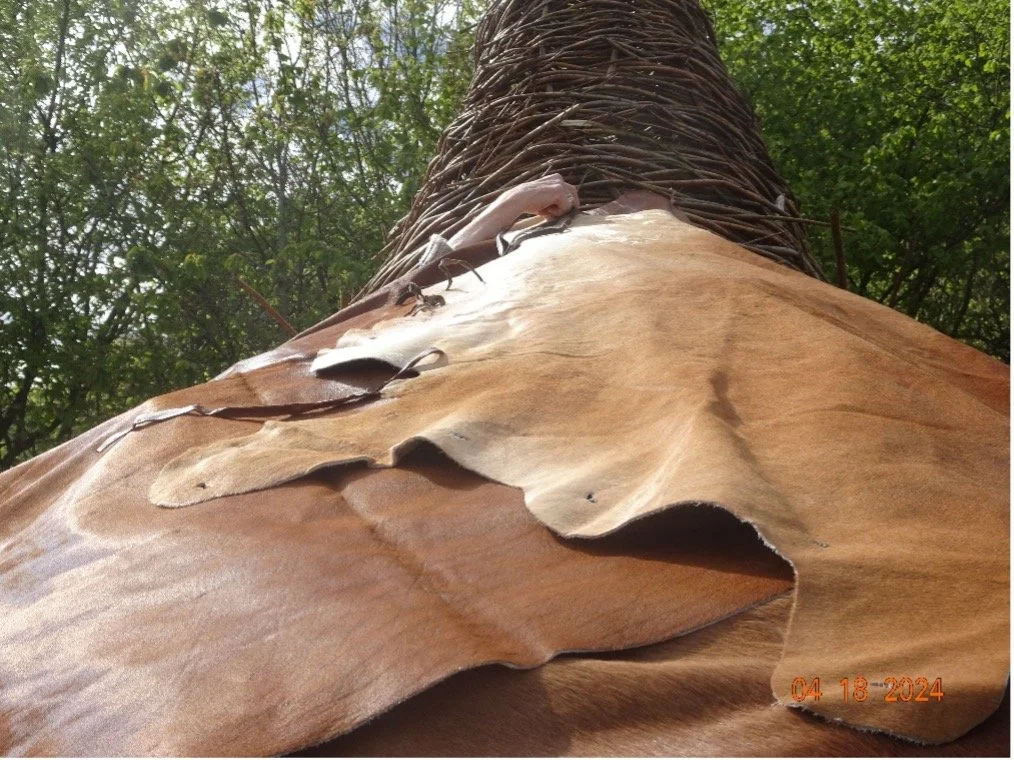
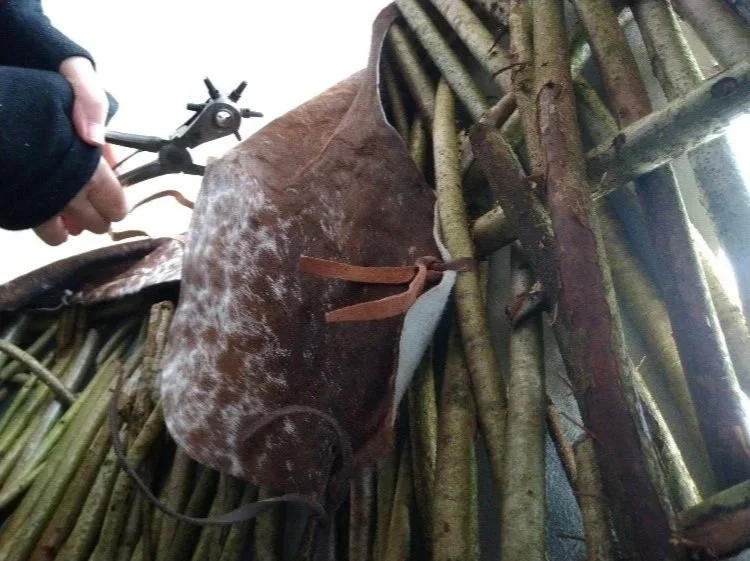
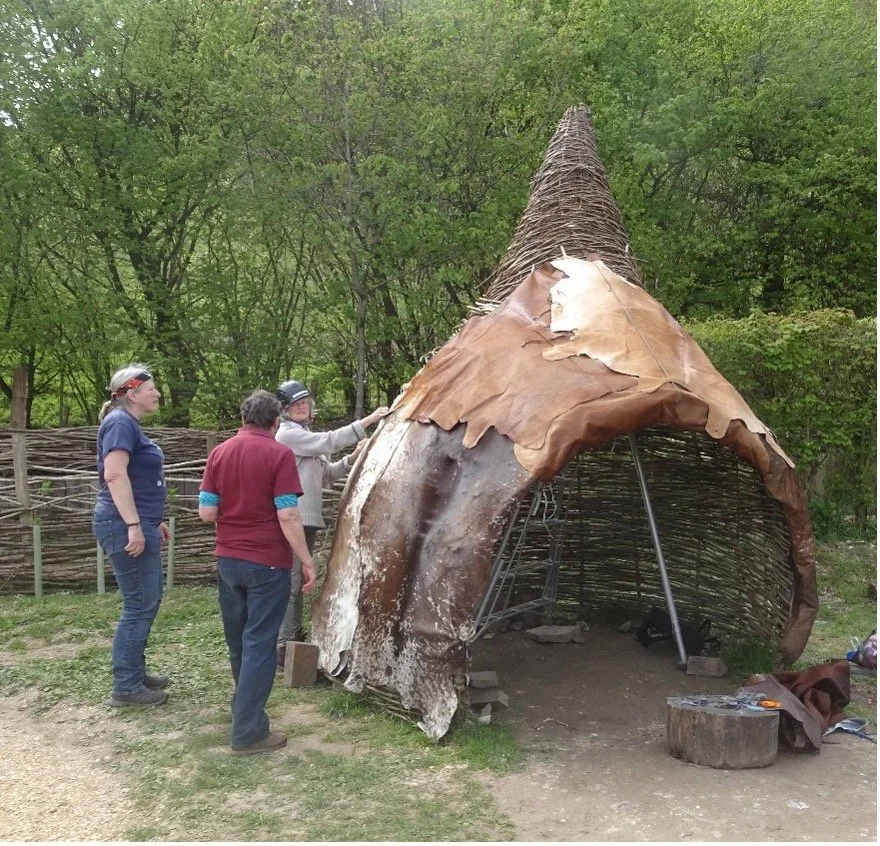
The team, assessing progress.
Why colour it at all? We wondered if our ancestors would have made their life more colourful and in the very distant past used it to create cave paintings. And, perhaps, using our imagination - on returning from a hunting trip, it would of course have been easier to identify their home!
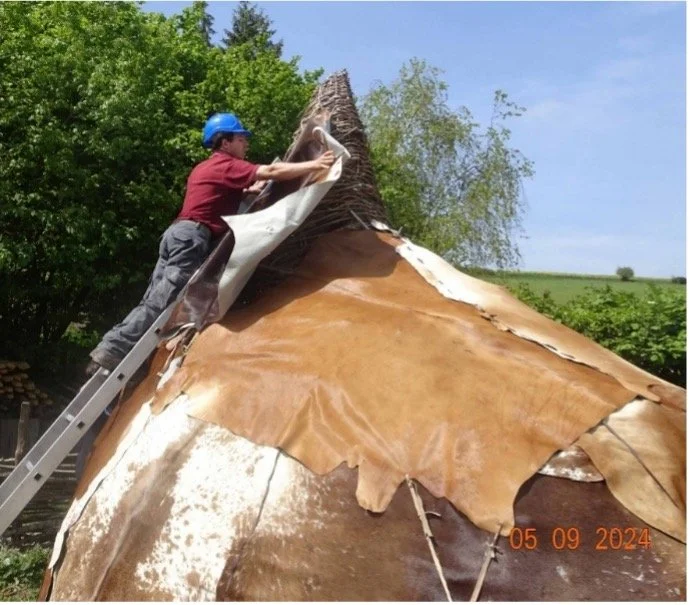
Will up the ladder
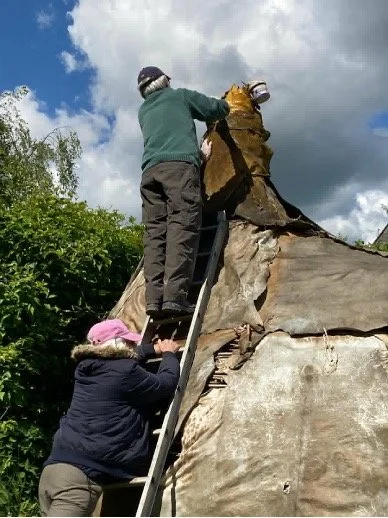
Ray and myself - on ladder patrol!
Experimenting with Tablet Weaving
This week’s guest post is by archaeology undergraduate Lucy French, who was awarded the Friends of Butser Ancient Farm bursary in 2025.
I’ve always been interested in archaeological textiles, especially since I became a historical re-enactor and started studying archaeological science at the University of Reading. During the COVID-19 pandemic I took up an ancient textile craft called tablet weaving that was popular in early-late medieval Northern Europe. I absolutely fell in love with the craft, and it became a big hobby of mine, eventually leading to me learning how to spin my own yarn and dye it with natural materials as well.
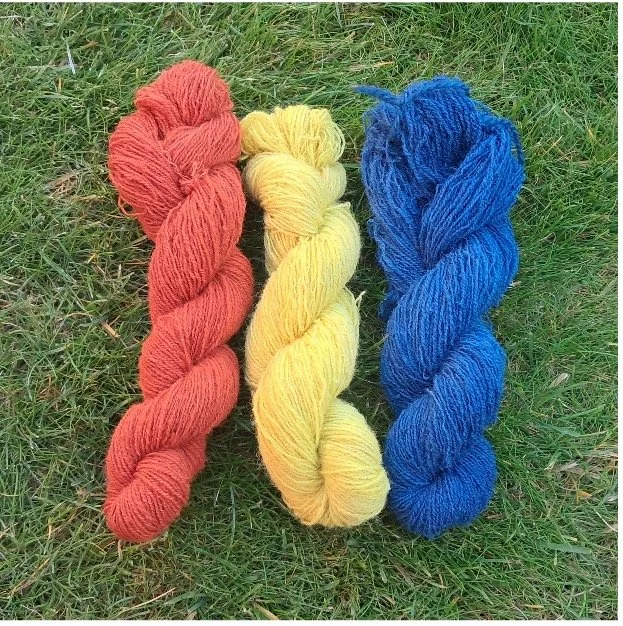
Figure 1: The yarn dyed with madder, weld and indigo.
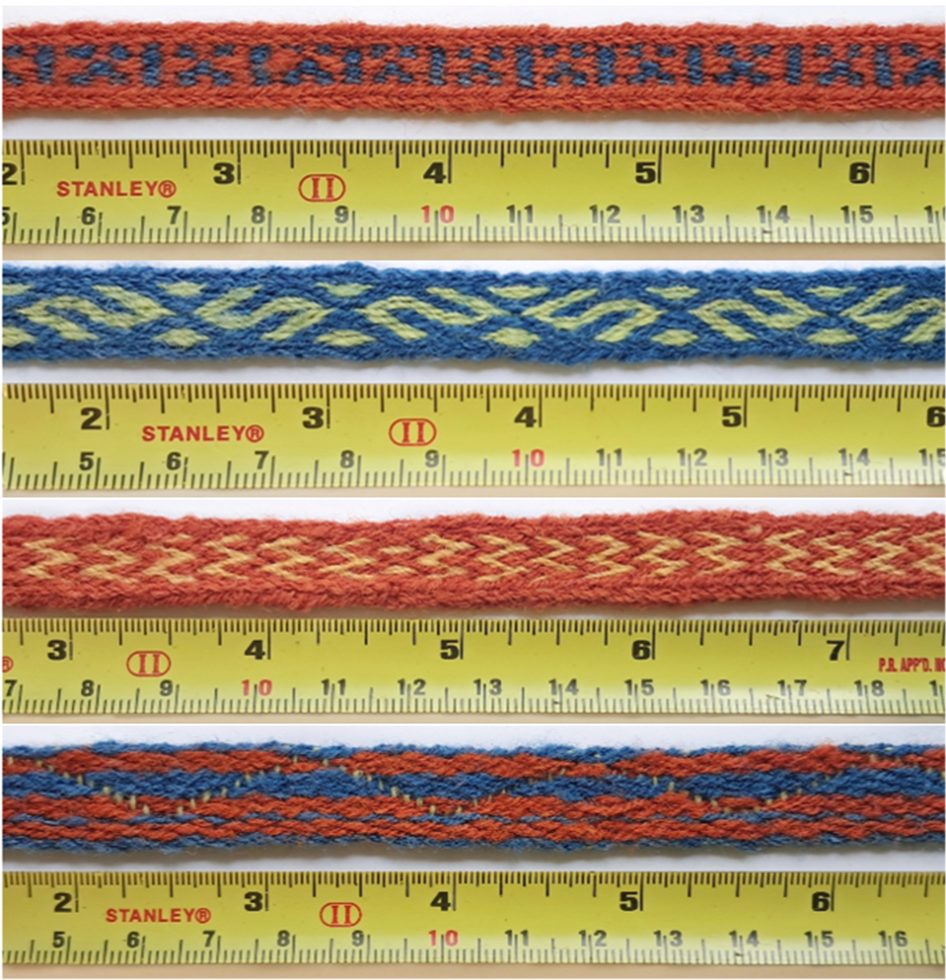
So for my undergraduate dissertation I decided to bring my love of crafting into my degree and recreate four examples of early medieval tablet weaving. I chose two bands from Russia, one from Norway and one from Iceland with dates ranging from 500 to 1200 CE. What I really wanted to explore with this project was the time that went into producing textiles like these. They would have been used as starting borders for weaving fabric, or made by themselves to use as straps, belts or trim on clothing. My first aim for the project was to find out how long it takes to make tablet woven ribbons from start to finish – I started the experiment with a bag of raw wool that I took right from the shearer. My second aim was to compare different weaving techniques to see which elements of the patterns affected how long they took to weave. This showed me which types of tablet woven bands would have taken the most time to produce, and this gives an idea of how much they might have been worth to the people that made them. I applied for the Friends of Butser Ancient Farm bursary in order to be able to buy the materials I needed to reproduce the textiles accurately.
I spent the summer turning my bag of raw wool into four metres of finished tablet weaving, a process that took 38 active hours - not including the time spent waiting for my woad vat to ferment! My first task was to clean the wool and remove all of the dirt and grease that had built up in it. Then I used wool combs to prepare the fibre for spinning, removing any short fibres and getting out the last of the dirt. For the spinning I used a modern spindle, and I ended up making 150g of yarn, which was much more than I ended up using in the experiment. This part was the most time-consuming step of the project, as it took over two-thirds of the total time. I made six small skeins of yarn and dyed two yellow, two red and two blue. For the yellow yarn I decided to use weld (Reseda luteola) and for the red I used madder (Rubia tinctoria). For the blue yarn I originally intended to use woad (Isatis tinctoria), however it’s a notoriously finicky dye to work with and I wasn’t able to get a blue colour out of my dye vat at all even after leaving it to ferment for a week! So instead I decided to use pre-processed indigo powder instead, which gave me the same rich blue but only required an hour and some chemicals to work. Dyeing with indigo is a fascinating process as when you first take the yarn out of the dye bath it looks green but as the dye particles hit the air they oxidise and it turns blue in front of your eyes!
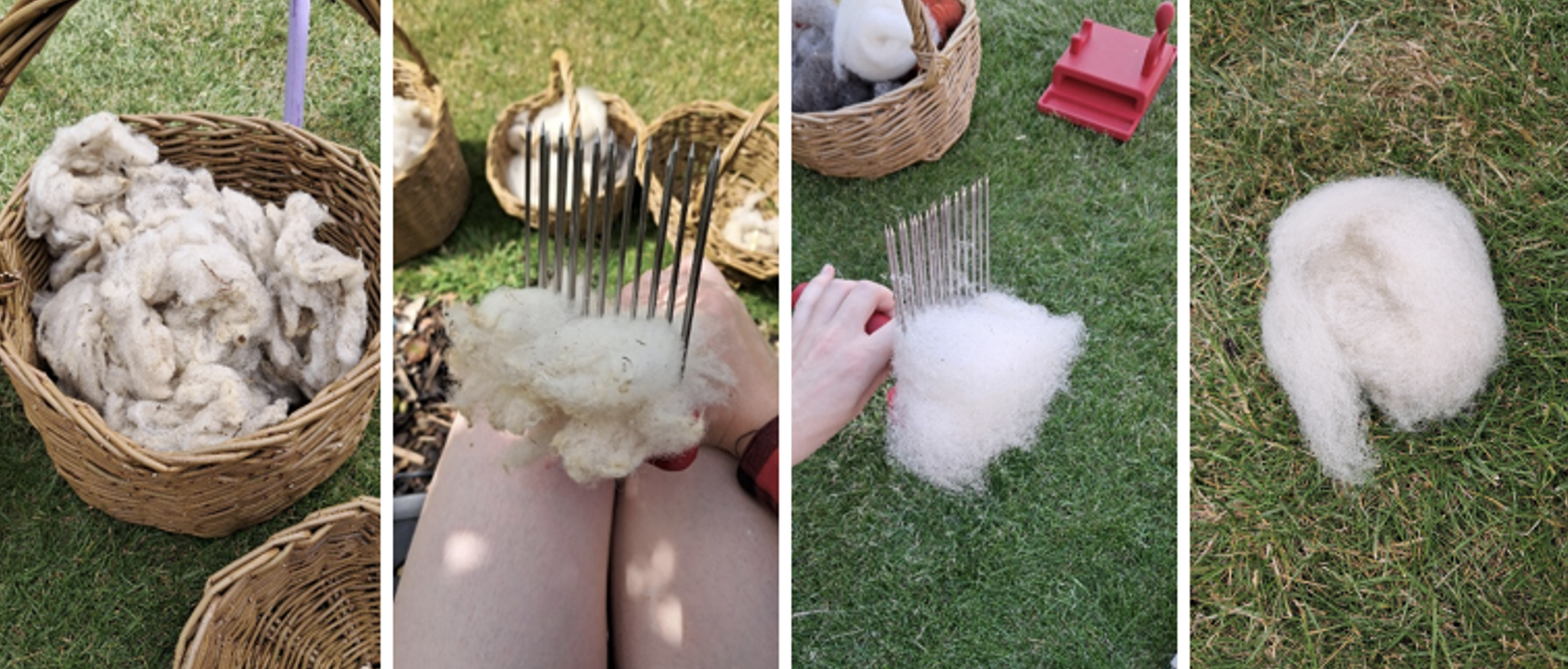
Figure 2: The process of combing the wool to prepare it for spinning.
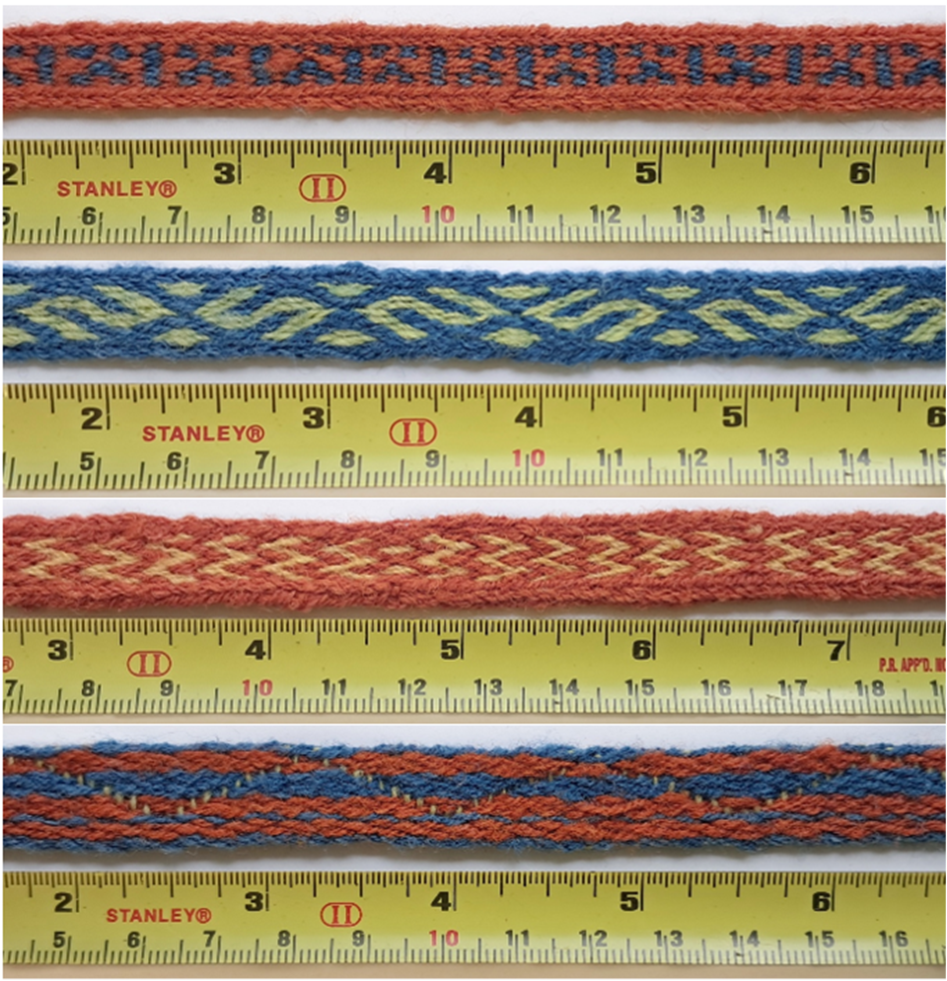
Figure 3: The reproduced bands.
Once the yarn was made I could get to weaving, and I made one metre of each of the bands I’d chosen to reproduce. This was actually the fastest part of the process, as now the yarn was made it only took eight and a half hours to weave all four of the bands. I found quite a big difference between the weaving times, the fastest took just an hour and a half to weave in total whereas the slowest took four and a half hours. I was able to compare the four different techniques and determine which of the factors, such as width and number of threads required, increase the time taken to make the band.
This experiment gives a really interesting insight into how much time went into making textiles like these in the past, and demonstrates how skilled early medieval weavers were. The results have shown that both the dyes used and the techniques used to weave a textile significantly impacts the time it takes to make, and this may have affected how much the cloth was worth to the people that made and used it. I enjoyed every minute of this project and I would love to do this again with some other tablet woven bands from other places and periods!
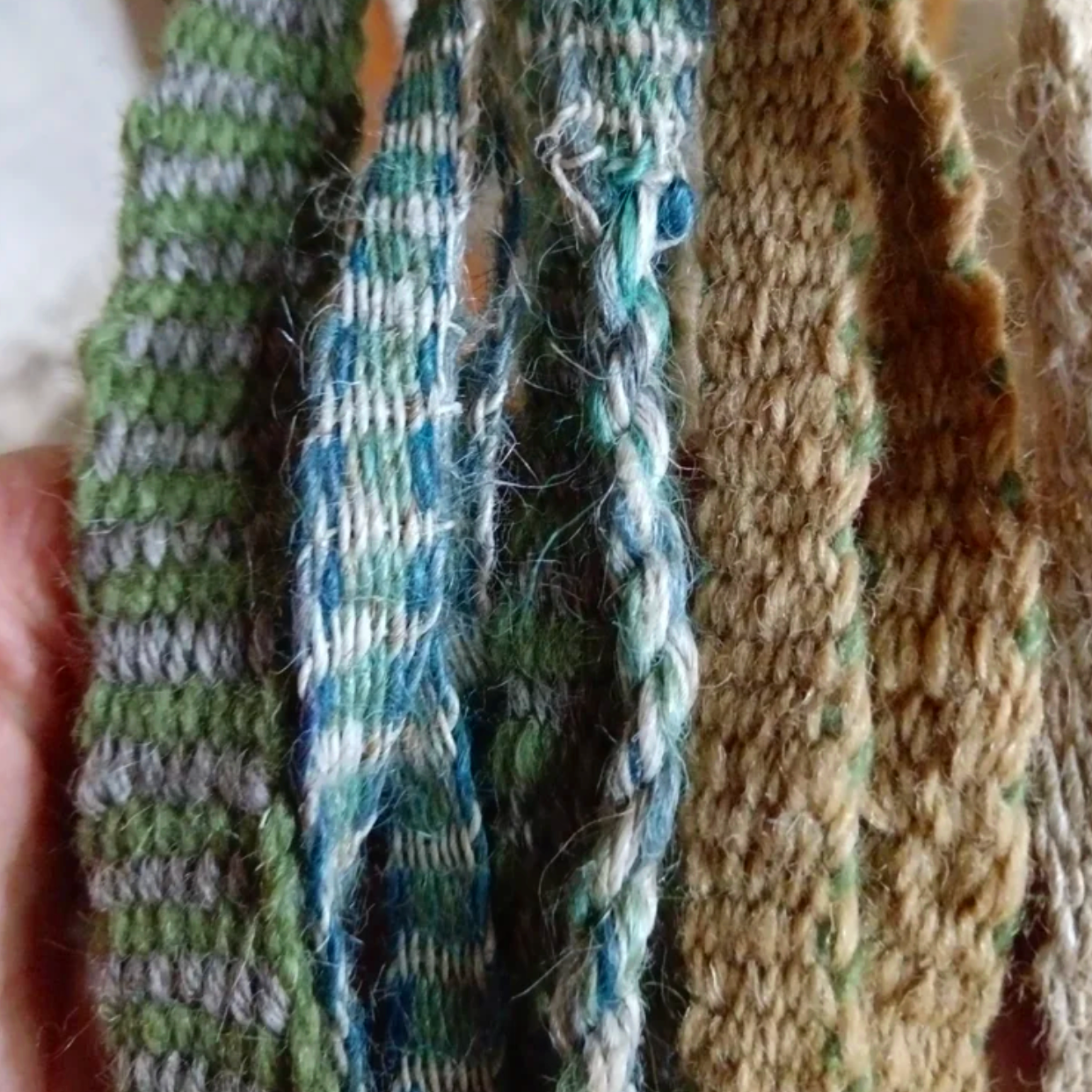
Interested in ancient weaving techniques? Come and weave in an Iron Age roundhouse, using techniques that stretch back thousands of years.
Belt Weaving - Backstrap Loom Workshop
Saturday 1 August 2026
10am - 2pm | £40 per person
Join heritage educator Kat Wootton to learn about setting up a simple backstrap loom using a rigid heddle.
Learn about warp threads and weft threads, what the shuttle does, and a little textiles history, while making a beautiful belt from natural fibres.
Suitable for beginners! Age 16+ (or 14+ if accompanied by an adult).
Ticket includes full entry to Butser Ancient Farm on the day.
Reynard Meets the Roost
The Experimentalists are an exciting volunteer team here at Butser, working on experimental projects to bring our ancient houses to life. They’re currently working on several projects across the farm. In this update, Margaret Taylor (Experimentalist and volunteer librarian) shares an update from their newest experiment - an Iron Age chicken coop! You can read more about this project in The Chicken House Eggsperiment.
Fox alert!
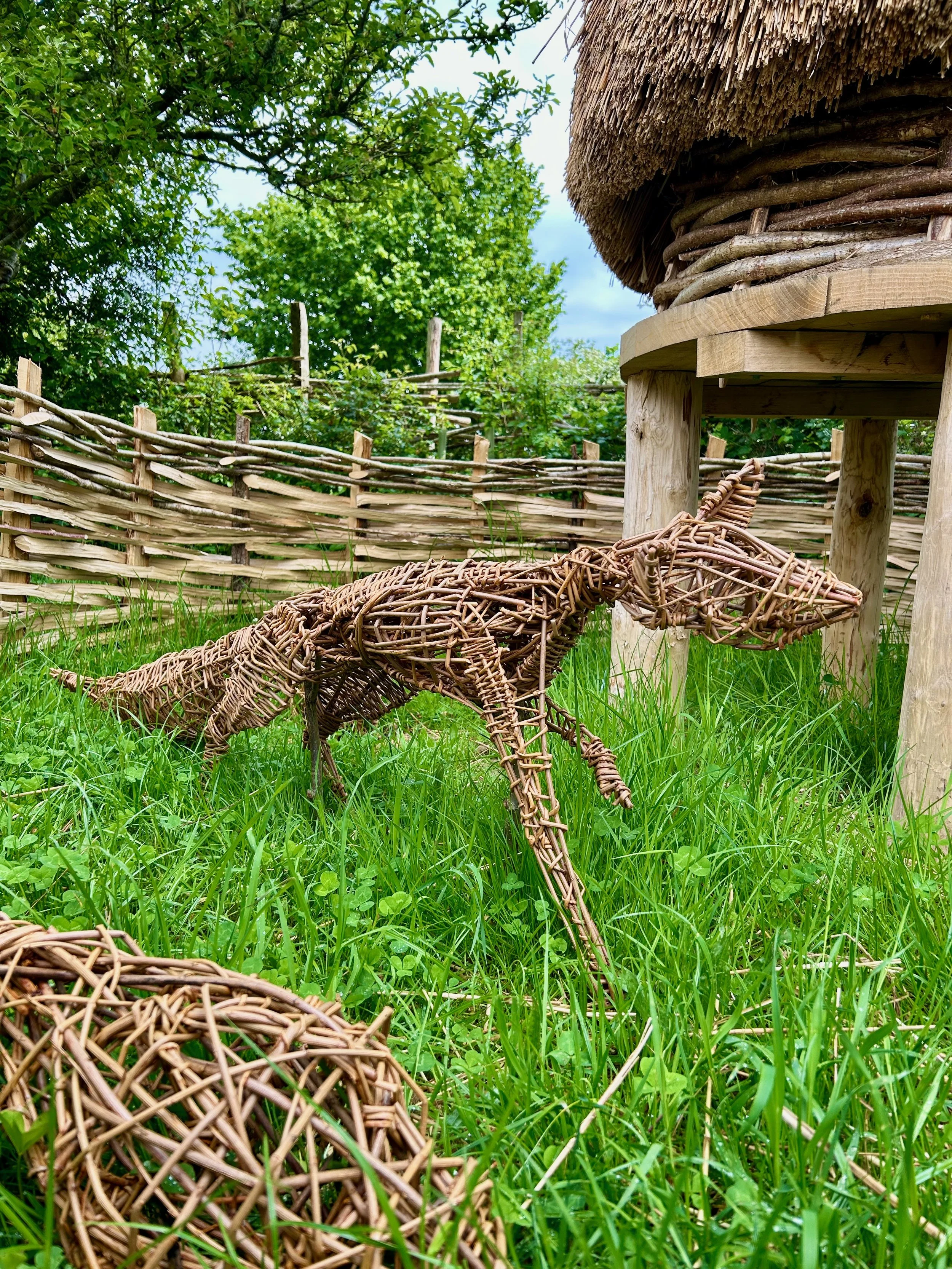
It is a fine, calm spring morning in the Iron Age enclosure at Butser Ancient Farm. Several chickens are happily pecking amongst the grass, when without warning a fox quietly enters the chicken pen… One sharp eyed cockerel, however, has spotted the fox and is determined to save the flock.
The Experimentalists have recently created our own chicken house and inhabitants. Real chickens would of course be ideal - but not practical! The answer? Willow chickens! Now 13 chickens and two chicks have moved in.
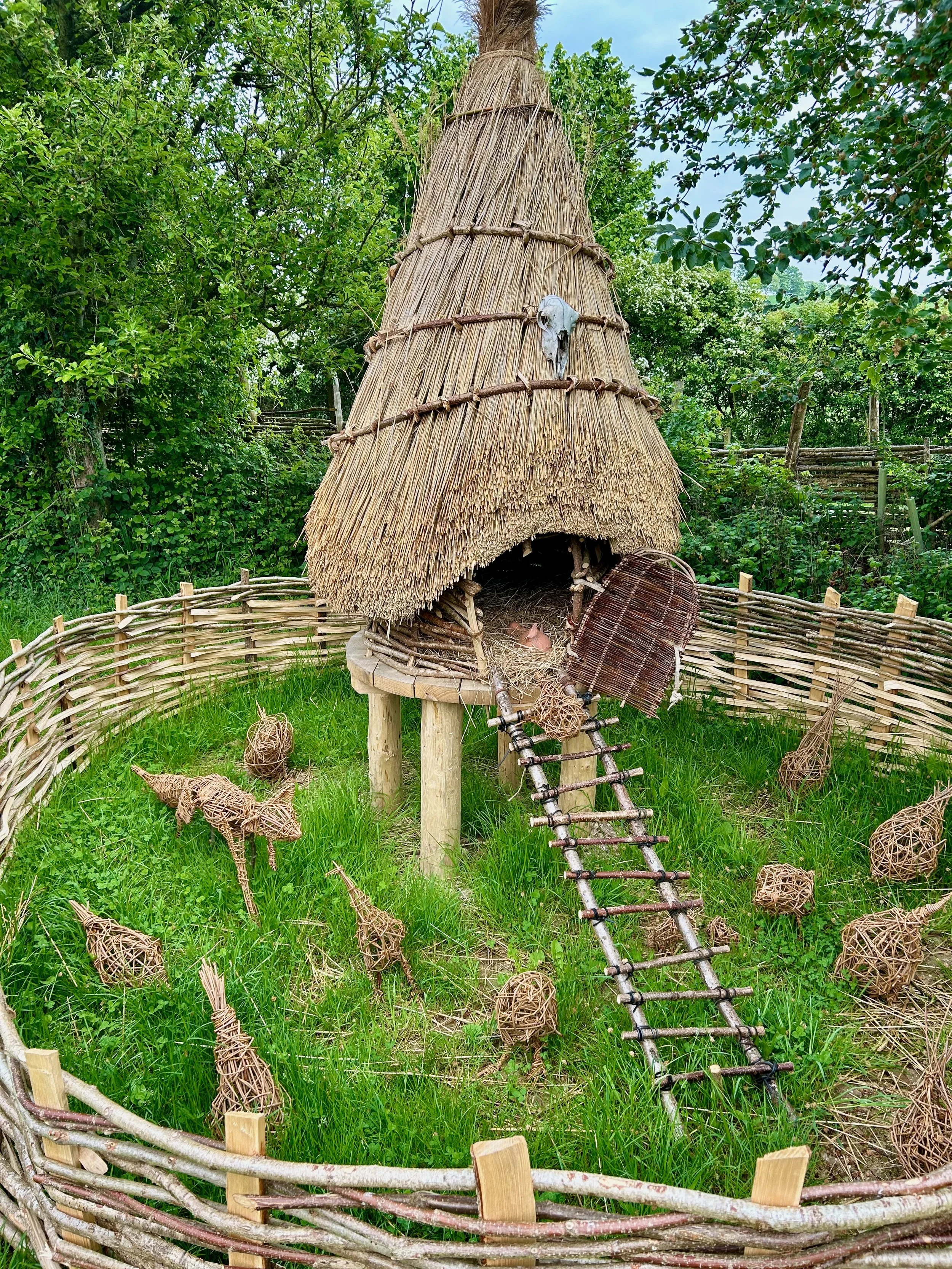
The fox and chickens in together!
This drew my attention towards natural construction materials: hazel, which we used for the lower part of the chicken house and the enclosure fence, and willow, which was used for the upper portion of the chicken house.
Willow is a versatile material that has been used for millenia, all the way from the Neolithic, Bronze Age and into ‘our’ era, the Iron Age. Willow will have been used for a multitude of items, including baskets and fish traps. However, the evidence is often lost as items created from willow rarely survive, except in areas like peat bogs and rivers where plant material does not fully decompose.
Fences have been a necessity for millennia, too. This led me to wonder about our early ancestors and their use of fences. Francis Pryor’s fascinating book Britain BC discusses how in the Mesolithic, hunter gatherers would have followed the herds in order to trap/kill deer and other animals. Then 5,000 years ago, there was a gradual shift from ‘loose herding’ towards ‘close herding’. Close herding can be dated to the later Neolithic and Early Bronze Age. Both would have been much easier with the use of herding dogs. The native cattle were aurochs, and too fierce to be domesticated. Pryor considers that the ancestors of our modern cattle must have been imported and came from a different bloodline. The final move to close herding would have been hastened by the introduction of new species, such as sheep and goats.
Pryor describes how: ‘Unlike modern animals, which have to be shorn, primitive sheep don’t retain their fleeces, but naturally shed them in the early summer. This means that in June they have to be caught up in order to ‘roo’ or pluck the old fleece; alternatively, they can be penned in a small paddock and the wool collected from bushes, hurdles and fences which the sheep rub against.’
Pryor then adds that as sheep can be milked and their milk makes excellent yoghurt and cheese, this provides an additional incentive towards closer herding.
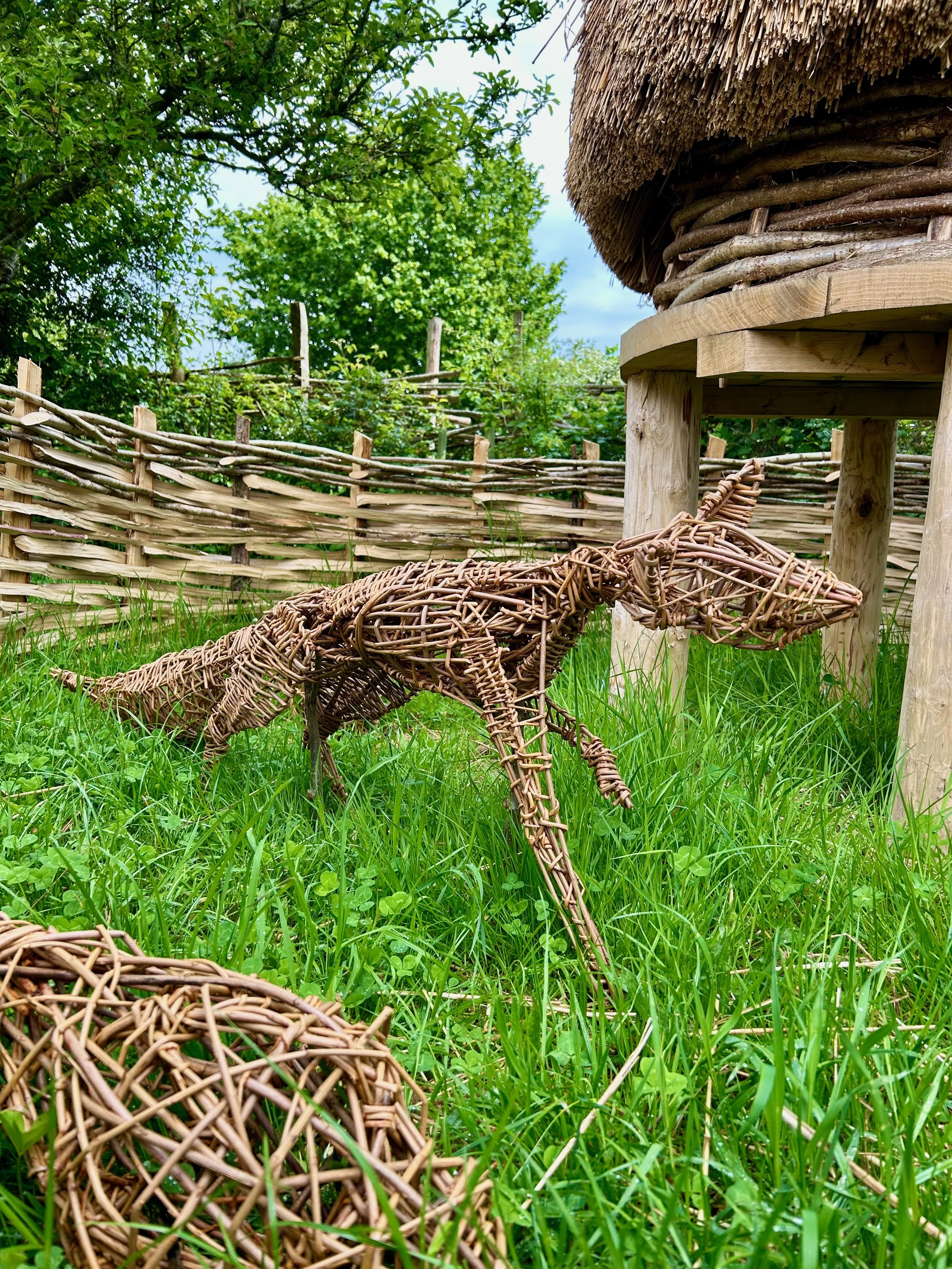
The fox sculpture up close
Now to return our attention to those chickens. Our ancestors, sitting around a fire - or more preferably out in the sunshine with a pile of withies - would have enjoyed discussing what they could create. They didn’t need fake chickens, but just maybe, alongside making life’s necessities, they enjoyed being creative making animals, figures and even toys for the children with their willow!
But there were also, of course, predators - one being the fox, with archaeological evidence for the red fox (Vulpes vulpes) in Britain from Wolstonian Glacial sediments in Warwickshire (wildlifeoneline.me.uk).
Constructing our Chickens
It was challenging - and definitely so for me, as I am not good at picking up new skills quickly. There were 15 of us in our group, under the expert tuition of Maddy. It was reassuring that there were no definite rules and we could make our chickens totally unique. Most members of the group made wonderful chickens, although they have variously described them as a duck/robin/kiwi etc! But they are all looking great, as can be seen in the photographs.
We used willow which had been pre-soaked for several days and then drained. The first task was to create 3 rings, which were then joined together to make a ball. This was the body and then we were invited to choose a spot for the beak and then the tail. The next task was making the legs and feet, and working out how to attach them to the body. This was an interesting exercise…
I felt I was lagging behind, although of course I was re-assured that there was plenty of time, and Maddy is a great teacher. Consequently, around lunchtime, I was definitely relieved when my willow withies began to resemble a possible chicken. I think it is fair to say that I was not the only one who found it a challenge, but we all got there in the end.
The talented Riley made a great chicken, and then took some willow home, and during the next week fashioned a fantastic fox. Others tweaked their chickens later, and now 13 chickens are living happily in their enclosure - pegged down to avoid them ‘flying off’.
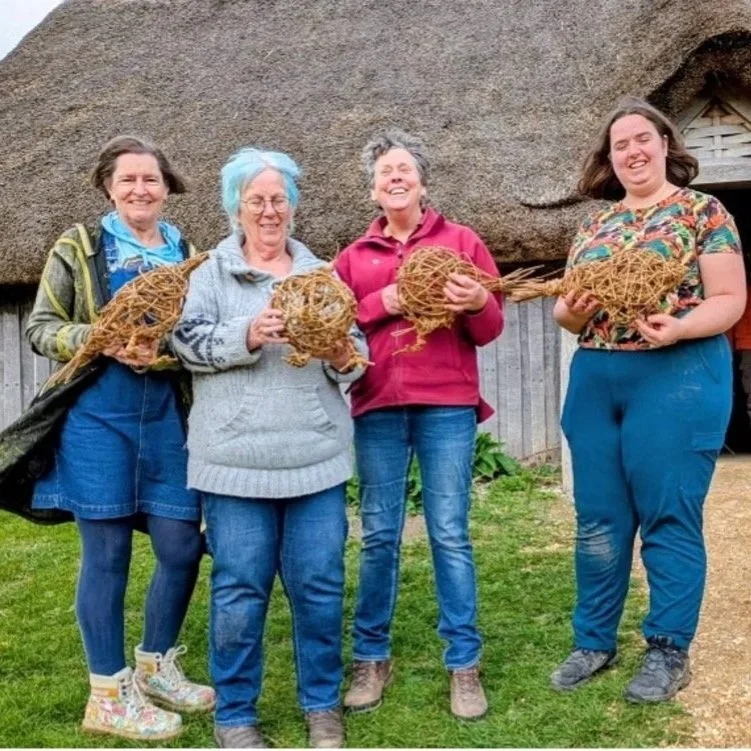
Some members of the original group with their chickens
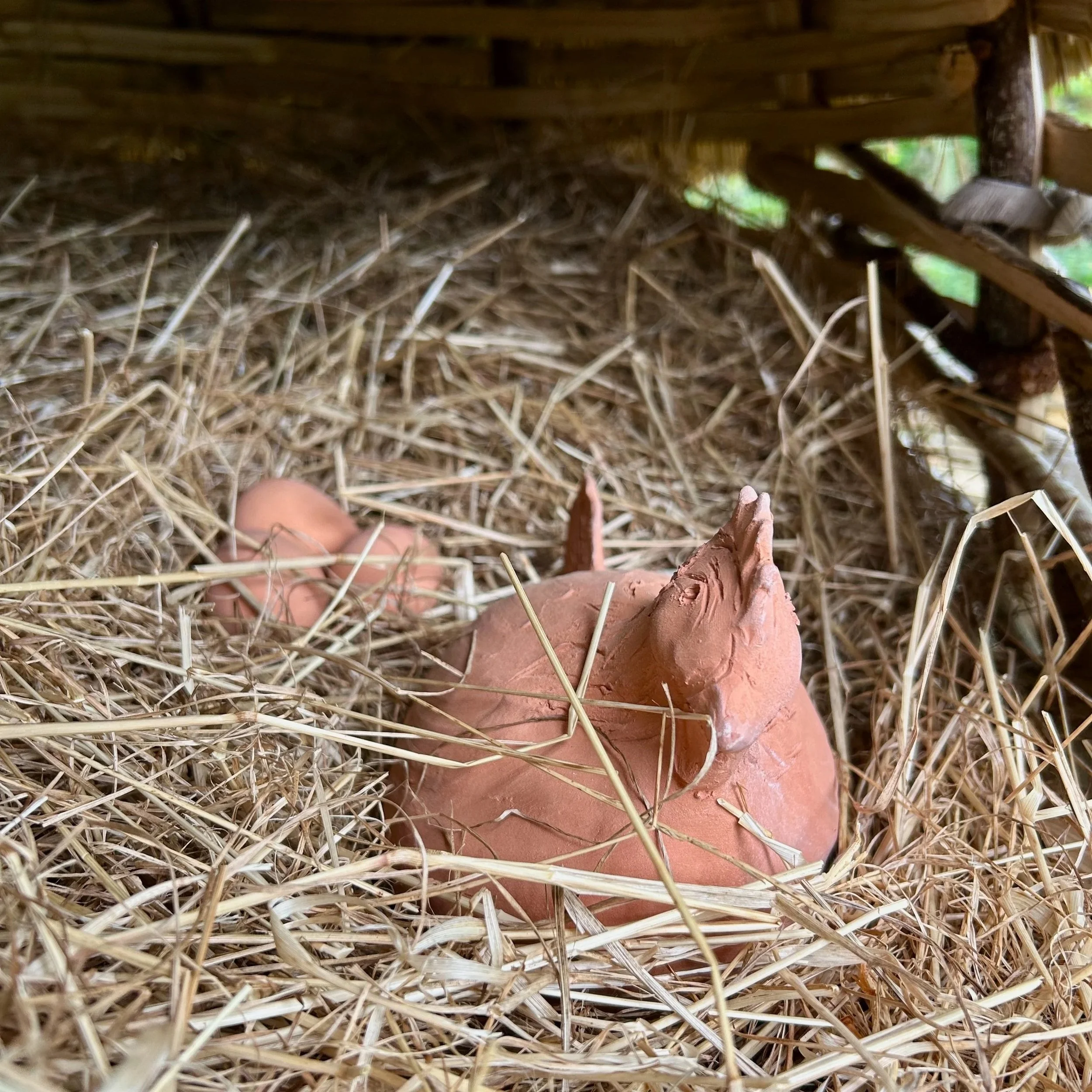
The first terracotta chicken to inhabit the coop
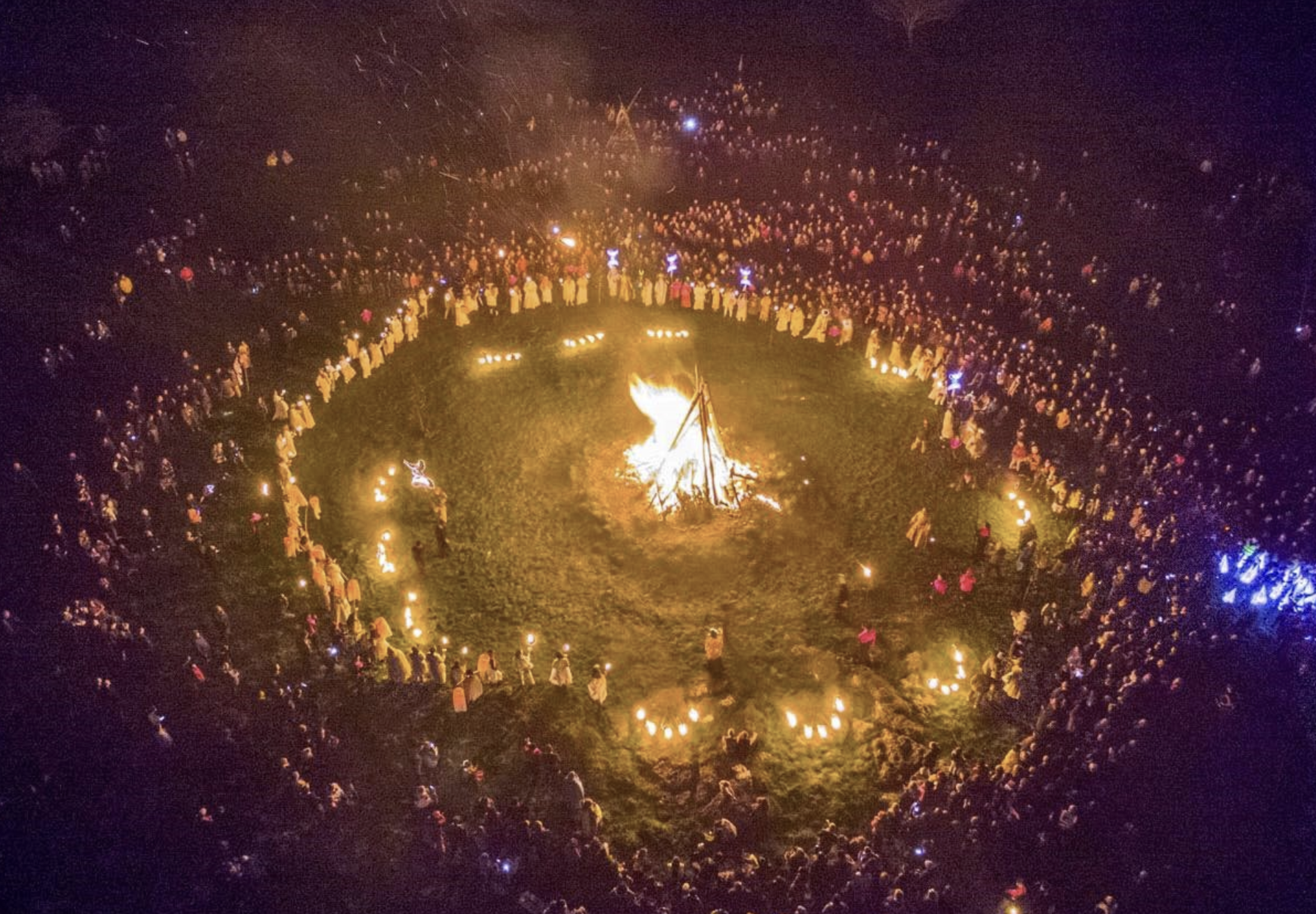
Beltain: Fires, Folklore & What History Actually Tells Us
This guest post is by University of Exeter student Frances Hansom, who is completing an MA in Magic and Occult Science.In her research, she explores the historical, textual and even archaeological traces of the Celtic seasonal festival of Beltain (spellings vary).
Welcome Lá Bealtaine ᐧ Là Bealltainn ᐧ Laa Boaltinn ᐧ Boaldyn ᐧ Beltane · Beltain · Beltine · Beltany!
In my early twenties, I was a member of Edinburgh's Beltane Fire Society and I performed in the large-scale public events the organisation has run in the city for nearly forty years. These celebrations were created to mark the main seasonal festivals of an old ‘Celtic’* calendar, Beltane in early May to welcome in the beginning of summer, and Samhuinn at the end of October to mark the start of the darker stretch of the year. Being only a small part of these events gave me a deep and lasting love for these immersive celebrations attributed to the ancient peoples of the British Isles.
I always wondered however, what primary evidence actually exists for these customs, beyond the modern reinterpretations of these cyclical ritual events. Returning to university as a mature student to study an MA in Magic and Occult Science, and undertaking a placement with Butser Ancient Farm as part of that, gave me the chance to find out.
* Bear in mind, the use of Celtic’ in this context is a romantic and atmospheric term rather than a precise one. Edwardian writers used it in broad strokes to describe peoples from Cornwall to Brittany to Ireland to Scotland across vast stretches of time. Beltain rituals of the past belonged to specific places and specific communities, not to a single, unified civilisation.
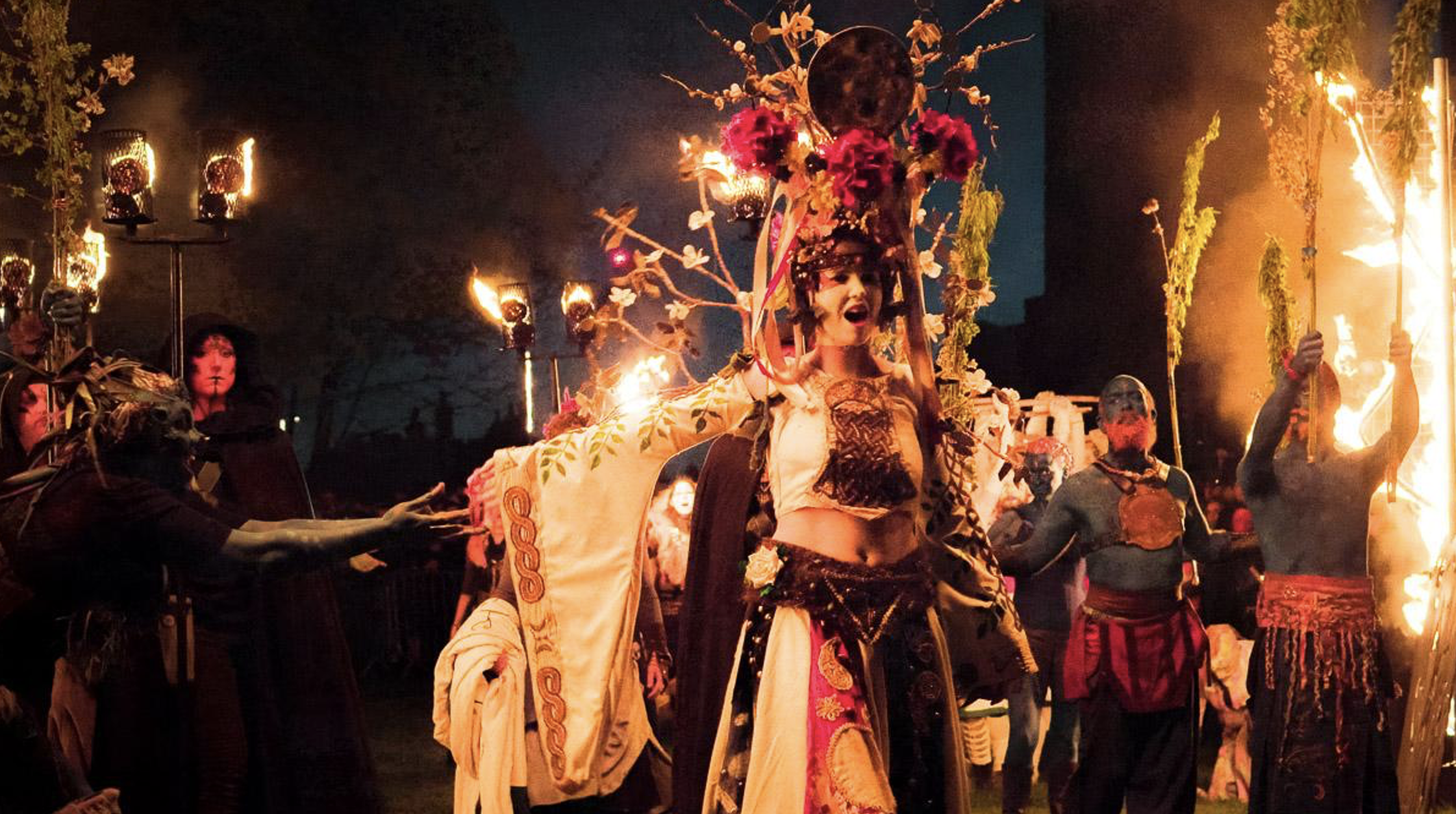
Image: Copyright Duncan Reddish for Beltane Fire Society
The Shadow of James Frazer
I wanted to know if historical accounts of Beltain rituals were still practiced today, and found that most modern celebrations trace their shape, at least partially, to the Edwardian Scottish anthropologist James George Frazer (1854–1941). In one section of The Golden Bough: A Study in Comparative Religion (1890), he tells of how Beltane fires were lit across the Central Highlands every first of May, and gruesomely claimed that ‘the traces of human sacrifice at them were particularly clear and unequivocal.’ He may well have been drawing on Julius Caesar's account in the Gallic Wars (51–52 BC), where he described how the ‘Celtic’ Gauls constructed enormous wicker figures, ‘the limbs of which formed of osiers they fill with living men, which being set on fire, the men perish enveloped in the flames.’ (Gallic Wars - Book VI, Chapter 16)
These two accounts should be taken with a large pinch of salt as Caesar was a commander who needed to justify his conquest of Gaul, and there has not been any archaeological evidence (or further records) for these burnings in the region. Frazer was a romantic literary writer more than an academic scholar, and his ideas are now widely disregarded. Butser's own Beltain celebration draws gently and peacefully on these supposed ‘traditions’ by including a large wicker figure at the heart of the Maytime event, as so beautifully crafted by artists Mark and Rebecca Ford from Two Circles Design. Though it goes without saying that this ritual fire is much more family friendly!

The Butser wickerman at Beltain 2019
Frazer had a broad theory that a Europe-wide fertility religion lay at the heart of all ancient ‘Celtic’ societies. In his interpretation of Beltain, the celebration was centred on the ritual movements of a sacred solar deity/king who moved through a mystical marriage to an Earth goddess, dies with the end of the year, and is reborn again when the light returns. It is still worth reading Frazer’s thoughts on pagan magical beliefs - not as history, but as an origin story for some modern Beltain events (not the human sacrifice, obviously!). He had an enormous influence on Margaret Murray's Witch-Cult in Western Europe(1921), Robert Graves' The White Goddess (1948), and Gerald Gardner, the founder of modern Wicca. His solar king eventually became the Wiccan Horned God/Green Man who moves through the Wheel of the Year. At Beltain or May Day celebrations today, it is common that the Green Man reaches his peak and takes the May Queen as his bride. It's a powerful and moving mythology, but is it an ancient one?
The Earliest Written Record
To examine this question, we need to travel to early medieval Ireland and the glossary Sanas Cormaic, attributed to the Munster king-bishop Cormac mac Cuilennáin (d. 903). Surviving in two manuscripts, this collection of old Irish words and their meanings contains the earliest known literary entry for ‘Beiltine’:
‘Beltane, that is 'bil-fire', that is, a lucky fire. It is a fire which the druids used to make with great incantations, and they would drive the cattle between them every year.’
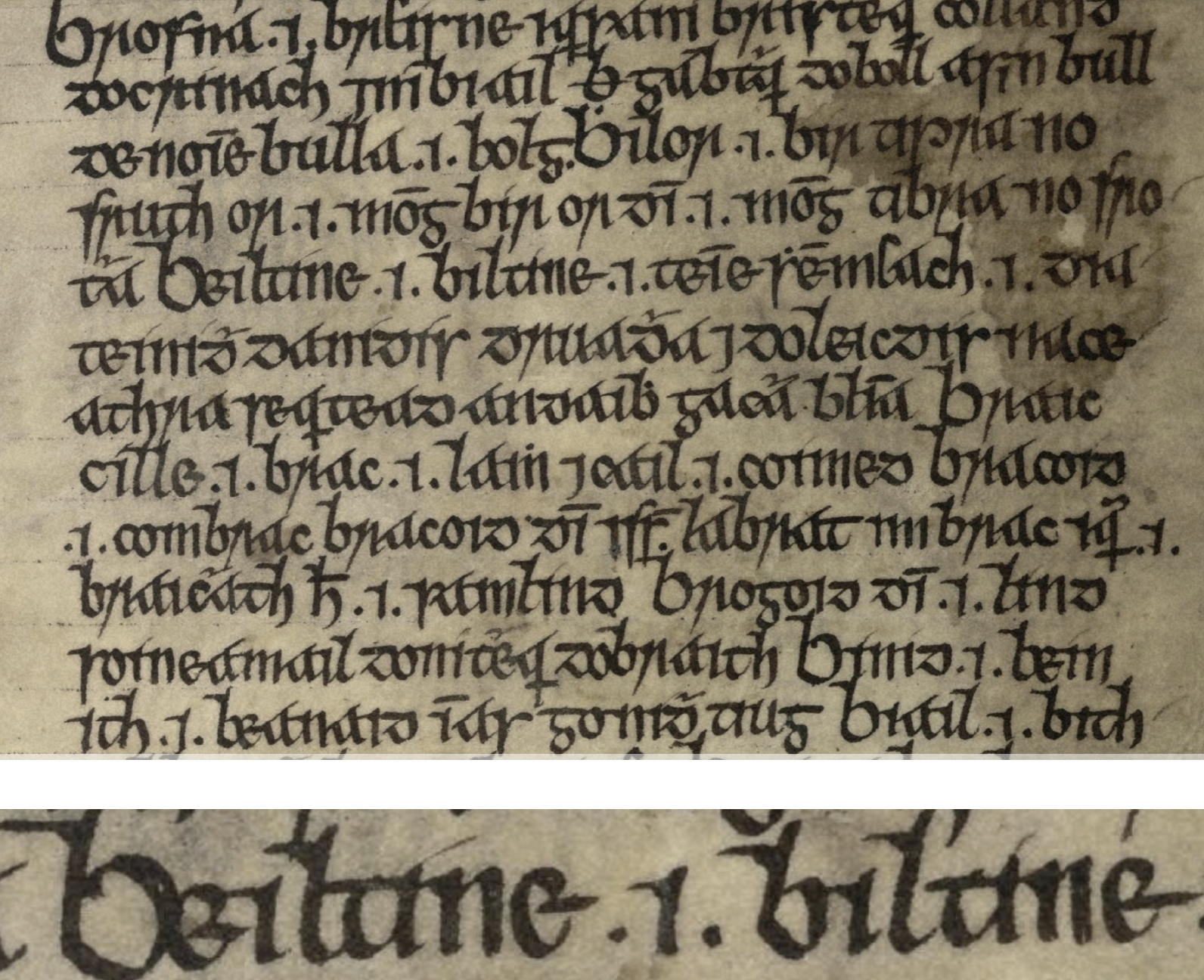
Sanas Cormaic (version M) = Book of Uí Maine (Dublin, RIA, ms D ii 1), fols. 177r–84ra [119r–126ra]. Image courtesy of Irish Script on Screen.
This glossary also records an entry for Bil (also written Bial or Bel), an idol god in whose name a fire was kindled at the beginning of summer:
‘Bil, that is, from bial, that is, a god of idols; whence bilteni, that is, the fire of Bil.’ (Bilteni is a very old version of Beltain)
These two entries offer slightly different focuses. One uses fire as an act of devotion to a deity, the other for practical protective magic for livestock before they were moved to summer pastures. Both of these entries demonstrate that some form of ritualistic ceremony was taking place at the start of summer, and driving cattle between fires as a cleansing ritual makes sense for communities whose survival depended entirely on the health of their herds.
But who or what was Bil? Professor Ronald Hutton, in The Stations of the Sun (1996), argues he may be a form of the Old Testament Phoenician storm god Baal. Others have suggested a connection to the pre-Roman Celtic healing god Belenus, whose name appears in records stretching from the Italian peninsula to Britain, and whose association with Apollo hints at a link to solar or celestial light. It is fitting that ‘Belenus’ may translate from an Indo-European root as ‘brightness’ or ‘whiteness’. The truth is that no other textual sources exist to answer the question. Bil remains a mystery, but the record of his importance to the ancient people of Ireland remains.
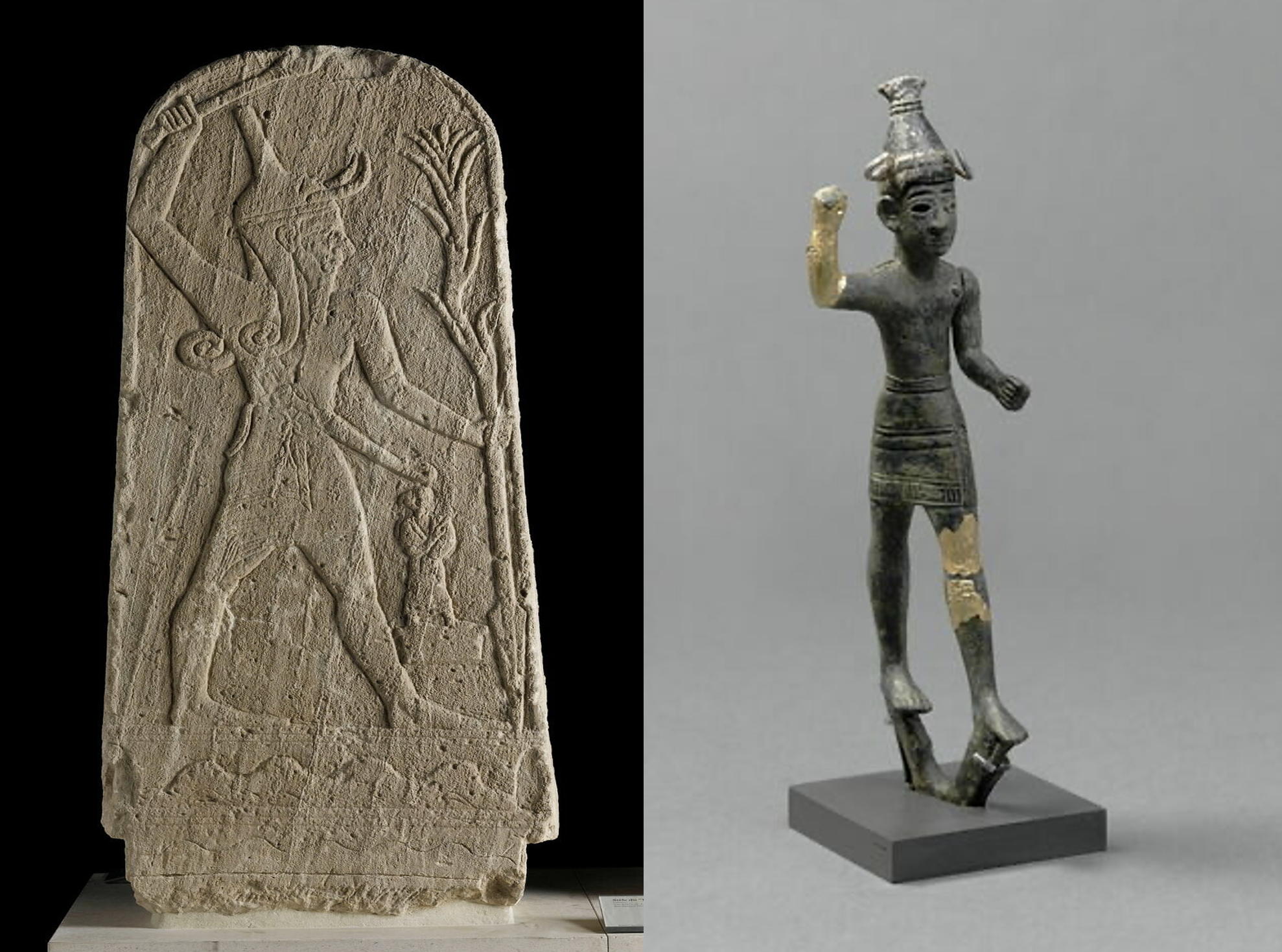
Stèle du Baal au foudre - 2000/ -1150 (Bronze moyen) @ 2006 GrandPalaisRmn (musée du Louvre) / Franck Raux. Figurine: Ras Shamra = Ugarit @ 2004 GrandPalaisRmn (musée du Louvre) / Franck Raux.
Fire on the Hill
The literary evidence that demonstrates some form of Beltain ritual existed over a millennium ago is arguably backed up by archaeology. At the Hill of Uisneach in Co. Westmeath (a UNESCO World Heritage site regarded as the symbolic centre of Ireland) excavations revealed evidence of continuous use across millennia. These included prehistoric ritual enclosures, medieval ring forts, and most importantly extensive ash deposits and vast quantities of charred animal bones. This evidence suggested that the animal deposits were made for a ritual protocol rather than for feasting.
In the medieval text Lebor Gabála Érenn (The Book of Invasions), the hill is described as the meeting point of Ireland's five ancient provinces where the Druid Mide kindled the first Bealtaine fires and kept them burning continuously for seven years. Though archaeologists are keen not to mix mythology with material evidence, Roseanne Schot does admit in The Journal of Irish Archaeology, 2006 that ‘purificatory rituals involving fire and cattle appear to have played a major role in Beltaine celebrations.’
Fires lit at the summit of Uisneach would have been visible from the Hill of Tara and across at least five counties. The mythological history and the archaeology give a tantalising hint that Bealtaine or ritual celebrations took place upon this site for thousands of years.
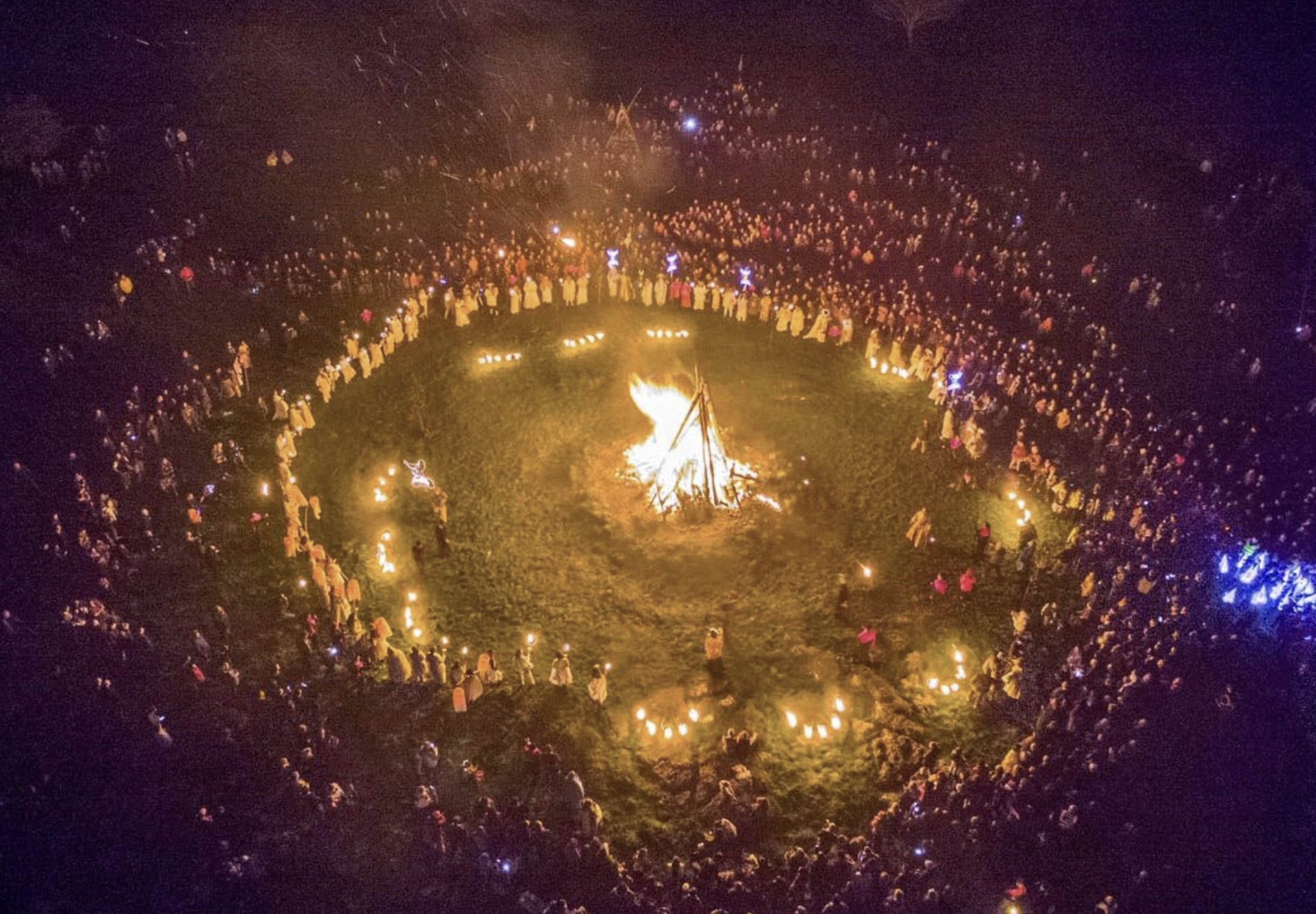
The Uisneach Bealtaine Fire Festival
Stone circles add another layer to this picture. The Beltany Stone Circle in County Donegal (named after Beltain) has a central decorated stone that aligns with sunrise at the Spring Equinox. The central stone at Berrybrae is oriented toward the setting sun at the end of April. Many Neolithic sites align with the seasonal equinoxes, raising the intriguing possibility that what we now celebrate on the first of May may once have been observed at the equinox itself, shifting gradually as calendar systems changed.
A Living Tradition
Druidic aspects of Beltain rituals didn't survive, but celebrations and regional customs of some form continued. Folklorists and historians still observed and wrote about local traditions as late as the 18th and 19th centuries. Ronald Hutton himself found written records of Beltane fire rituals in Munster from the 1820s, Leinster in the 1830s, and the Isle of Man in 1837.
Victorians celebrated Queen Victoria's coronation by introducing a Beltane Queen in 1899, and in Peebles a reinvented Beltain tradition mixed old ceremonies with the ‘Ganging of the Marches’ (recorded from 1652) and a May fair granted by Royal Charter in 1621. The festival, in other words, has always been a living and evolving custom which has been reshaped by each generation that inherits it.
Was Beltain originally an act of devotion to a god, a celebration of returning light, or a practical form of sympathetic magic to protect the animals at the heart of community survival? The evidence suggests it may have been all three at once, in different places and at different times. What the sources do agree on however is this: fire was always at the centre of it and that remains true today!
Enjoy your Beltain weekend, light a candle to mark the beginning of summer and if you happen to have any cattle in your vicinity, make sure they are part of the festivities!
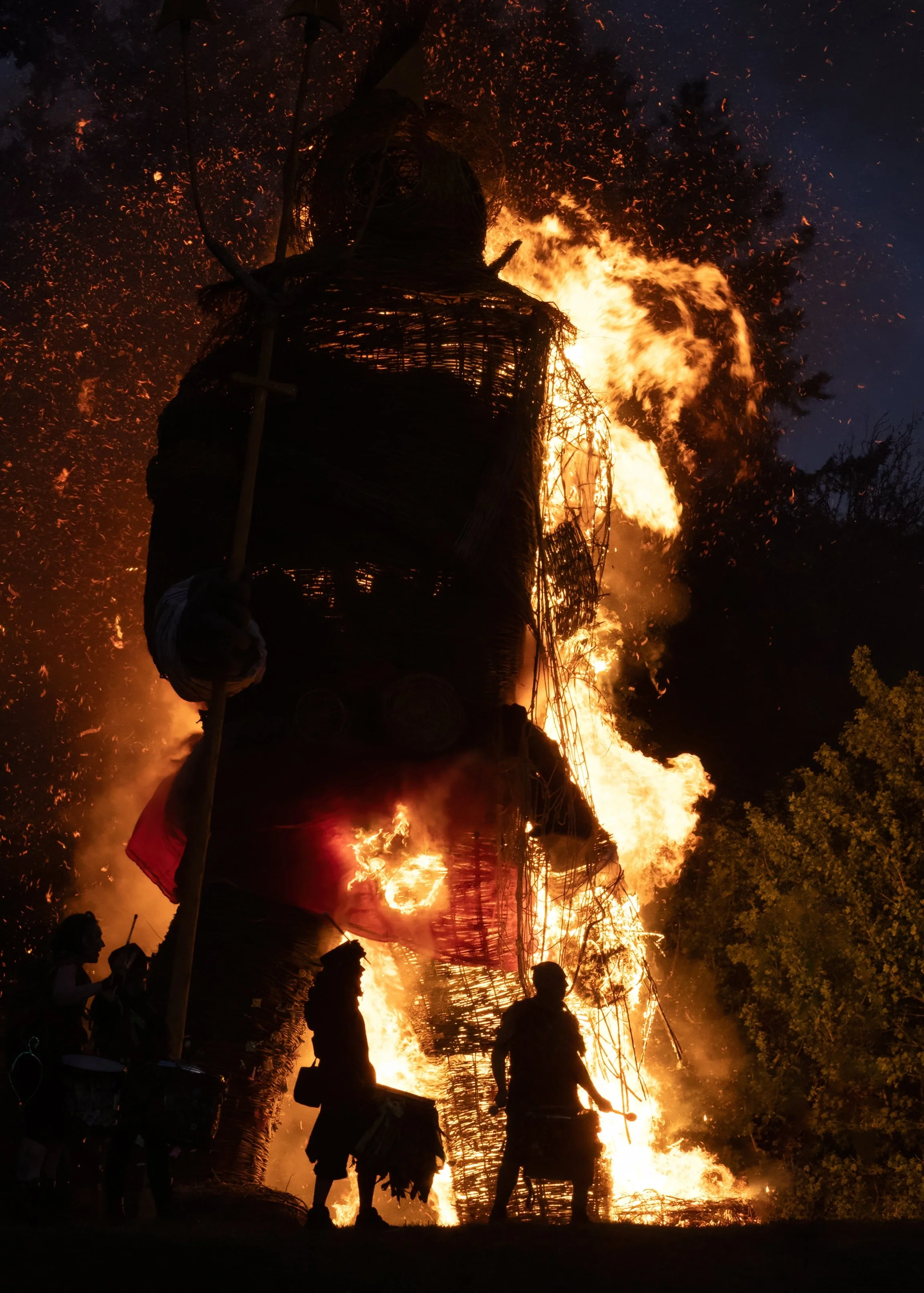
How to Celebrate Beltain
Looking for tickets for our bestselling Beltain festival? Join Butser Plus to be first in line!
Of all the Celtic fire festivals in the Wheel of the Year, Beltain (or Beltane) is the most powerful celebration of fertility, new life and the vibrant summer days to come. It was said that if you bathed in the first dawn dewdrops of Beltain, the next few months would blossom with beauty and youthful energy. Traditionally, two large fires would be built on Beltain night using wood from the nine sacred trees: birch, rowan, ash, alder, hawthorn, oak, holly, hazel and willow. Herds of cattle would then be driven between the two flames as part of a cleansing ritual, purifying the livestock and manifesting abundance for the season ahead. Another fire burnt as part of the Beltain tradition was that of the wicker man, a huge figure made of timber and straw that was first recorded by Julius Caesar in his Commentary on the Gallic War around 58BC. He claimed that ancient Druids were using the giant effigy of a man to perform human sacrifices to the gods, although in truth, the Romans regarded the Celts as barbarians and often exaggerated their behaviour. For the ancient people, it is likely the flames also represented the same cleansing force that fuelled the rest of the festival, welcoming in the summer and bringing the darker half of the year to a close.
The morning after Beltain, another folk custom known as the maypole dance originated in European countries like England and Germany. It was traditionally performed by garnishing a wooden pole with flowers and ribbons to symbolise a tree, then dancing around it to weave the ribbons together and manifest bountiful crops for the season ahead. In England, the dance became part of a wider fertility ritual with its roots in the fires of Beltain. When couples performed the maypole dance, they usually came staggering in from the fields with their clothes in disarray and straw in their hair, which led seventeenth century Puritans to describe the maypole as ‘a Heathenish vanity, generally abused to superstition and wickedness.’ They quashed the ritual for nearly two hundred years before it regained popularity and saw a revival in the late nineteenth century. In London, St Mary-le-Strand is on the site of one of the tallest poles that once reached 30 metres high, brought down by the Puritans in 1644 and then replaced in 1661 with an even taller one reaching 40 metres high! By 1713 it had rotten so much that it was removed, replaced and then blown over by the wind; the final reincarnation was bought by Sir Isaac Newton to be turned into a mount for his telescope. Even though the maypole regained popularity, the dance lost most of its pagan flair and became more aligned with church celebrations. It is still a popular English ritual today, although the maypole has become a far more conservative custom than it once was.
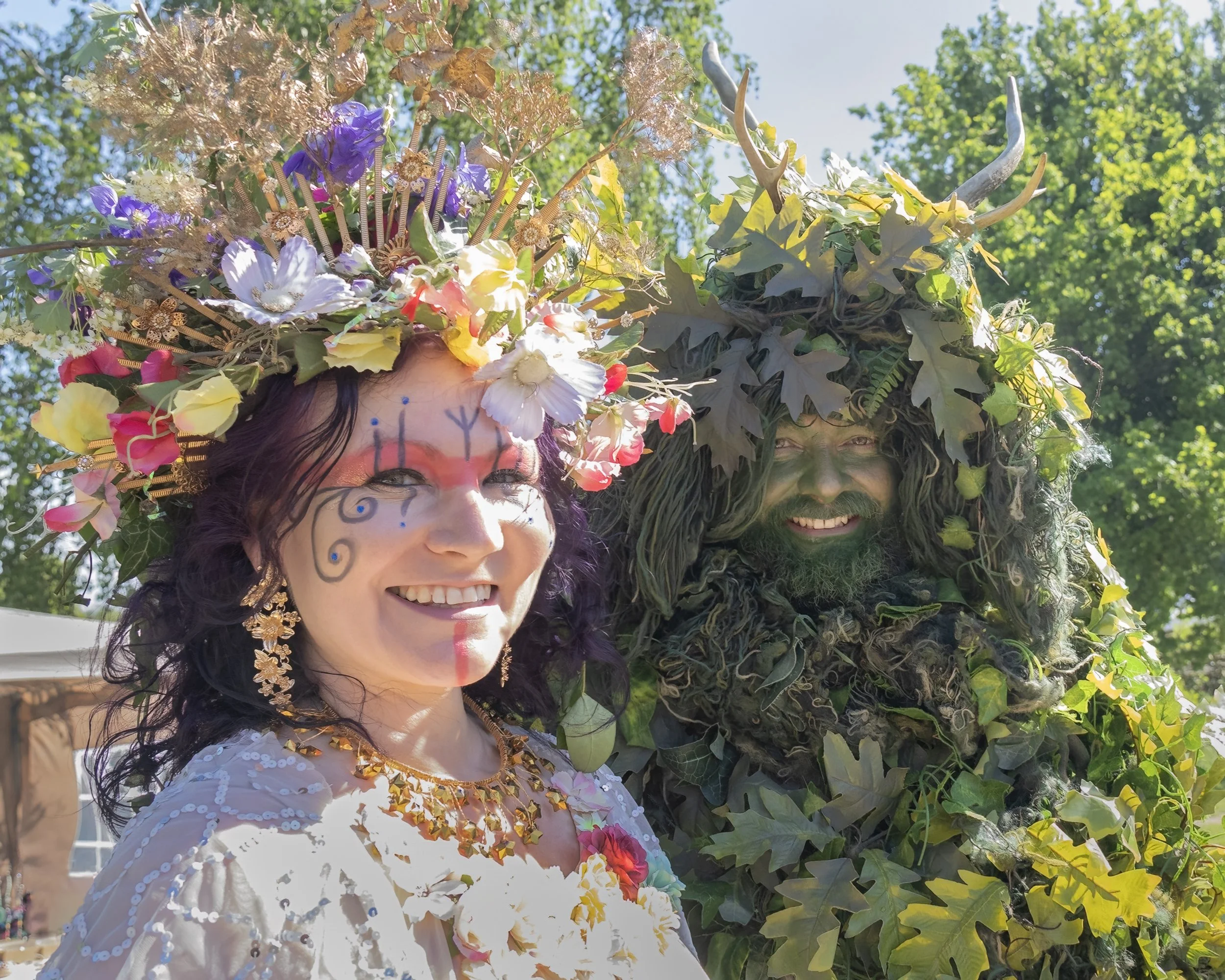
The May Queen and Green Man at Beltain 2025 (Photo by Gary Howes)
Other Beltain and May Day customs include the crowning of the May Queen and her consort Jack-in-the-Green; visiting holy wells; dowsing and relighting new hearth fires; placing yellow and white wildflowers above the doorways; decorating a hawthorn bush with flowers and ribbons; protecting butter churns and dairy equipment from being stolen by fairies. In Scotland, ‘Beltain bannocks’ were baked over the bonfire; these were cakes made from oatmeal, flour and buttermilk, divided into nine segments. According to tradition, each person would face the fire and break the segments off, one by one, then throw them over their shoulder in an offering to the spirits to protect their livestock. Another tradition involved marking one of the slices with a piece of charcoal, then putting them in a bonnet and having everyone take one piece out while blindfolded. Whoever got the marked piece was considered the ‘sacrifice’ for the evening and made to leap over the fire three times, only to be spoken about for the rest of the night as if they were dead!
Extract taken from Ebb and Flow: A Guide to Seasonal Living by Tiffany Francis-Baker (Bloomsbury, 2024).
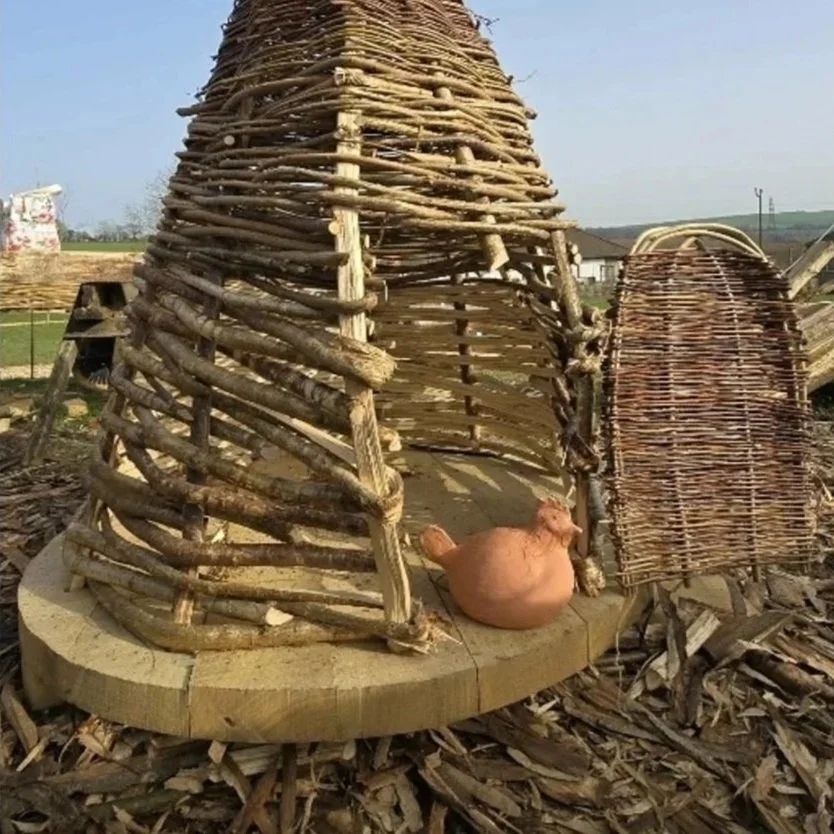
The Chicken House Eggsperiment
The Experimentalists are an exciting volunteer team here at Butser, working on experimental projects to bring our ancient houses to life. They’re currently working on several projects across the farm. In this update, Margaret Taylor (Experimentalist and volunteer librarian) shares an update from their newest experiment - an Iron Age chicken coop!
PART ONE
Our Iron Age ancestors left us many tantalising clues as to how they lived their lives, one of the most important being post holes. These holes are evidence for a very wide range of uses, including houses, stores, shelters - and perhaps, using our imagination - chicken houses!
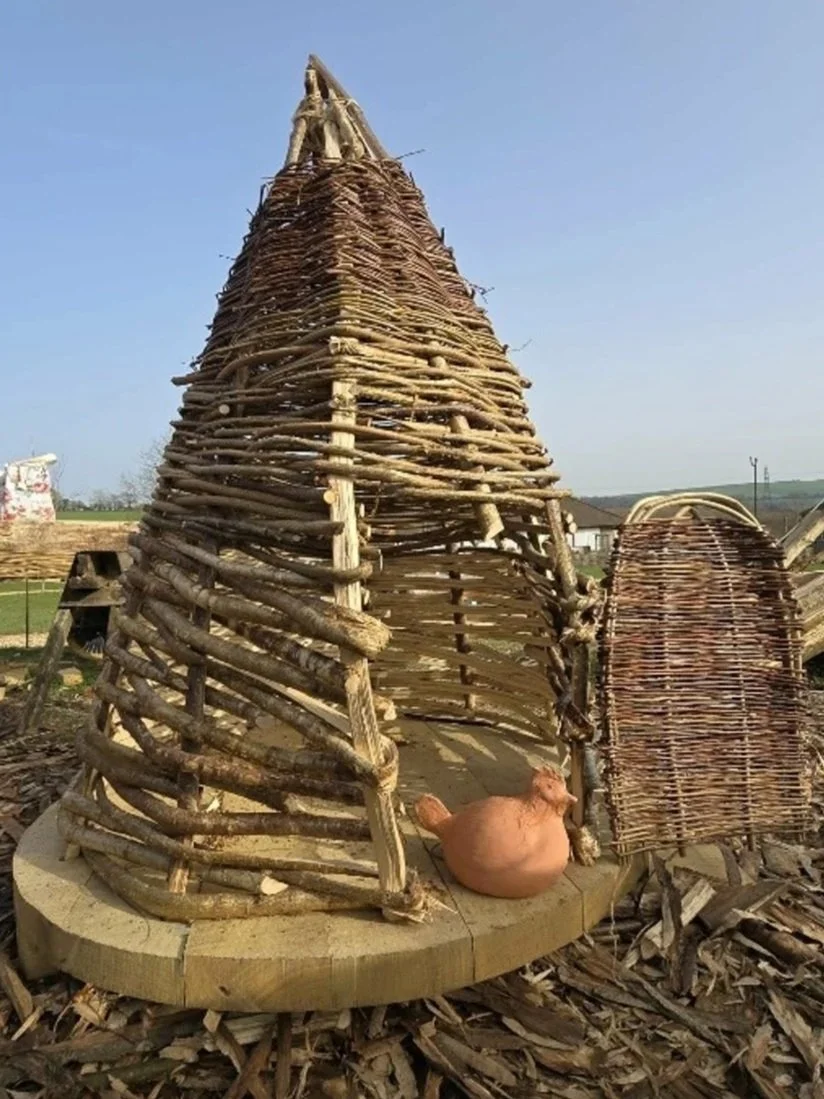
The chicken in her coop
This led to our interest in chickens. It appears that in the Iron Age/early Roman times, chickens were regarded as sacred and treated as pets rather than food. Unfortunately, they also bred them for cock fighting. Later, in the early Roman period, chicken was considered to be somewhat exotic, with remains found at Vindolanda, on Hadrian’s wall, and closer to us at Fishbourne Roman Palace, Chichester. A paper from Bournemouth University (Counting Roman Chickens: Multidisciplinary Approaches to Human-Chicken Interactions in Roman Britain) suggests that although there was a modest increase in their abundance during the Roman period, they were still rare, and still represented in graves, shrines and ritual deposits. We do have Iron Age evidence though, as at Houghton Down in Hampshire two birds (one hen and one cockerel) were recovered from an early Iron Age pit (Prehistoric Society).
So with the expertise of Butser’s expert carpenter, Darren, we have designed our very own chicken house, and it will shortly be inhabited by a small flock of wicker chickens - which we are going to have a go at constructing soon. We would like real ones, but that’s not very practical as they would most likely be a tasty meal for the local wildlife! In the meantime, however, Experimentalist Pat has created our first resident, a terracotta clay chicken. She has described its construction below, and although she used a modern kiln, we know that our ancestors also fired their own pottery. We can imagine our Iron Age man or woman, sitting by a fire, constructing their designs in the same way and using sticks and bones for decoration:
‘It is made of terracotta clay, formed into two large pinch pots joined together with slip into a hollow, roughly ovoid shape with a smaller pinch pot added for the head, and a piece of flattened slip added for the tail and joined with the slip. I then moulded the wings on the body and used my finger tips to incise feathers on the wings. I shaped the beak and throat flap and drew up some of the clay on the head into a comb. I incised the feathers on the neck and tail with a pointed stick. I made a hole in the base so the air could escape and bisque fired it to 1080°C.’
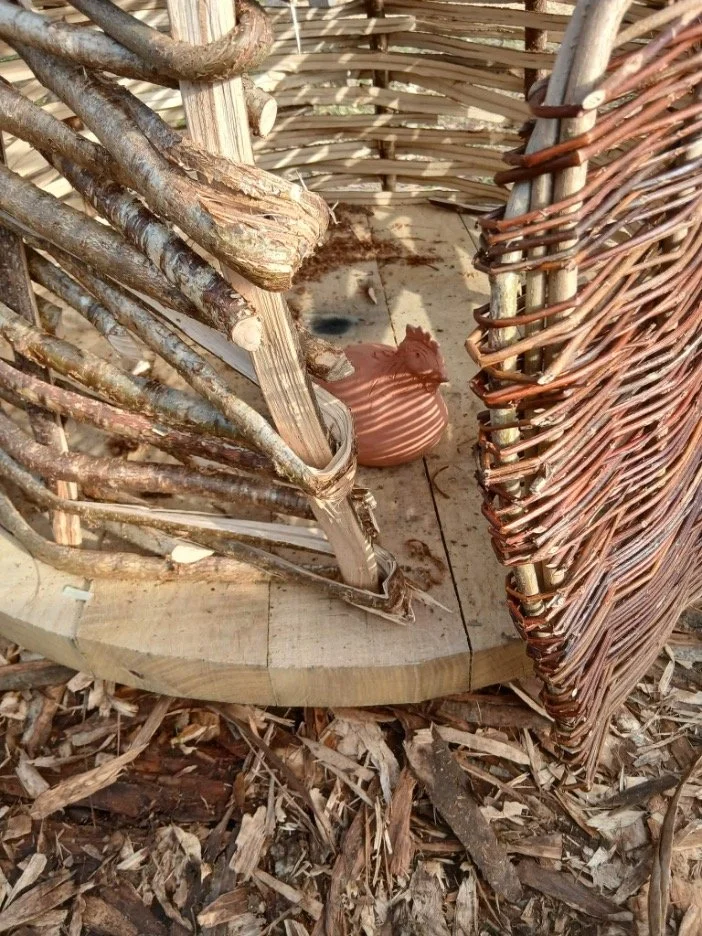
Our first occupant!
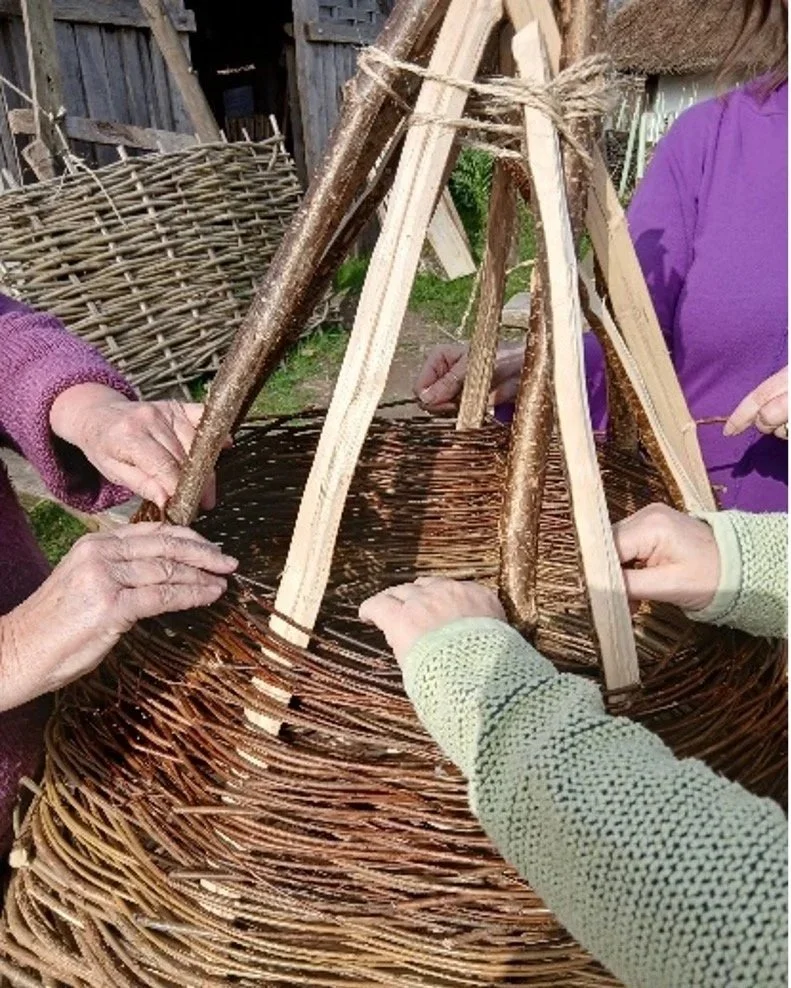
Weaving the willow into the chicken house
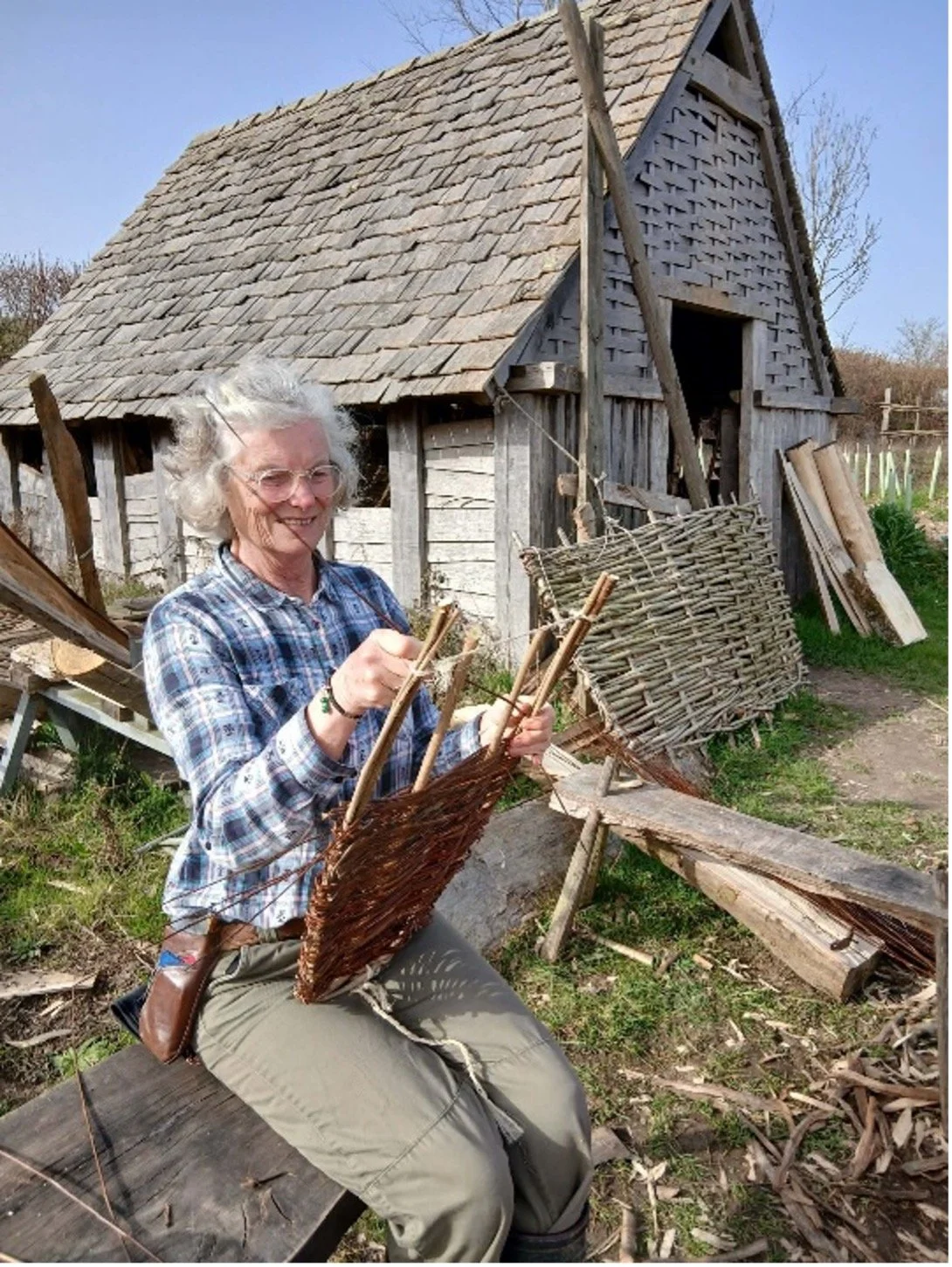
Claire constructing the chicken house door
We began our project earlier this year with the processing of sweet chestnut wood, stripping the bark, upsetting the wood worm larvae, and thus making 4 posts. Although this wood would not have been available in Iron Age times, it is similar and will work well. If the bark is stripped, it deters creatures from making their homes in it. We also used hazel, which grows on site, for the framework.
The construction of the chicken house was a team effort and many hands certainly made lighter work. We were very grateful for Darren’s expertise. Clare (and others) made a great job of splitting the hazel for the uprights, and the hazel lengths had to be free of any ‘sticking out bits’ - a lovely technical term, which would cause the hazel to catch on the sails. Then as a team, we wove the hazel through the sails, keeping it close to the sails, thus forcing the wood to bend.
PART TWO
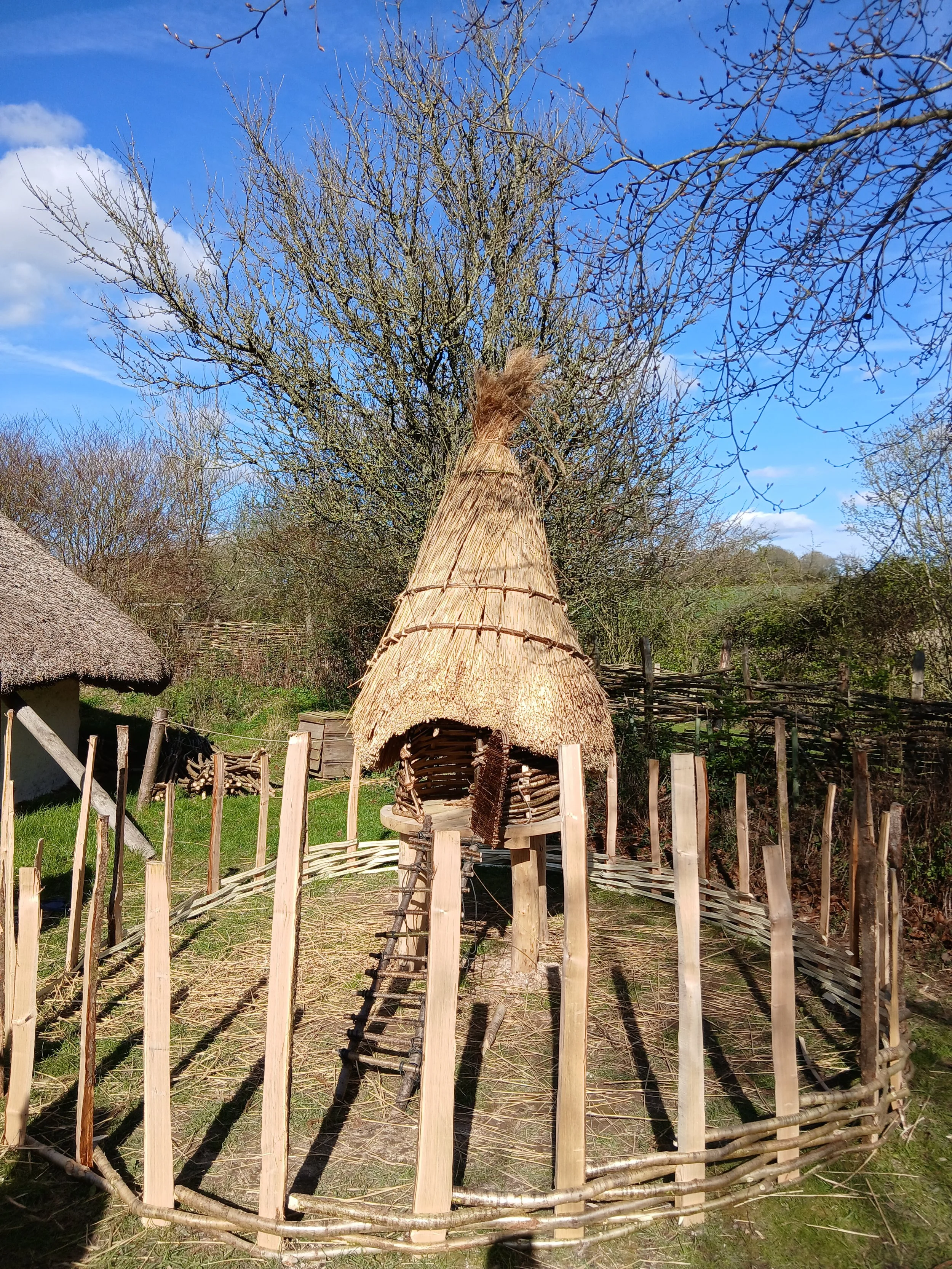
The framework of the chicken house was completed, and moved to its permanent position in the Iron Age village enclosure.
The first task was to dig four post holes for the structure, to a depth of 16 inches. Then the team used a trolley to transfer the chicken house to its new home. I expect our Iron Age ancestors would have created their house as near as possible to its final destination! Then, with the house in place, it needed a roof.
Our ancestors have been building structures as far back as the Mesolithic, when the hunter gatherers needed a seasonal shelter, and then later in the Neolithic when we see the beginning of farming and a settled lifestyle. The Mesolithic Howick House, dated between 7600 to 7800 BCE, near Alnwick near Northumberland would have had a roof covering. This was a house for hunter gatherers, of 5-6 metres diameter, and upright beams. It was probably teepee-shaped and covered with reeds and turf. However, this was not the earliest structure; the best known of Britain’s Mesolithic sites is Starr Carr, in North Yorkshire, which was dated to 500 years earlier.
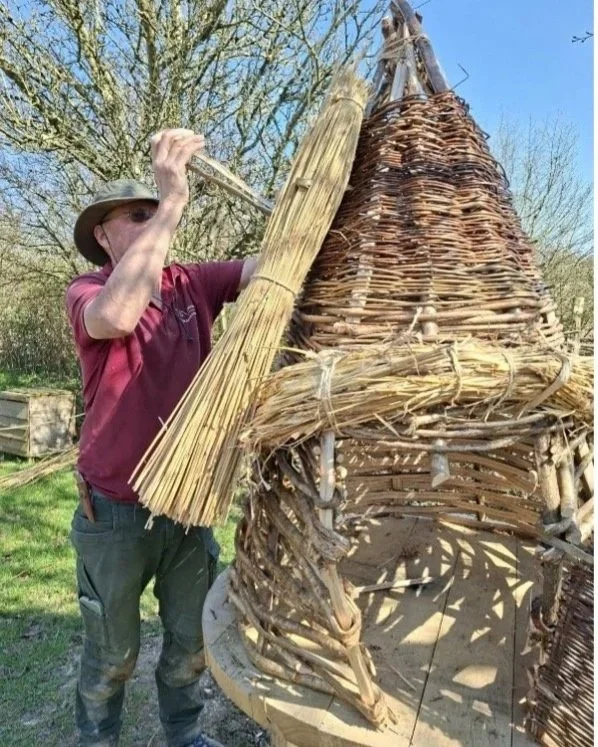
The next course of thatch is added once the one below is secured
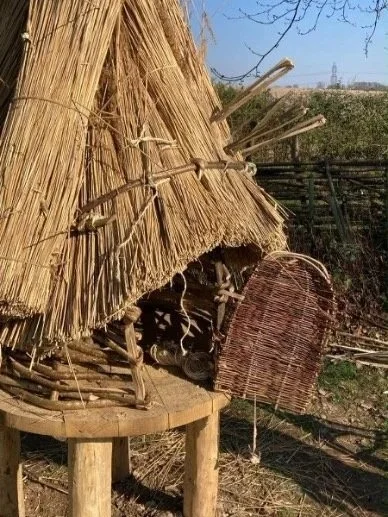
Mid-thatch
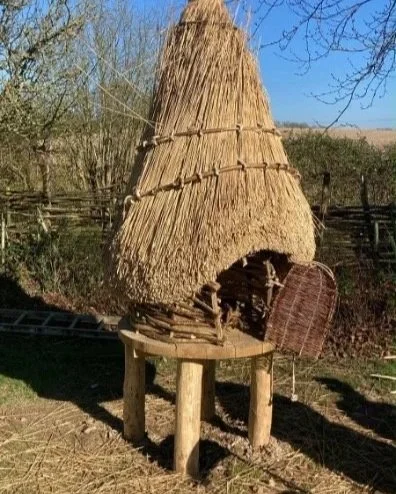
Looking good!
Thatching is the craft of constructing a roof using dry vegetation. Materials can include anything from straw to water reed, to heather and rushes too. In his book Britain BC, Francis Pryor writes, with regard to the Bronze age houses at Must Farm in the Fens:
‘I have a theory that they were roofed with turves, laid on top of a thick layer of reeds. This was a very heavy roof, especially when wet, and needed to be supported by a ring of stout roof-support posts. By late Bronze and Iron Age times cereal crops were more commonly grown, and straw could have been used for thatch, although in the Fens I suspect that reed (which is vastly superior) would have been chosen.’
Thatching methods have evolved over the centuries and in the 17th and 18th century we have the introduction of the spar and the sway to secure layers of thatch. This is the method chosen to build our chicken house roof.
At Butser, Jason supervised and built the thatched roof, with the enthusiastic assistance of the Experimentalists. Darren constructed the spars and twisted them in order to make it easier for our team to bend them in place, and either add them or hand them to Jason. Experimentalist Sarah describes the process:
‘We used water reeds for thatch, and used split hazel to attach them to the roof. First, we made a sausage of reeds and put it in a ring around the lower part of the roof. The sausage of reeds around the bottom holds the thatch away from the building, helping the water run off and allowing for tension. The thatch was initially held in place with split hazel spars, much as you would pin when sewing. As the courses of thatch were built up, the spars were removed and placed with rings of split hazel, held with spars.’
The reeds were then driven into place using the leggett, and the process was continued until the roof was covered and the top was tied off.
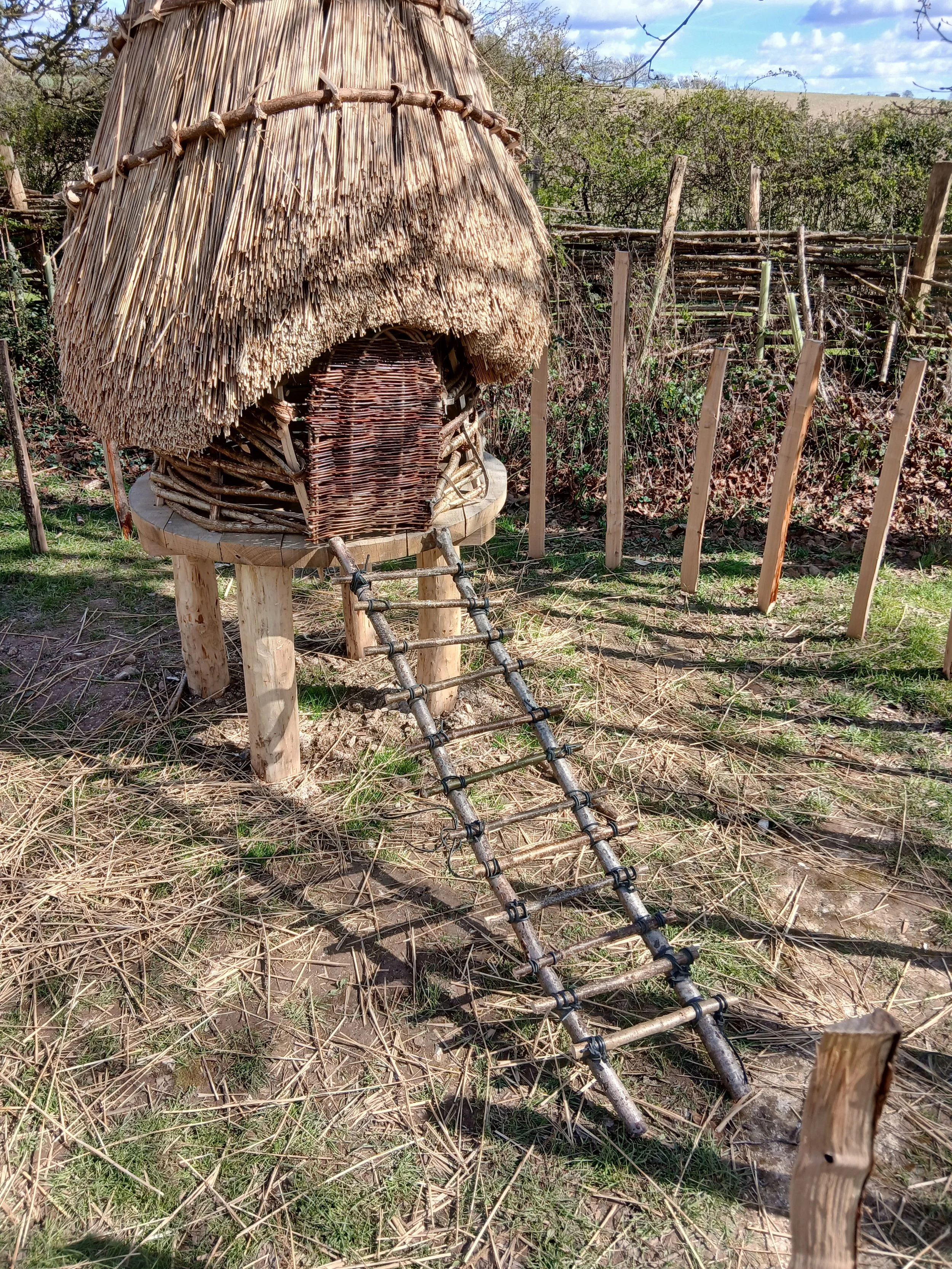
The next step will be to add the ramp, made by Experimentalist Clare, and then the Experimentalists are planning to make a whole family of willow chickens. The willow is already soaking in preparation!
PART THREE COMING SOON!
Uncovering the Mysteries of the Roman Provincial Mint (sort of)
This week’s guest post is by PhD student Francesca Lam-March from King’s College London, who was awarded the Friends of Butser Ancient Farm bursary in 2025.
When you look at the humble Roman As (little bronze coin) or even the brash Sestertius (big bronze coin), do you ever think about how that coin came to be? I do. Although they don't age as well as their gold and silver cousins, these bronze coins were, in their day, every bit as shiny and very pretty to look at. These circular flashy tokens were the currency (mainly) minted by the Roman provinces, the cities with the means and the wealth to produce their own local currency. Yet, despite a hefty dataset of thousands of coin types, we know relatively little about them.
How did these coins come to be? Where were they made? And by who?
These questions have become a large branch of my PhD research and inspired me to apply for the Friends of Buster Ancient Farm bursary in 2025, to see if I could find out more. Quickly, I realised this was a multistep process.
Roman coin from Bilbilis
3D scan of coin
My first challenge, and the topic of this blog, was to make a bronze coin. A bronze coin is a circular pellet (generally) made from tin and copper melted together. I made mine in a modern 6kg metal melting furnace fired with propane gas. And with the generous help of the Friends of Butser Ancient Farm I was able to buy the metal and have a place to fire up the furnace and conduct these experiments.
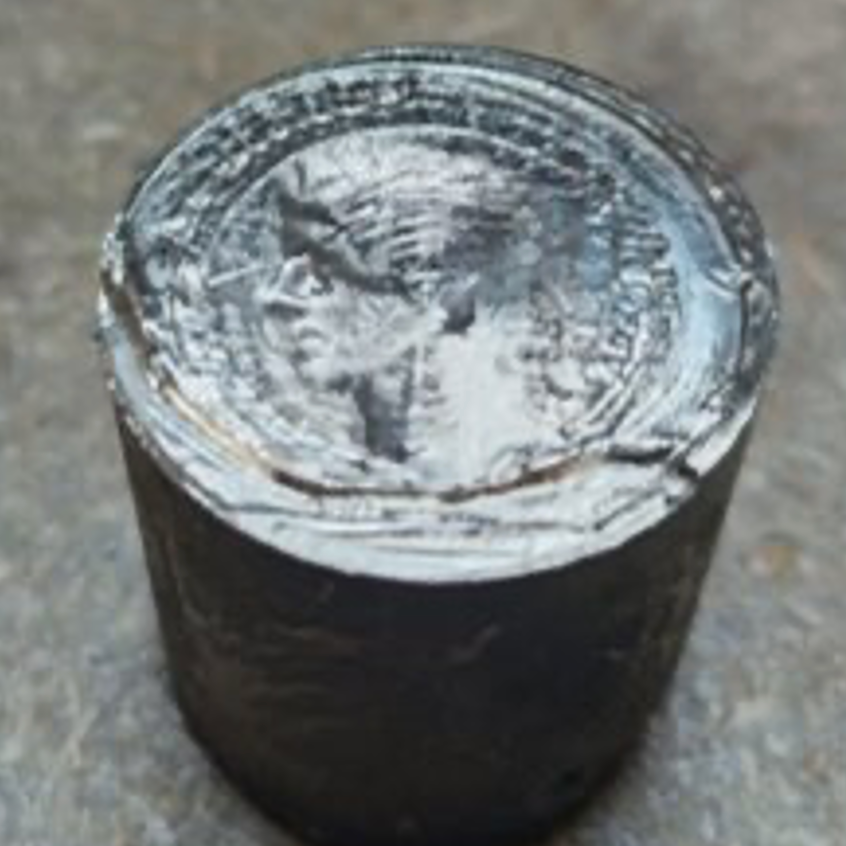
Engraved coin die
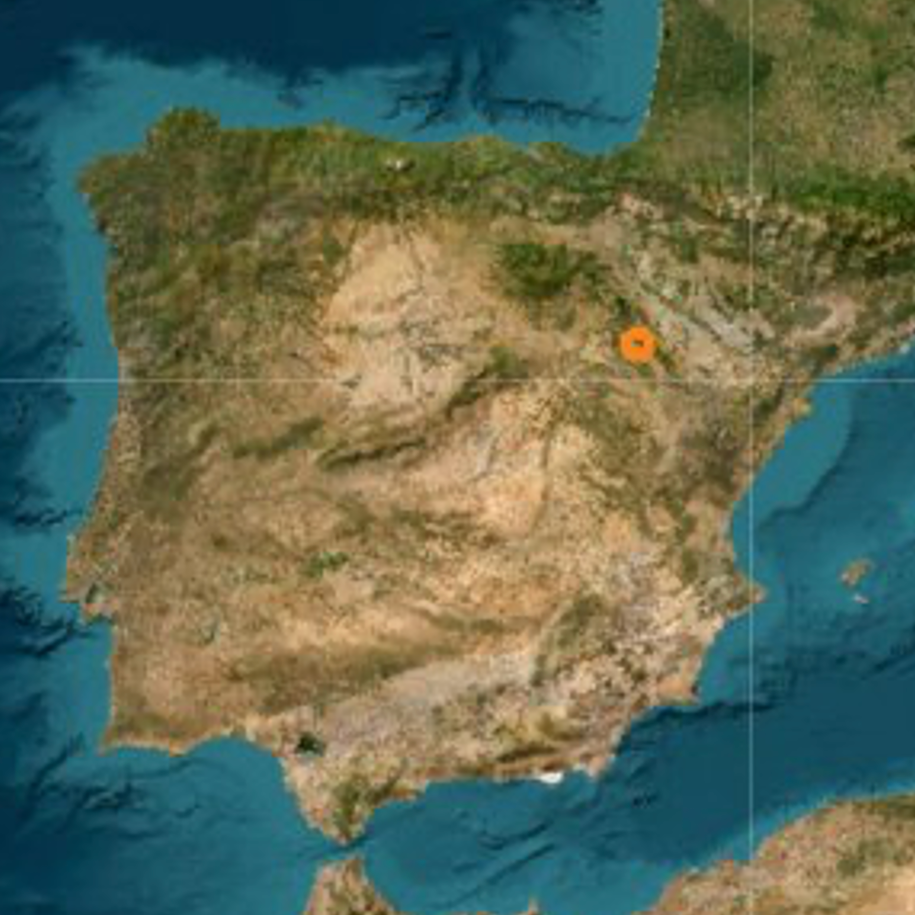
Map denoting where Bilbilis is
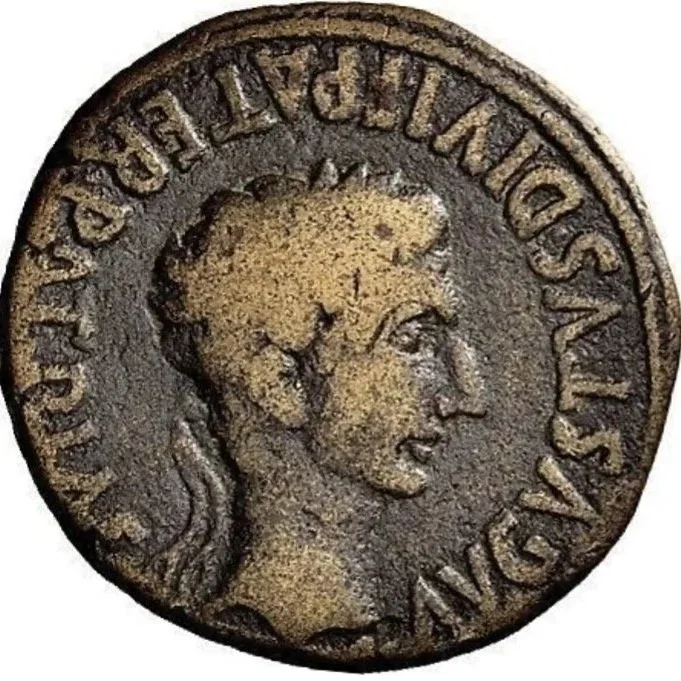
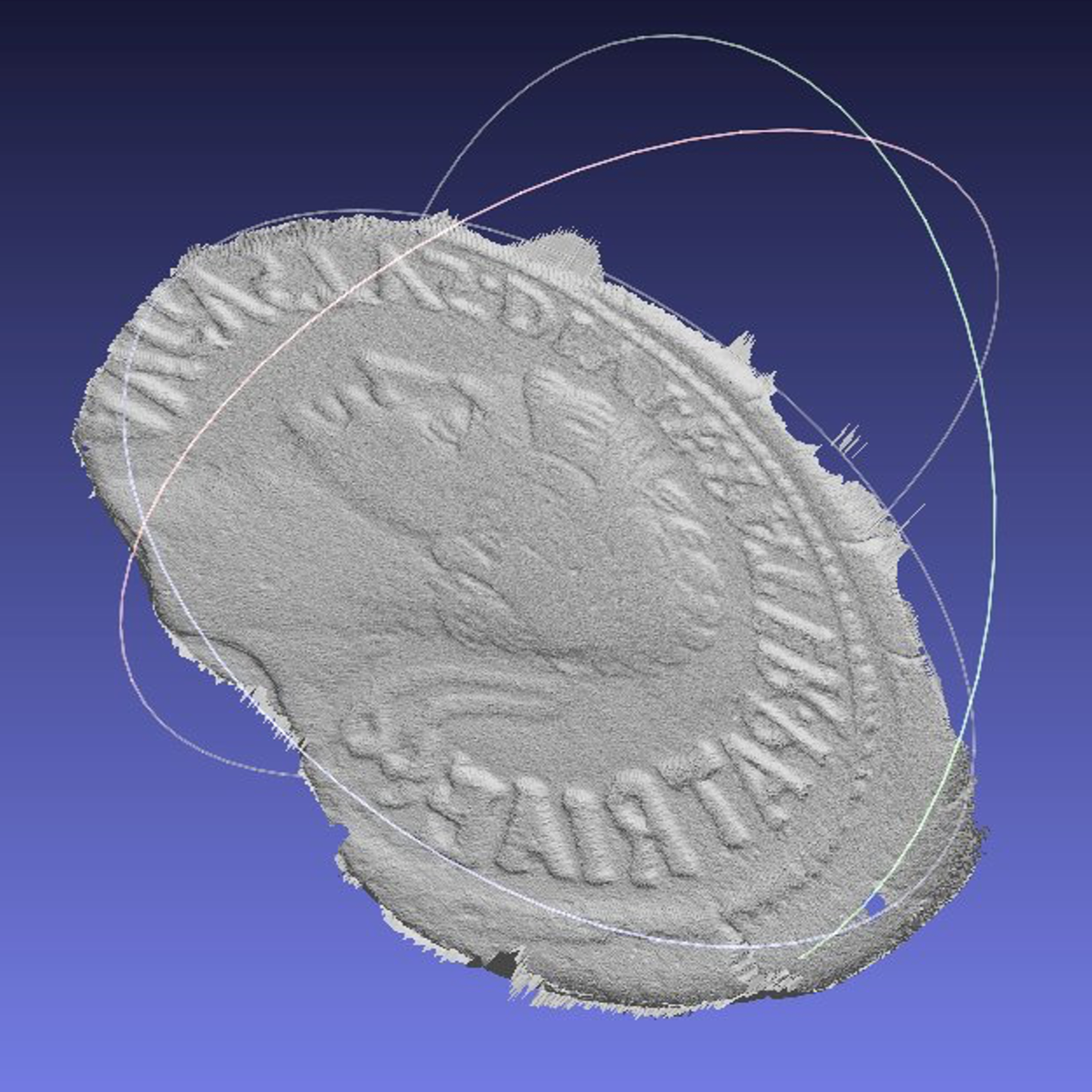
My chosen coin to replicate was a chunky (29mm) sestertii sized coin from Bilbilis - a municipium (city) located around 400km west of Barcelona. The Romans were adept hands in casting their blanks, as the weight disparities between the blanks was no more than 4g. Unsure of how to repeat such accuracy, I developed three types of mold: Graphite, Steel and Sand.
The graphite and steel molds were created with a CNC machine. The flan molds were 30mm in diameter and were connected with a 10mm wide channel to allow the bronze to flow through. The molds were open molds based on styles seen from Roman Paphos. The problem was that the open molds were heavily oxidising. This was the first red flag that this was a more complex business than I'd thought.
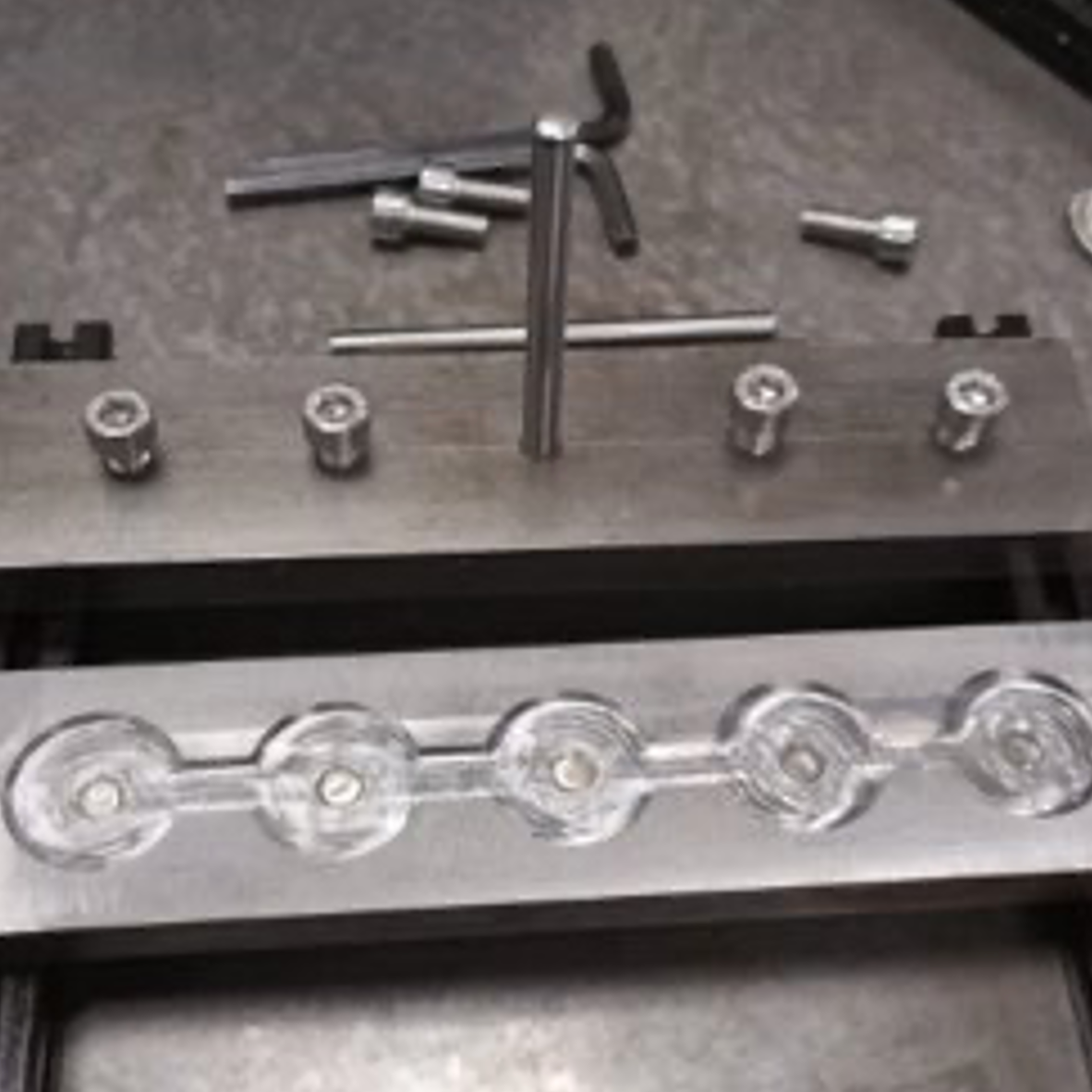
Steel molds
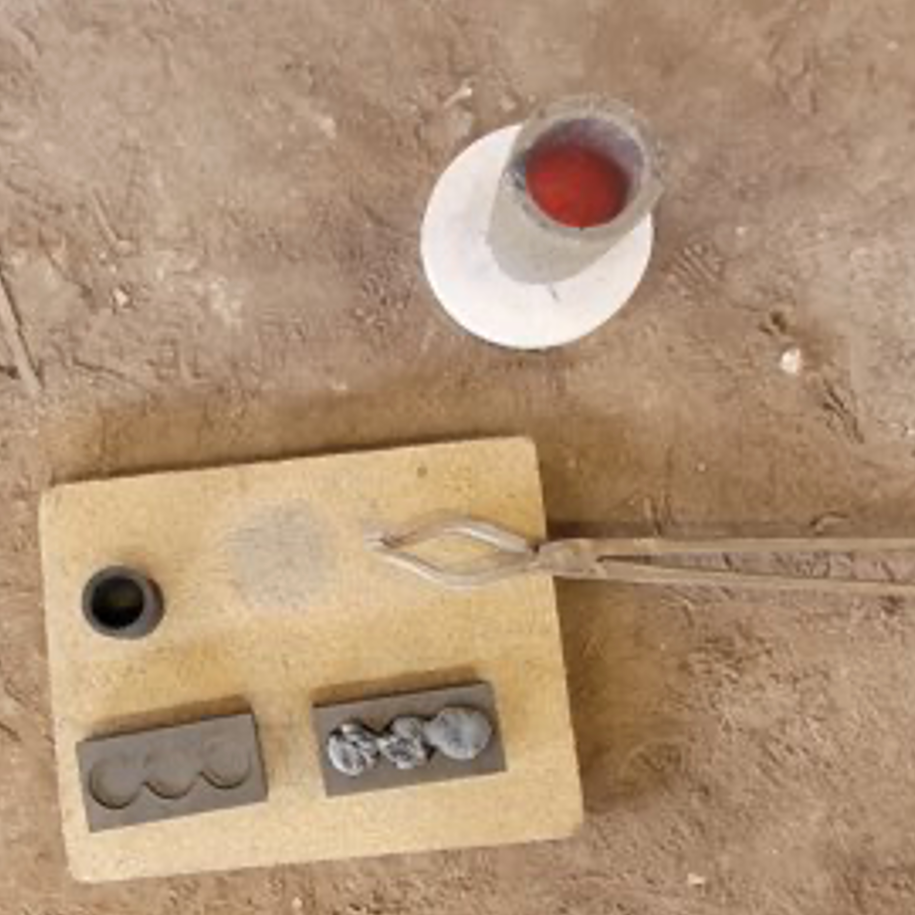
Graphite molds
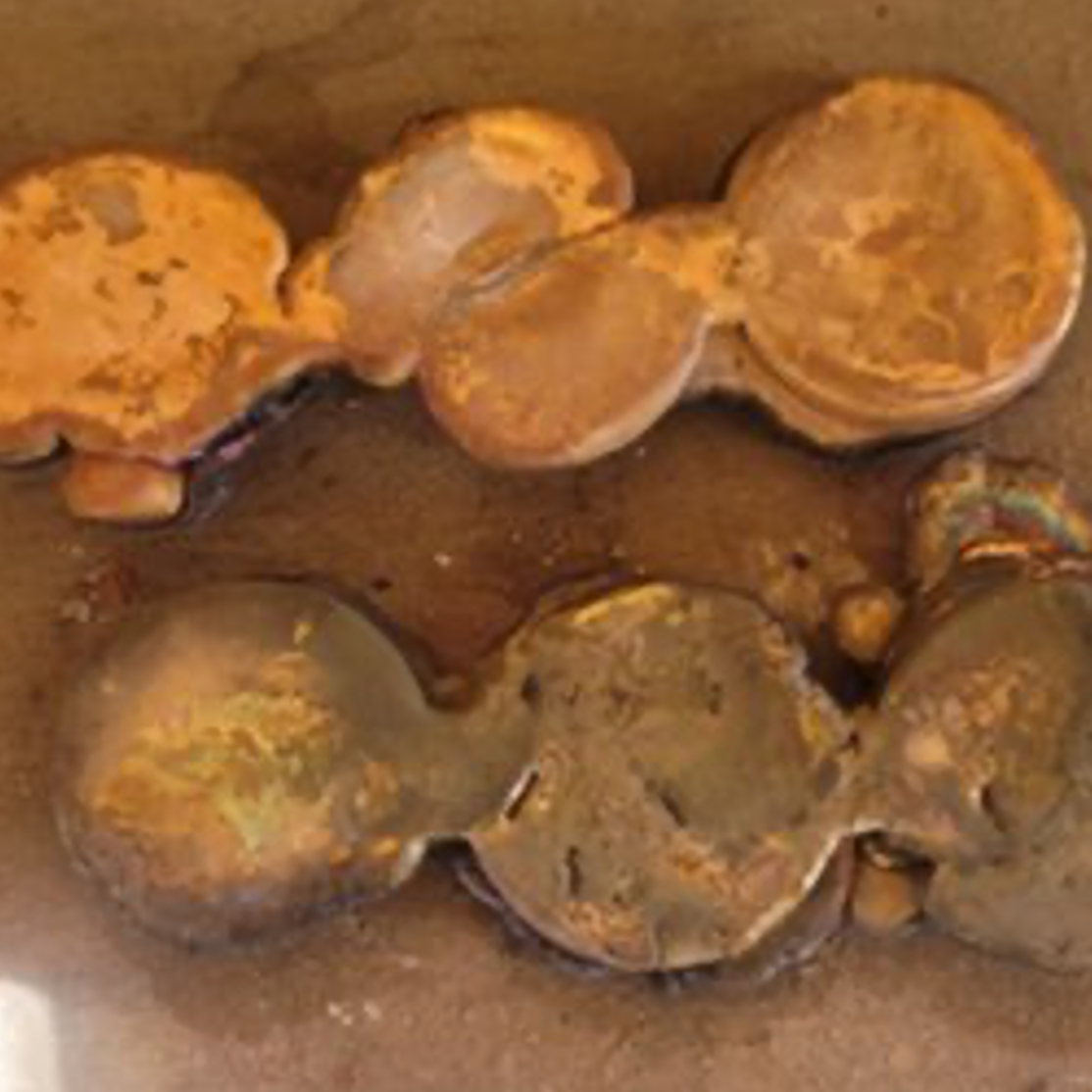
Oxidised coin blanks
The sand casting proved much better as the mold was closed. But the pockets for the flans proved tricky to get right, because I was using a punch as a template. In the end I 3D printed a template which yielded much better results.
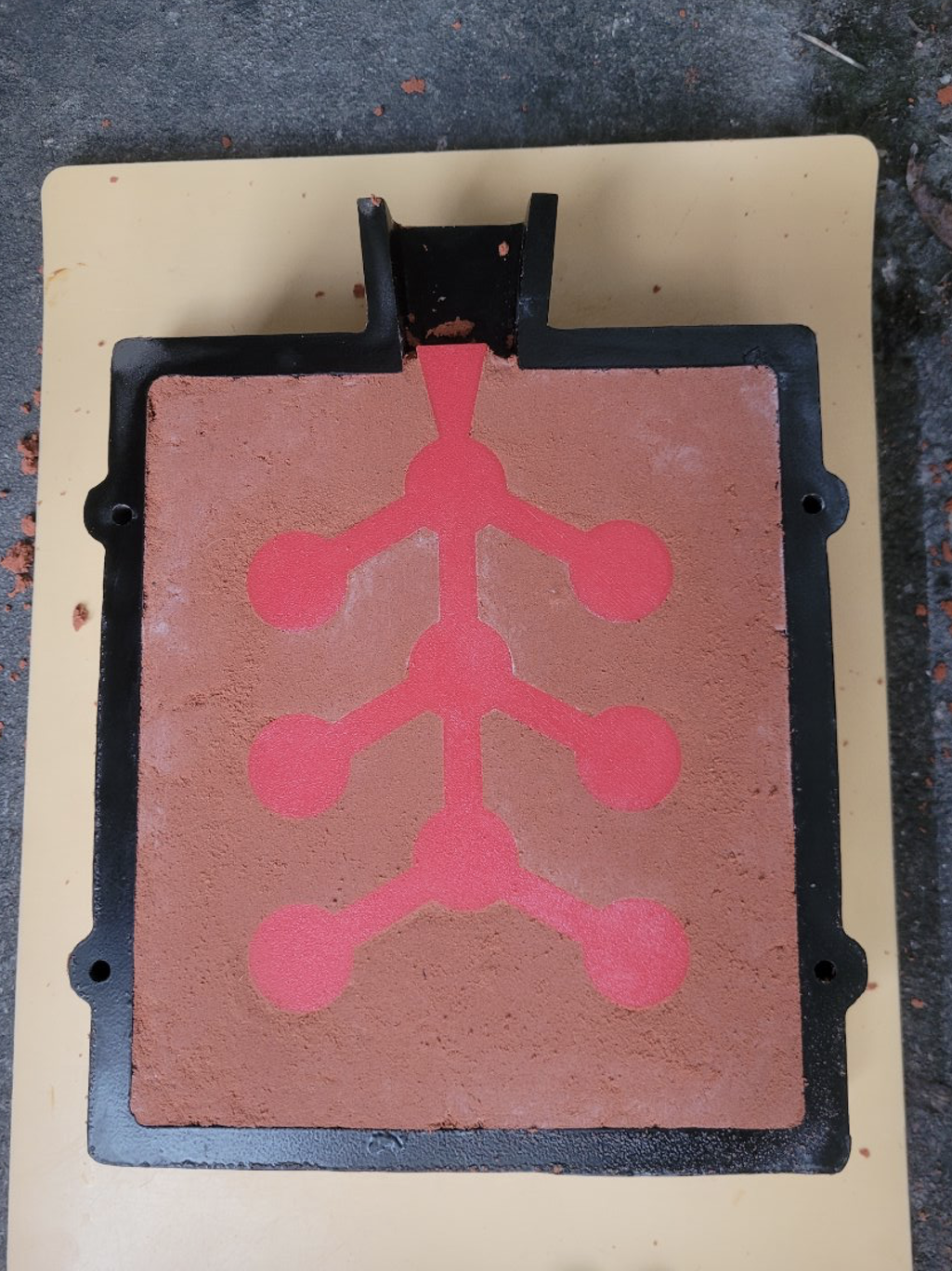
3D printed mold or sand casting
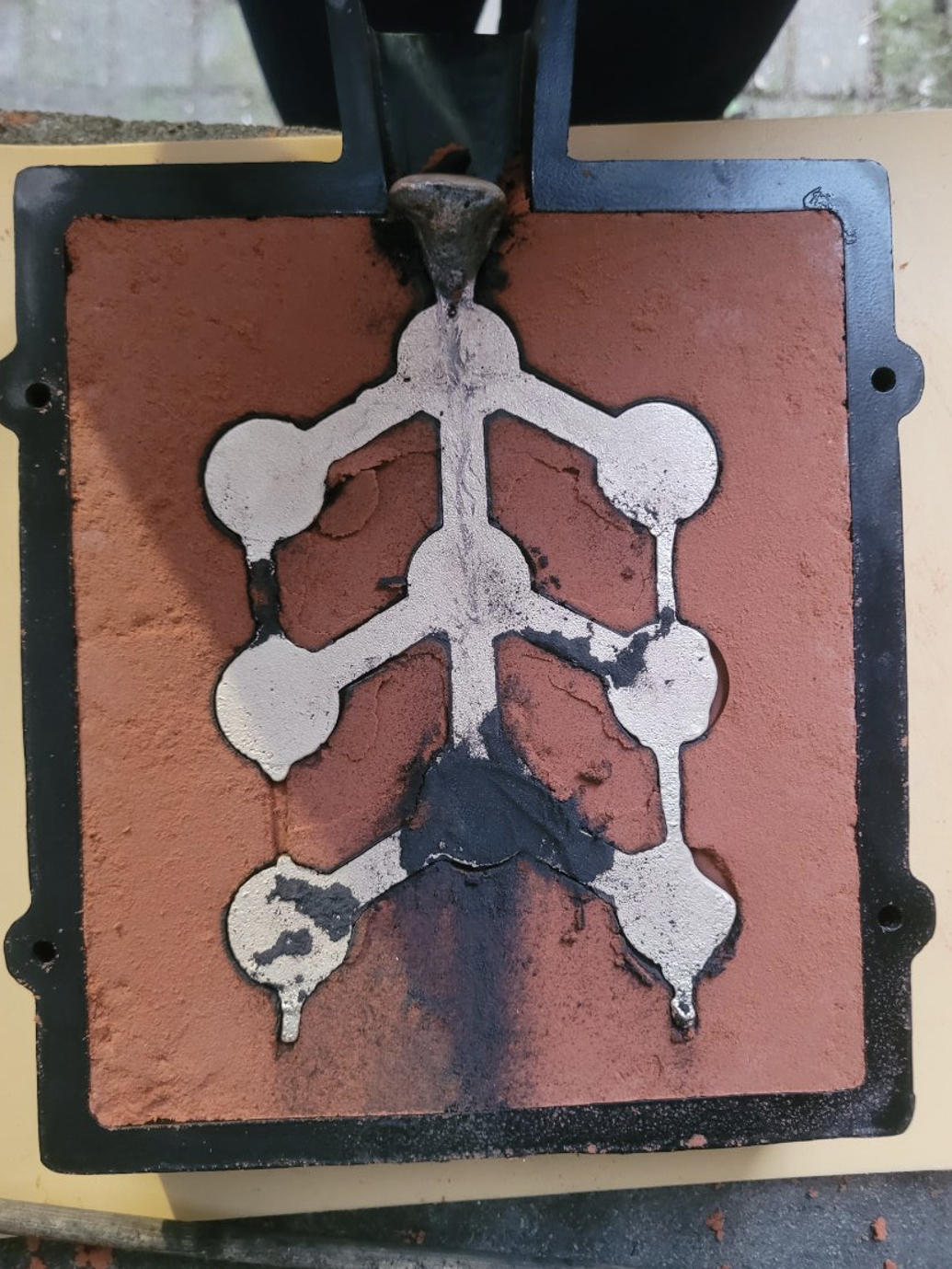
Bronze coin blanks
Next, I set about striking the coins, with the generous help of Dr Will Wootton on striking duty and Dr Katy Mortimer on temperature checking duty.
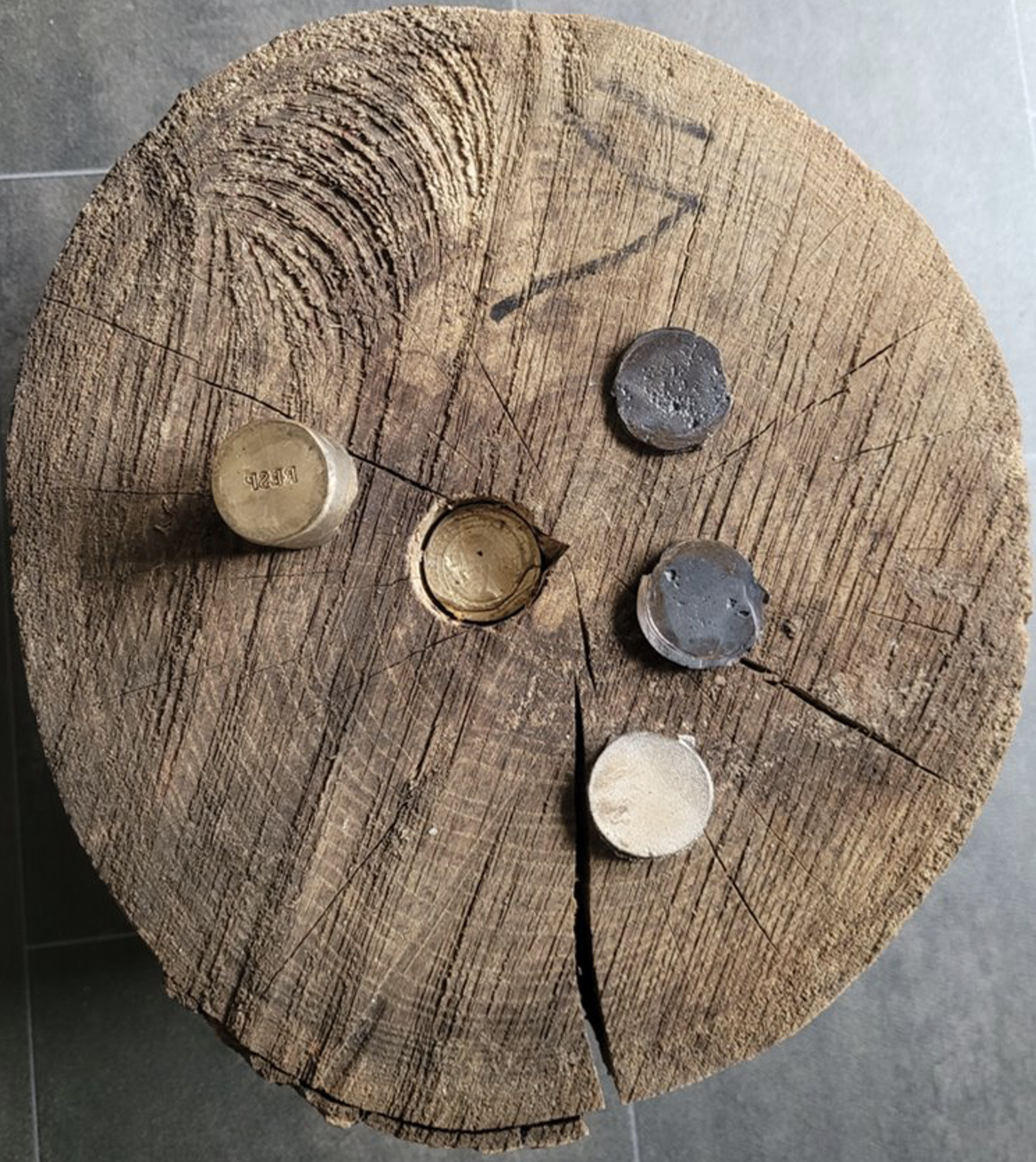
My first attempt was to strike the coin in the die, cold. This meant inserting the coin and the die into a tree stump to hold it steady and striking the coin as hard as possible. To my surprise - nothing. Not one part of the design of the die transferred.
I struck again, but this time I tried heating the coin to 100 degrees. Nothing. 200 degrees. Still nothing. A whopping cherry red hot, 400 degrees. Only the outer rim of the coin transferred.
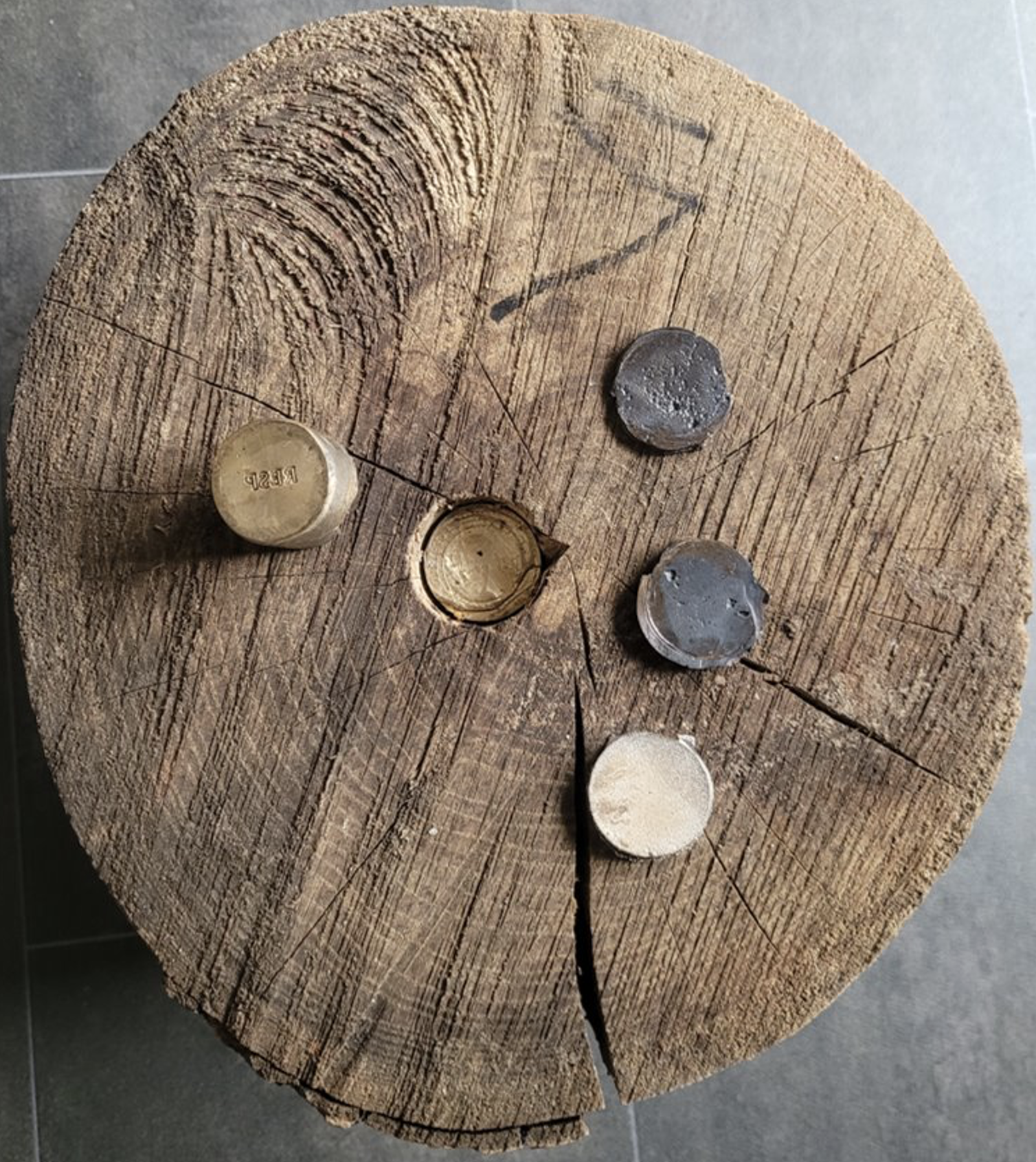
Oxidised coins - turned grey!
And what was still more confusing is that my shiney bronze coin had turned grey with oxidisation!
This left me puzzled - with even more questions than before. Why is it so hard to strike a bronze coin? What key step am I missing?
What I have no doubt of, however, is the value of experimental archaeology. We can learn so much more from experimentation, about not only the complexity of the processes but also the lives of the people behind them.
Part two on annealing, striking (again) and polishing the coins to follow soon!
Blog archive
- October 2026 1
- June 2026 1
- May 2026 2
- April 2026 2
- March 2026 4
- February 2026 5
- January 2026 6
- December 2025 2
- November 2025 2
- September 2025 1
- April 2025 2
- February 2025 1
- January 2025 1
- November 2024 2
- August 2024 1
- July 2024 2
- May 2024 1
- November 2023 1
- October 2023 1
- September 2023 1
- August 2023 1
- July 2023 1
- June 2023 2
- May 2023 2
- March 2023 1
- February 2023 1
- December 2022 1
- October 2022 1
- August 2022 2
- April 2022 1
- March 2022 2
- February 2022 1
- January 2022 1
- December 2021 2
- November 2021 3
- October 2021 2
- September 2021 5
- August 2021 2
- July 2021 3
- June 2021 3
- May 2021 2
- April 2021 4
- March 2021 1
- November 2020 1
- October 2020 2
- August 2020 1
- March 2020 4
- February 2020 4
- January 2020 3
- December 2019 3
- November 2019 1
- October 2019 1
- September 2019 1
- August 2019 1
- July 2019 6
- June 2019 3
- April 2019 2
- March 2019 3
- February 2019 2
- January 2019 1
- November 2018 1
- October 2018 2
- September 2018 3
- August 2018 4
- July 2018 2
- June 2018 2
- May 2018 2
- March 2018 6
- February 2018 1
- October 2017 1
- September 2017 5
- August 2017 4
- July 2017 3
- June 2017 1
- May 2017 1
- April 2017 3
- March 2017 2
- February 2017 3
- January 2017 1
- December 2016 2
- November 2016 1
- September 2016 1
- August 2016 2
- July 2016 2
- June 2016 3
- May 2016 2
- April 2016 1
- March 2016 2
- February 2016 1
- January 2016 3
- December 2015 2
- November 2015 1
- October 2015 1
- September 2015 2
- August 2015 1
- July 2015 2
- June 2015 2
- May 2015 3