
Building Butser’s ‘Little Hadrian’
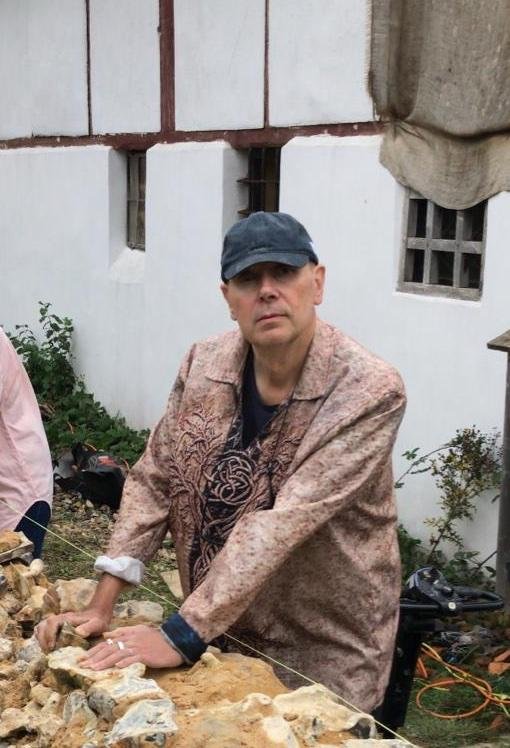
John at work on the wall
The Experimentalists are an exciting volunteer team here at Butser, working on experimental projects to bring our ancient houses to life. They’re currently working on several projects across the farm. In this update, Margaret Taylor (Experimentalist and volunteer librarian) shares a short update on the team’s progress.
Butser Ancient Farm has a reconstructed Roman Villa, based on the one found at Sparsholt, Hampshire. At the front of the Villa there is a beautiful Roman garden, complete with a mosaic and stone seating area, and on the western side there is a flourishing kitchen garden. However, the area between the western Villa wall and the kitchen garden requires attention. The mission is to create an attractive useable area where the Villa inhabitants and visitors can relax.
Therefore, in June last year Butser staff enlisted our team, the Experimentalists, and trained us as ‘Roman soldiers’ to build the western boundary wall. There was already a low wall there; when the Roman Villa was built, it was a training area for new recruits. When they had passed the ‘skills test’ on that wall they were free to use their new found skills on the actual Roman Villa.
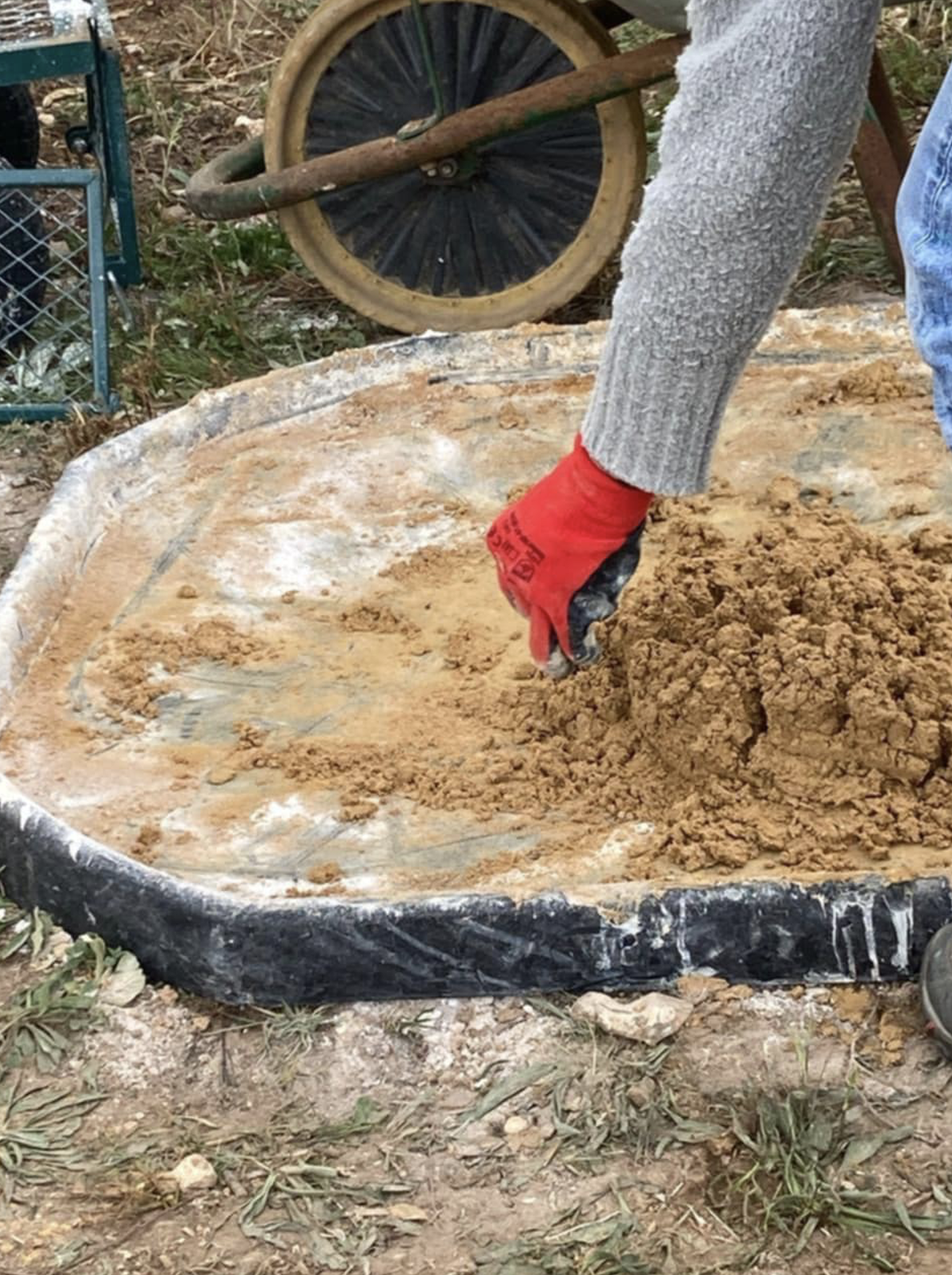
Preparing the mortar
Butser staff kindly managed and trained us, provided us with PPE and also provided us with some excellent buffet lunches, as a reward for our work. Building the wall has been a particularly enriching experience for John. He has ‘found his calling’ and would have continued building the wall at his home, if that was possible! It has been an enjoyable and challenging ‘learning curve’ for all of us. Retaining walls need to be strong; a pretty face is not enough. Hadrian’s Wall is still standing - and Butser’s own ‘little Hadrian’ needs to stand the test of time too.
The wall is constructed with a flint and lime mortar. Lime mortar is a traditional building method, which is flexible, allows for movement, and is moisture resistant and durable. We used a ratio of two spades of lime to three spades of sand. We also had to correctly add the appropriate measure of water, with the result that the mixture varied. We had minor set-backs; occasionally, the mix was less good or the wall got wet before the mortar set. Consequently, with the great British weather, we often had to cover the wall with a variety of modern tarpaulins. Crucially, if we did not adhere to ‘flint on flint’, some sections of wall crumbled and we had to redo them. But set-backs have been minor and we have progressed well; the first few metres of the wall are complete and we have now reached the far end of the Villa. So far, we have used 7 tonnes of flint! However, winter has stopped play, as the temperature is required to be 5° C or more, otherwise the mortar will not set.
Roman Soldiers on Hadrian’s Wall would have had the advantage of large numbers of men, and they would have had to work in shifts until the wall was finished. They certainly wouldn’t have been visiting the wall once a week! Would they have completed all the work in good weather, or continue through bad weather?
However, as modern ‘soldiers’ we are spending the winter completing other Butser tasks, retreating to the inside of ‘our’ Iron Age roundhouse (Danebury CS1), sitting around the fire and waiting for summer to arrive so that we can finish ‘our wall’. We will of course, keep readers informed of our progress!
Further study: The Winchester City Museum is an excellent place to visit and discover more about the Roman Villa at Sparsholt.
Update by Margaret Taylor and John Briggs, from The Experimentalists.
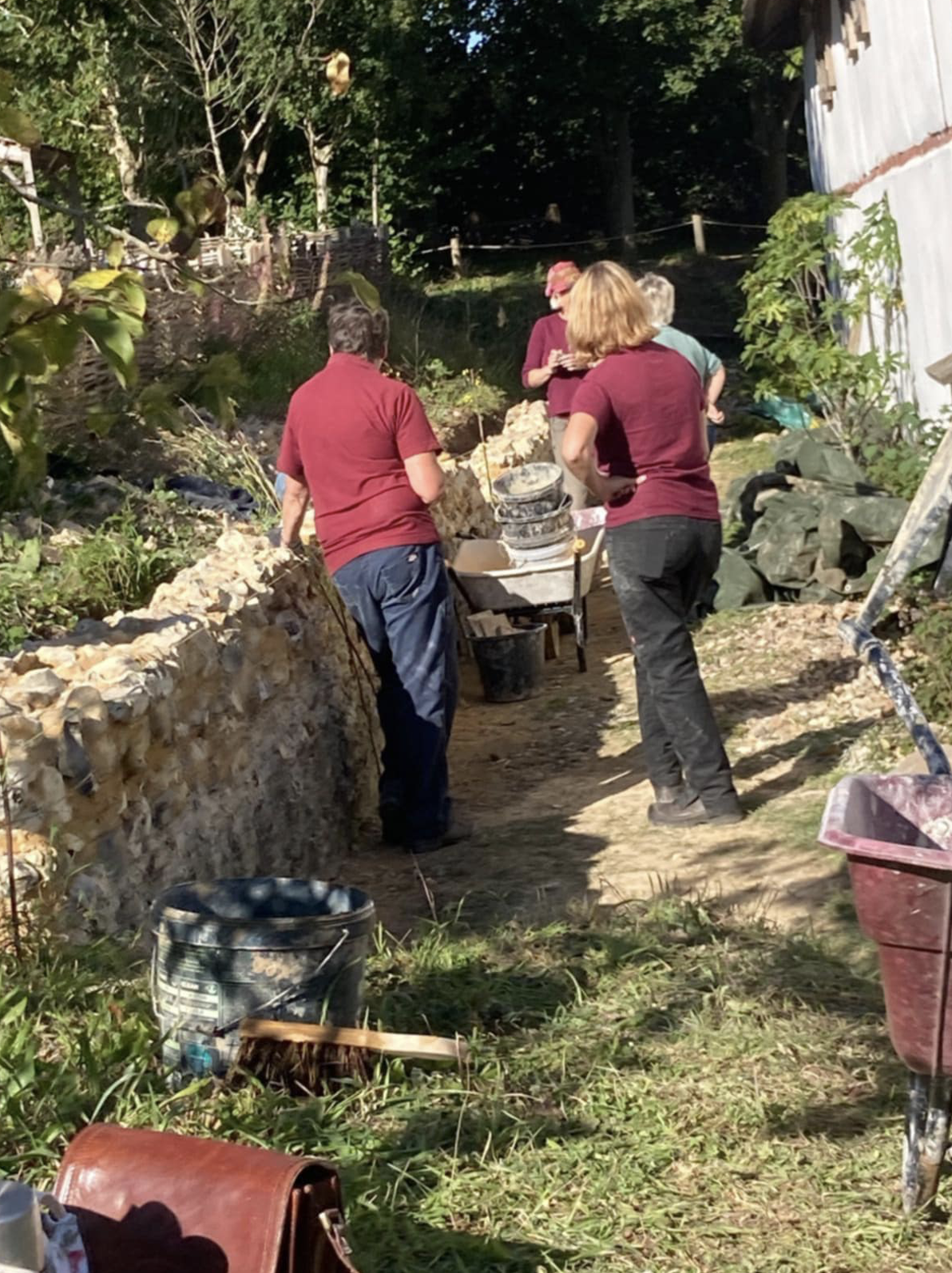
Consultation with Maureen and Imogen
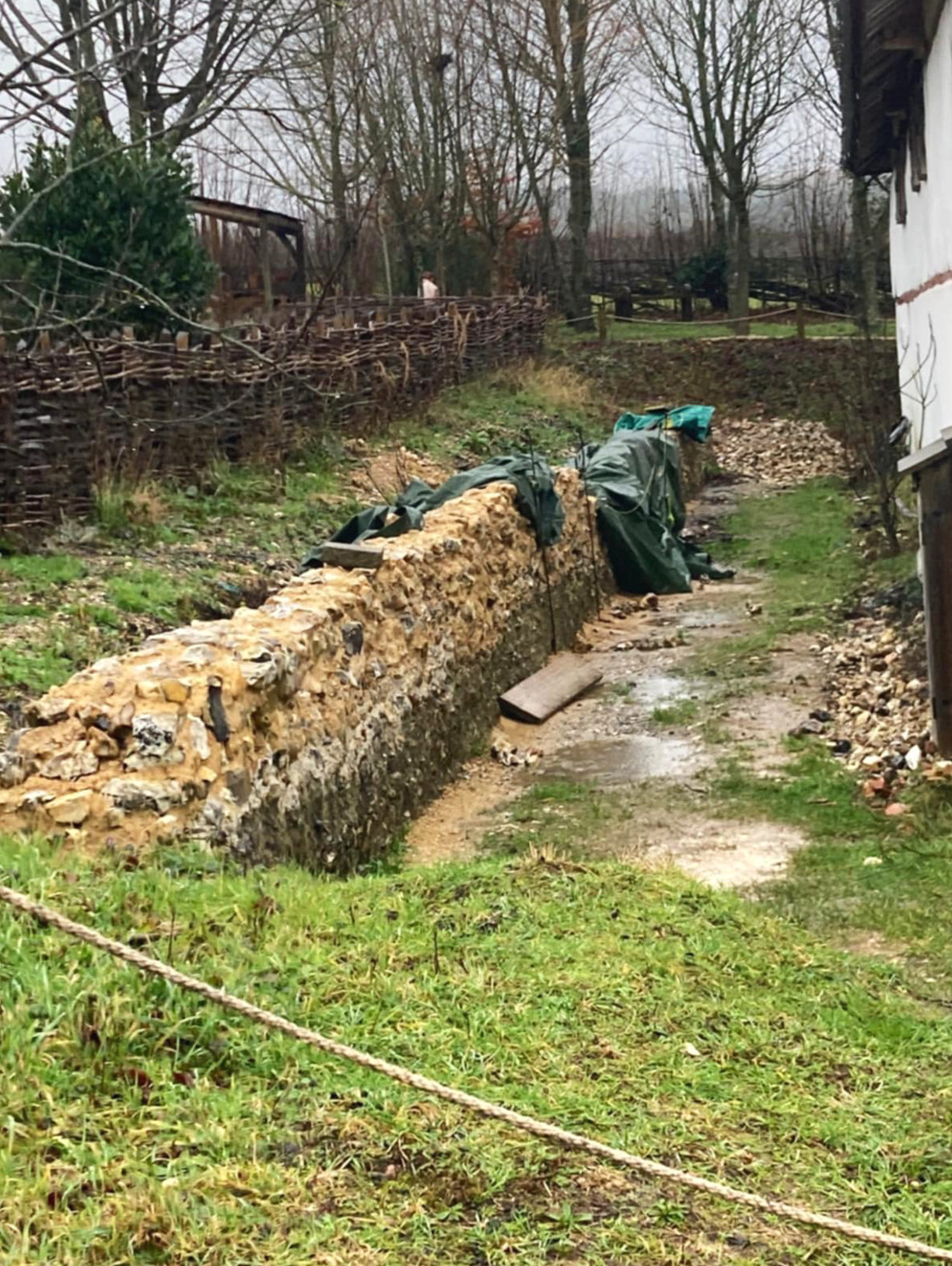
The first section of the wall is now finished