
Student Blog: Interpreting Experimental Archaeology
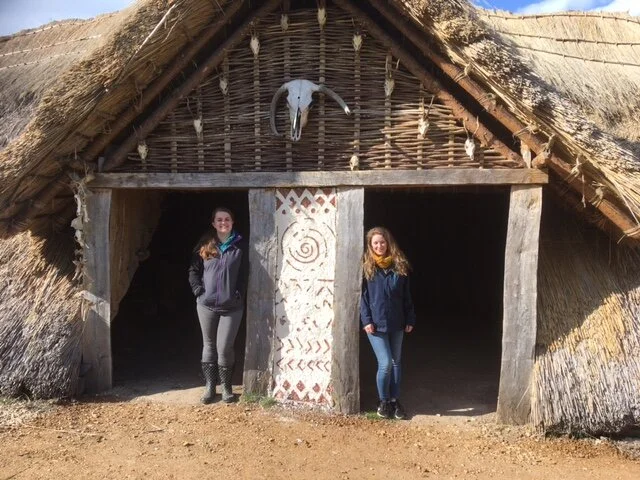
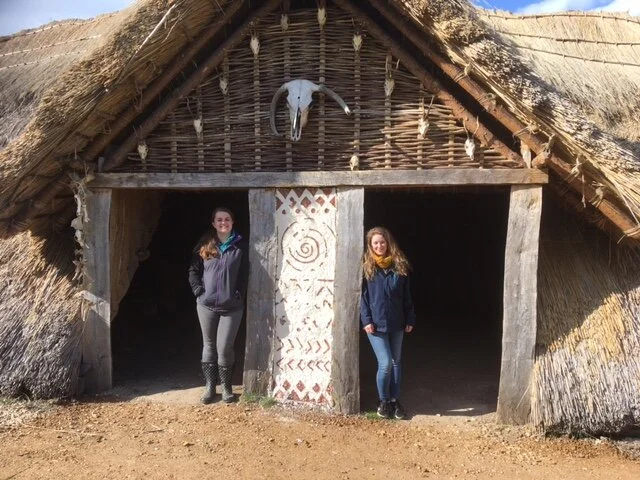
At Butser we regularly welcome students on placements and projects, and have recently hosted two archaeology masters students from the University of Southampton Department of Archaeology. Here they describe their student project to develop interpretation related to our latest Stone Age Horton House and experimental archaeology.
At Butser we regularly welcome students on placements and projects, and have recently hosted two archaeology masters students from the University of Southampton Department of Archaeology. Here they describe their student project to develop interpretation related to our latest Stone Age Horton House and experimental archaeology.
We are two archaeology masters students from the University of Southampton, placed at Butser Ancient Farm to gain experience working in an open air museum. In true lockdown fashion, we have been doing this placement virtually but luckily were able to visit Butser for the grand reopening in Easter 2021. The aim of our placement is to create information boards for use in the reconstruction of their Neolithic house; called Horton House. These information boards will provide insight into the experimental reconstruction process as well as Neolithic life.
But what is experimental archaeology? It is the experimental replication (interpretation) of practices from past cultures. The construction of Butser’s Neolithic house revealed the message at the heart of experimental archaeology - it is about interpretation. Butser’s house is one possibility out of numerous. We may never know which exact model was used in the Neolithic, or in fact if just one model was used! The design plans provided by Wessex Archaeology differed from the original design plans of Butser’s house, and in fact from the end product! All options were viable, and Butser’s phenomenal work epitomises the essence of experimental research, pioneered by its founder who was adamant that an ongoing challenge on the site is to “persuade people that they are actually visiting an open-air laboratory and not a reconstructed Iron Age village.” (Reynolds 1999: 125).

We designed three boards to tell a three-fold story of Horton House from how it was first used, to its excavation, and finally to its reconstruction. As children ourselves we loved the Horrible Histories and their comical portrayal of historical events, so we followed a similar format in order to engage the next generation in Butser’s experiments. Using our own experiences as well as the knowledge we have gained in museum and heritage modules from our degree, we are confident that this will provide an excellent resource which will enhance and complement the wonderful work they are already doing at Butser.
Kirsty Batson and Jessica Coughtre
Many thanks to Kirsty and Jessica for their hard work and enthusiasm on this project and in talking to our visitors.
Butser Ancient Farm is now open if you would like to come and see their interpretation panels and the Horton House in person!
The Launch of Butser Plus
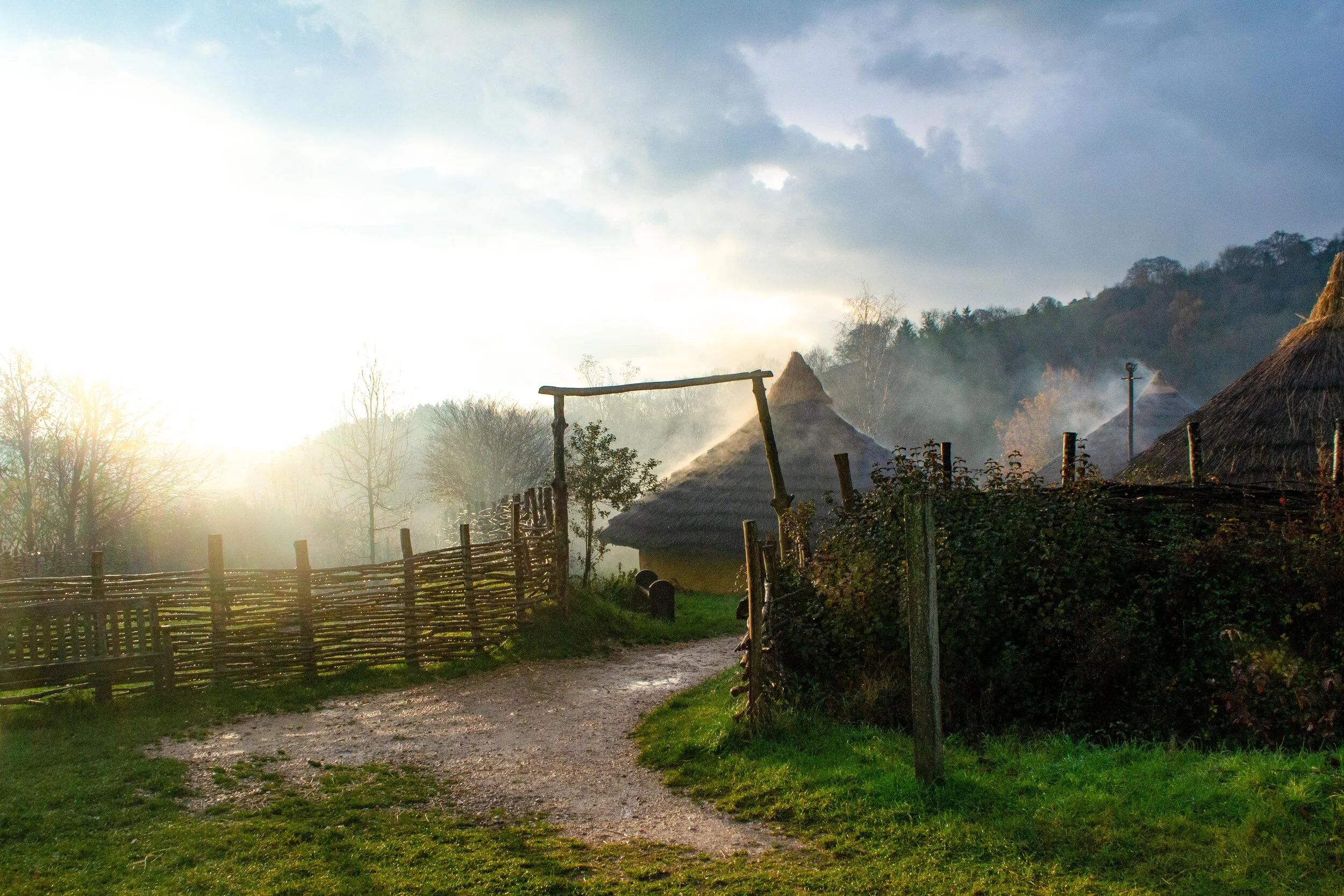
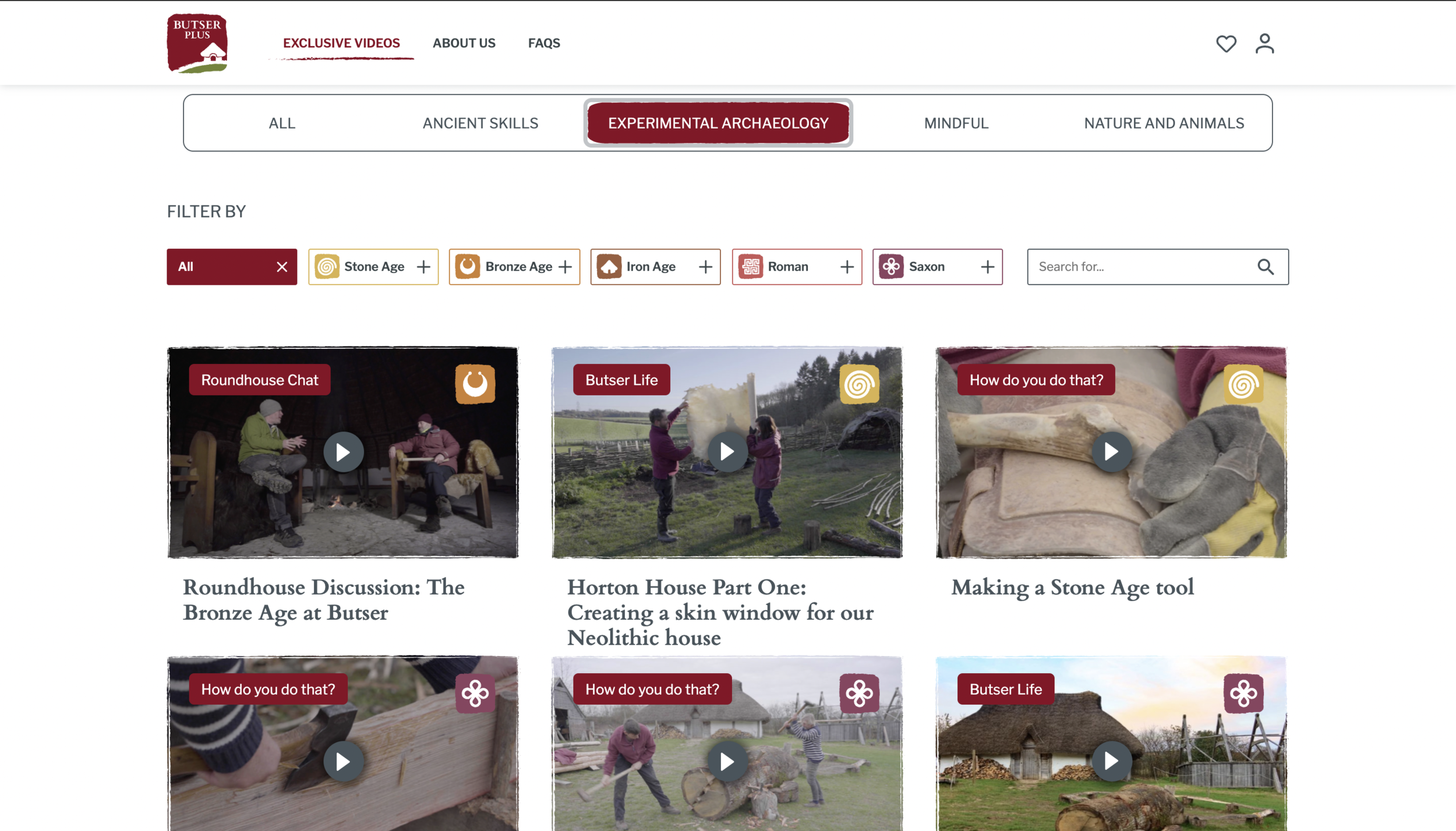
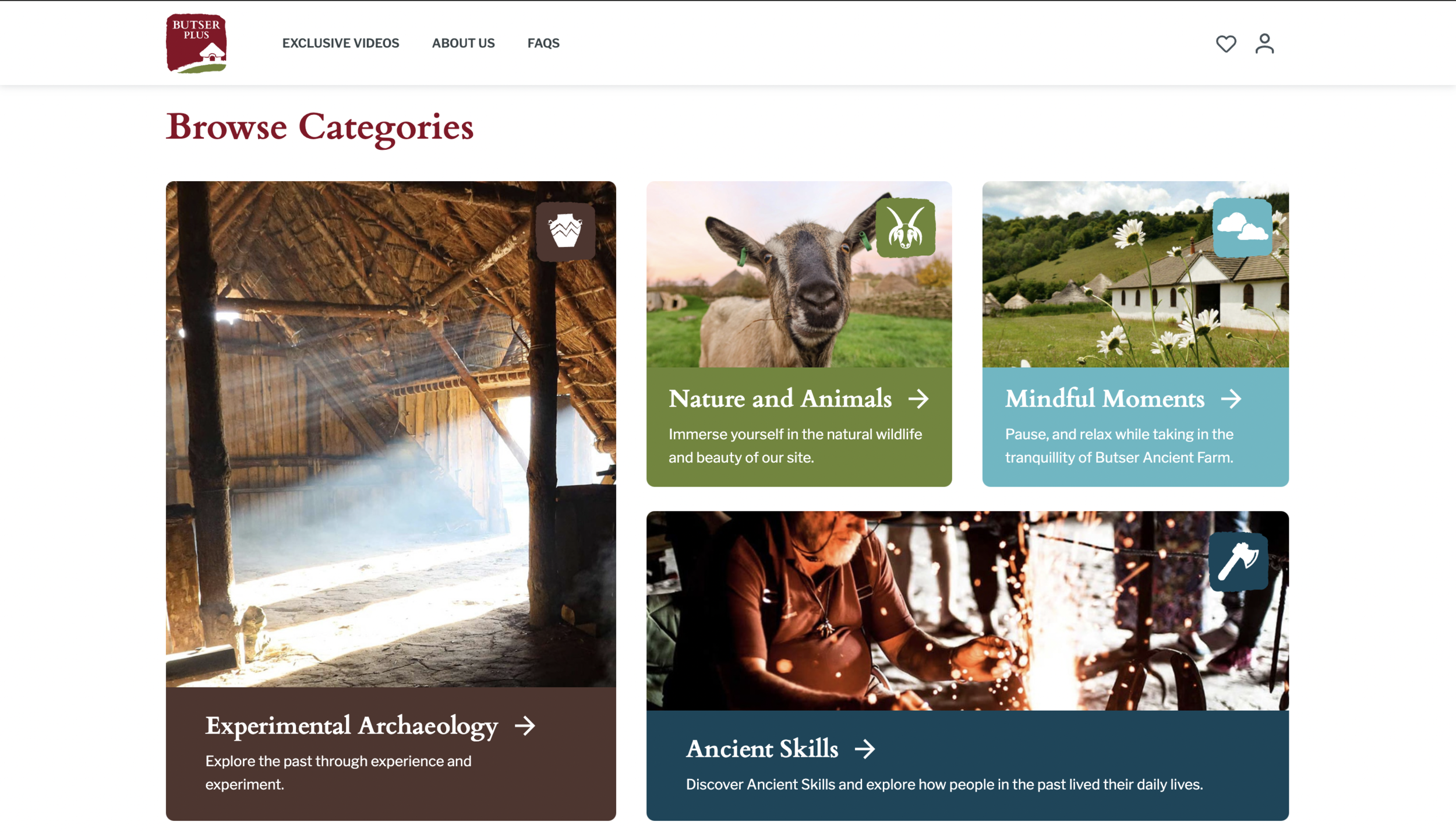
Today we are very excited to launch our new online venture ‘Butser Plus’: a way to share and support the work of Butser Ancient Farm online. Find out more about what we’ve been working on and why below…
Today we are very excited to launch our new online venture ‘Butser Plus’: a way to share and support the work of Butser Ancient Farm online. Find out more about what we’ve been working on and why below…

Today we have launched Butser Plus – a new online platform that will allow supporters to enter an online world featuring professionally shot behind-the-scenes video content about life at our unique heritage site. Supporters from around the globe will be able to sign up to access the exclusive content, and their donations will help to safeguard our future as we recover from the impact of COVID and the subsequent loss of visitors over the last year.
Simon Jay, Director of Butser Ancient Farm said:
“As a not-for-profit Community Interest Company, we have been affected very badly by the pandemic and loss of visitors to the site over the past year. Without the generosity of people across the world, it would have been impossible to stay viable given that it has been costing us around £800 a day just to keep the Farm running, maintain the buildings and feed the animals. We hope that our new online site will help to counter this loss and protect our future, as a place to both share and support our work. It aims to capture the very essence of Butser and provides a connection back to our ancient past, whilst embracing modern technology and the global connections this allows.”
We have luckily had help this year via funding from the UK Government Culture Recovery Fund, which has enabled us to develop this innovative way to bring the ancient farm to life as part of an online virtual space. The pandemic has shown how online tools can be used to help people stay connected with the places we love and we hope Butser Plus will be able to translate aspects of the inspirational and calming nature of the farm to an online world that anyone will be able to enjoy. The website will not only showcase experimental archaeology and ancient skills such as coppicing, flintknapping and thatching, but it will also share nature and mindful content, giving remote access to the gentle beauty of our rural location in the South Downs National Park.
Simon Jay added:
“Over the past year we have become more and more convinced of the importance of places like Butser to provide a space of tranquillity and inspiration in an increasingly uncertain world. We have supporters from all walks of life and from countries all over the world who are keen to see Butser continue and I’m delighted that they will now be able to share some of the beauty of Butser wherever they are.”
Virtual visitors to Butser Plus will be asked for a small monthly donation (starting at £5.99 per month) to access the behind-the-scenes content, all of which will go towards keeping Butser open and enabling us to continue to bring the past to life, long into the future.
We are excited to share many more aspects of life at Butser with you through this new online platform. For example we have been able to capture some of the work done in reconstructing the brand-new Stone Age Horton House building, using prehistoric techniques and tools. You can also watch how we build and thatch our new Saxon Hall, meet our rare-breed animals, discover flintknapping and other ancient skills, and watch along on our latest Bronze Age build project (which starts later this week!). New videos will be added on a regular basis to keep our supporters updated with the latest experiments and activities at the Farm, and we can’t wait to share all our hard work with you all, wherever you may be.
Thank you in advance for your support.
Neolithic House Project - the completion of the Horton House!
Archaeologist Claire shares the feeling of achievement as our Horton House is finally completed and we welcome the first visitors to the new house…
Although our updates have been a bit sporadic due to the lockdown we have still been working hard on the finishing touches to our Neolithic Horton House. Here, archaeologist Claire shares the feeling of achievement as our Horton House is completed and we welcome the first visitors to the new house…
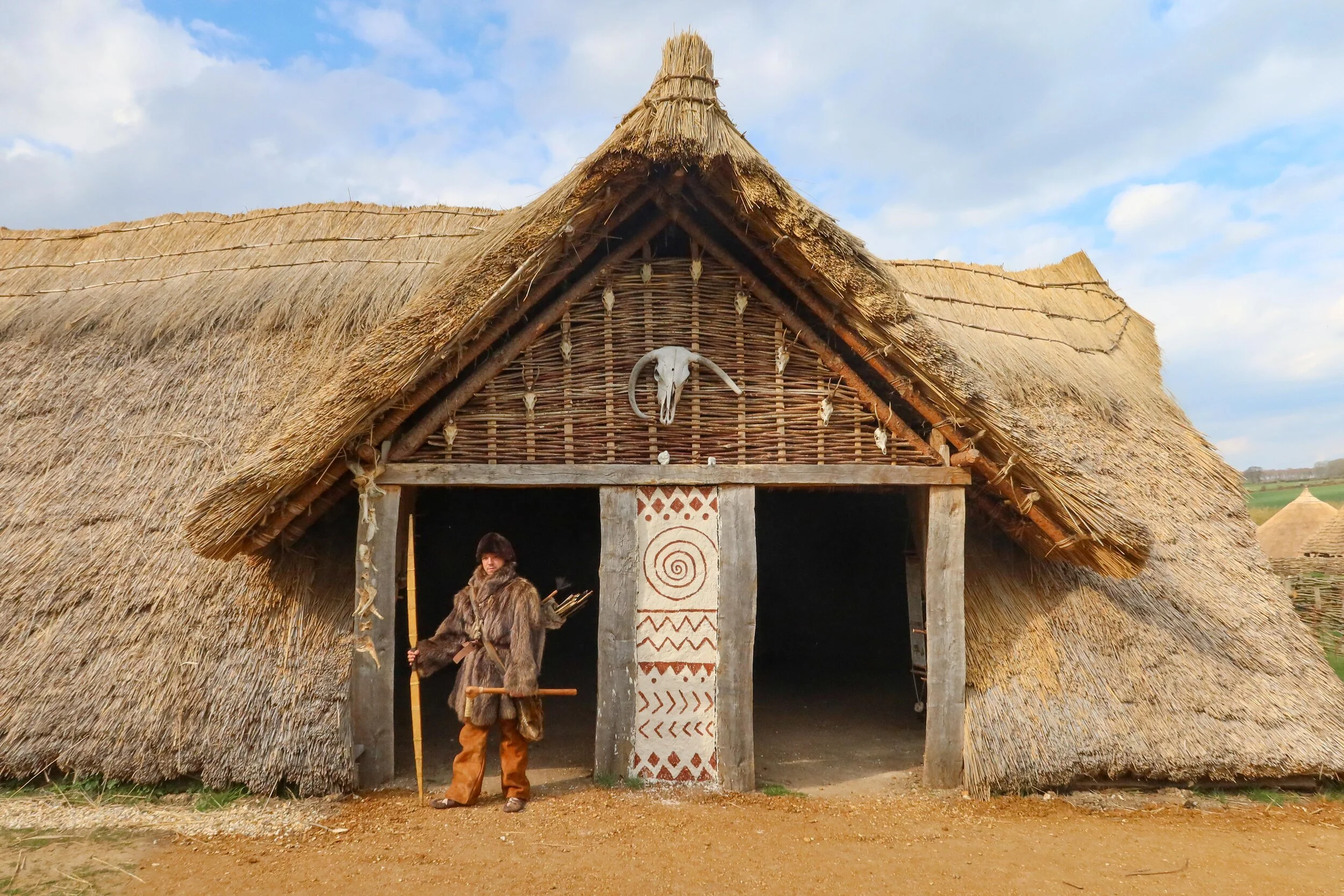
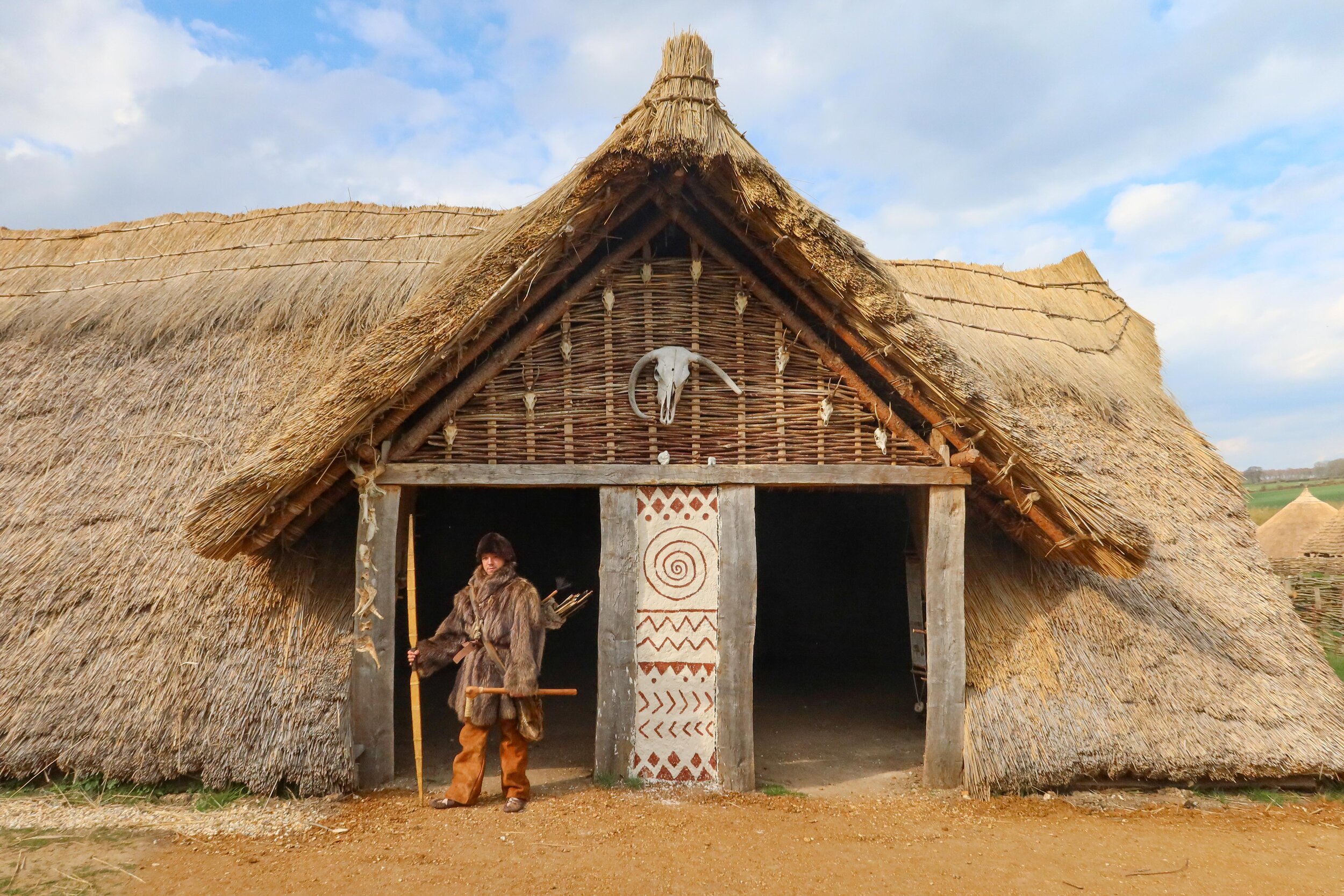
At last I am able to announce the completion of our Neolithic house project. In doing so, we will finally be saying goodbye to a construction site, and hello to a new, immersive visitor attraction here at Butser. The emotions this provokes in me aren’t easily defined – a sense of relief, joy or maybe even sadness…..….I suspect there’s a bit of all three.
It is without doubt one of the most challenging construction projects we have taken on here, not least because it really was experimental. Unlike a roundhouse, there was no tried and tested design (thank you Peter Reynolds) nor a prescribed method of construction and erection. But of course like many, we were also faced with the additional challenges of working whilst following the government’s COVID restrictions and guidelines. From furlough to social distancing, through a scorching summer and a long, dark, lonely winter, with the stress of closures and re-openings we’ve battled on and in the end, I truly believe we have triumphed.
Everyone who has been involved in helping to construct it now has an emotional connection to this building, all seven tons of Scots pine, six tons of thatch, the mile of thatching twine and the sheer monumental scale of it.
Once a colleague turned to me having spent many hours working on the house. With a Neolithic knife cradled in his hand and his eyes glassy with emotion, he said, pointing to the house:
“A piece of you is in that. The more you invest, the more you are invested in that building”.
His heartfelt observation was one of those rare moments of illumination, shining a light into the darkness of the past. That shared experience and emotional engagement with our ancestors was just as precious as all the material traces left behind in the archaeological record.
Of course, the whole experience wasn’t some kind of pseudo-séance with the Neolithic builders of this structure. Along the way we discovered the answer to lots of practical questions, and satisfied our curiosity about many things, whether that be how well a bone chisel worked ( an hour and a half to core right through a 5 inch diameter Scots pine pole, seeing as you ask) to how successful our flint axe was at shaping timbers (surprisingly efficient). In the absence of that séance, there’s one question which will have to remain unanswered however, and that’s whether the original Neolithic inhabitants of this house would have approved of our efforts. Why not come to Butser Ancient Farm to see the Horton house, have an immersive Neolithic experience and decide for yourself?
A huge thank you to everyone who has been involved in the Horton House project.
Continue reading below to find out more information about the construction…
Background to the Horton House
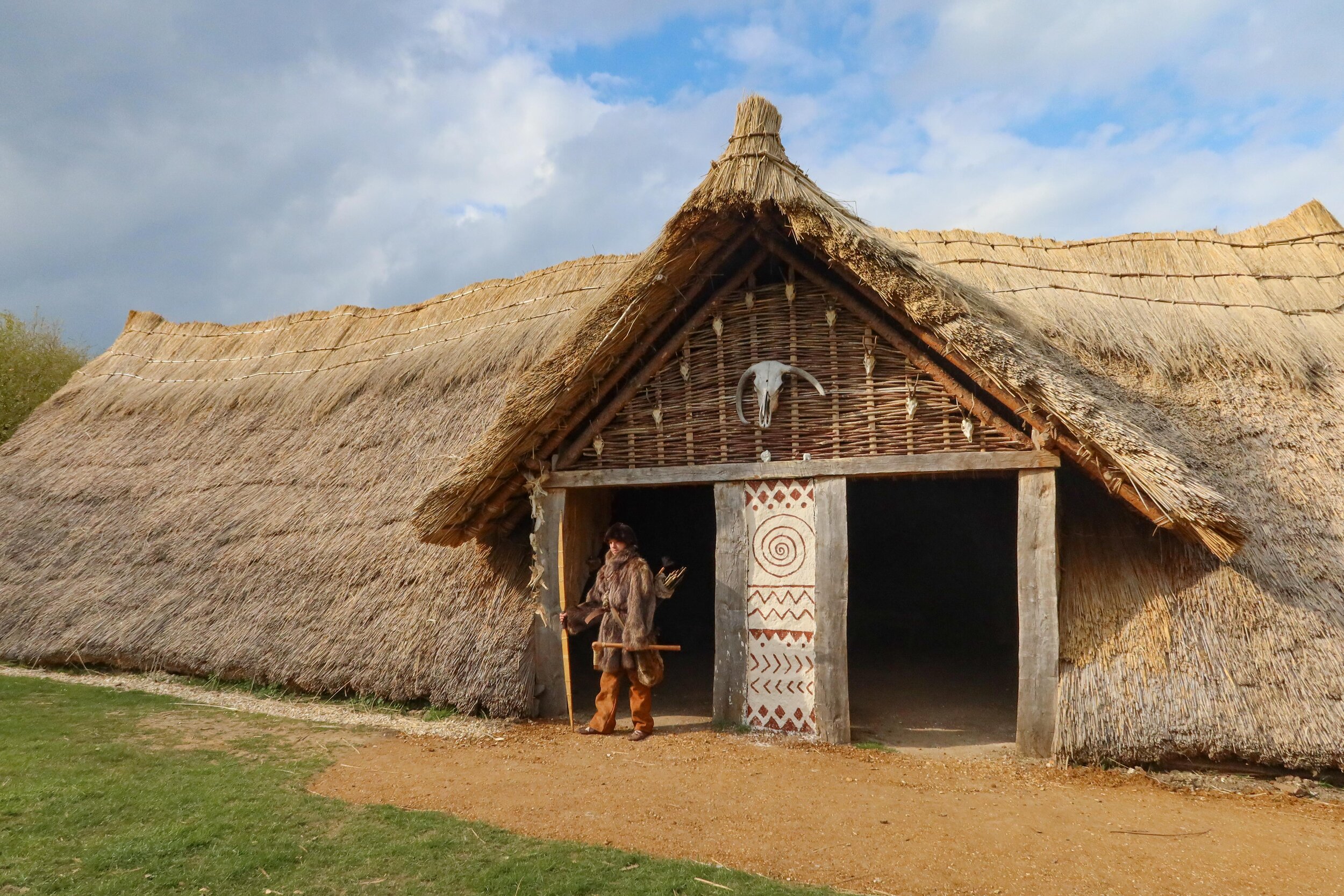
The Horton House is a reconstruction of a Neolithic building based on a discovery made at Kingsmead Quarry near Horton in Berkshire in 2012 by Wessex Archaeology. The original house is believed to date to 3800-3600 BC. There is remarkably little evidence for Neolithic housing in the UK so this was a particularly exciting discovery as it was the largest of four houses discovered at the same site.
Horton House is unusually large for this time period; the Neolithic or late Stone Age. It measures approximately 15 metres in length by 7.5 metres in width. Its widest point is the middle, tapering towards each end like a trapezoid. On excavation, the footprint of the house could clearly be seen, revealing a large structure with a series of post holes and slot or foundation trenches.
From this evidence, working closely with the original excavation team from Wessex Archaeology we have designed and constructed one interpretation of the finds made. It is of course feasible that there could be other possibilities.
The main features of the Horton House:
The evidence revealed 6 post holes – remarkably few for such a large building, creating an exciting challenge for our experimental archaeologists here on site.
It appears to be divided internally into two ‘cells’. We don’t know how this influenced the use of space internally. Although there is no direct evidence, it is possible that animals were stalled at one end.
The archaeology suggests a possible double entrance on the South East end of the building. We’ve speculated that one door could have provided access to an animal stall whilst the other led to domestic living space.
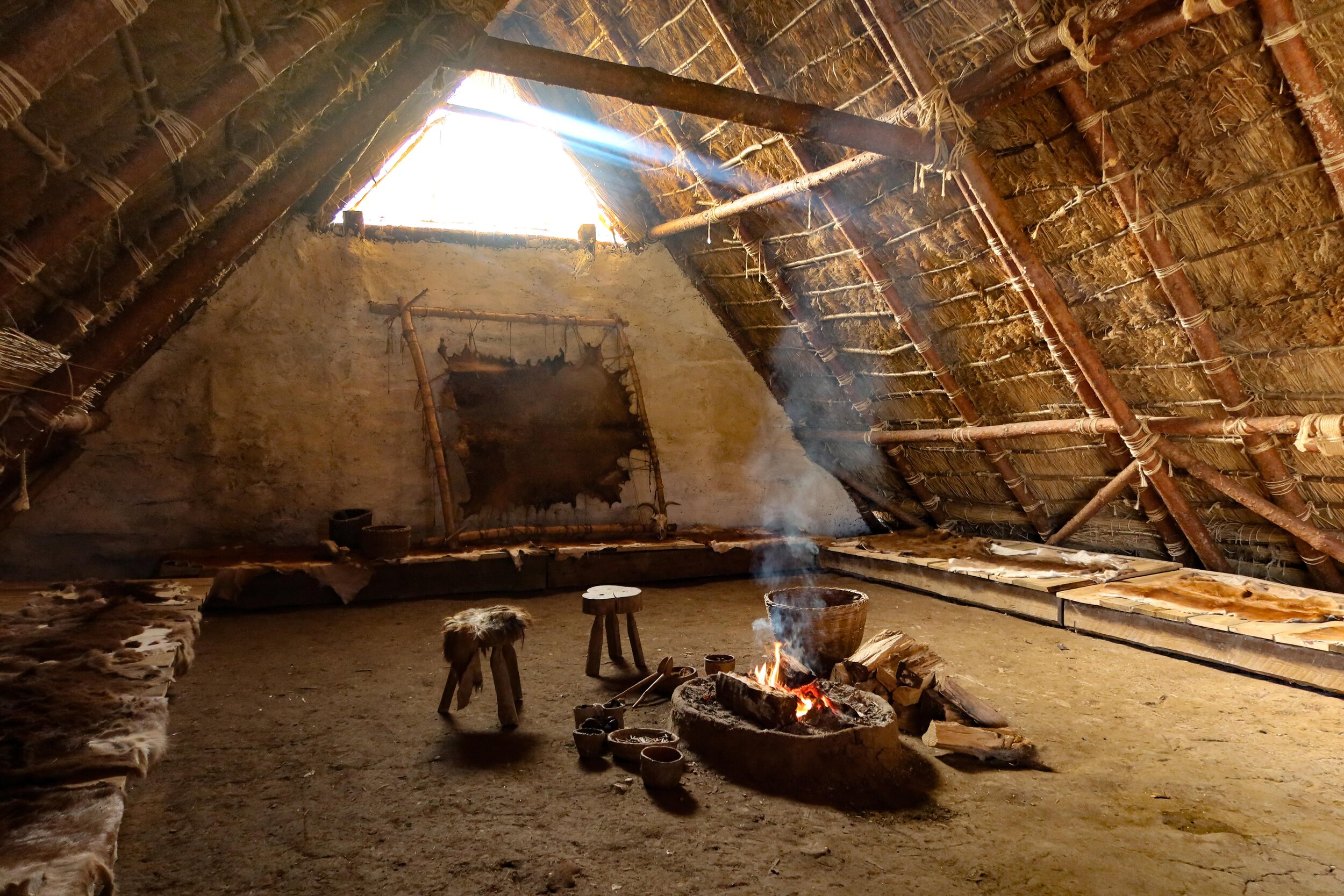
With no trace of a floor surface or hearth for a fire we’ve chosen to have a simple beaten earth floor and a clay hearth – both frequently recorded in archaeological excavations of prehistoric houses.
The roofing material is water reed, in this case imported from Turkey because the tradition of managing reed beds for thatch has been abandoned here in the UK.
We calculated that the reed roof must have pitch of at least 45 degrees – any shallower and the thatch would rot. An increased pitch would provide no functional advantage and would just use up more material resources. It was this that partly dictated the design of the building. The weight of a roof this size on a timber wall would have been enormous. Our design enables the roofing timbers to double as the walls of the house, with oak planking acting as infill at the base, in line with the archaeological evidence.
Horton House Facts and Figures from the build…
15 m x 7.5 m, trapezoidal shaped structure
6 post holes and slot or foundation trenches possibly suggesting oak planks
Oak, Scots Pine, hazel and ash all used in its construction.
5 to 6 tons of thatch
1.5km of thatching twine
2.7km of twine attaching the battens to the roof structure.
950m of rope used to lash the large timber joints together.
A Sustainable Revolution for Open Air Museums - Exarc at Butser in 2022
Projects Co-ordinator Sue talks about our exciting plans to host an EXARC Experimental Archaeology conference in 2022 all about Sustainability in Open Air Museums.
Butser Projects Co-ordinator Sue talks about our exciting plans to host an EXARC Experimental Archaeology conference in 2022 all about Sustainability in Open Air Museums.
While we spend a lot of time here at Butser thinking about the past, we also think about the future too. Next year, 2022, is a special year as it’s 50 years since Peter Reynolds started his experimental Iron Age farm on Butser Hill. We’ll be celebrating that anniversary, there will be lots more to come on that later, but one date for 2022 that is already in our calendar is the EXARC international conference that is coming to Butser Ancient Farm in May.
EXARC is an international cultural heritage network with over 350 members in 40 countries. The organisation works in the areas of Ancient Technology, Experimental Archaeology, Interpretation / education and Museum Practice. Butser Ancient Farm is a dedicated member.
International conferences get planned well in advance so we were already talking about 2022 before the 2021 conference got underway. 2021 was an online conference with 167 presentations that are now available on EXARC’s youtube channel.
We are hoping that 2022 will allow EXARC members to meet in person for a conference at Butser Ancient Farm on 19 and 20 May. The theme for the conference is “A Sustainable Revolution for Open Air Museums”.
The questions we will be talking about will include how to develop the strength of open-air museums by building partnerships with other organisations. Here at Butser we have been working together with universities, Wessex Archaeology and Operation Nightingale in partnerships that benefit and develop all the organisations.
The conference will also consider how open-air museums can become leaders in sustainable solutions. Ancient technology has much to offer the modern world. As well as a collection of buildings, Butser Ancient Farm is the centre of some amazing specialist knowledge in skills and crafts.
We will discuss how can we change internally, support others and eventually lead the way. We will include site and materials management but we look forward to hearing more examples from around the world.
EXARC members are in a unique position where our teaching of the past offers our visitors lessons for the future, so we are more relevant than ever before. Butser’s education programme offers something for all ages from school children to university students, and adults learning from our workshops.
But looking at our own strengths is not enough, we have to develop and find our audience where they feel comfortable, which means we should also, but not exclusively go online. How can the virtual world add to the real-life world? All in all, we need to re-imagine our museums and adapt to change. This is the new journey that Butser is now taking to the online world which will allow us to reach audiences who cannot visit the farm in person.
There will be a call for papers later this year, and we expect tickets for the conference to be on sale in October. https://exarc.net/meetings/2022-sustainable-revolution

The Bronze Age begins at Butser Ancient Farm
Projects Co-ordinator Trevor Creighton discusses the background to the next exciting project at Butser Ancient Farm, our Bronze Age house collaboration with Operation Nightingale. Read on to find out more about the idea and what we hope to achieve…
Projects Co-ordinator Trevor Creighton discusses the background to the next exciting project at Butser Ancient Farm, our Bronze Age house collaboration with Operation Nightingale. Read on to find out more about the idea and what we hope to achieve…
Here at Butser we're about to start a new project to build a Bronze Age roundhouse in collaboration with Operation Nightingale. Operation Nightingale is an initiative to assist the recovery of wounded, injured and sick military personnel and veterans by getting them involved in archaeology.
I first learned about Operation Nightingale's work six or seven years ago when I was watching an episode of the ever-popular Time Team, where they were involved in an important excavation of an Anglo Saxon cemetery. That's a good few years before I started work at Butser, but Operation Nightingale's mission really struck a chord with me. Part of my work at Butser involves co-ordinating volunteer projects and it had been in the back of my mind to get in touch with Operation Nightingale some day and see if we could work together on a project. When a colleague told me that Richard Osgood was on site one day about a year ago this long, vague gestation of a collaboration came suddenly into focus. Richard is an MOD archaeologist and the archaeological director of Operation Nightingale. Well, it took about 10 minutes for us both to realise that this was an idea whose time had come.
I'll backtrack a little now and explain a little about Butser, in case you aren't familiar with the chronology – the time periods – of our buildings. All our buildings are from British archaeology and the earliest reconstructions date from the Neolithic, or Late Stone Age. That's from around 6000 to 4500 years ago. Our next buildings date from the Iron Age – about 2800 to 2000 years ago. Then we move on to Roman and Anglo Saxon buildings. You have probably noticed that there's a big chunk missing – the entire Bronze Age! It starts about 4500 years ago and gradually morphs into the Iron Age in Britain around 2800 years ago. And it's a really exciting period. Of course we see the first metalwork, but there is a lot more besides that – new ways of burial, new pottery and new ways of farming the land. Society in Britain was transformed by the Bronze Age, so that was a big gap! It just so happened that Operation Nightingale were about to excavate a Bronze Age site on MOD land on Salisbury Plain. Subsequently, they uncovered the foundations of a Bronze Age roundhouse and, based on that archaeology, that's what we are about to start building.
So this is an incredibly exciting and important project on a number of levels. It fills our chronological gap – once the structure starts going up we can begin to tell our visitors the story of the Bronze Age in a much more tangible way. Our house will be set in its own small enclosure, surrounded by our sheep enclosures and backed onto by the neighbouring farm's crop fields. What better way to highlight the intensification and diversification of farming in the Bronze Age?

Butser Ancient Farm Manx Loaghtan sheep and Lambs in a field adjacent to where our new Bronze Age house will be built. Our Iron Age enclosure and roundhouses can be seen in the background.
As well as the archaeology though, we are going to be contributing to a programme to help others. That has long been a part of what we do at Butser through our volunteers programme and our Operation Nightingale project is an extension of that. And, of course, all of our volunteers contribute enormously to Butser's success. In this case we will get a fascinating new building, unlike any other on our site. This one is extra special as it will be built by the people who excavated it. And, we very much hope, those same people – the volunteers from Operation Nightingale - will be coming back to join us to tell our visitors the story of the Bronze Age through the medium of their house.
Are we excited by this project? You bet!
We are delighted to have received funding and support from the South Downs National Park, The Armed Forces Covenant Positive Pathways Fund, Breaking Ground Heritage, Step Together Volunteers and Operation Nightingale for this project to go ahead. Thank you!
If you are a veteran who would like to get involved please contact elaine.corner (at) step-together.org.uk for more information.
Neolithic House project blog 14
The latest happenings on our Neolithic Horton House project
During this second lockdown we are luckily able to continue working on the outside building projects at the farm. Here, Archaeologist Claire Walton gives an update on what we have been working on this past week.
“What could possibly go wrong?”
This phrase somewhat sums up what it’s like working at Butser. We devise, try and test out various ideas during the construction of our buildings here on site.
Some ideas work out brilliantly, matching archaeological evidence and justifying our choice of interpretation. Other plans go a little awry in the execution, and we have to think about how to resolve the problem we have created for ourselves!
A perfect example is the construction of our end gable wall. Due to the nature of its construction, it quickly became apparent that an extra thick layer of daub was going to be required to cover the rather uneven wattle. No self-respecting Neolithic person would have been happy with bits of hazel wattle projecting out the wall -they were without doubt as sensitive to aesthetics as we are today.

The first coat of daub therefore had to be treated like a ‘scratch’ or undercoat. I based the ‘design’ on photos I had seen of houses in Ethiopia which have a daub undercoat, with a dimpled surface. In their case, the daub undercoat is then topped with modern concrete! Clearly, the dimpled holey surface creates a good bond with the top coat. We too have needed a second coat on top, to smooth out some of the particularly ‘bony’ bits. The difference is I’ll stick to our Neolithic concrete – daub. We also used small hazel sticks banged into the existing daub layer and left to stick out a couple of inches to act as additional support pegs for the final layer. It seems to work extremely well.
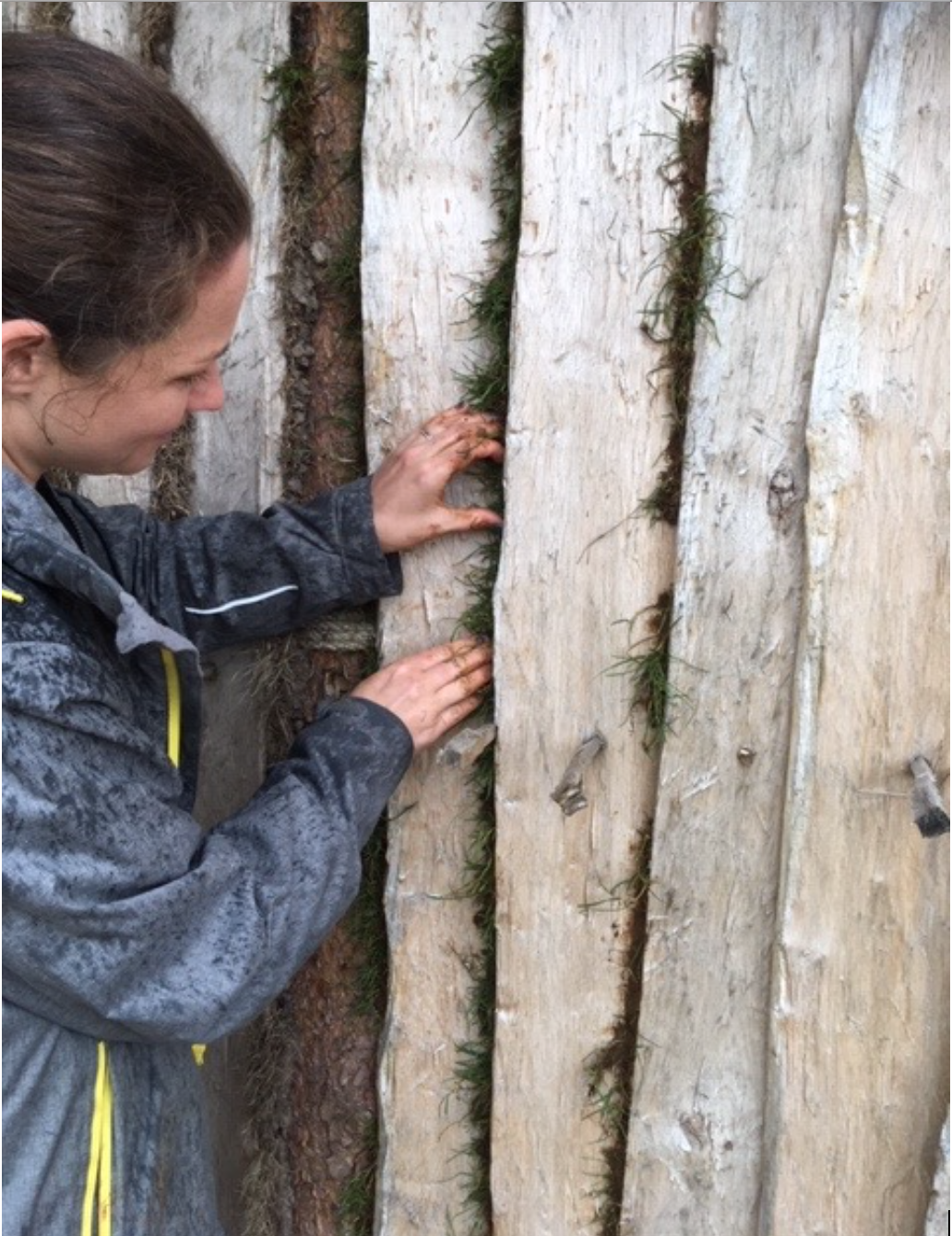
Meanwhile at the other end of the house, the planked wall has been completed and we’ve stuffed the wall with turf and moss. Not only does this block up all the gaps, but it certainly gives the impression of working towards a completed look.

We have also just completed the planking in the doorway, which certainly lends the building a cosier feel. Bit by bit, we are creeping towards completion.
And for those of you who are wondering….. yes, Will is STILL on the roof. I think he’s trying to give Saint Simeon of Stylites a run for his money.

Neolithic House Project week 13+?!... work resumes!
After a long break, work is now resuming on our Horton House construction. Here, Archaeologist Claire talks about creating a water-tight ridge using reed thatch.
Our weekly Horton House blog posts from earlier this year were interrupted by… well we all know what! Thankfully since lockdown we have been able to slowly resume our experimental archaeology work on the farm, and thanks to the funding we have received from the UK Government Culture Recovery Fund, we will now be able to complete our Horton House construction over the Winter!
Here our Archaeologist Claire Walton sums up some of the latest steps we have bee taken on the build…
If there was one things I learned during lockdown, it was that the world is a particularly beautiful place without the sound of cars, engines and aeroplanes. With engines silenced, lockdown took tranquillity to a new level. It gave me the opportunity to think about what the Neolithic might have sounded like, although of course, Neolithic life wasn’t always quiet. In fact, if it was anything like the last two weeks here at the Horton house site, it would have been a collection of very productive noises, from axes on wood, to daub being slapped, with the hum of conversation and discussion going on in the background. We are re-focused and re-energised, determined to push on and complete our Neolithic house before winter sets in.
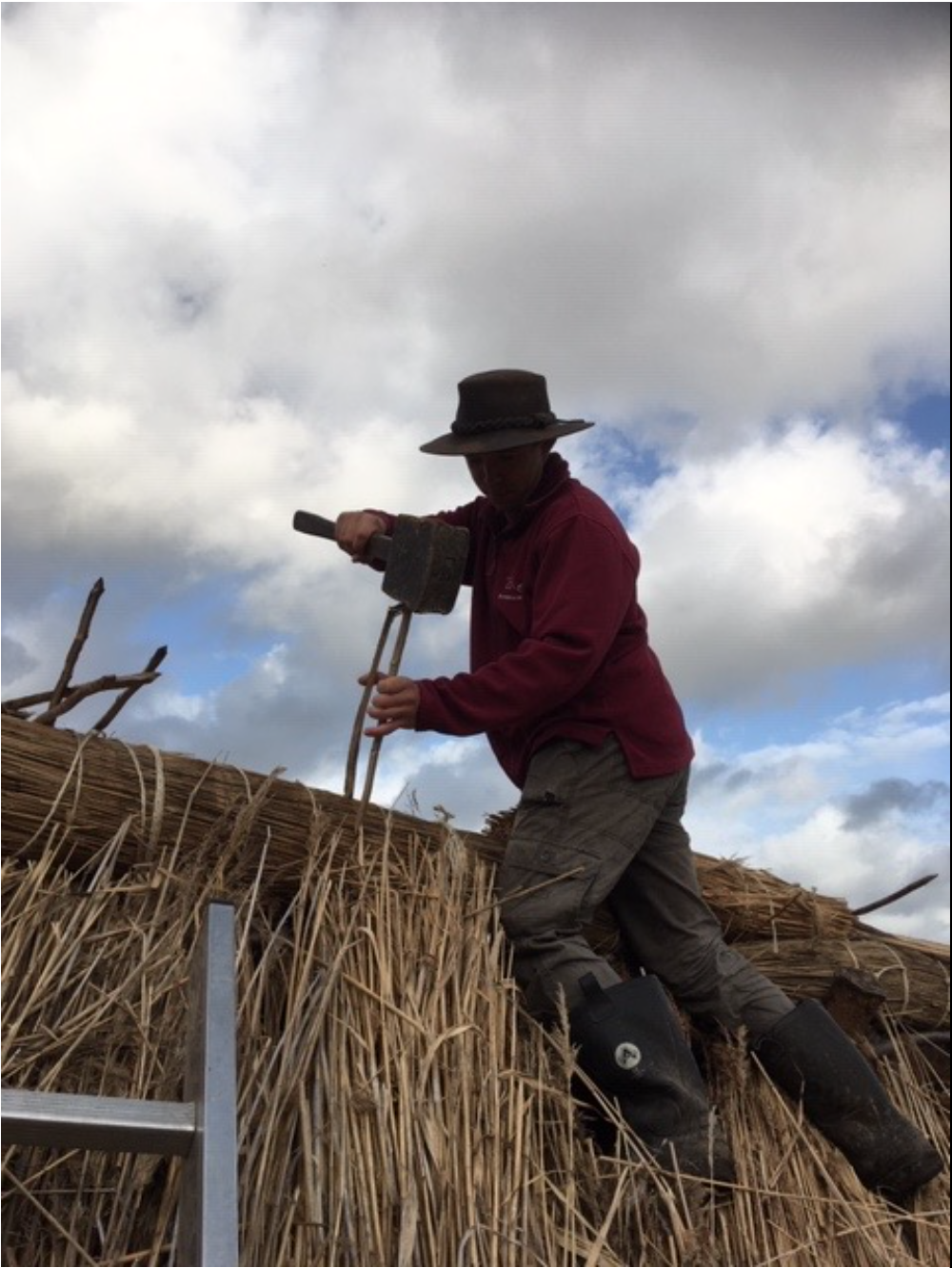
On Friday last week Will received some instruction and a tutorial from Lyle Morgans, Master Thatcher, on how we can create a ridge along the apex of the house. The completion of this part of the thatch will mean the building is completely waterproof. While our choice of reed for the house is supported by the landscape in which the original house was situated, and also works on a practical level due to its longevity, we have discovered one issue. When thatching in reed, one would normally use wheat straw to create the ridge. This is because reed does not bend enough, and would simply break if we tried to create a ridge using the normal technique. However, due to several poor harvests, there is now a serious shortage of thatching straw. So, just like Neolithic people we had to get creative. We’re using a far less common, but no less effective method. By creating long ‘sausages’ of reed, tied together into bundles, we have been able to pack out the top of the roof where the two sides of reed thatch meet.
Over this sausage, we will lay more reed, with the feathery end facing down towards the ground. This will be held in place using ‘liggers’, long strips of split hazel tied into the roof with hazel ‘spars’.


Butser Ancient Farm receives lifeline grant from Government’s £1.57bn Culture Recovery Fund
Almost 450 heritage organisations in England, including Butser Ancient Farm have been awarded cash from the first round of the Culture Recovery Fund for Heritage.

Butser Ancient Farm is one of 445 heritage organisations across the country set to receive a lifesaving financial boost from the government thanks to the £1.57 billion Culture Recovery Fund to help them through the coronavirus pandemic.
445 organisations will share £103 million, including Butser Ancient Farm to help restart vital reconstruction work and maintenance on cherished heritage sites, keeping venues open and supporting those working in the sector.
The grant awarded to Butser Ancient Farm is £284,800 which will be a lifeline in these challenging times. Part of the grant will help fund staffing and maintenance costs at the farm throughout the winter period when our income has been severely hit by Coronavirus restrictions. The financial support will also help to complete the constructions of our Stone Age house and Saxon house and develop our buildings and site in order to safely welcome visitors, school children and groups to learn about our ancient history in the years to come. The funding will also allow us to make adaptations in order to cope with Covid-19 restrictions such as additional covered shelters and developing online offerings whilst restrictions to on the ground activities remain in place.
This vital funding is from the Culture Recovery Fund for Heritage and the Heritage Stimulus Fund - funded by Government and administered at arms length by Historic England and the National Lottery Heritage Fund. Both funds are part of the Government’s £1.57 billion Culture Recovery Fund which is designed to secure the future of Britain’s museums, galleries, theatres, independent cinemas, heritage sites and music venues with emergency grants and loans.
433 organisations will receive a share of £67 million from the Culture Recovery Fund for Heritage to help with costs for operating, reopening and recovery. This includes famous heritage sites across the country, from Wentworth Woodhouse in Yorkshire to Blackpool’s Winter Gardens, Blyth Tall Ship to the Severn Valley Railway, the International Bomber Command Centre in Lincolnshire to the Piecehall in Halifax. The funds will save sites that are a source of pride for communities across the country.
12 organisations, including English Heritage, Landmark Trust, Historic Royal Palaces and the Canal and River Trust, will receive £34 million from the Heritage Stimulus Fund to restart construction and maintenance on cherished heritage sites to preserve visitor attractions and protect livelihoods for some of the most vulnerable heritage specialists and contractors in the sector.
The Architectural Heritage Fund (AHF) has also been awarded a grant from the Culture Recovery Fund through Historic England. The AHF will use the funding to support charities and social enterprises occupying historic buildings to develop new business plans and strategies for organisations affected by the pandemic.
Culture Secretary Oliver Dowden said:
“As a nation it is essential that we preserve our heritage and celebrate and learn from our past. This massive support package will protect our shared heritage for future generations, save jobs and help us prepare for a cultural bounceback post covid.”
Simon Jay, Butser Ancient Farm Director, said:
‘We are incredibly grateful for the funding we have received from the Culture Recovery Fund for Heritage which will allow the Farm to keep going and developing over the coming months and years. We have exciting plans as we approach our 50th anniversary in 2022 and are thrilled to be able to continue our experimental archaeology and educational work to continue to bring the past to life for more visitors, schools and groups. The funding will enable us to maintain the unique skills and environment of Butser Ancient Farm and support our staff and volunteers whilst providing a much needed outdoor space for school groups, visitors and the local community to access our heritage and nature.’




Blog archive
- December 2025 1
- November 2025 2
- September 2025 1
- April 2025 2
- February 2025 1
- January 2025 1
- November 2024 2
- August 2024 1
- July 2024 2
- May 2024 1
- November 2023 1
- October 2023 1
- September 2023 1
- August 2023 1
- July 2023 1
- June 2023 2
- May 2023 2
- March 2023 1
- February 2023 1
- December 2022 1
- October 2022 1
- August 2022 2
- April 2022 1
- March 2022 2
- February 2022 1
- January 2022 1
- December 2021 2
- November 2021 3
- October 2021 2
- September 2021 5
- August 2021 2
- July 2021 3
- June 2021 3
- May 2021 2
- April 2021 4
- March 2021 1
- November 2020 1
- October 2020 2
- August 2020 1
- March 2020 4
- February 2020 4
- January 2020 3
- December 2019 3
- November 2019 1
- October 2019 1
- September 2019 1
- August 2019 1
- July 2019 6
- June 2019 3
- April 2019 2
- March 2019 3
- February 2019 2
- January 2019 1
- November 2018 1
- October 2018 2
- September 2018 3
- August 2018 4
- July 2018 2
- June 2018 2
- May 2018 2
- March 2018 6
- February 2018 1
- October 2017 1
- September 2017 5
- August 2017 4
- July 2017 3
- June 2017 1
- May 2017 1
- April 2017 3
- March 2017 2
- February 2017 3
- January 2017 1
- December 2016 2
- November 2016 1
- September 2016 1
- August 2016 2
- July 2016 2
- June 2016 3
- May 2016 2
- April 2016 1
- March 2016 2
- February 2016 1
- January 2016 3
- December 2015 2
- November 2015 1
- October 2015 1
- September 2015 2
- August 2015 1
- July 2015 2
- June 2015 2
- May 2015 3