
What Is a Carnyx & Why Are They So Rare?
We love a bit of breaking archaeological news here at the farm, so we were delighted to see the headlines this week about a rare Iron Age hoard being unearthed in Thetford, Norfolk. At its heart was the first-ever boar's head flag standard to be found in Britain, and the most complete battle trumpet ever found in Europe - also known as a carnyx. If you joined us for our annual Beltain festival in 2025, you may have spotted a few carnyces floating above the heads of the crowds. But what exactly are they, and why are they such a rare find?
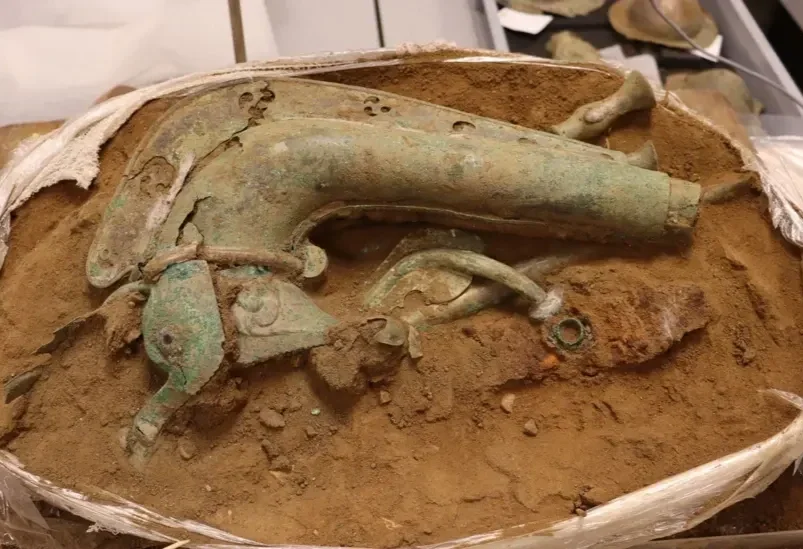
The Norfolk carnyx head revealed (PA Media)
Carnyces were war trumpets used by Celtic tribes across Europe to intimidate their enemies, and to inspire and direct warriors during battle. These tribes included the famous Iceni of East Anglia, which was led by queen Boudicca in her failed uprising against the Romans in AD 60-1. The trumpets were usually animal-shaped, and they fascinated the Romans who encountered them, frequently depicting them as war trophies.
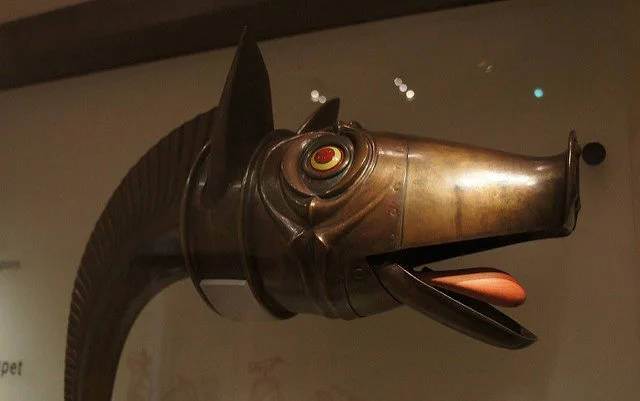
The Leichestown Deskford carnyx, found in a peat bog in 1816
As to the sound of the carnyx, there is nothing quite like it - as researchers have discovered when reconstructing them from archaeological fragments. According to musician and composer John Kenny: ‘It has a range of five octaves, wider than most modern orchestral instruments. At its loudest it can over-volume the trombone, but is equally comfortable working at the same breathy pianissimo as the alto flute.’
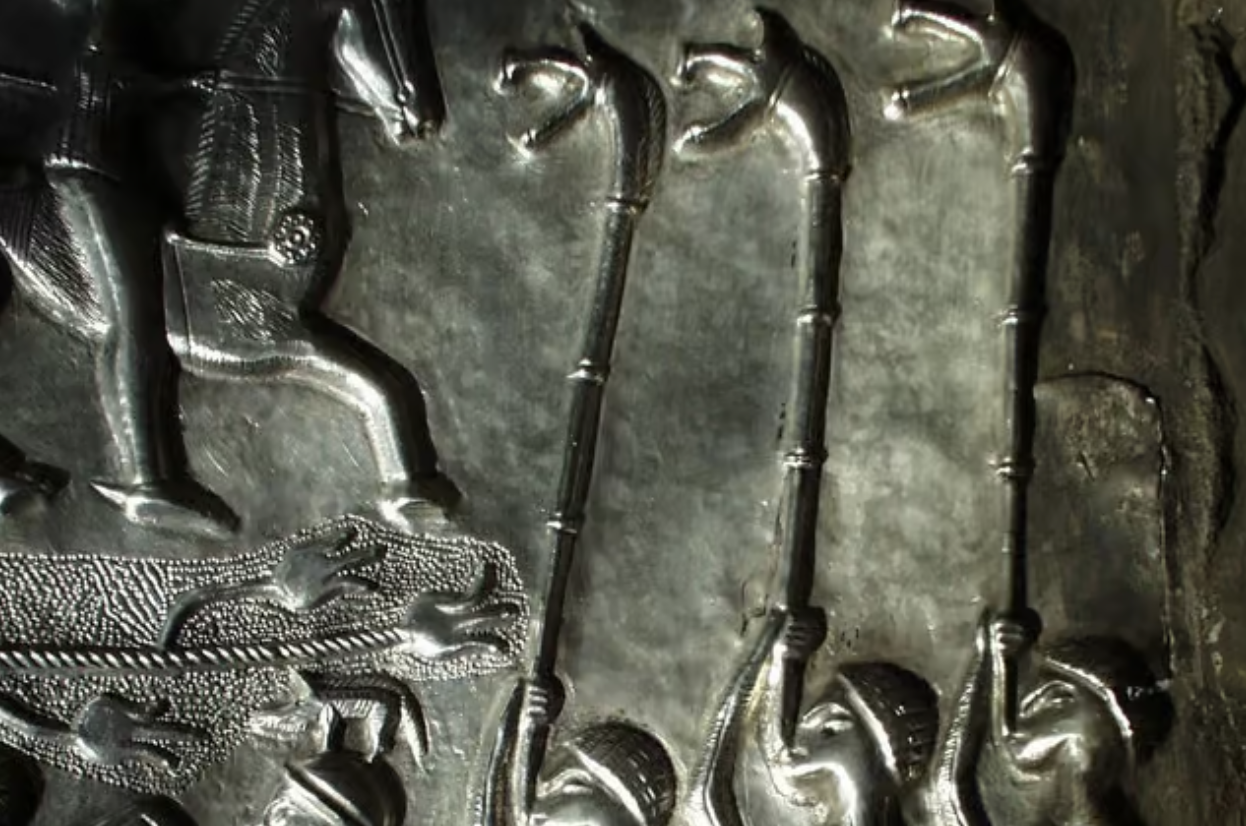
Three carnyx players depicted on the Gundestrup Cauldron (National Museum of Denmark, Copenhagen)
This particular discovery was found during a routine excavation as part of the standard planning process for residential properties. Amazingly, it is one of only three known carnyx in Britain, and one of the most complete to be found in Europe, according to Historic England.
So why are they so difficult to find?
Conservator Jonathan Carr has said that the Thetford find was made ‘from extremely thin sheets of metal which have become extremely brittle after 2,000 years in the ground.’ The materials chosen were valuable and delicate, and often disposed of ritually after use, which is likely why they are so rare. As well as being one of only three carnyces found in Britain, the Norfolk carnyx is also considered to be ‘the most complete carnyx ever found, with the pipe, mouthpiece and bell all uniquely intact'.
The only other two carnyces found in Britain are the Leichestown Deskford carnyx, discovered in a peat bog in Scotland in 1816, and one dredged from the river Witham at Tattershall Ferry in 1768. Unfortunately, the latter is represented today only by drawing and engravings, as it was melted down for scientific analysis shortly after its discovery. (Oh, how archaeology has changed!)
The discovery of such a complete artefact in the Norfolk carnyx will help researchers learn even more about sound and music in the Iron Age, although according to Historic England, the items are in a very fragile condition and require extensive stabilisation work before detailed research can begin. We can’t wait to see what they find!
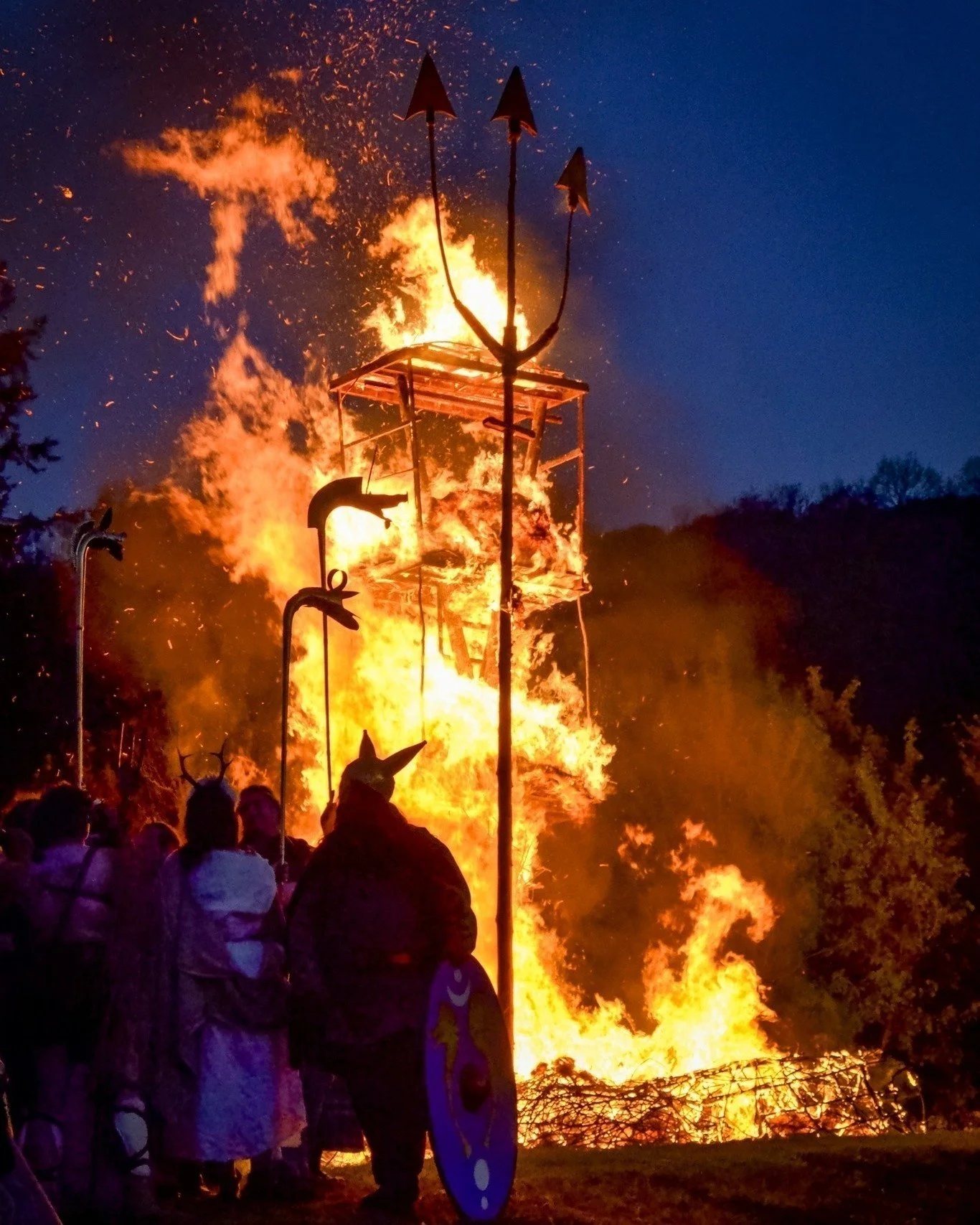
Carnyces on display at our Beltain Festival in 2025