
How to Make Warm, Spiced Wassail
Have you ever communed with a tree spirit on Twelfth Night?
Before the industrialisation of the 18-19th centuries, the festive season looked very different. Today, Christmas generally begins in early December and ends on New Year’s Day, but in the past it ended with feasting and revels on the 5th January - also known as Twelfth Night.
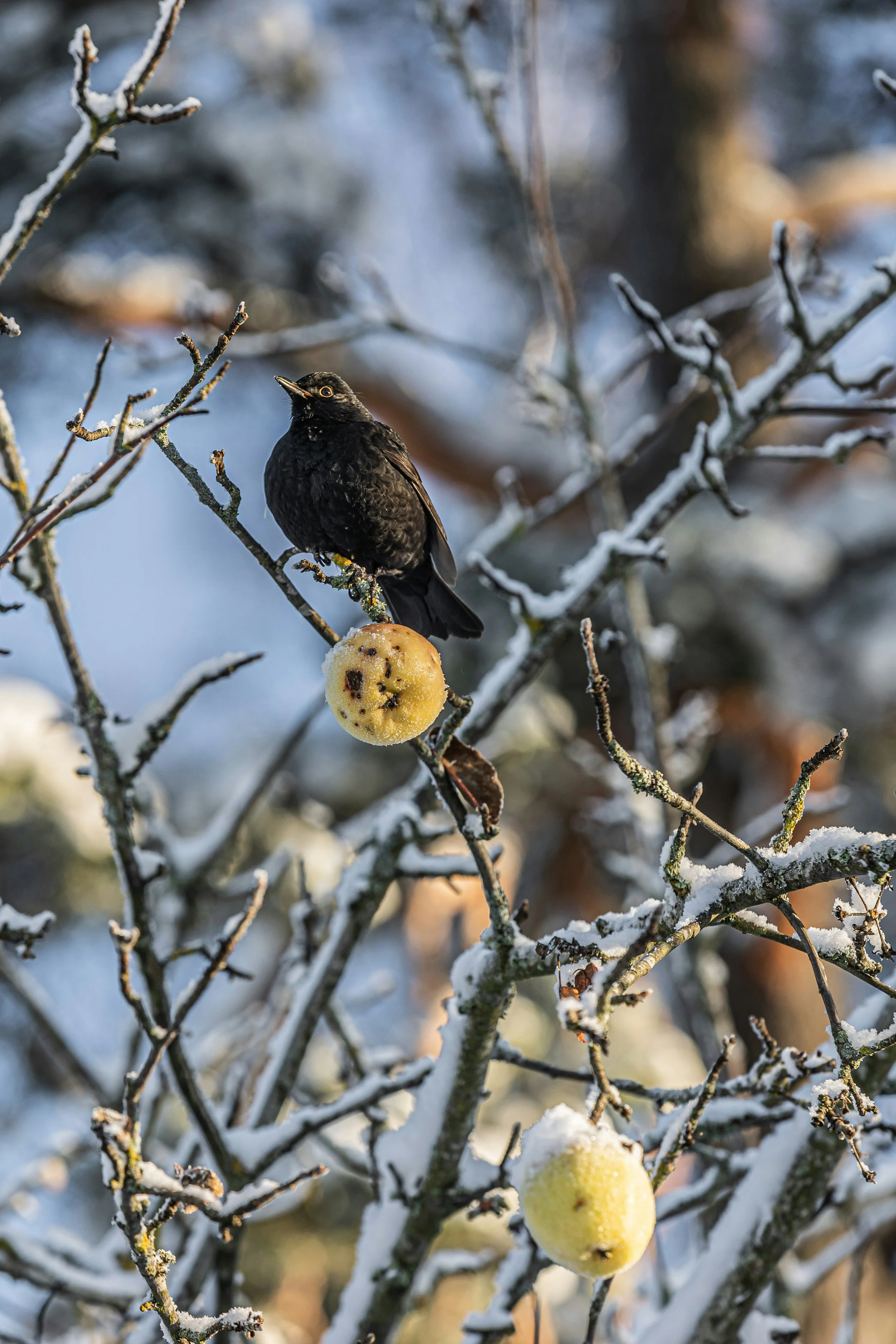
A centuries-old ritual with pagan roots, wassailing is traditionally linked with Twelfth Night, a date when social roles were turned upside down amidst decadent parties, feasts and merriment. The purpose of wassail was to encourage the spirits of the trees to bless the community with a good harvest the following season. It took place on the twelfth night after Christmas and usually involved a communal visit to the local orchard for singing, dancing and drinking from the wassail bowl, which was filled with warm spiced cider, perry or ale.
Wassailing was - and still is - an important part of the festive tradition in areas where apple and pear orchards grow. Revellers typically visited nearby orchards and fruit trees, singing songs and making a hullabaloo by banging pots and pans.
A wassail King and Queen sometimes led the procession from one orchard to the next, placing cider-soaked toast in the tree branches and pouring cider over the roots. The orchard’s owner, grateful for their attempts to ward off bad spirits and manifest a good harvest, would reward them with some form of warm, spiced alcoholic drink from a communal bowl or cup, sometimes with an apple topping known as ‘lamb’s wool’.
Other forms of wassailing included visiting local houses, door to door, drinking toasts and wishing good health on the neighbours. The word wassail is thought to be derived from the Old English was hál, meaning ‘be in good health!’
There are two stories from English folklore connected with the wassail tradition, both concerning the Apple Tree Man - a figure named after the spirit of the oldest apple tree in the orchard. In the first, a poor man offers his last cup of mulled cider to the trees in his orchard on Christmas Eve, and is rewarded by the Apple Tree Man who reveals to him a stash of buried gold.
The second story tells of a farm cat who set out one day to explore the nearby fields that were said to be haunted by ghosts and witches. She got as far as the orchard before the Apple Tree Man cautioned her to go no further, because local villagers were coming to pour cider for his roots and make noises to drive away evil spirits. He persuaded her not to go exploring until St Tibb’s Eve, and she never did - because neither she nor anyone else knew when that was!
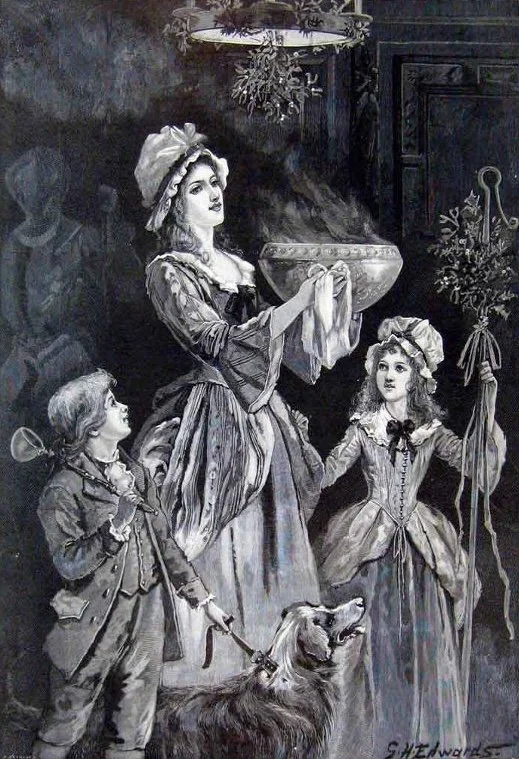
Newspaper illustration of a family with their wassail bowl, circa 1893
As part of the wassailing celebrations, a wassail bowl was passed from person to person, each taking a sip and wishing the next a healthy new year. The wassail bowl dates back at least six hundred years, and although some were elaborately decorated, most were ordinary maple bowls typical of a farmhouse kitchen, occasionally decorated with greenery and ribbons.
At the height of wassailing in the seventeenth century, many magnificent bowls were carved from Lignum vitea, a newly discovered timber from South America that became popular as Britain’s colonial powers grew. Lignum vitae is the hardest and heaviest of commercial timbers, which meant it was particularly suited for holding hot liquids.
As for the liquid itself, there were many recipes for the brew contained in the wassail bowl depending on local custom, but most were a variation of mulled wine, ale or cider mixed with apples, lemons, oranges, brandy, egg whites and spices. The perfect winter warmer for a long night of wassailing!
Variations of the wassailing song went something like this:
‘Here we come a-wassailing
Among the leaves so green;
Here we come a-wand'ring
So fair to be seen.
Our wassail cup is made
Of the rosemary tree,
And so is your beer
Of the best barley.
Love and joy come to you,
And to you your wassail too;
And God bless you and send you a Happy New Year
And God send you a Happy New Year.’
RECIPE: Mulled Apple Cider
This recipe is from Ebb and Flow: A Guide to Seasonal Living by Tiffany Francis-Baker (Bloomsbury, 2024)
There’s nothing like a hot mug of mulled cider on a cold winter’s night, rich with the flavours of sharp, crisp apples and aromatic spices. Try and use locally sourced, high quality cider if you can, or opt for scrumpy if you like your tipple a little stronger. Scrumpy was historically made from smaller, windfall-ripened apples and often left to ferment for longer, giving it a stronger, cloudier taste. Traditionally, a drink like mulled cider might have been served in a large bowl at the centre of a table, but you could also serve it at the end of a meal with baked apples for extra warmth, or take a mug outside after dark to enjoy with the winter stars. It can also be made with pear cider if you prefer a sweeter, fruitier flavour.
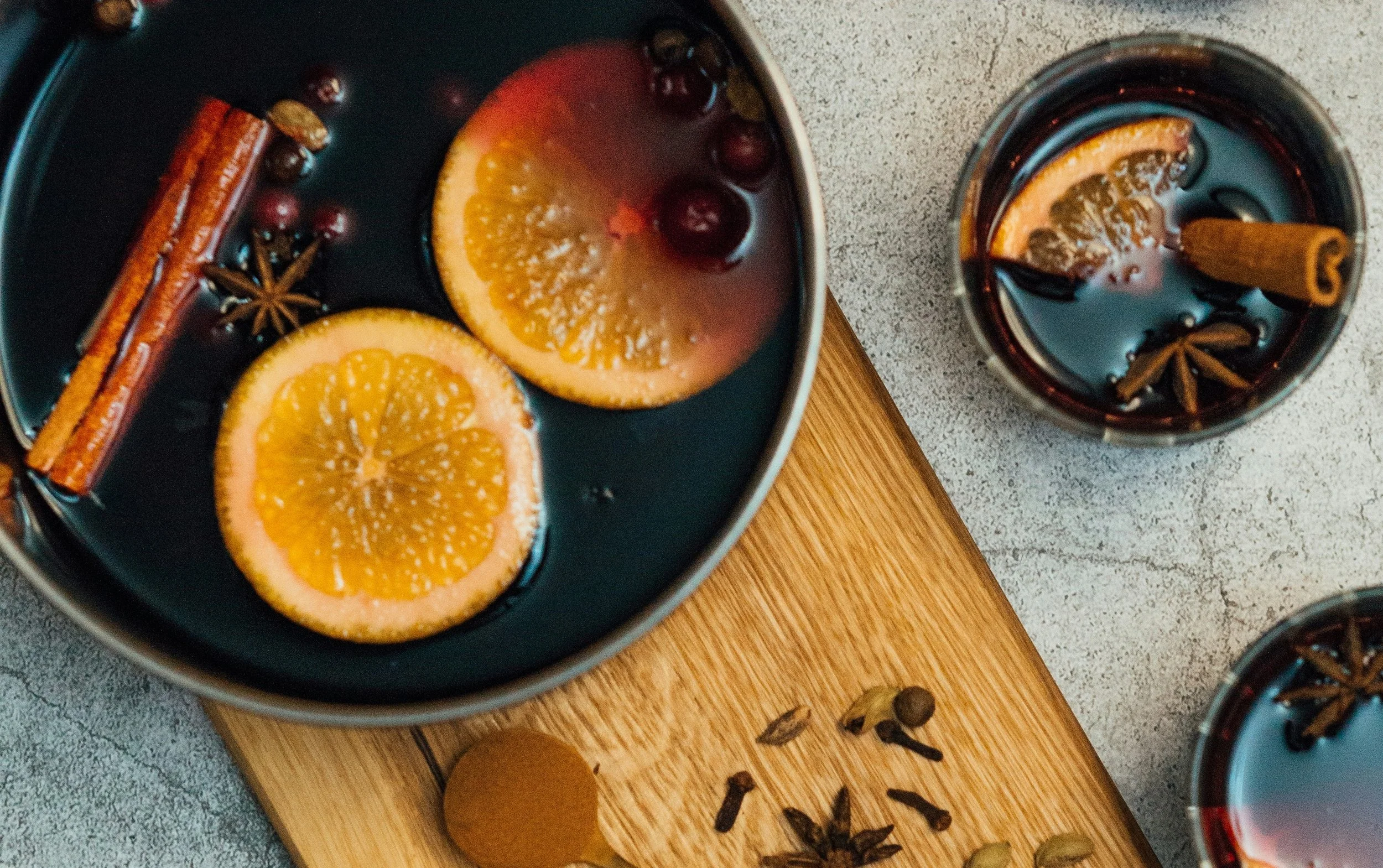
Serves 8
2 litres dry cider
75g dark brown sugar
6 cloves
4 star anise
2 cinnamon sticks, snapped in half
½ nutmeg, finely grated
1 vanilla pod, halved
Zest and juice of 1 orange
1. Pour the cider into a large saucepan and warm through on a low heat for a few minutes.
2. Add the sugar and stir gently to dissolve.
3. Add all the spices and orange juice to the cider and turn the heat up slightly until the mixture is boiling, then turn it back down to a simmer and leave for 10-15 minutes to infuse.
4. Ladle into mugs to serve, pouring through a fine mesh sieve if you want to remove the larger ingredients.