Experimenting with Iron Age Tapestries
The Experimentalists are an exciting volunteer team here at Butser, working on experimental projects to bring our ancient houses to life. They’re currently working on several projects in our Iron Age village. In this update, Margaret Taylor (Experimentalist and volunteer librarian) shares a short update on the team’s progress.
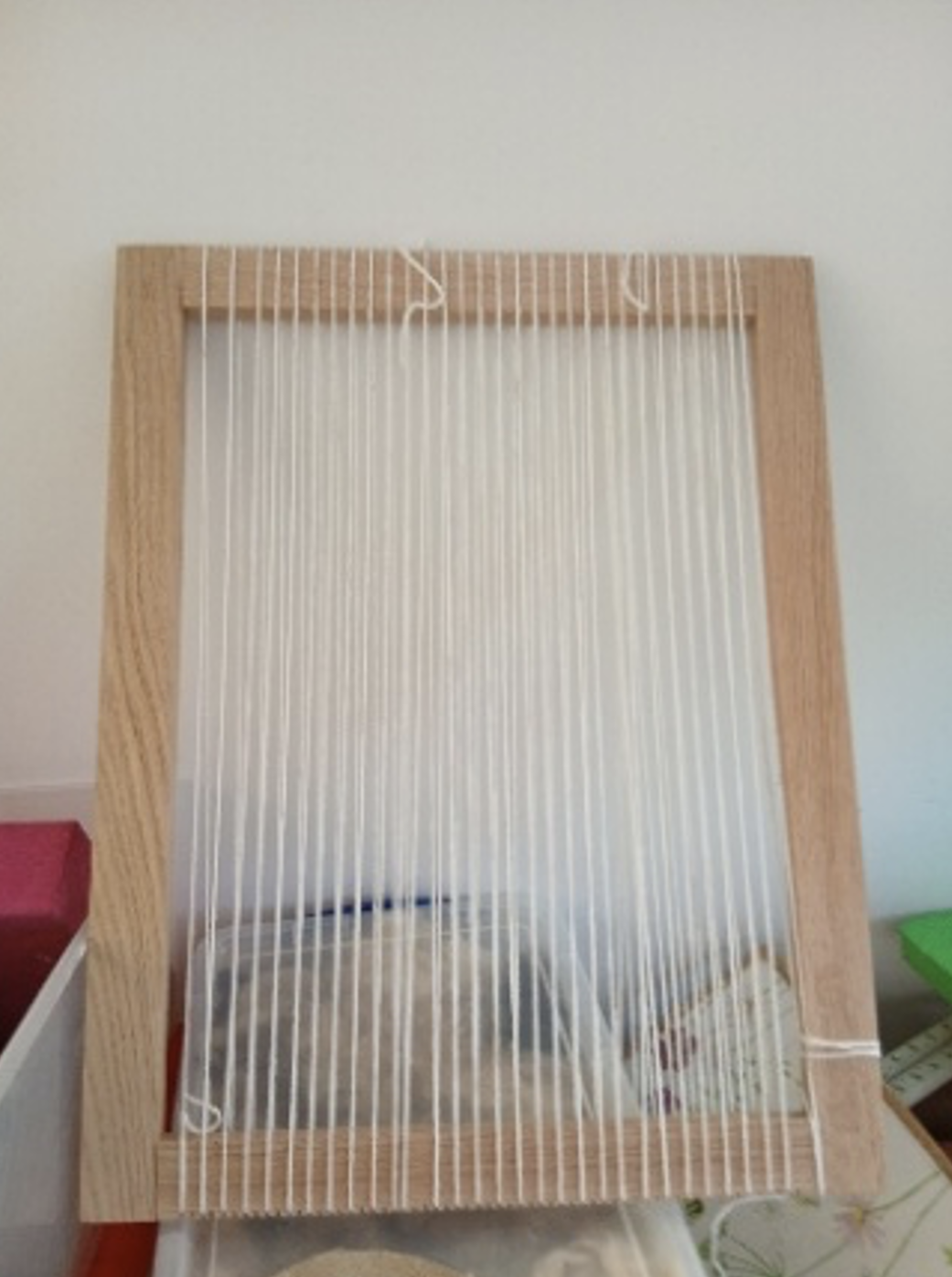
Our loom, warped and ready to go, constructed by one of our team, Alan. Photo by Margaret Taylor.
Since our last blog, the Experimentalists have been really busy with a number of projects: enhancing the CS1 roundhouse, rebuilding the Iron Age toilet, and of course building the Roman Villa wall. These will all feature in future blogs, but this entry is about our spinning project.
Readers may remember my early battle with drop spinning. I am now pleased to report that I have improved - but definitely not mastered the process! I have shared the skill with the team, and we have now been inspired to create a tapestry picture, depicting a view of one of the Butser Iron Age roundhouses, with the hills as a backdrop.
But did our Iron Age ancestors make tapestries? Of course, we do not know, as very little survives. However, they were accomplished weavers, making clothes, and they would have wanted to make their homes cosy and warm. We, the Experimentalists are based in CS1 - one of the Danebury roundhouses - and we know that at Danebury our ancestors were definitely spinning, and using their spun wool to weave. Elizabeth Wayland Barber (author of Women’s Work: The First 20,000 Years) also tells us that in the Bronze Age ‘Greek women sometimes did produce storytelling cloths and some of these ‘tapestries’ were kept in the treasuries of Greek temples.’
Dyeing itself has very long roots, although in the Iron Age, Nicole DeRushie (author of Bog Fashion: Recreating Bronze and Iron Age Clothes - available in the Butser shop) describes how ‘white wool was quite rare in the early Bronze Age, becoming more common as centuries wore on and breeding coaxed out this colour, which is best for dyeing.’ By the time we reach our period, the Iron Age, dyeing was popular and woad was certainly popular, both for painting bodies for warfare and for transforming textiles.
As a group, we have been experimentally dyeing with oak bark, tansy, weld and others. Maureen has been busy using natural dye stuffs from her garden, including tansy and oak, and spinning her wool. I hosted a small dyeing workshop in my garden. A small group of the team used weld (commercially purchased), consulting Jenny Dean’s Wild Colour: How to Make and Use Natural Dyes to create 20 different shades of green from one ‘dye bath’ using different mordants. We have also experimented with woad - this grows at Butser but I used woad from my garden. Woad produces shades of blue, but the process is tricky and we were not successful. Further research and practice are required and we will try again in the summer. Meanwhile, the team are keeping busy spinning more wool and we hope to begin weaving in the summer.
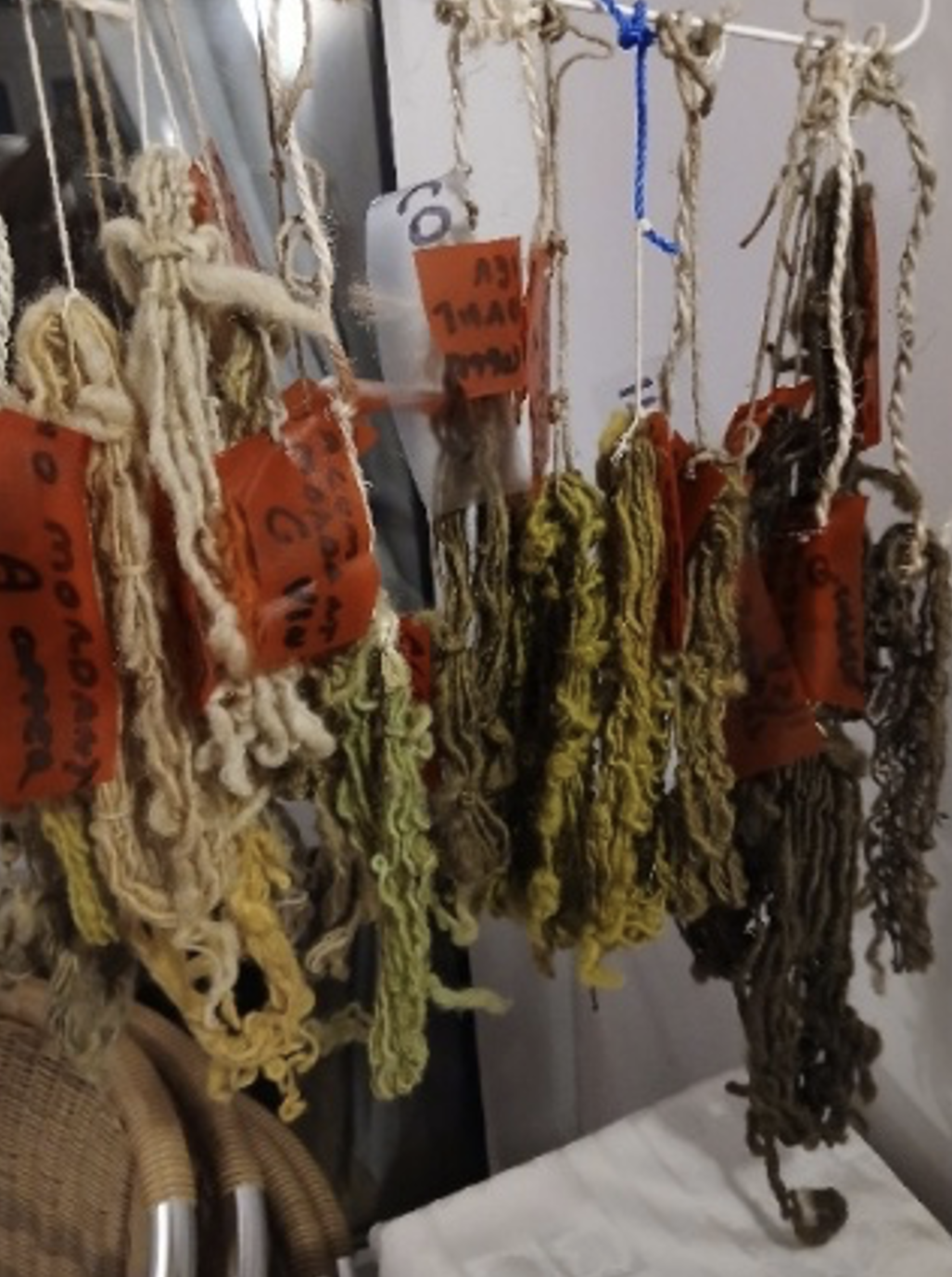
Our weld experiments. Photo by Margaret Taylor.

Spinning. Photo by Belinda.
REFERENCES
Elizabeth Wayland Barber - Women’s Work: The First 20,000 Years
Barry Cunliffe - Danebury Hillfort
Jenny Dean - Wild Colour: How to Make and Use Natural Dyes
Nicole DeRushie - Bog Fashion: Recreating Bronze and Iron Age Clothes